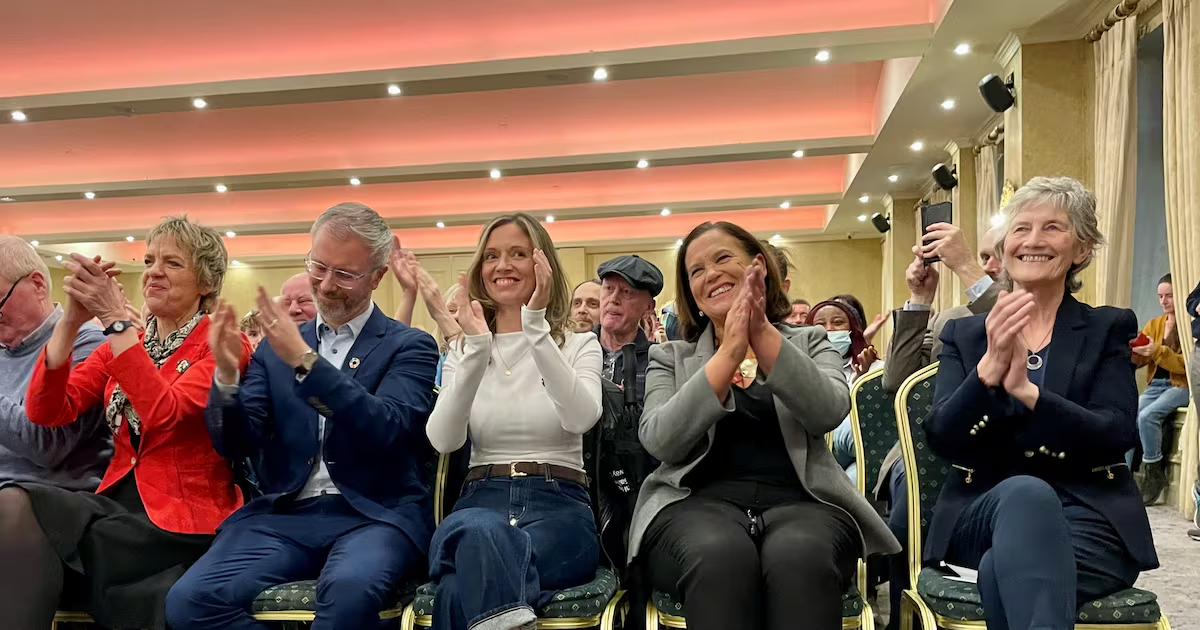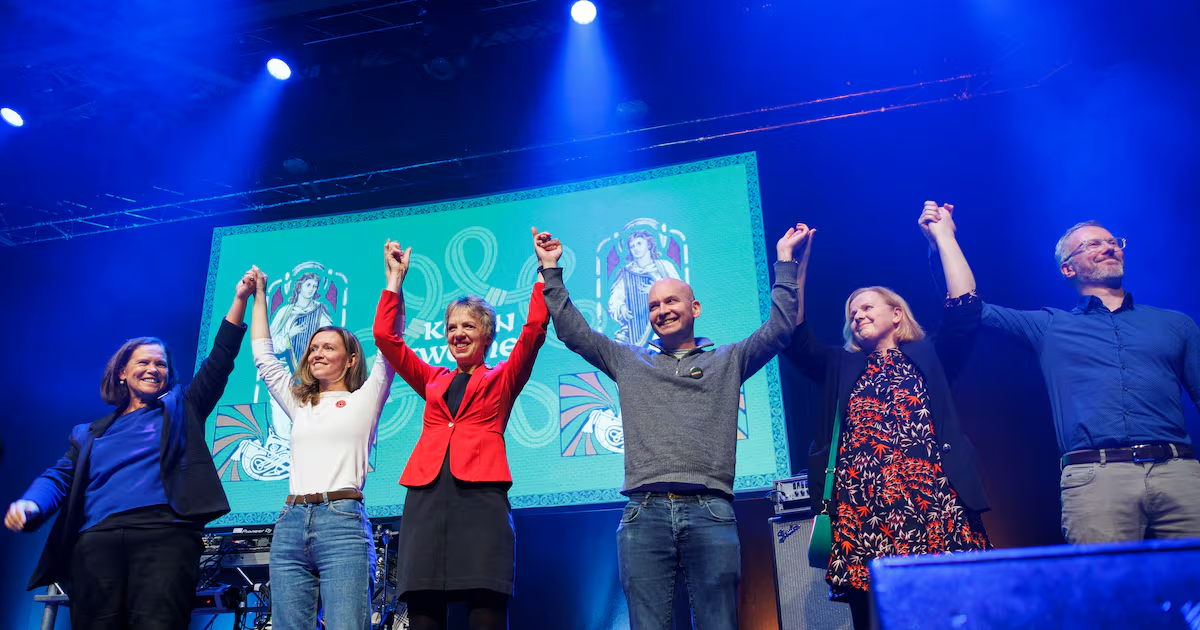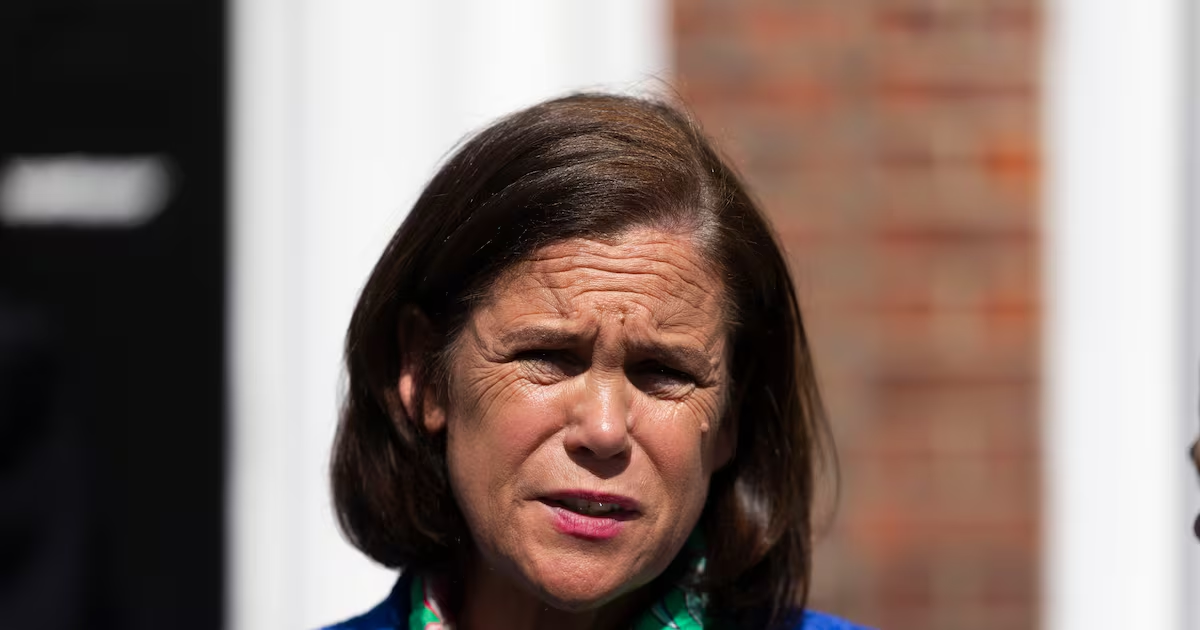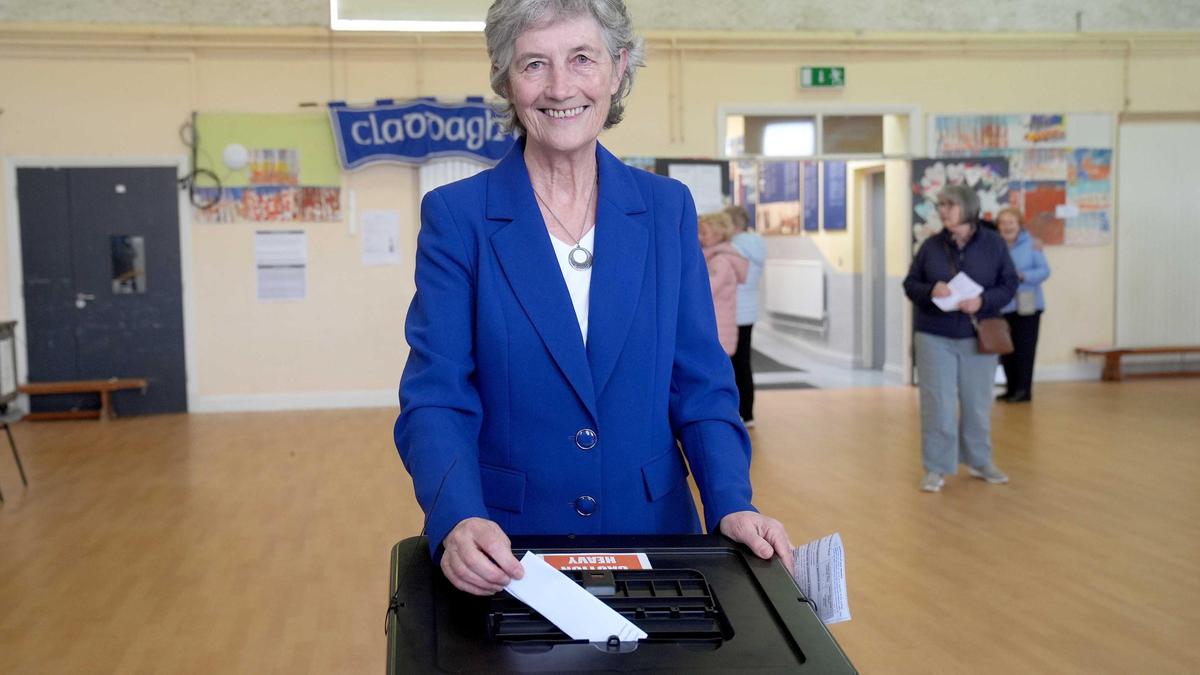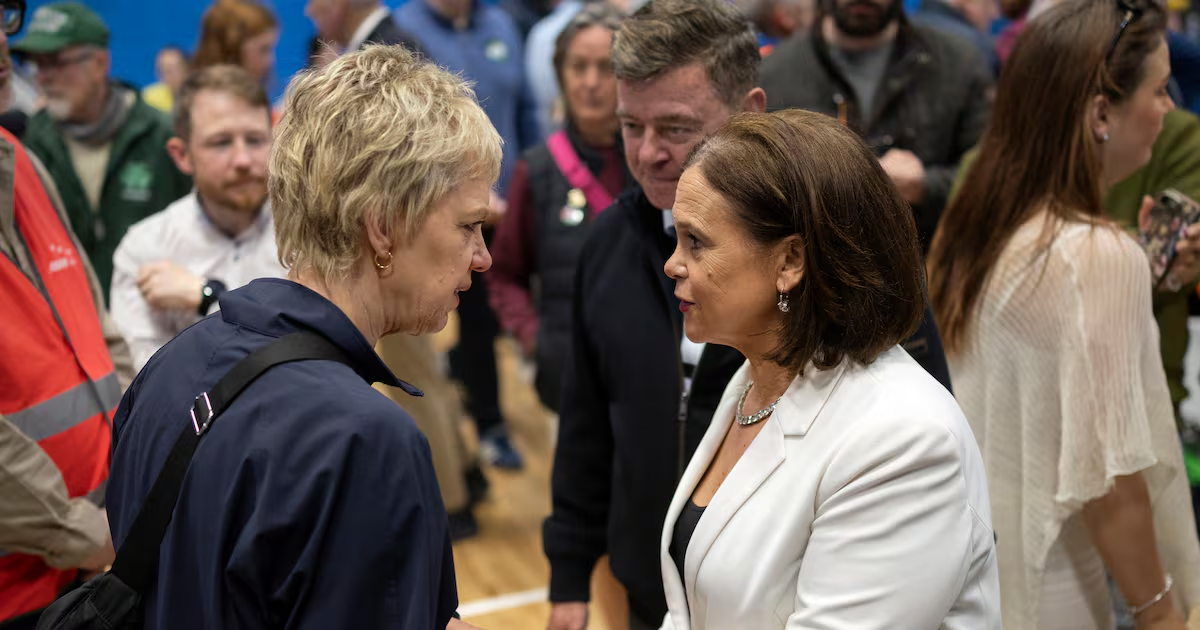
When the five beaming politicians arrived at Dublin Castle the day after the 2025 presidential election it looked like they could have been attending a wedding.Each of the leaders of the five left-wing parties were there to bask in the reflected glory of the election of Catherine Connolly, their victorious unity candidate. Politically, the most important union being celebrated that day was a pre-arranged one: their decision to back a single candidate to defeat the two main Government parties.Sinn Féin president Mary Lou McDonald proclaimed it “a victory for the combined opposition over the jaded, worn-out politics of Fianna Fáil and Fine Gael”.For voters, this could be seen as beta testing for a future left-wing government, the first to feature neither of the two main political parties. The signal from the parties to voters was clear: if they could unite for Connolly, they could unite for a coalition government. Seven months on, the honeymoon of that October union is over. The May 22nd byelections, in Dublin Central and Galway West, to fill the seat vacated by Connolly’s election, exposed fractures in that tentative coalition of the left. Long-standing concerns of both Labour and the Green Party – and more recent misgivings within People Before Profit and the Social Democrats – about Sinn Féin’s policies came into sharp relief in the aftermath of the byelections.These public criticisms potentially present insurmountable problems in the formation of any programme for government that might unite the parties of the left in coalition. Ivana Bacik, Roderic O'Gorman, Holly Cairns, Mary Lou McDonald and Catherine Connolly at campaign rally at the Galway Bay Hotel on October 23rd, 2025. Photograph: David Young/PA Wire While the biggest Government party, Fianna Fáil, recorded an abysmal performance in the two byelections – failing to secure double-digit first preference vote percentages in either race – it was the internecine tensions on the left in the wake of the vote that has dominated political debate in the days since the results. The recriminations stretched back to last autumn’s presidential campaign. Labour leader Ivana Bacik, who said her party has “never accepted” that Sinn Féin is a left-wing party, this week hinted that she did not want McDonald’s party to be part of the Connolly campaign. Asked if it was a mistake to allow a party that she didn’t believe was left wing into the alliance, Bacik said: “It was the Social Democrats who brought in Sinn Féin at that point.” She noted that it took Sinn Féin “some months – it was the end of the summer” before they finally came out to endorse Connolly, an Independent, in her bid for the presidency. This dynamic continued this week, when Labour invited only the Social Democrats and the Greens to agree a left-wing candidate for the upcoming Seanad byelection to fill the seat left vacant by Fine Gael’s Seán Kyne after his victory in the Galway West byelection. But the Social Democrats extended the invitation to Sinn Féin and People Before Profit. Seán Kyne, new Galway West Fine Gael TD, at Leinster House, Dublin, on May 26th. Photograph: Dara Mac Dónaill/The Irish Times While Independent Ireland was separately trying to blame Labour for electing Kyne on transfers in Galway West, Bacik took issue with Sinn Féin voters who transferred to Independent Ireland in the same constituency. When Sinn Féin’s Mark Lohan was eliminated, more than 23 per cent of his available transfers went to Independent Ireland’s Noel Thomas. Bacik said she was “concerned, frankly, about the Sinn Féin transfers” that did not benefit Labour’s Helen Ogbu.She noted there were more transfers to Thomas than to Ogbu, “the leading candidate on the left, and indeed the only black candidate, and we are concerned to see those transfers”.Asked if she was suggesting that there was an anti-migrant sentiment among Sinn Féin voters, Bacik said: “I would never say that. What I would say is that Sinn Féin had clearly pivoted to the right on migration ... clearly, their policies have pivoted right-wards.”Much of the debate this week about Sinn Féin’s left-wing credentials has focused on what some argue are more newly conservative positions on issues such as migration and abortion. Sinn Féin this month was critical of a proposal by the Social Democrats to decriminalise abortion and liberalise access to terminations for medical reasons, despite having supported a more liberal People Before Profit bill on the same issue last December.[ What byelection results say about the rise of right-wing parties and candidatesOpens in new window ]But within both Labour and the Social Democrats, party sources said they were far more concerned about the parties’ differences in economic policy with Sinn Féin. Sources in both parties cited Sinn Féin’s opposition to the universal social charge (USC), local property tax and the carbon tax. The parties also differ from McDonald’s party on the VAT cut for hospitality and the nitrates derogation for farmers. Three Social Democrats TDs who spoke to The Irish Times shared anxieties about Sinn Féin’s ability to manage expectations of voters with the party’s promise to increase public services while reducing taxes. “That’s really dangerous,” one of the party’s TDs said. “People are really sick of voting for one thing and getting something else.” Within Sinn Féin, some party figures are mystified about the fresh interrogation of their left-wing credentials. Asked on Virgin Media this week if her party was left wing, Roscommon-Galway TD Claire Kerrane said she had never been asked that question before. Sinn Féin TD Claire Kerrane. Photograph: Dara MacDónaill/The Irish Times During the Dublin Central campaign, Sinn Féin distributed leaflets which promised the party would “manage migration”.Some in the party are exasperated by what they see as soft-left parties, which are viewed as being inherently middle class, lecturing Sinn Féin about progressive politics. Pat Fitzgerald, a Sinn Féin councillor based in Waterford, said the soft-left parties can be guilty of a kind of “champagne socialism” and that parties such as Labour and the Greens are “more prone to be lured into Government” by Fianna Fáil and Fine Gael. “We should keep on track as best we can and keep going doing our own thing,” he said.Within the parliamentary party, Sinn Féin believes that as a working-class party it has a duty to respond to the genuine concerns of working-class people, including concerns about immigration. McDonald previously told The Irish Times that she believed it was a “classic left-wing position” to subscribe to a rule-based immigration system because a “responsible party of the left” listens to working-class concerns.Daniel Ennis, the newly elected Social Democrats TD in Dublin Central, rejected the premise of this argument. Social Democrats TD Daniel Ennis at Leinster House with party leader Holly Cairns TD and Gary Gannon TD. Photograph: Nick Bradshaw/The Irish Times Ennis, who entered politics in opposition to a rise in anti-immigration sentiment in Dublin’s inner city, said that it was “absolutely not” the duty of a party to adopt a harsher position on migration in response to working-class concerns about immigration. “A big part of my entry [into politics] was listening to our community, putting the helmet on, going into certain conversations wasn’t the easiest. I’ve been doing that, walking into family members’ sittingrooms and kitchens, and speaking about it,” he said. “It’s our job to educate and raise awareness around the lies that we’re seeing online about migration.” The challenge for Sinn Féin, which argues that its position on migration is informed by working-class voters, is that it just lost an election in Dublin Central, a constituency with significant concentrations of working-class communities and the Sinn Féin leader’s own constituency. One contributing factor to Sinn Féin’s loss was not just a decline in its vote share but also its inability to pick up significant transfers from other left-wing parties.Green Party leader Roderic O’Gorman said it was “obvious that people who voted Green number one in this election looked at the other parties and they didn’t see a home for themselves in Sinn Féin early in their ballot”. Paul Murphy wants parties to agree certain policy positions. Photograph: Nick Bradshaw/The Irish Times According to People Before Profit, the party saw a decrease in transfers from its party to Sinn Féin in Dublin Central compared to previous elections. People Before Profit TD Paul Murphy said he would like to see parties agree to certain policy positions before a left alliance agrees a transfer pact in advance of the next general election. Murphy said this would include “not to engage in scapegoating of asylum seekers, not to backtrack on women’s rights” and to agree not to join a coalition with Fianna Fáil and Fine Gael. McDonald has previously declined to rule out a coalition with Fianna Fáil. “Of course there needs to be give and take in terms of what those principles are, but there are bottom line points for us,” Murphy said. “I think there was a relatively high transfer rate between what people would generally see as parties who were saying ‘vote left, transfer left’.“But I think that can go even higher if you have a common pact, a common projection, and if you polarise the election to a choice: Fianna Fáil and Fine Gael, or the chance to get rid of them and have a left-wing government.”
Post-byelection bitterness ends honeymoon of the left’s Connolly coalition
Fianna Fáil, the largest political party, bombed in the byelections but divisions among the left-wing parties drew most attention
1,544 words~7 min read