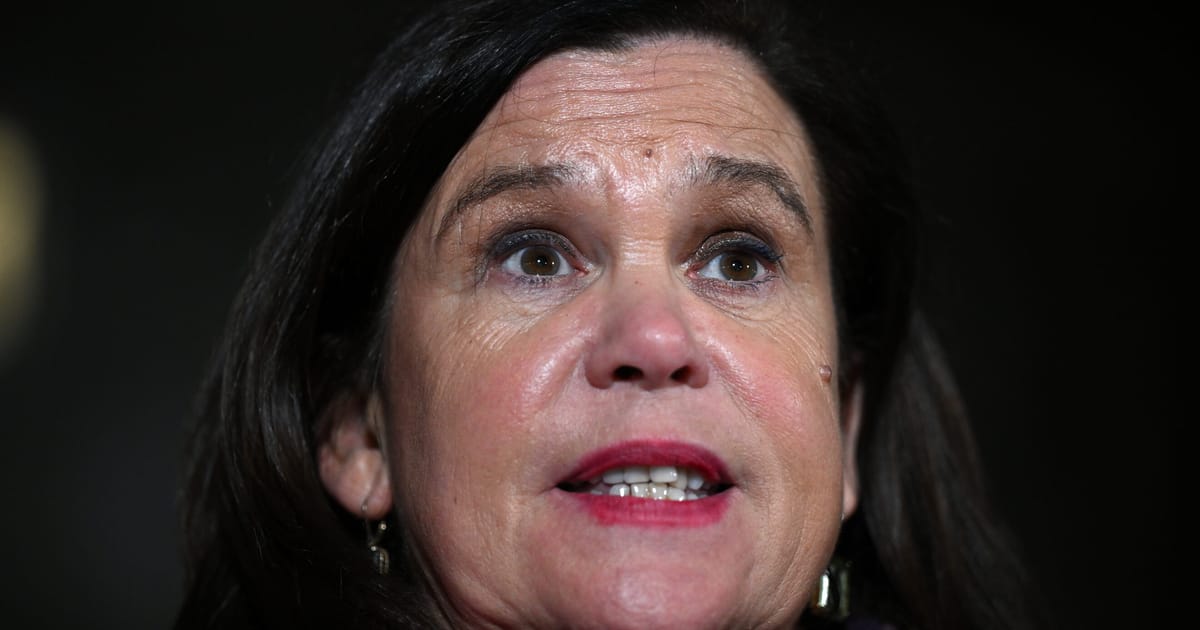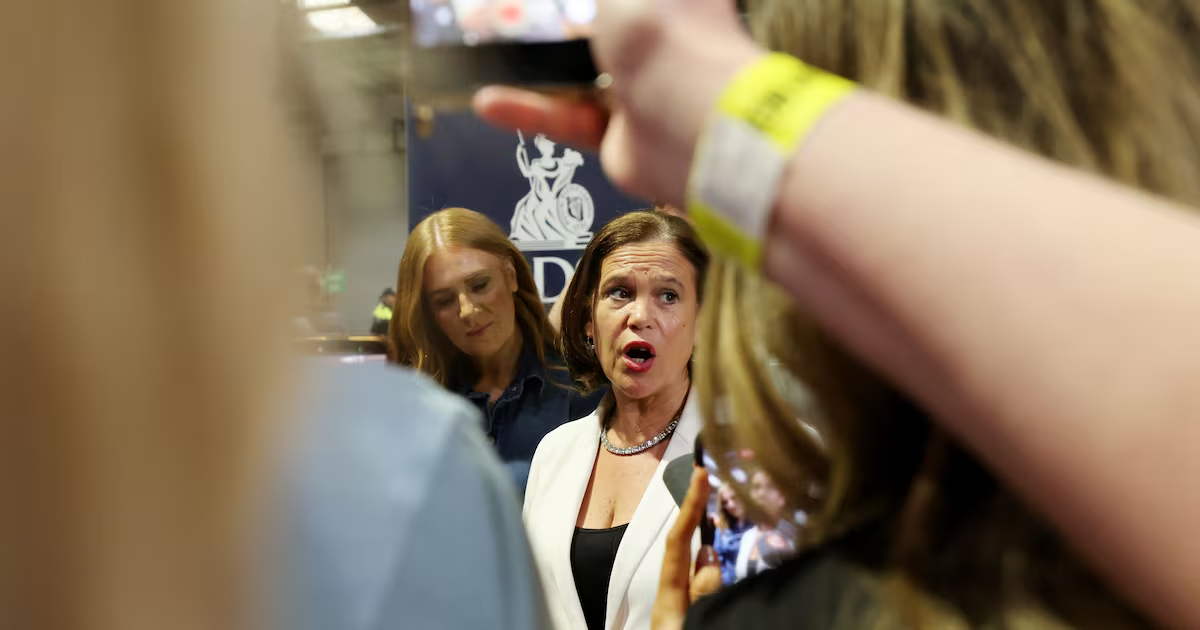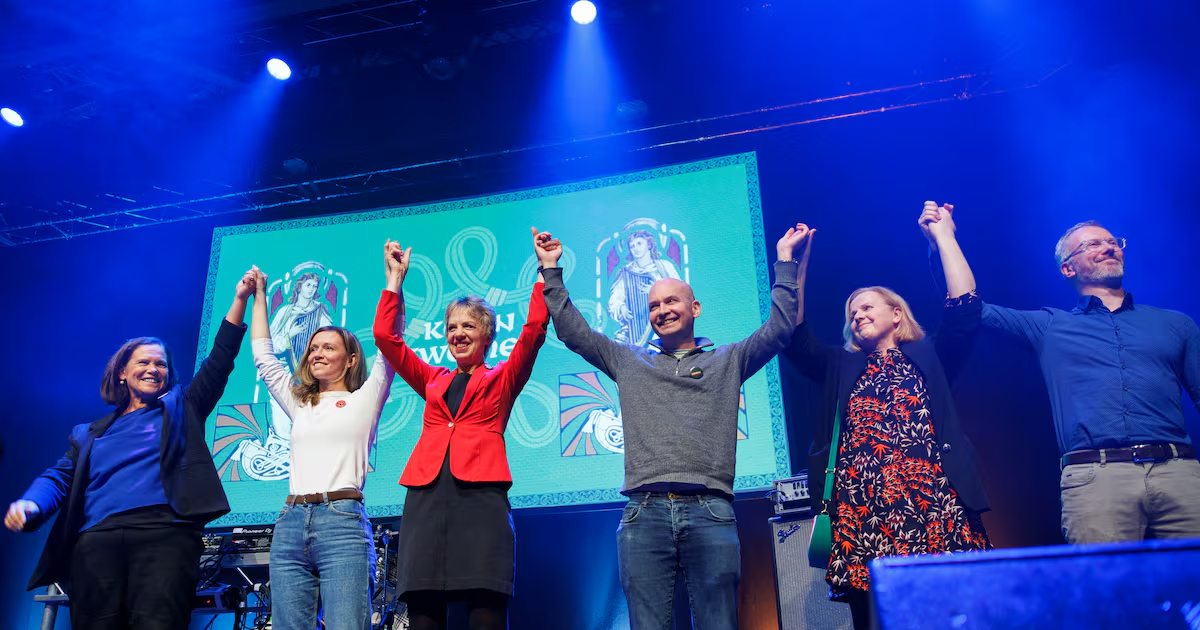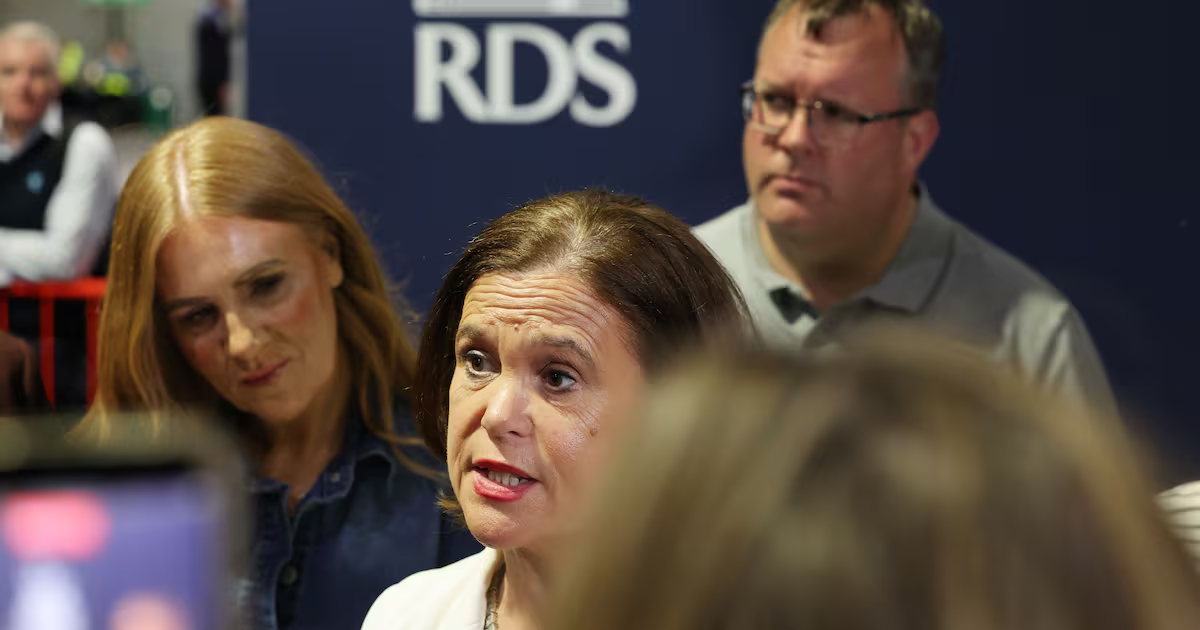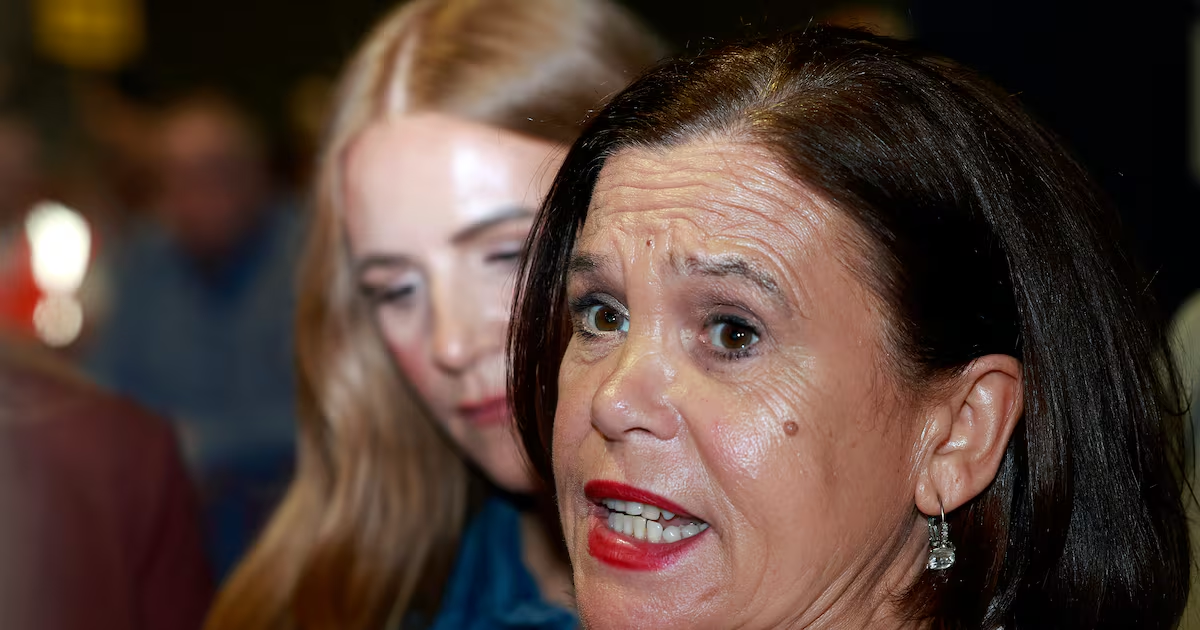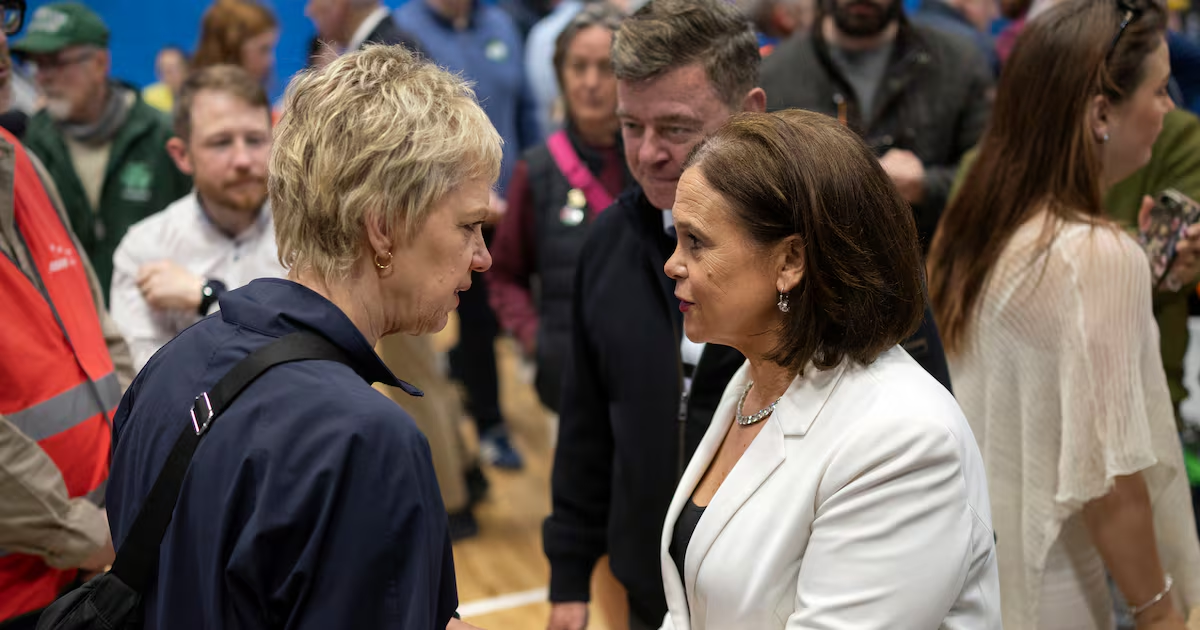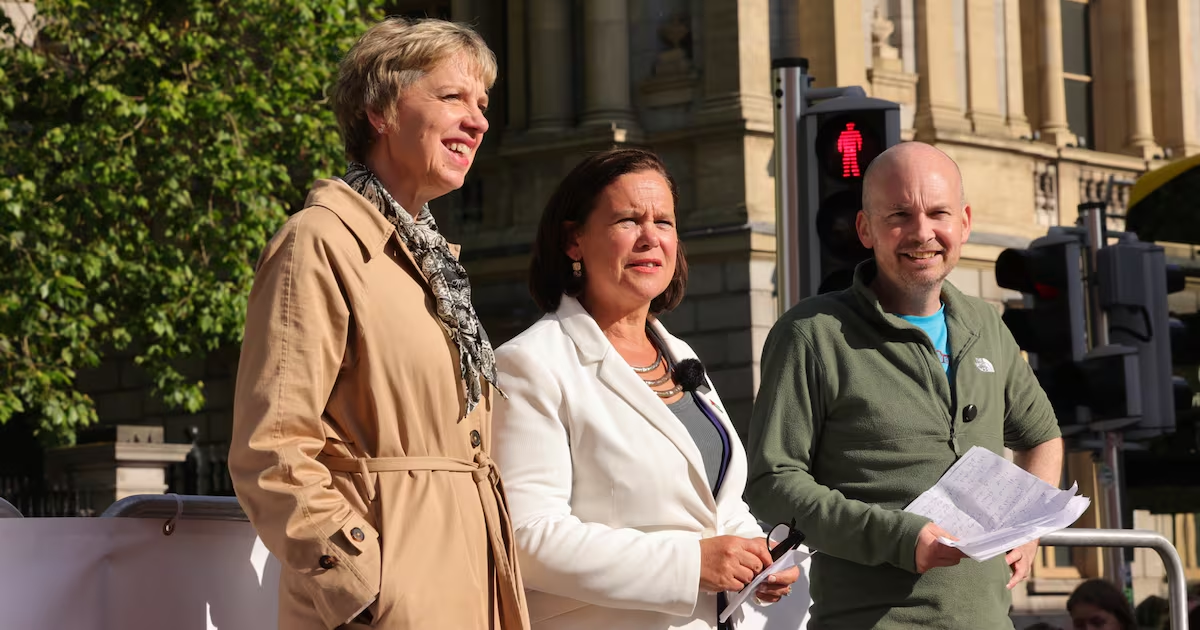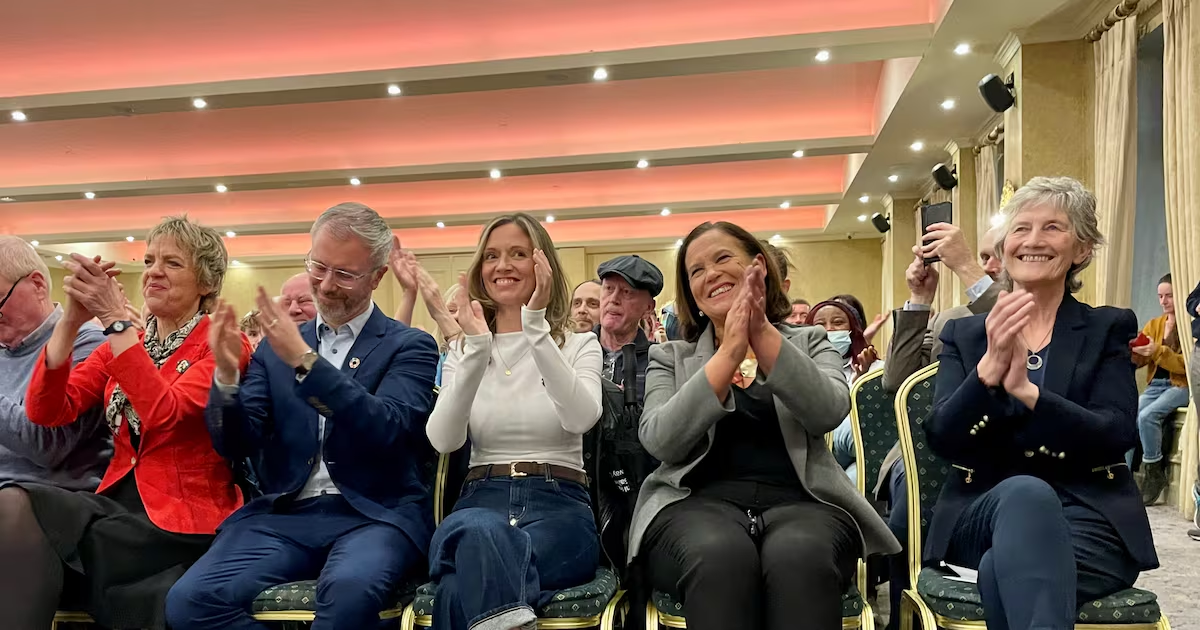
In the afterglow of last year’s successful campaign to elect President Catherine Connolly, Sinn Féin leader Mary Lou McDonald made a real effort to keep together the Leinster House alliance of five left-wing parties that had backed Connolly. The Social Democrats, Labour, the Green Party and People Before Profit were invited to come together under some purely intentioned but fairly uncontroversial policy platforms. One example was a cross-party motion on support for children with additional needs timed to coincide with a protest by teenager Cara Darmody, something to which no serious Opposition party would really say no. Within the alliance, there was a bit of discomfort from some who felt the significance of what was heralded as a new era of “left-wing unity” might have been a little overstated – including by us in the media. Everyone was aware of key policy differences between all five parties, which were always going to remain competitive with each other. But at the same time, all of these people were politicians and had long been aware of an appetite within a significant cohort of their own bases for a government that, for the first time in the history of the State, would feature neither Fianna Fáil nor Fine Gael. So the mythos became that, based on the alliance formed in last year’s presidential election, an alternative left-wing government was not just possible, it was now probable. If general elections tell the national political story, then byelections show us the underplots. Such is the case today, with our lead story and the accompanying analysis piece, which explains how the aftermath of the Dublin Central and Galway West count has exposed an ideological fracture between Sinn Féin and the other left-wing parties. Labour, the Social Democrats and People Before Profit are all questioning the policy direction of McDonald’s party, suggesting certain recent stances do not align with progressive left-wing positions. People Before Profit, for example, raised concerns about a leaflet drop by McDonald’s party in Dublin Central – raised by Ruth Coppinger in the Dáil – that said Sinn Féin would control migration. And the Social Democrats and Labour were taken aback earlier this month when Sinn Féin decided to abstain on a Bill from Holly Cairns’s party that would have liberalised and reformed Ireland’s abortion law. There is no doubt among the left-wing parties that Sinn Féin has some very progressive policies and that it’s a party with plenty of individual politicians who are genuinely devoted to progressive and left-wing ideas. The problem is that Sinn Féin, as a larger party, is trying to court voters from both sides of the political spectrum. The fact the left-wing parties’ own voters did not transfer to Sinn Féin in Dublin in either of the byelections has sent quite a clear message to some of those in Leinster House. The alliance is also plagued with the suspicion that any of the other parts of it would – brace yourself – consider going into coalition with The Other Two. The smaller parties worry that Sinn Féin would drop them like a hot snot if a new Fianna Fáil leader looked at them sideways. Sinn Féin, meanwhile, insists it is a truly left-wing, working-class party and says critiques and criticisms against suggest each of the smaller parties – bar PBP – is psychologically primed to prop up Fianna Fáil and Fine Gael in a coalition. With left-wing allies like that, who needs enemies? New TDs in the HouseIt’s the first day of the political week this week and newly minted TDs Daniel Ennis and Seán Kyne will be proudly shown off by party colleagues in Leinster House this morning, before they both meet the clerk of Dáil Éireann to sign the members’ register. Both the Social Democrats and Fine Gael will be ebullient about their new TDs, while Sinn Féin and Fianna Fáil will still be trying to downplay the scale of their respective losses. Other parties will also be busy on the plinth, crafting their own narratives about how the byelection results were a victories for their own specific kind of politics. There is plenty to parse – the lack of tangible political capital from the fuel protests for both Independent Ireland but particularly Aontú is one interesting aspect. It remains to be seen whether the slight bump in the polls that both received in the wake of the blockades will materialise into something more long term. Elsewhere in the paper this morning, Pat Leahy has an interesting yarn following on from the byelection that shows voter turnout in general elections may have been habitually higher than estimated. Figures supplied by the returning officers in Dublin Central and Galway West have highlighted how there is a difference between the total electorate and the total number of people entitled to vote in Dáil elections. The former, which is higher, is the one that was incorrectly used to measure turnout. This means the official turnout figures have been smaller than they should have been. So, a belated congratulations to the Irish electorate, which is marginally more engaged in their elective franchise than we had all previously assumed. Meanwhile, the Cabinet is meeting this morning and, as Harry McGee is reporting, the very long-awaited Occupied Territories Bill is being brought by Helen McEntee. As had been widely expected, the proposed legislation will exclude a ban on the trade of services from Israeli settlements in the occupied Palestinian territory. We can expect much Opposition criticism of what will be described as a watered-down proposal from the Government.With each passing year, and the increased Israeli bombardment of Palestine, the Bill has started to occupy a space in Irish politics that is probably completely disproportionate to its actual effect. The Government has been clear that the economic sanction this legislation will impose on Israel will be pretty minimal. However, there is a broad understanding that it carries ideological significance as most of the public want their Government to be seen to be doing something. McEntee is understood to want to have the Bill enacted before the summer break. Best Reads If having Bertie Ahern make a recent return as a main character in Irish political news wasn’t enough early millennium nostalgia for you, we have a piece in the paper today about ghost estates. Hugh Dooley is writing about a derelict housing estate outside Castlebar in Co Mayo that is derided by locals as an “eyesore” and a playground for youths “getting up to no good”. Fintan O’Toole’s column today dissects the poor performance of Fianna Fáil in Dublin Central, concluding that what was once the most popular political project in the country is now “the ghost of a machine”. In world news, we have detailed coverage of the continuing peace talks between the US and Iran – which are ominously marked by each side offering different expectations of how close they are to a deal. Denis Staunton has an analysis piece that explains how Iran appears to have won key concessions. Playbook The Dáil schedule for today is as follows: 2pm: Leaders’ Questions 2.34pm: Order of Business and Questions on Policy or Legislation3.04pm: Motion(s) without debate3.05pm: Taoiseach’s Questions3.50pm: Second stage of the Dublin Transport Authority (Amendment) Bill 2026 7.24pm: Sinn Féin motion on the cost of disability9.24pm: Parliamentary Questions: Oral – Tánaiste and Minister for Finance11pm: Topical Issues12am: Dáil adjournsThe Seanad schedule includes: 2.30pm: Commencement Matters3.30pm: Order of Business4.45pm: Statements on student accommodation and supportsReport and final stages of the International Co-operation (Omagh bombing Inquiry) Bill 2026 7pm: Committee stage of the Garda Síochána (Powers) Bill 2026 9pm: Seanad adjourns
Sinn Féin's struggles and an uneasy left-wing alliance
Plus: New TDs in the House; and ghost estates return to the news
1,267 words~6 min read