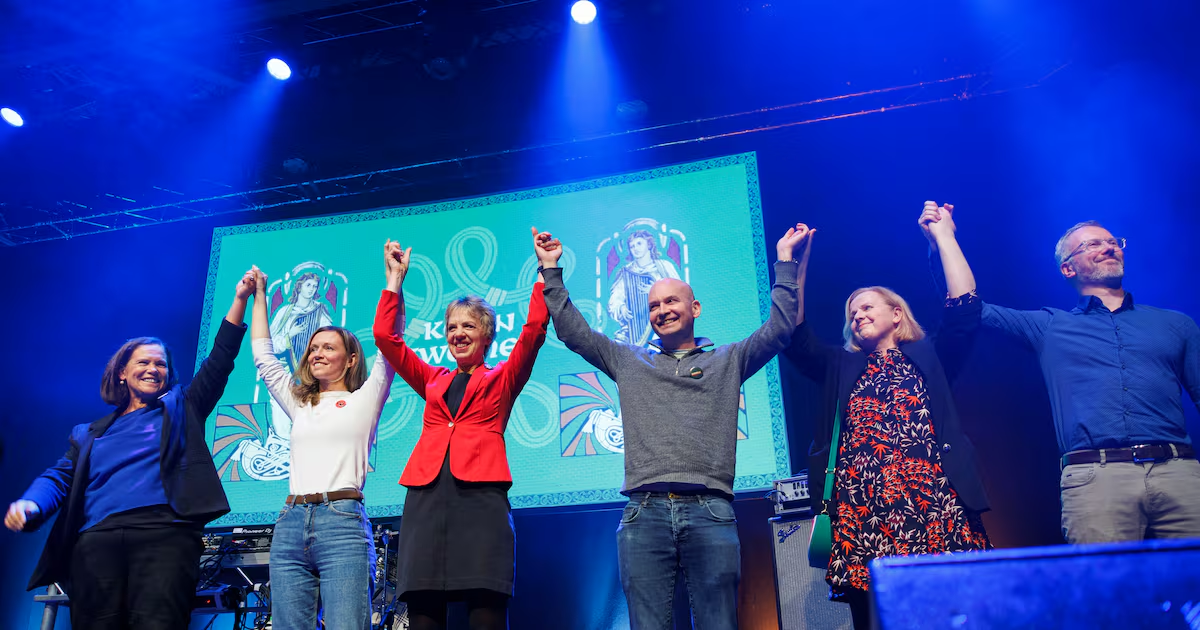
Holly Cairns might be forgiven some ebullience in the wake of her party’s strong performance in the weekend’s byelections. But the Social Democrats leader was on less firm ground in declaring a left-wing government now “within touching distance”.There is more than one reason to be sceptical. The results have brought to the surface deep-seated differences between Sinn Féin, the largest party in the putative left-wing alliance, and the rest. Cairns herself highlighted these when criticising Sinn Féin’s positioning on abortion legislation as a “huge mistake”, while some of her party colleagues attacked its policies on immigration, climate and other issues. It is worth noting that these disagreements do not extend to the economic questions which once defined the left/right divide.The fracture was also apparent in transfer patterns. In Galway West there were strong transfers between Social Democrats, Green and Labour voters, but fewer from the Sinn Féin candidate, with a significant number of his second preferences going to Independent Ireland. In Dublin Central, meanwhile, Sinn Féin fared less well on transfers from left-wing candidates than it did from those of veteran criminal Gerry Hutch.These patterns leave Sinn Féin with a difficult dilemma as it seeks to reconcile its appeal to socially conservative, nationalist voters with the demands of left-wing progressives. But they also pose questions for centre-left leaders. Last year, they seemed more willing than before to present a common front with Mary Lou McDonald, culminating in the joint campaign that swept Catherine Connolly into the presidency.Now, though, the mood has shifted. Labour leader Ivana Bacik has called for her party, the Greens and Social Democrats to negotiate as a bloc with Sinn Féin, Fianna Fáil and Fine Gael after the next election. Such a strategy would be a death knell for any prospects of a pan-left pre-election alliance presenting itself to the electorate as a government-in-waiting.While the centre-left parties may scent electoral opportunity in Sinn Féin’s disarray, there are dangers here too. Cairns’s optimism about a left-wing government will only be justified if all these parties grow their overall vote. It also requires strong transfers between them.Ultimately, the challenge remains with Sinn Féin. Cairns’s criticism can also be read as an attempt to drag the party back from the more socially conservative postures it has begun to adopt. It will be clear to McDonald and her colleagues that a course correction is required. What form that takes will be one of the defining questions of the next phase of Irish politics. And the political left may have to grapple with the unpalatable idea that many voters it counted as supporters do not share its values.
The Irish Times view on cracks in the left alliance: a new phase in politics
Byelection results have exposed differences between Sinn Féin and the rest
436 words~2 min read