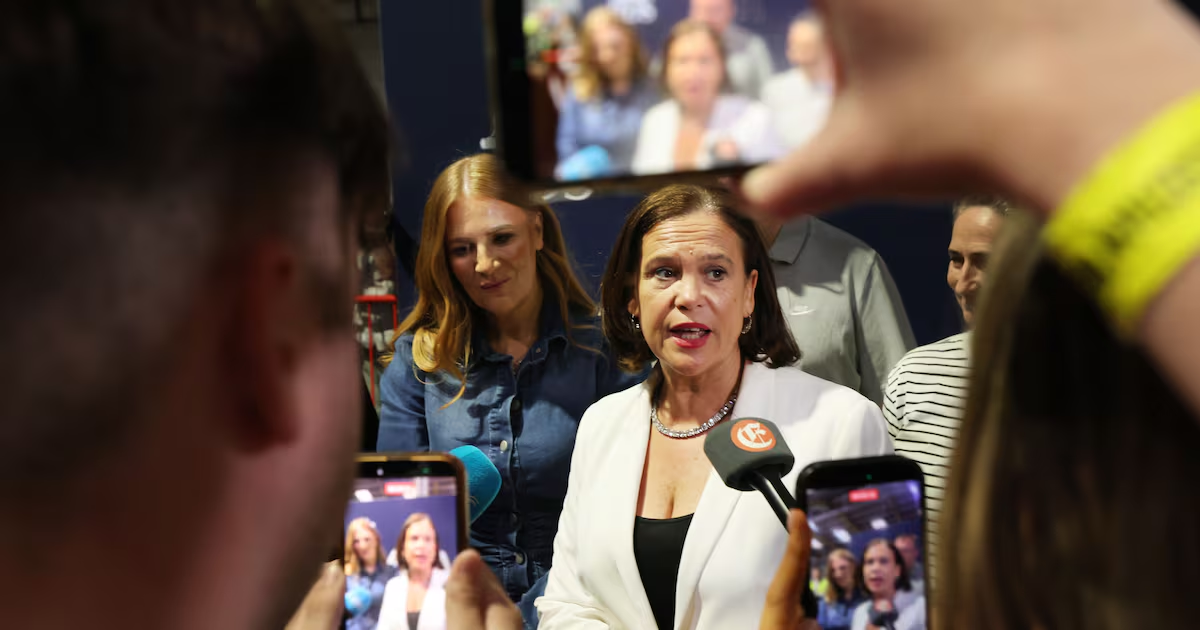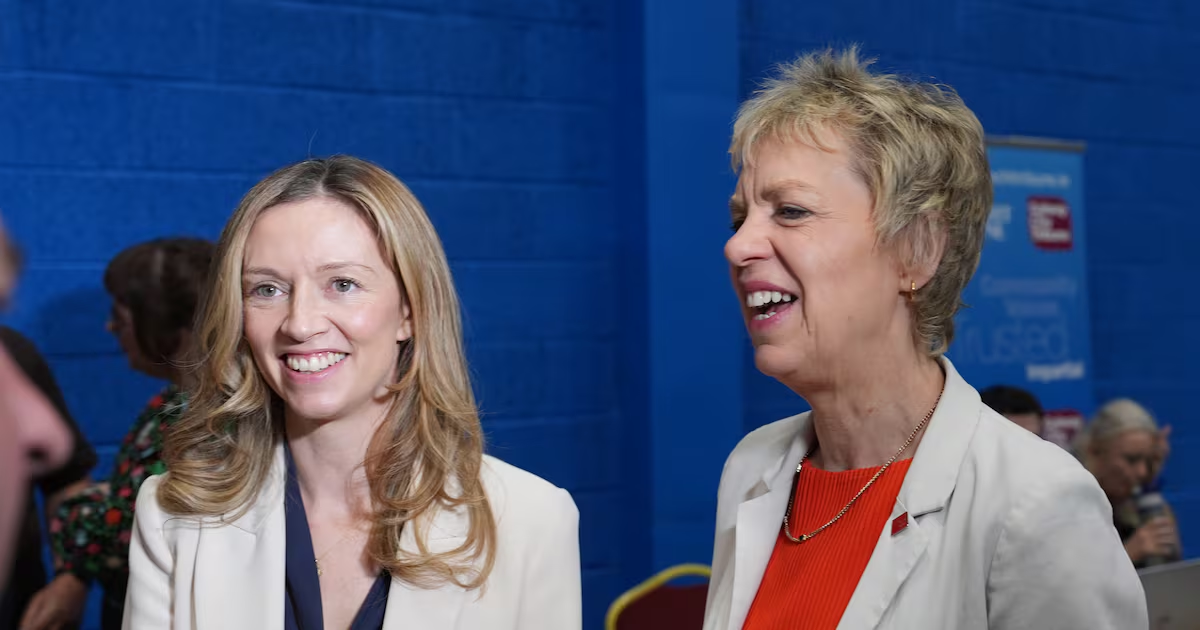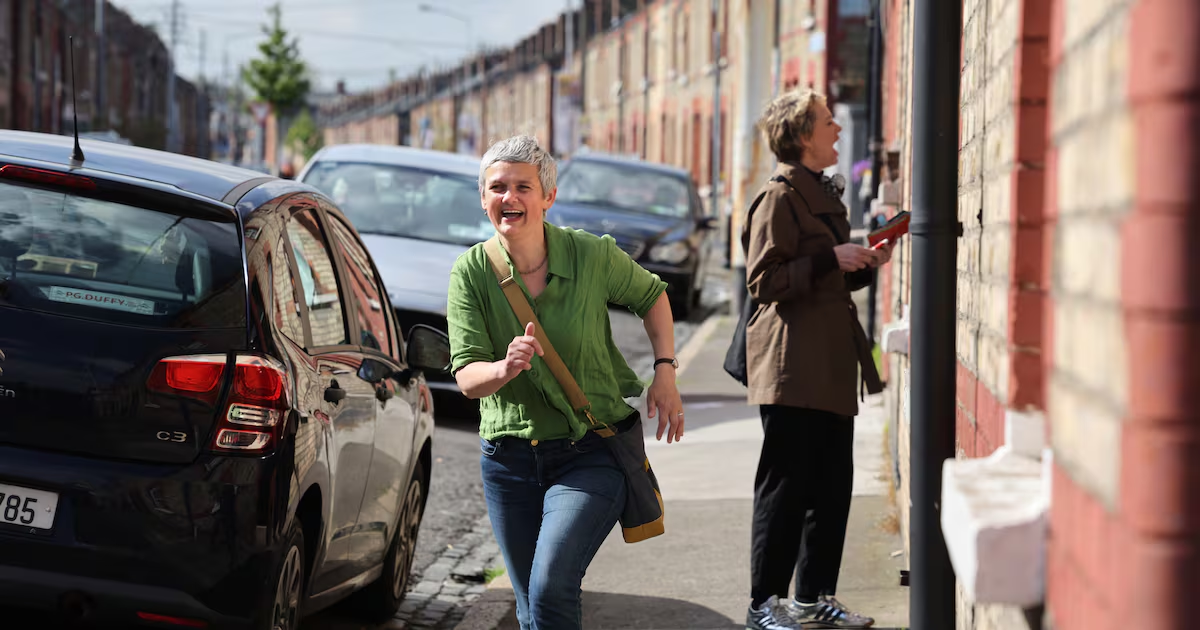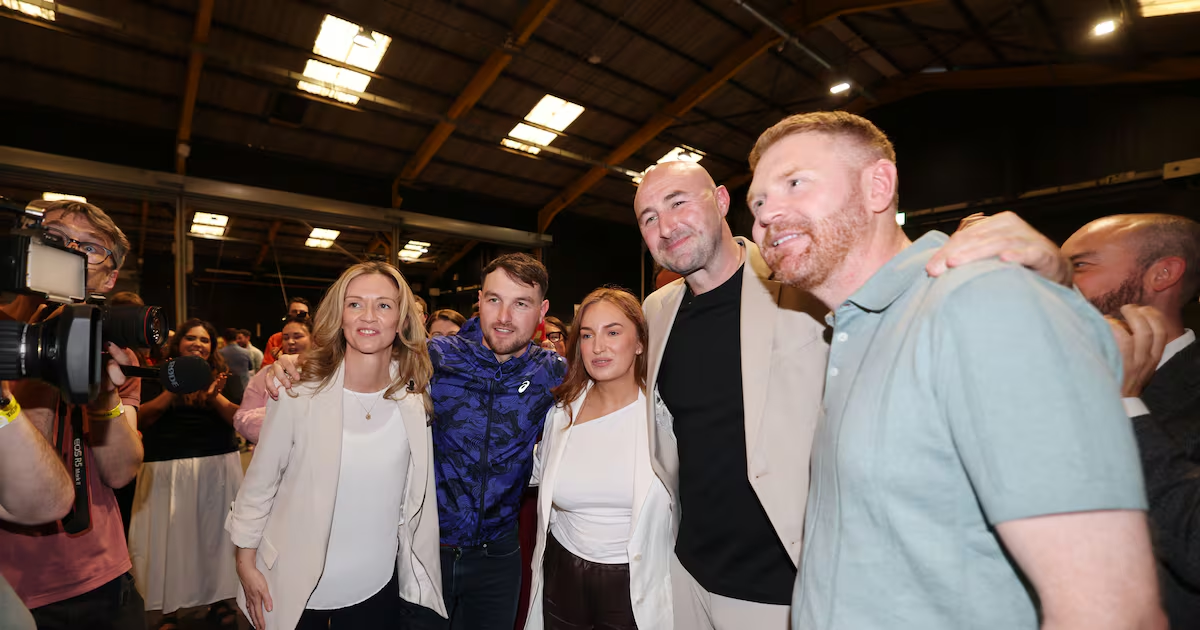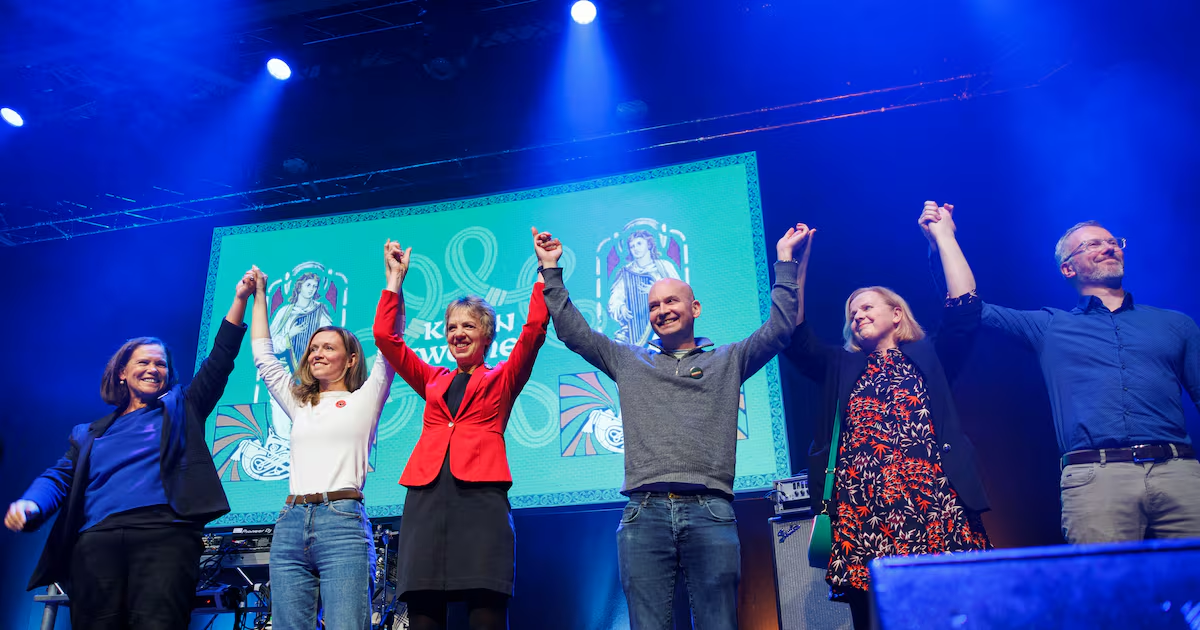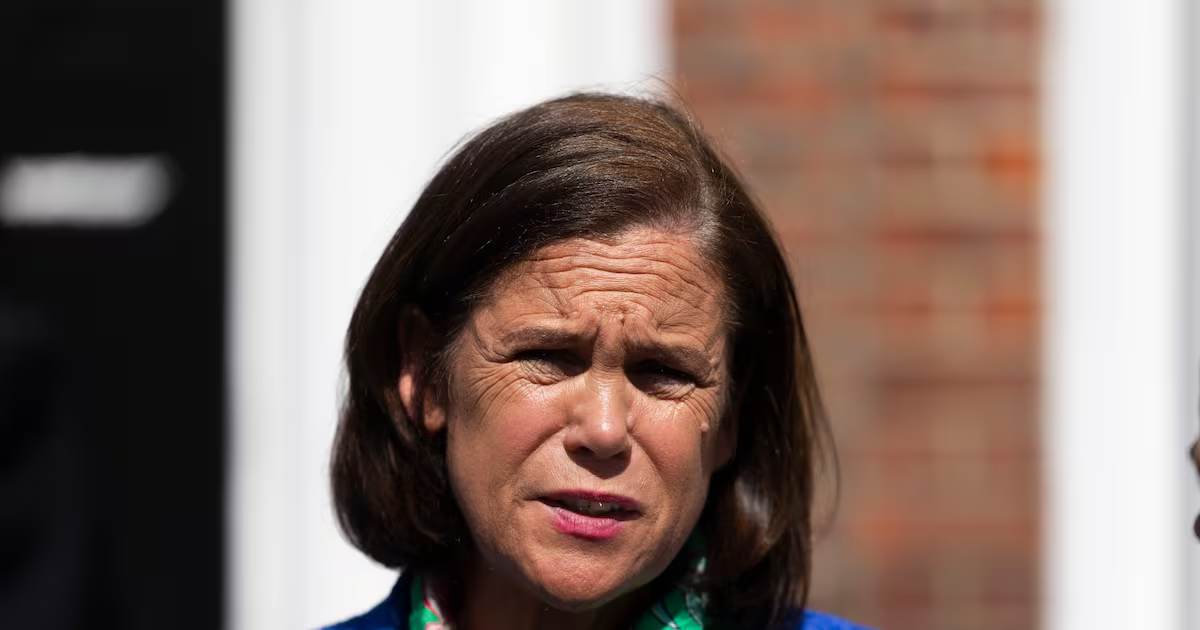
Today’s politics digest is brought to you by Brendan Behan, as the first item on the agenda really is the split. In the aftermath of the Galway West and Dublin Central byelection, Fianna Fáil was confronted by the dismal and depressed vote it witnessed in both constituencies. Yet the Government party has somehow avoided a public-facing psychodrama over its electoral misfortunes. Although the very poor byelection results were raised at the Fianna Fáil parliamentary party meeting on Tuesday evening, even Micheál Martin’s harshest rebels are not on manoeuvres at the moment. There are probably a few reasons for this. There is a broad acknowledgment in Fianna Fáil that a leadership heave on the eve of Ireland’s presidency of the EU would probably not be fruitful or responsible. There is also an acknowledgment that, until a successor to Martin is ready to strike, the patience of the public is at risk of being exhausted by any more futile backbiting. So the week after the byelections has instead been dominated by ructions on the left. What had previously been presented as a Sinn Féin-led alliance of five left-wing parties is now indisputably fractured by key, and maybe even insurmountable, policy differences between the largest party and what it would have hoped might be its future coalition partners. For Labour and the Social Democrats, their concerns are with Sinn Féin’s social and economic policies: Mary Lou McDonald’s party favours tax cuts that both of the soft-left parties would oppose. People Before Profit has chastised Sinn Féin for the positions it has adopted on the issues of migration and abortion, concerns that are shared among all of the left-wing parties. And the Green Party is as critical of Sinn Féin’s position on climate as it is of the Government’s record on the green agenda. All of which sounds quite foreboding for what all these parties had promised the public was the possibility of electing the first ever left-wing coalition government through the next election. The upcoming Seanad byelection to replace newly elected TD Seán Kyne also seems set to be blighted by a futile in-fight. Labour wants to agree a progressive female candidate with the Greens and the Social Democrats. But Holly Cairns’s party wants to include Sinn Féin and People Before Profit. The disagreement is over a Seanad election that a left-wing candidate would be very unlikely to win, anyway. Russian war, Limerick sanctionsEarlier this year an Irish Times investigation found that the Aughinish Alumina plant in Co Limerick is shipping vast amounts of alumina to smelters in Russia, where it is used to make aluminium, which is then sold to a trading company, ASK, that supplies dozens of Russian arms manufacturers. This raised questions over whether the Co Limerick plant should face sanctions for its exports. Jack Power is reporting today that the European Commission has no plans to propose sanctioning alumina supplied to Russia by Aughinish Alumina, due to the knock-on effect such a move would have on European industry. Separately, the plant wrote to Government this week and warned of the “potential unintended consequences” of any imposition by the EU of a trade restriction on alumina. The Co Limerick plant is owned by the Russian metals giant Rusal.In a letter to the Government on Thursday, the plant warned the possible “unintended consequences” of a sanction included a tightening of alumina supply across Europe and the potential loss of 1,000 jobs in the midwest.The plant said its cost base would “materially deteriorate” and it would lose 45 per cent of its customer base if a sanction were imposed.Niall Collins, the Fianna Fáil TD for Limerick county and junior minister at the Department of Agriculture, told The Irish Times on Friday he “could not overestimate” the impact that Aughinish had as a direct employer and as an indirect contributor to the wider economy in the midwest.The plant employs almost 1,000 people, with another 1,000 working in supporting companies.Collins, who said he has been in regular contact with Aughinish and with the Taoiseach about the issue, said he was concerned about the impact a sanction would have on both jobs and electricity supply in Ireland.“We have been saying this as a Government and the EU recognises this as the basic principle of any sanction arising from the war ... that the sanction shouldn’t have unintended consequences – particularly here in Ireland,” Collins said.“Sanctions have to have an impact where the aggressor originates, not here in Ireland.”Watt Meanwhile, Jack Horgan-Jones has a very interesting yarn on how and why Robert Watt made the move from Government to Dublin City Council. He reports how the council’s chief executive identified Watt as the person to lead the capital’s new regeneration authority, telling the Government the “generational civil servant” had the required skills and network to drive the project forward. In a letter to the top official in the Department of the Taoiseach, Richard Shakespeare lavished praise on Watt, who earned more than €300,000 a year while serving as Department of Health secretary general. “I believe that he is a Generational Civil Servant, with a unique skill set and network to drive forward the ambitions of the taskforce,” he said.Shakespeare and Watt previously served together on the board of the Football Association of Ireland for two years.
Growing ructions on the left
Inside Politics: Galway West and Dublin Central byelection results raise questions over a future left-wing government
880 words~4 min read