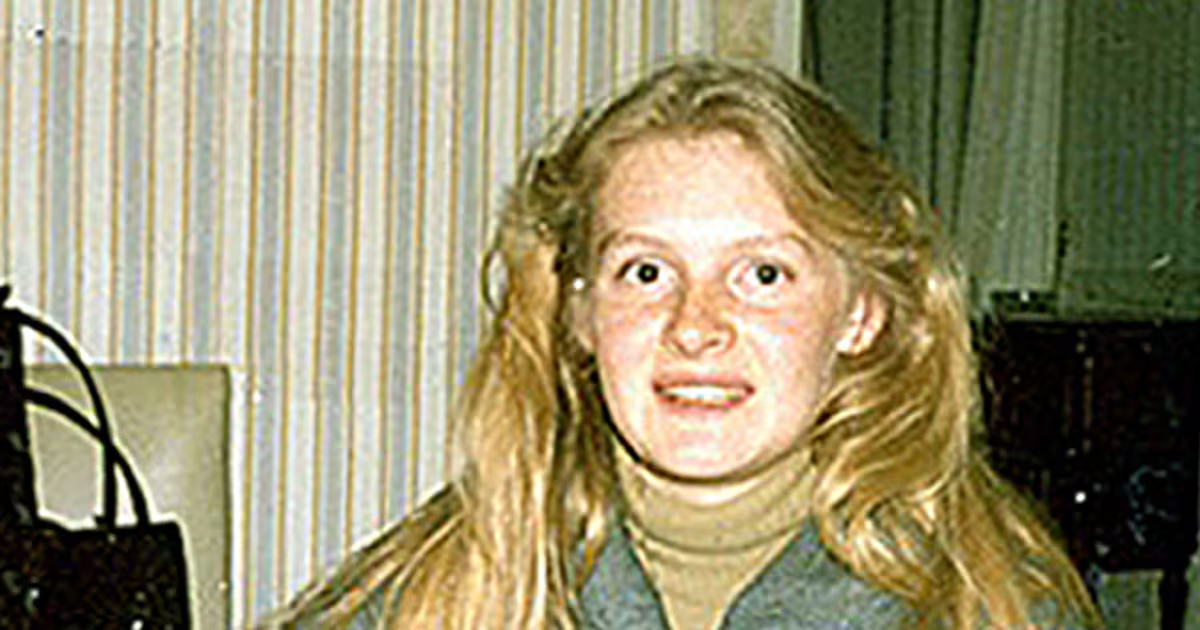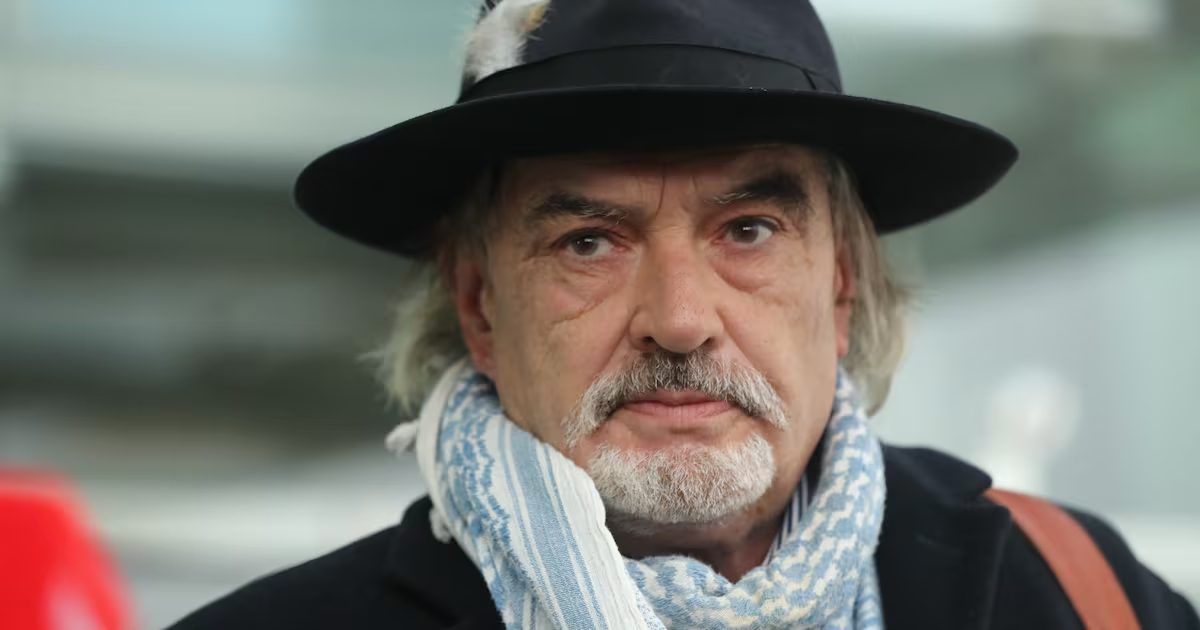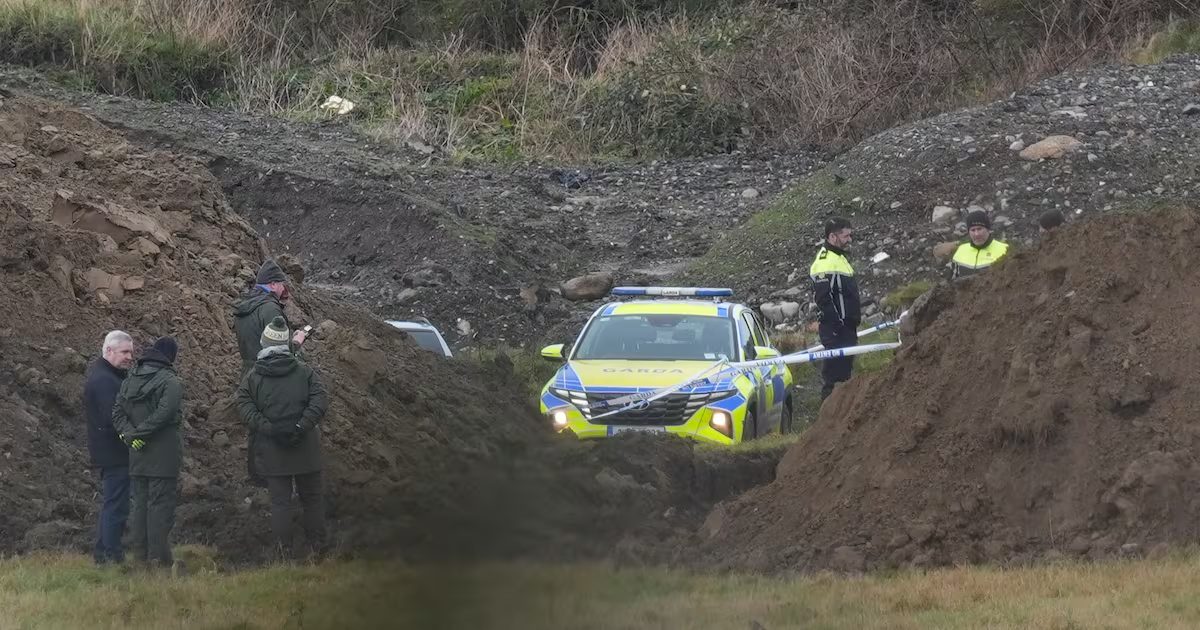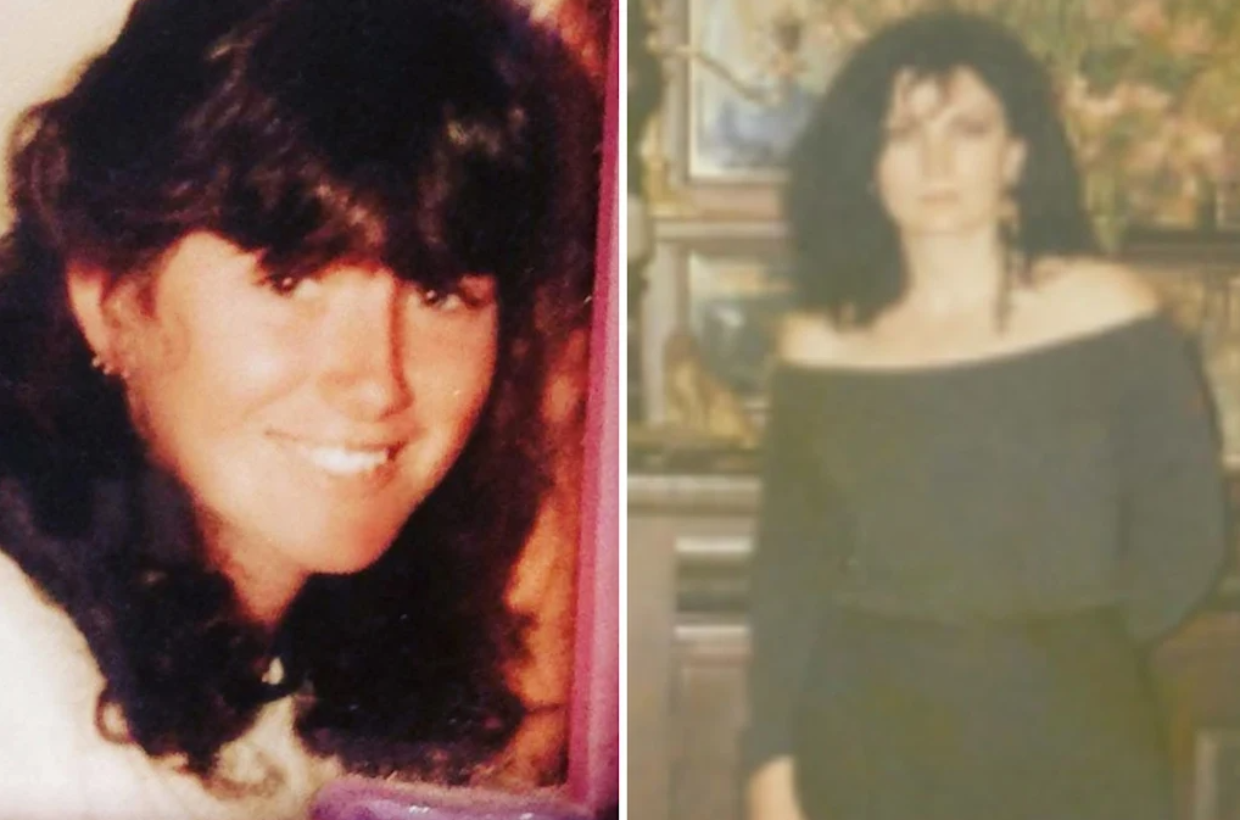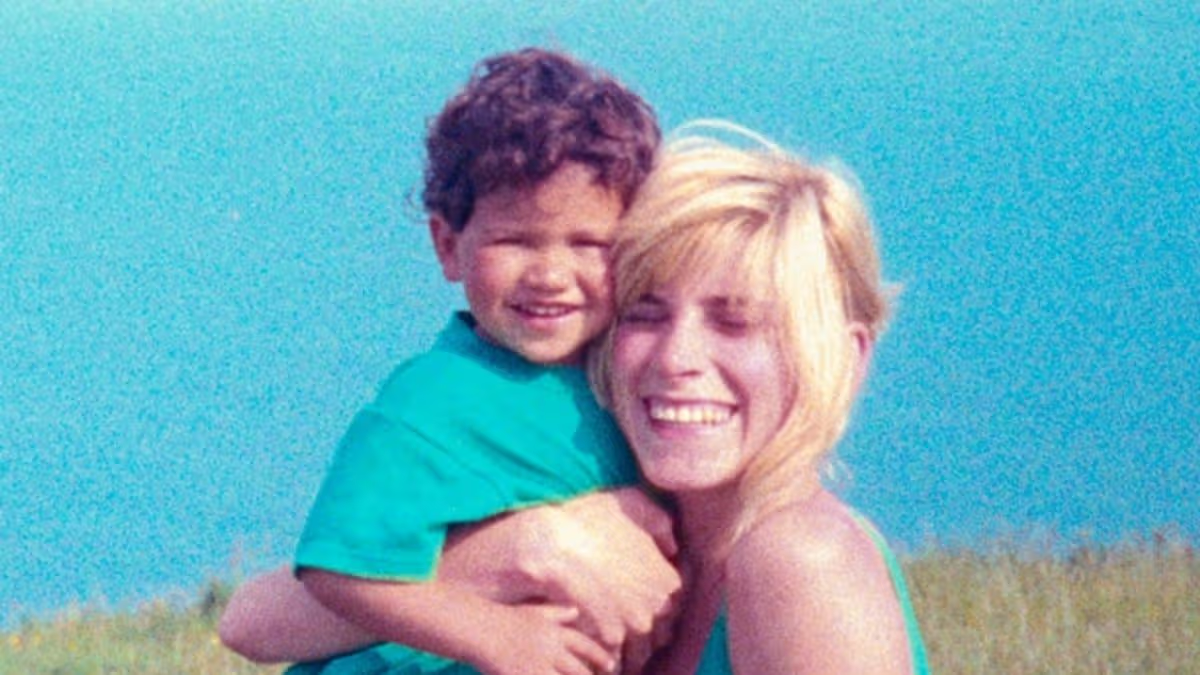
Gardaí investigating the murder of French film producer Sophie Toscan du Plantier in west Cork almost 30 years ago are turning to foreign police forces to try to identify DNA found on one of the dead woman’s boots.The Garda cold case team examining the case – headed by Det Supt Paul Murphy and Det Supt Joanne O’Brien – asked Forensic Science Ireland (FSI) to use a law enforcement treaty to check internationally if there was any match for the DNA.The Prum Convention, which includes both EU and non-EU member states, allows law enforcement agencies to exchange data on DNA, fingerprints and vehicle registration to investigate cross-border crime and terrorism.More than 20 countries – including Ireland, which has a database of just under 75,000 criminal DNA samples – have signed up to the international treaty allowing access to a database of more than 11 million DNA samples, including 7.4 million samples in France. A Garda source said FSI forwarded the details of the DNA profile found near an eyelet on the tongue of Toscan du Plantier’s right boot to forensic bodies in the other countries, but they have so far failed to find a DNA match.The badly beaten body of Toscan du Plantier, a 39-year-old mother of one, was found on the laneway leading to her isolated holiday home at Dreenane, Toormore, outside Schull in west Cork on the morning of December 23rd, 1996, by her neighbour, retired teacher Shirley Foster.The discovery led to a Garda investigation that twice arrested English journalist Ian Bailey, who was never charged in Ireland. He was later convicted in France in absentia in 2019 of the voluntary homicide of Toscan du Plantier. Bailey died in 2024.Bailey’s conviction in France followed an investigation involving French forensic scientists who came to Ireland in 2011 as part of a team dispatched by investigating magistrate, Judge Patrick Gachon.The French scientists were given access to the case exhibits, including the clothing that Toscan du Plantier was wearing on the night of her murder.[ Jeffrey Donaldson’s wife had listening device planted in car due to suspicion of affairOpens in new window ]The French police did not disclose whether they found anything in their forensic examination, but in May 2018, Bailey, the chief suspect in the case, revealed the French scientists had found what they described as “alien DNA” on one of the boots worn by Toscan du Plantier when she was murdered. Bailey, who repeatedly denied any involvement in the killing right up to his death on January 21st, 2024, told Cork’s 96FM in 2018 that among the items he had found when given access to the French file was a report of unidentified DNA on Toscan du Plantier’s boot.“I got all the forensic details. There were over 100 different blood samples collected at the scene – the vast majority of these were from Ms du Plantier (but) there was, apparently, according to the file, what was known as alien DNA – not her DNA,” said Bailey.Bailey said this “quite clearly” did not match his DNA because he had voluntarily given samples to gardaí on New Year’s Eve 1996 before his first arrest.The Garda Serious Crime Review Team began obtaining DNA samples from retired gardaí who served as scene-of-crime examiners or exhibits officers or who were present at Toscan du Plantier’s postmortem on December 24th, 1996, to rule out their DNA from the boot sample.It’s understood gardaí have obtained DNA samples from about half a dozen of the dozen people identified as having potentially come into contact with Toscan du Plantier’s body, clothing and footwear around the time that she was murdered, or afterwards.“We’ve had to approach family members of people who are deceased to obtain DNA samples – it’s proving slow work, but we are being painstakingly thorough – we are sending the samples to FSI but we haven’t got any match yet for the sample found by the French forensic team,” said one source.
Gardaí enlist international help to identify DNA found in Sophie Toscan du Plantier murder investigation
Unknown DNA was found on one of the dead woman’s boots
655 words~3 min read