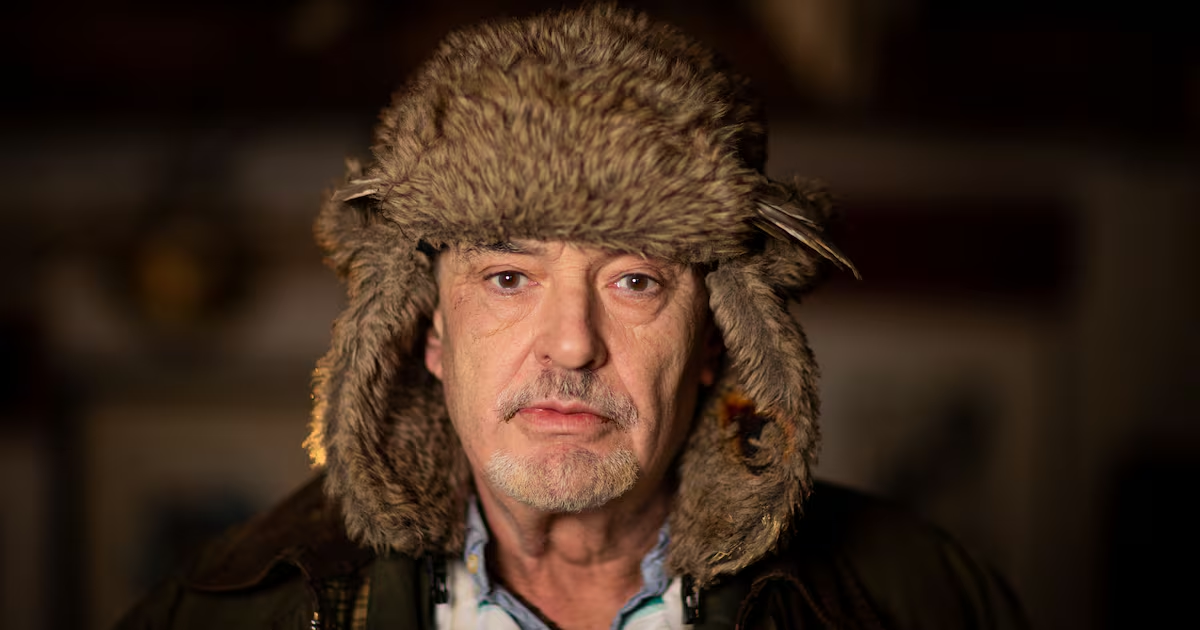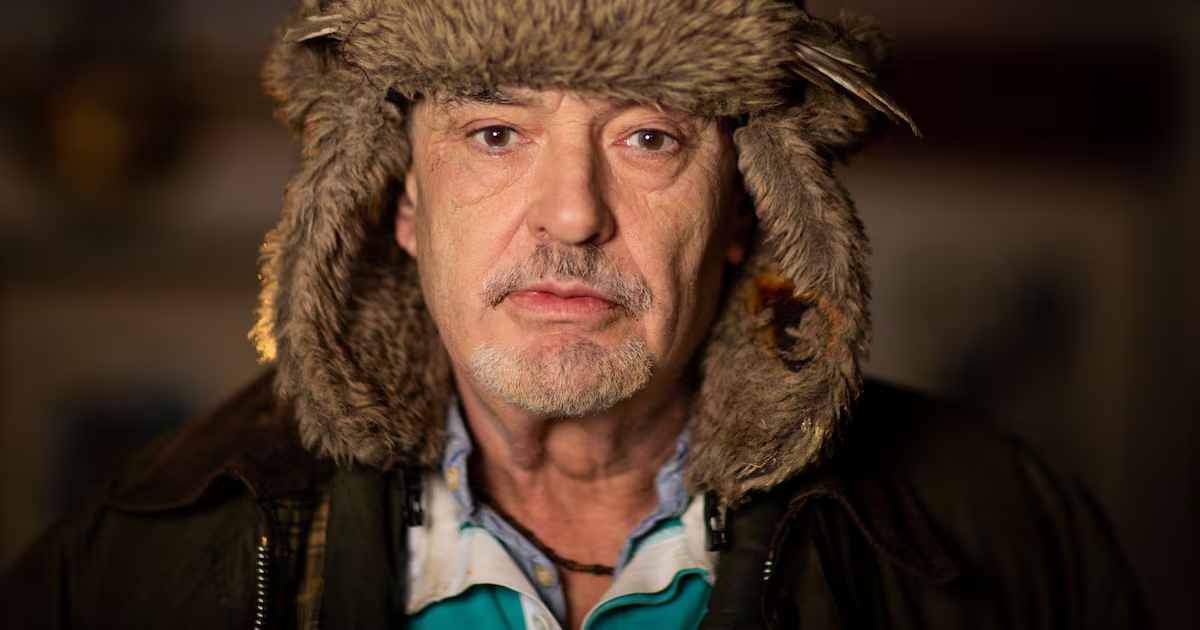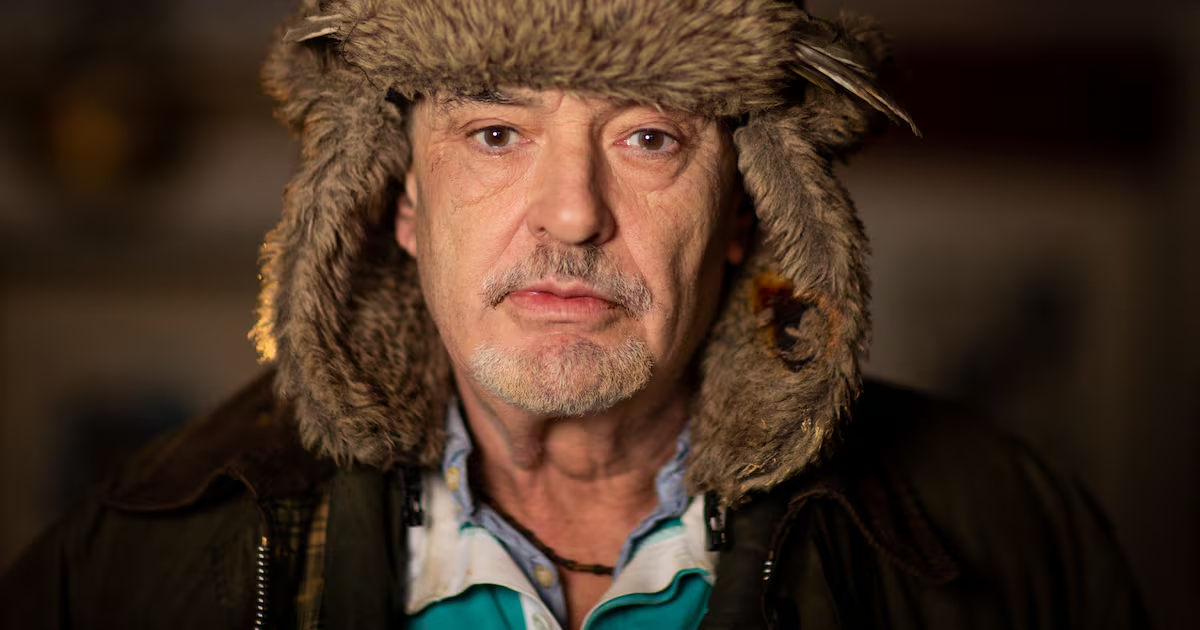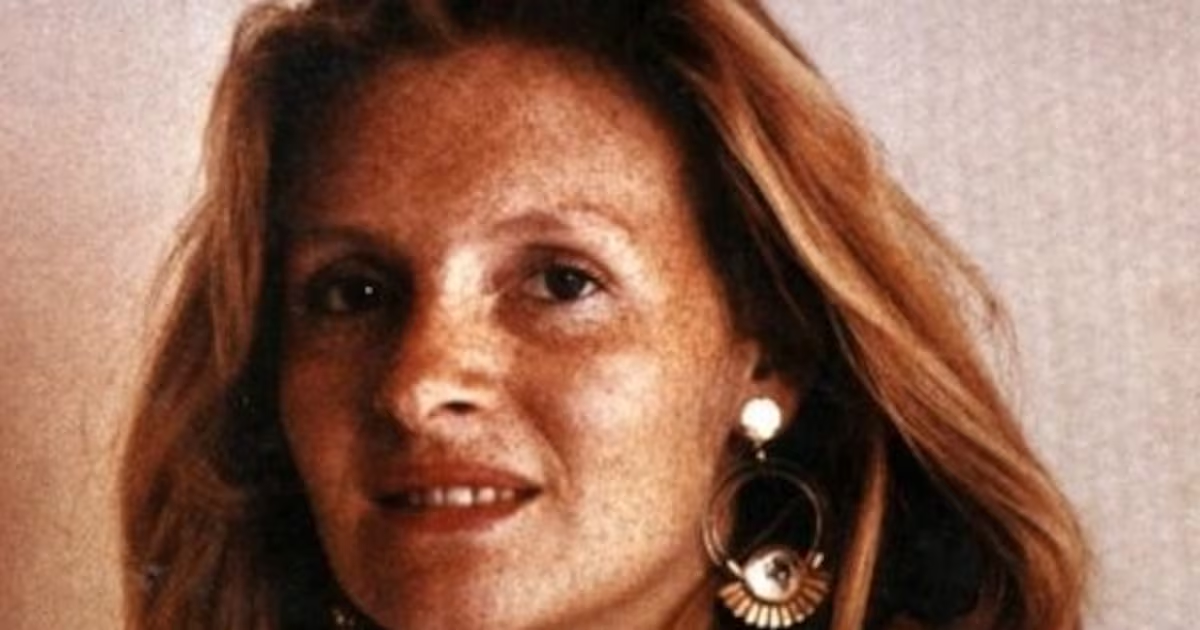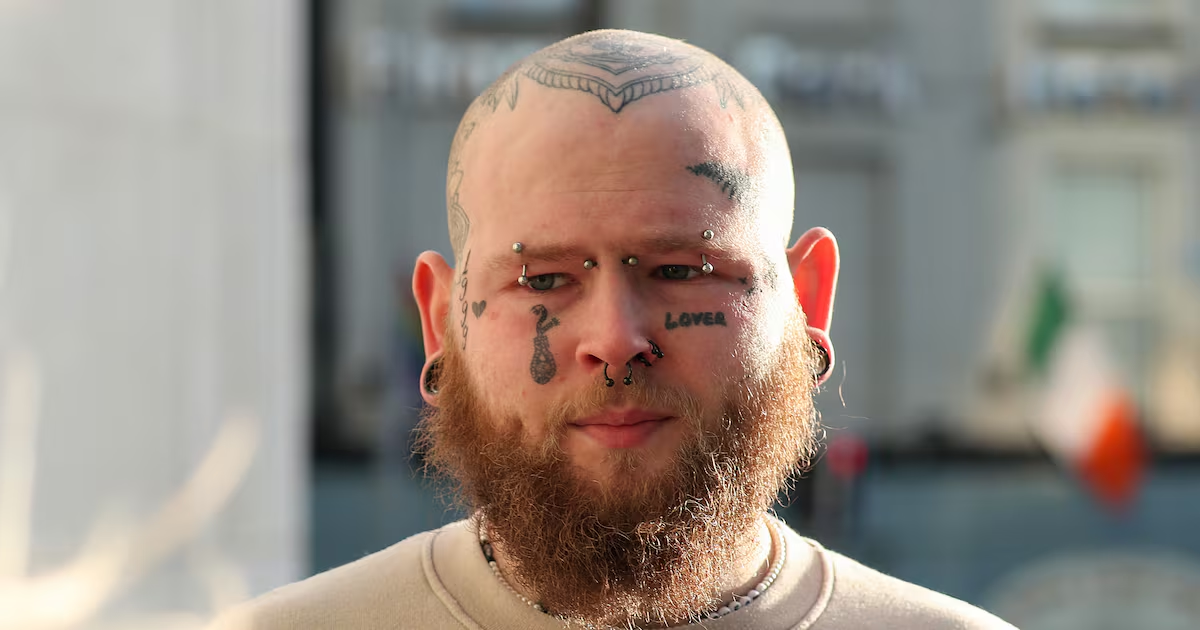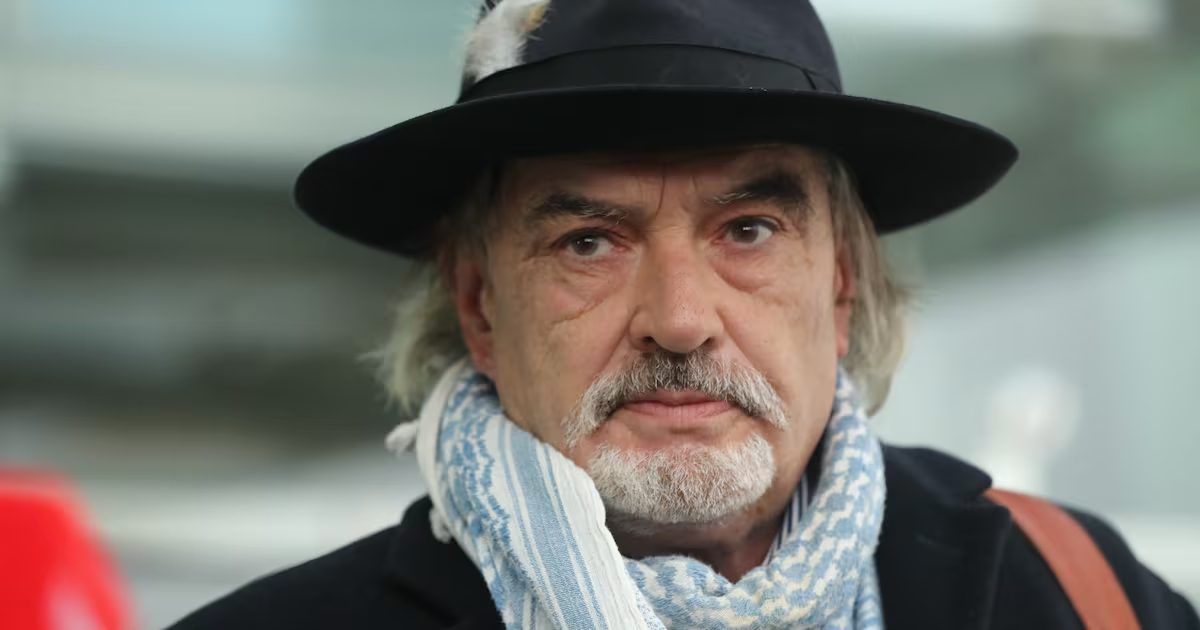
The solicitor at the Office of the Director of Public Prosecutions (DPP) who directed that Ian Bailey should not prosecuted for the murder of Sophie Toscan du Plantier has written to the French authorities urging them to overturn Bailey’s conviction in France for her murder.Robert Sheehan, who is now retired from the DPP’s office, wrote to the French ministry of justice earlier this month, urging authorities in France to reverse their conviction in light of the apparent inability of the Garda cold case team to forensically link Bailey to the murder.Bailey, who repeatedly denied the murder of Toscan du Plantier at her holiday home near Schull in west Cork in 1996, was convicted in absentia in 2019 by the Cour d’Assises in Paris of the voluntary homicide of the 39-year-old mother of one and sentenced to 25 years in jail. A former journalist, Bailey died in west Cork in 2024,Sheehan, who has been following the Garda cold case review of the original Garda investigation into the murder since its establishment in 2022, now believes that conviction by the three-judge Paris court should be reversed to maintain the integrity of the French judicial system.Sheehan told The Irish Times his decision to write to the French authorities was linked to two separate forensic elements of the Garda cold case review – the decision by gardaí to hire US DNA-gathering experts and the decision to check European-wide DNA databases.In July 2025, gardaí hired US DNA-harvesting expert M-Vac Systems to examine several exhibits from the murder scene, including the flat rock and large cavity block used to bludgeon Toscan du Plantier to death, as well as her dressing gown, leggings, vest and boots.The M Vac method involves spraying a sterile solution on to a surface, simultaneously vacuuming it up to break free any DNA containing cells for analysis. The resultant samples in the Toscan du Plantier case were sent to Forensic Science Ireland for analysis.Sophie Toscan du Plantier (39) was found murdered at her holiday home near Schull in 1996. Photograph: Family Handout/PA The second forensic development in the case was the decision by the Garda cold case team to check international DNA databases to see if they could find a match for an unidentified DNA sample found on Toscan du Plantier’s right boot by French forensic scientists in 2011.Utilising the Prum Convention, which allows police forces to exchange DNA data, gardaí have checked internationally with more than 11 million DNA samples held in more than 20 countries, but to date no match has been for the unidentified DNA sample on Toscan du Plantier’s boot.Gardaí are still awaiting the results of the M-Vac examination from FSI but Sheehan told The Irish Times that, given the M-Vac examination took place in July last year, it seems reasonable to assume that no forensic evidence was found to link Bailey to the murder.“Sophie Toscan du Plantier was bludgeoned to death in a frenzied attack where her killer would surely have left some forensic evidence and, given Ian Bailey was well on with drink that night, you would [think] that he would have left some DNA evidence at the scene if he was the killer,” he said.“It’s reasonable to assume that, almost 12 months on from the M-Vac process, that if Bailey’s DNA had been found by M-Vac at the scene, it would be made public by gardaí – but there has been no such disclosure or leak to the media, which one would expect if there was a Bailey link.“Add to that the fact the unidentified DNA found on Sophie’s boot – which we know isn’t Bailey’s – remains unidentified despite gardaí using the Prum Convention [and] it seems reasonable to assume that both developments, but particularly the M-Vac, are indicative of Bailey’s innocence.”[ Ian Bailey obituary: Suspect in one of the country’s most notorious murdersOpens in new window ]In his letter to the French authorities, Sheehan wrote that if they have not received the results of the cold case review DNA tests, they should seek them, as they “may fundamentally contradict the evidentiary basis of the French in-absentia conviction of the late Ian Bailey and provide precise statutory grounds for a formal judicial review under the French Code of Criminal Procedure.” He also pointed out to them that he was the public prosecutor who wrote an analysis of the Garda case, in which he detailed “the fundamental structural flaws, witness inconsistency and absolute lack of forensic links required to sustain a criminal prosecution against Ian Bailey”.He said his decision that there “was an insufficiency of credible admission evidence” to prosecute Bailey was “supported by at least two director[s] of public prosecutions, three independent senior counsel and numerous senior legal professionals within the Office of the DPP.”
Former DPP solicitor asks French authorities to overturn Ian Baily conviction for Sophie Toscan du Plantier murder
Robert Sheehan highlights inability of Garda cold case team to forensically link Bailey to west Cork murder
790 words~4 min read