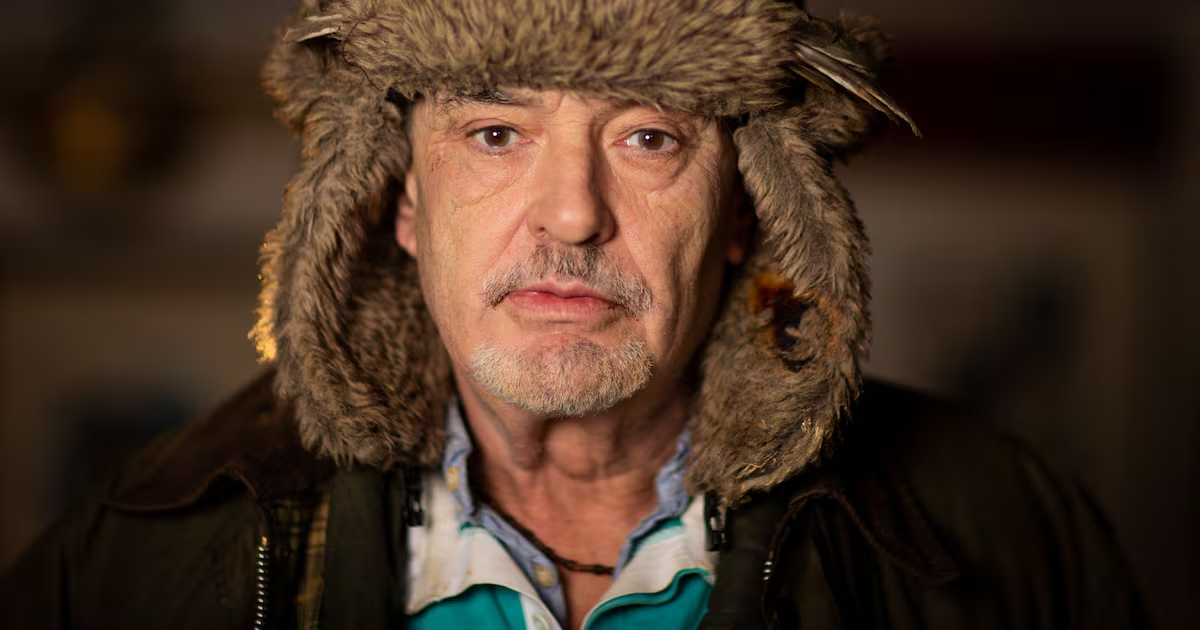
Ian Bailey’s solicitor has said he plans to explore the possibility of appealing Bailey’s conviction in France for Sophie Toscan du Plantier’s murder on the basis that key DNA evidence was excluded. Frank Buttimer told The Irish Times he plans to contact Bailey’s sister Kay Reynolds with a view to bringing an appeal on the grounds there may have been a miscarriage of justice in that key evidence, which he says would have exonerated his client, was excluded from the French trial.Bailey, who died in January 2024, was convicted in absentia by the Cours d’Assises in Paris in May 2019. He was sentenced to 25 years in jail for the voluntary homicide of mother of one Toscan du Plantier (39) at her holiday home near Schull in west Cork in December 1996. However, Buttimer said he had learned from a retired solicitor in the Director of Public Prosecution’s office, Robert Sheehan, about the possibility of lodging an appeal under French law against the conviction on the basis it represented a miscarriage of justice. “Robert Sheehan has written to the French Ministry of Justice in relation to Ian Bailey’s conviction in France in 2019 and he also sent me the correspondence, and his letter is highly informative as his research of the French criminal and legal system is extraordinary,” Buttimer said.“Under French law, a relative of a deceased person can seek to overturn a conviction if they believe that there has been a miscarriage of justice and I intend to contact Ian Bailey’s sister, Kay Reynolds in respect of what I believe indicates a miscarriage of justice in Ian’s case.”Sophie Toscan du Plantier (39) was found murdered at her holiday home near Schull in 1996. Photograph: Family Handout/PA Buttimer said neither he nor Bailey attended the four-day hearing in Paris in May 2019 nor did he obtain a transcript of it. However, it was his understanding the French trial made no reference to unidentified DNA found on the tongue of Toscan du Plantier’s right boot.“Ian Bailey learned in 2018 when he got the French file that French investigators found unidentified DNA on Madame Toscan du Plantier’s boot in 2011 when a team of French investigators came to Ireland and they were given access to the exhibits by An Garda Síochána,” Buttimer said “That DNA did not belong to Ian Bailey as it did not match the samples he had given gardaí in 1996/97, and it remains unidentified to this date and I’m not sure will it ever be identified, but it is a key piece of evidence and for it to be glossed over in the French trial is extraordinary.”Buttimer said Sheehan had very validly highlighted the issue of the unidentified boot DNA in his letter to the French authorities. In the correspondence he suggested it amounted to the basis for arguing that Bailey had been the victim of a miscarriage of justice by the French legal system.“If something like happened in Ireland the defence team would raise it immediately that a key piece of forensic evidence relating to a potentially meaningful third-party suspect was not disclosed so for it not to have happened calls into question the fairness of the French trial.”Buttimer said Sheehan was to be highly commended for continuing to highlight what he believes was an injustice to Bailey when he was convicted in absentia in Paris and it reflected well on the law officer who had directed in 2001 that Bailey should not be prosecuted in Ireland.
Ian Bailey’s solicitor to explore appealing French conviction for Toscan du Plantier’s murder
Frank Buttimer says he plans to examine potential miscarriage-of-justice grounds on basis that key DNA evidence was excluded from Paris trial
580 words~3 min read