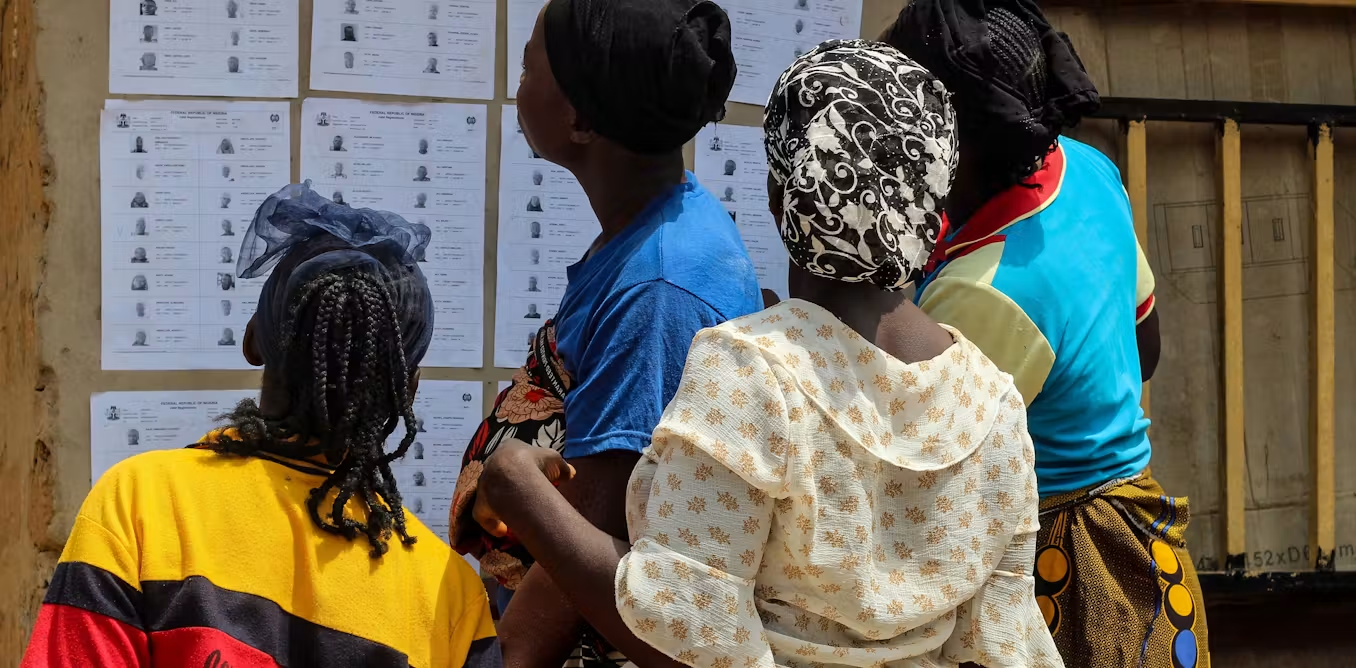
As Nigeria’s political season gathers momentum, women are steadily losing ground in governance, raising urgent questions about democracy, representation, and whether Africa’s largest country is deliberately silencing half its population, writes Adedayo Adejobi
In the loud theatre of Nigerian politics, where ambition crackles through television studios, party conventions, and crowded campaign grounds, one silence has become impossible to ignore. Women are steadily disappearing from the room.
Not entirely, of course. They still organise rallies, mobilise voters, anchor policy conversations, and often carry the emotional weight of communities through economic hardship and political instability. Yet when the ballots are counted and appointments announced, the distance between women’s contribution and women’s representation becomes painfully obvious.
Nigeria, Africa’s largest democracy and most populous black nation, now finds itself confronting an uncomfortable truth. At a time when many countries are widening political opportunities for women, the Nigerian political system appears to be moving backwards.
Female representation in Nigeria’s legislature has fallen sharply from 6.4 per cent in 2011 to roughly 4.4 per cent following the 2023 general elections. It is a decline that would be troubling anywhere, but in a nation of more than 200 million people, it feels particularly alarming.