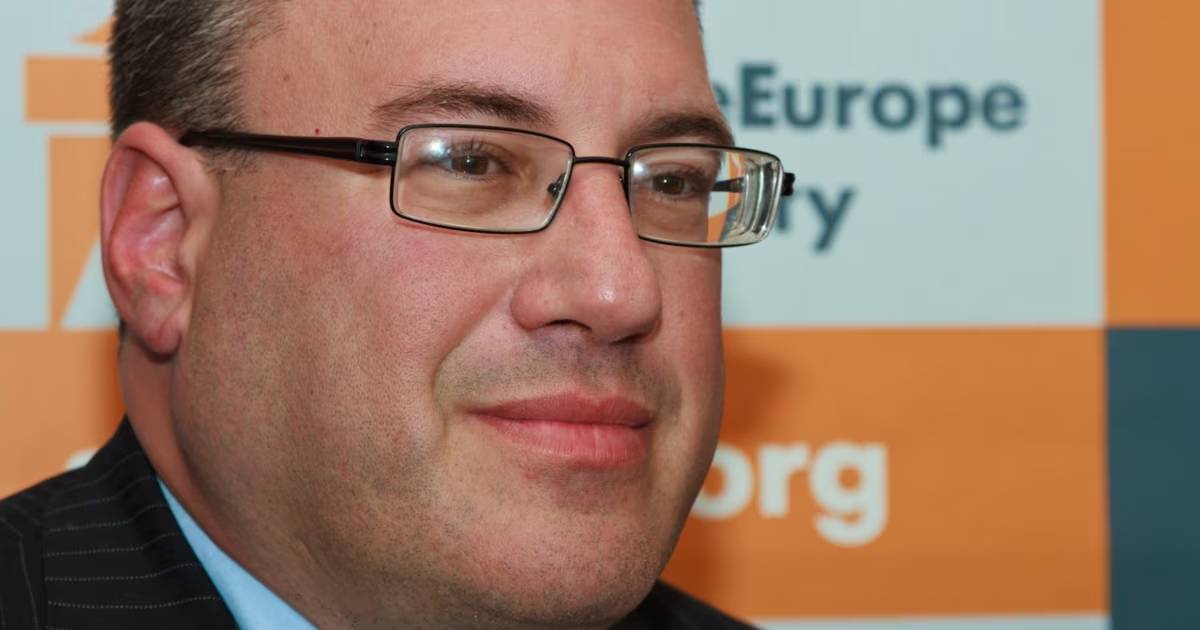
WASHINGTON -- As US President Donald Trump concluded a high-stakes Situation Room meeting on a possible Iran agreement, major questions remained open: Iran’s uranium enrichment, the fate of its nuclear stockpile, sanctions relief, and the reopening of the Strait of Hormuz.To understand where negotiations stand and whether diplomacy can still prevent another escalation, RFE/RL spoke with Ethan A. Goldrich, a veteran US diplomat who served under multiple administrations, most recently as Deputy Assistant Secretary of State overseeing Near Eastern affairs between 2021 and 2024.'Fundamentally Different Ideas'RFE/RL: US officials now say the cease-fire extension framework with Iran is close but not finalized. What is still blocking the deal, in your opinion?Ethan A. Goldrich: Even at the moment where President Trump is making a decision on whether to go forward with whatever the current version of the deal is or not, I think what has been blocking the deal ever since April 8, when the cease-fire took place, is that the US and Iran seem to have some fundamentally different ideas on what should or shouldn't be discussed at the moment.On the US side, President Trump has been very clear over and over again that Iran cannot have a nuclear weapon. On the Iranian side, they think that they have an inherent right to enrich uranium or to develop a nuclear capacity -- they claim not for a weapon. So in that respect, they have been very consistent in negotiations in saying that they're not ready to give the kinds of guarantees that the US wants to see on what they're doing with their nuclear capacity.
'Fundamentally Different Ideas' Cloud US-Iran Talks, Former Senior US Diplomat Says
To understand where Iran negotiations stand and whether diplomacy can still prevent escalation, RFE/RL spoke with Ethan A. Goldrich, a veteran US diplomat who served under multiple administrations, most recently as deputy assistant secretary of state overseeing Near Eastern affairs from 2021-24.
2,142 words~10 min read