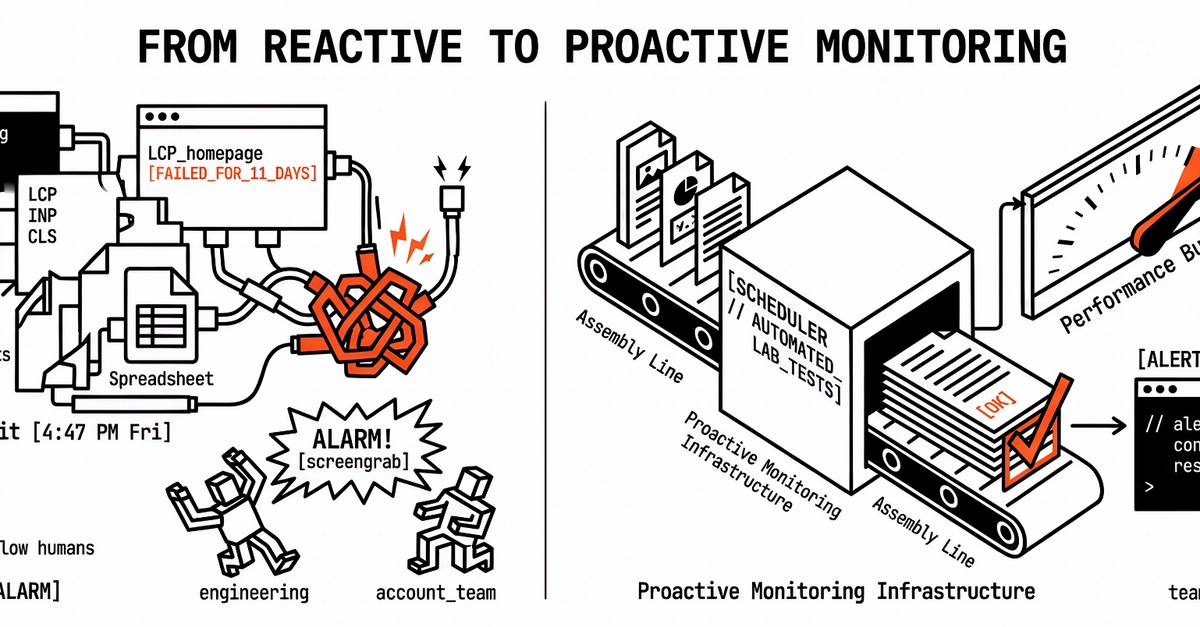
An account manager forwarded us a Search Console screenshot at 4:47 p.m. on a Friday. LCP on the homepage had been in the red for eleven days. Engineering had not been in the thread because nobody was assigned to watch the numbers until a sponsor noticed.
That is reactive performance monitoring in practice: fast tools, slow humans, and a calendar that only opens when someone else raises the alarm.
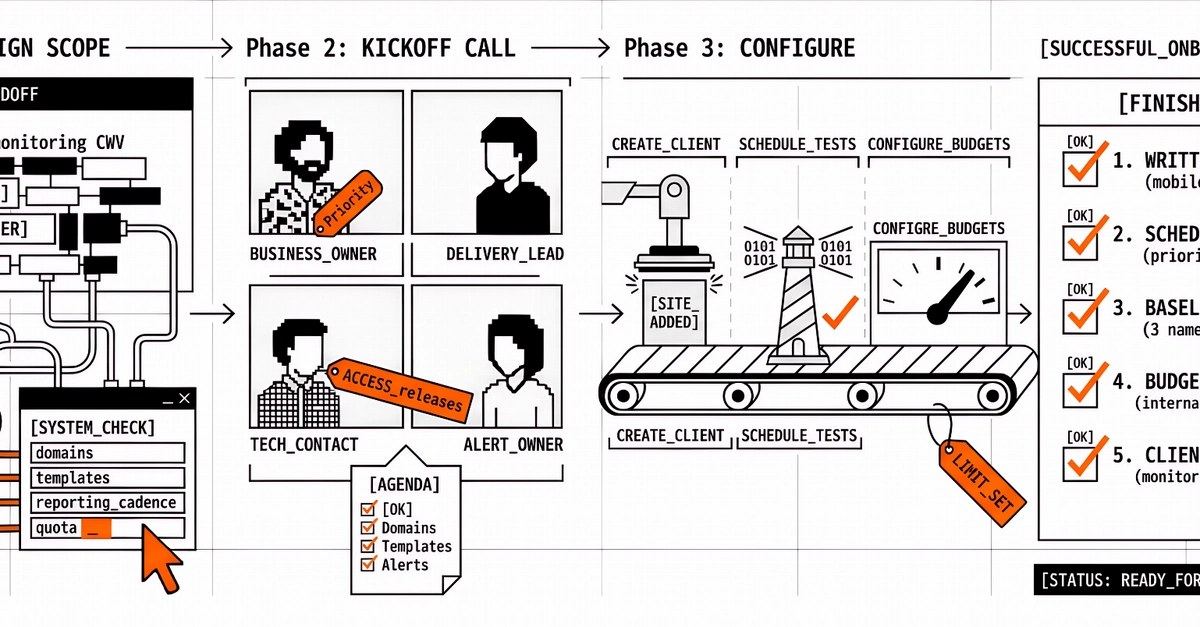
Proactive monitoring is the opposite shape. Scheduled lab tests run whether or not anyone remembered to open PageSpeed Insights. Performance budgets turn history into rules. Alerts fire when those rules break, with enough context to triage and enough restraint that people still read them. The word “smart” in product copy usually means the second part: alerts that match how teams actually work, not a louder siren.
This post is for agency leads who already automate some tests but still learn about regressions from client inboxes. We walk through what reactive looks like, what proactive requires, and how to wire alerts so they change behaviour instead of training everyone to mute the integration.
What reactive performance monitoring looks like on agency teams