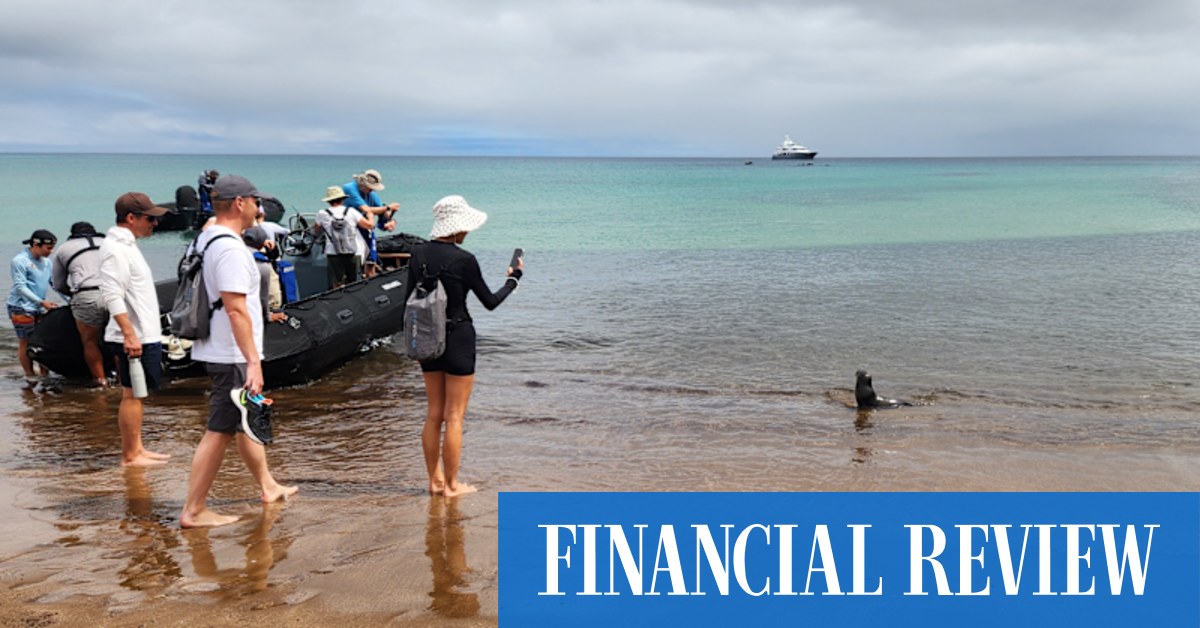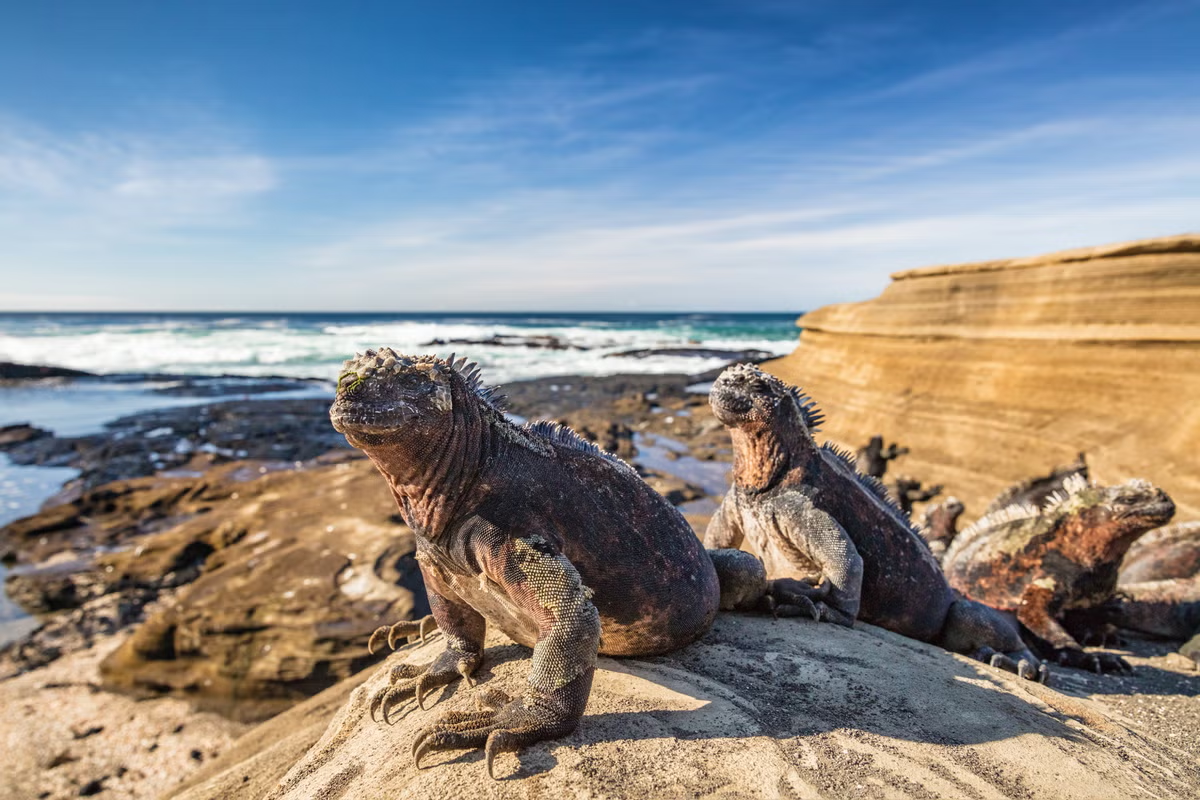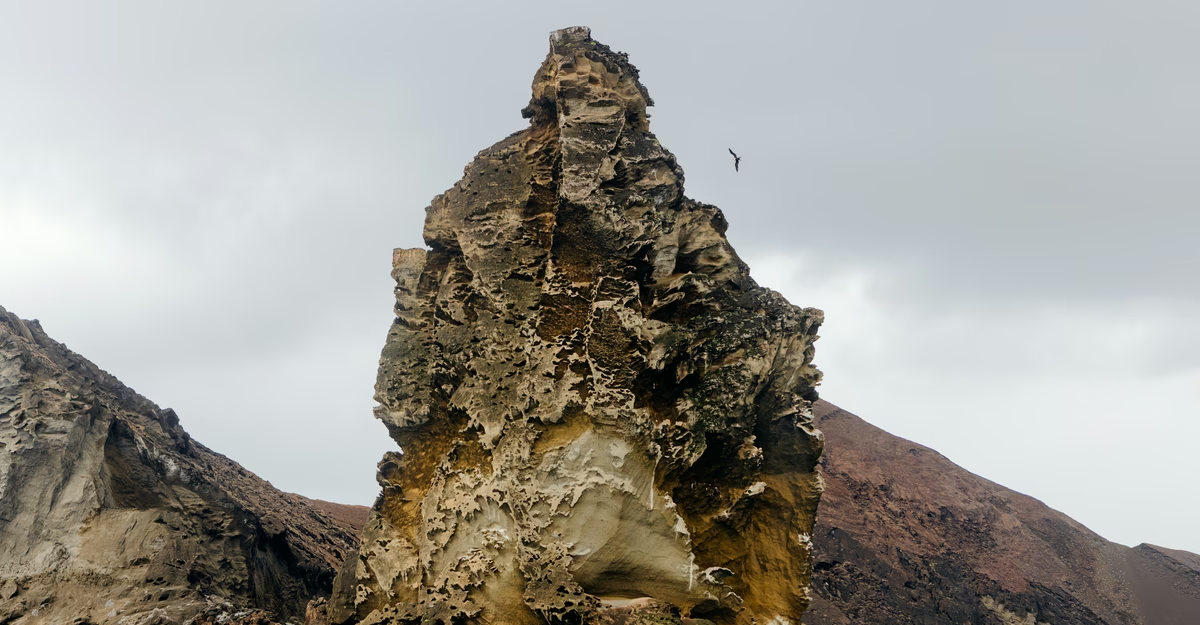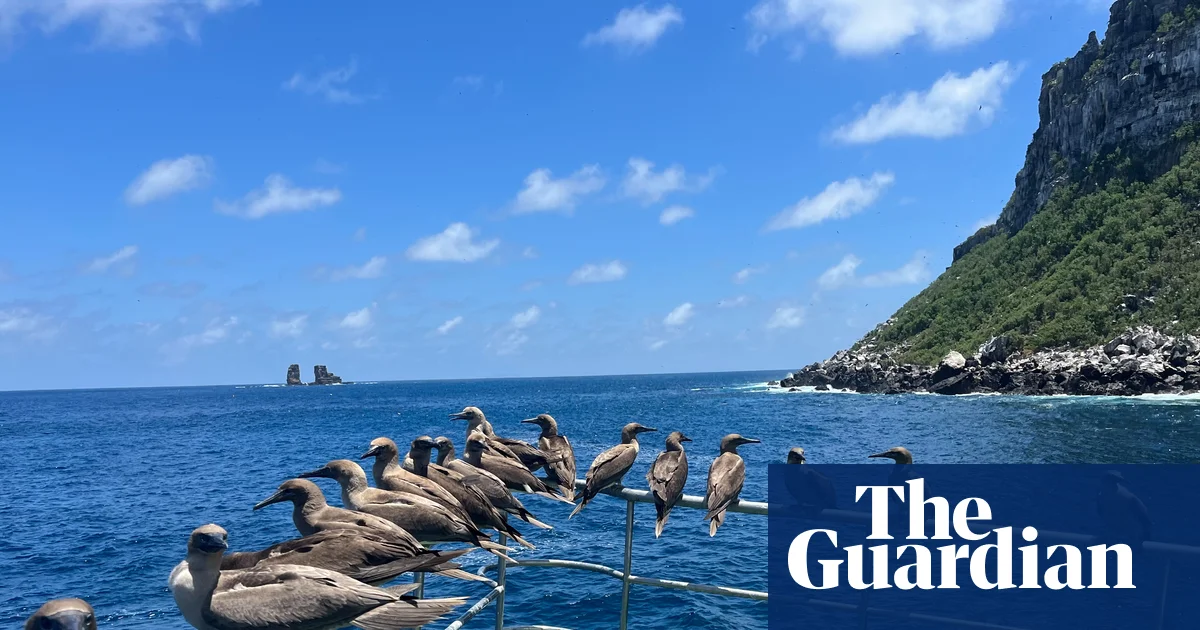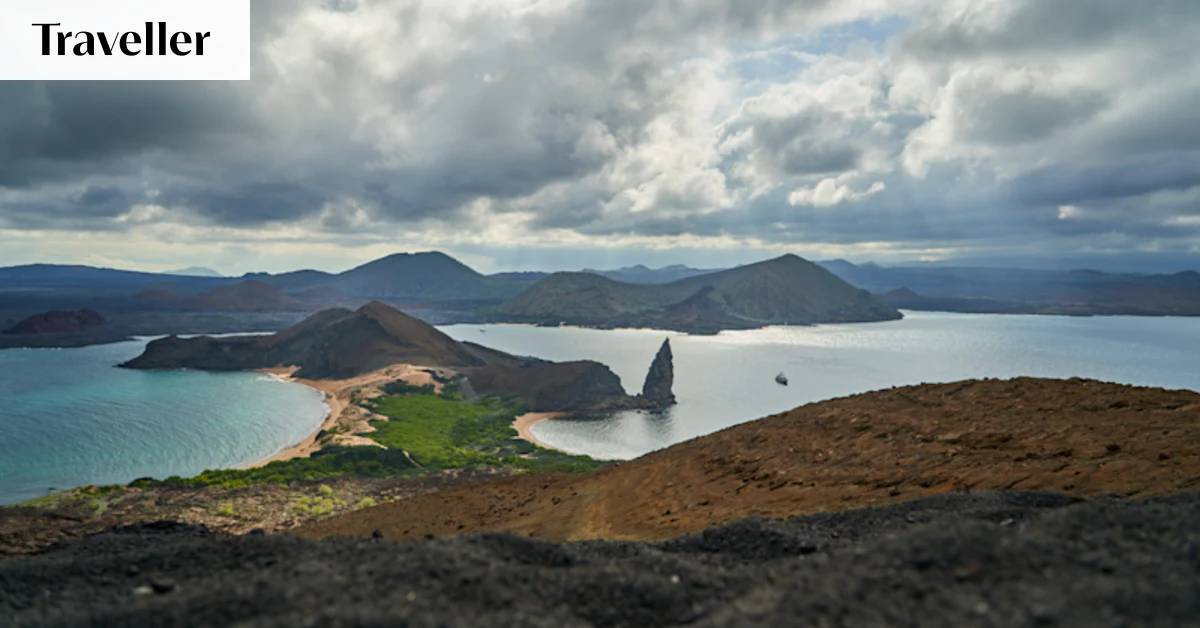
The heat is radiating in waves off the tarmac as the passengers from Quito leave the plane and head towards the airport terminal in Baltra, one of the only two airports that serve flights from mainland locations in the Galapagos. A huddle forms on the concrete path as the newly arrived visitors point excitedly at something and whip out their phones.My years of gainful employment as an investigative reporter, aka professional sticky-beak, doesn’t dissipate, even on the other side of the world. I am curious to see what all the fuss is about.Lying under an exotic cactus tree, the leaves of which are the size of dinner plates, is an iguana with more rolls of neck fat than King Henry VIII and sporting a similar self-satisfied regal smirk. But even His Majesty did not possess such extraordinary green lips.“Welcome to Galapagos” reads the wooden sign in English and Spanish on the nearby wharf where we were to wait for the Zodiac to take us to our yacht. Lolling underneath the sign, seemingly without a care in the world, is a pair of sea lions.By that very afternoon, on North Seymour Island, human population zero, I feel a twinge of embarrassment at my initial excited reaction at stepping around semi-conscious sea lions and sighting a single iguana enjoying the sun by the tarmac.Snorkelling is one of the absolute highlights of the trip. Sign up for the Traveller Deals newsletterGet exclusive travel deals delivered straight to your inbox. Sign up now.On North Seymour, the sea lions and the iguanas are plentiful. The latter was described by Charles Darwin as an “ugly animal” with a “singularly stupid appearance.” I beg to differ. These land iguanas are among the largest lizards in the world, and have a life-span of about 60 years. Their diet consists almost entirely of the most-unappetising looking prickly-pear cactus.On Espanola Island, the southernmost island in the archipelago, we encounter fabulously coloured marine iguanas. These are nicknamed the Christmas iguana because of their festive colours - mint-green faces, green legs and a long green spine which bristles with dangerous-looking spikes. This contrasts with a rust-red body and tail. The colours are at their most vibrant during the mating season, which runs from December to March.A fabulously coloured “Christmas” iguana.iStockBut back to North Seymour. As we walk across the barren island, we encounter the most astonishing sight. A black frigate bird with an enormous red balloon bulge at its throat. The inflated crimson pouch of one bird is so large it almost dwarfs its owner. Our guide says it’s the mating season for frigate birds and the males have a bright red sac on the throat, which they inflate like a balloon to attract females. The famous blue-footed boobies are everywhere, feeding chicks and dive-bombing for fish.A frigate bird in courting display in the Galapagos Islands.Getty ImagesToe to toe with the blue-footed booby.Near the cliffs, dozens of sea lions lie across the rocks, encrusted with gravel-like sand. Some hobble clumsily toward the water using all four flippers. None of the wildlife seems remotely concerned with our small group of curious spectators.As we sail from island to island, our on-board naturalist and guide, Edwin Alay, explains the geology, the wildlife and the commitment by the people of Ecuador to preserve this unique habitat. Hiking on the islands is strictly controlled for ecological reasons. You can’t wander off by yourself, and you have to be accompanied at all times by a certified guide.&Beyond’s Galapagos Explorer has four decks and capacity for 12 guests.
Incredible landscapes and wildlife, but a murder mystery piqued my interest in this paradise
It was already a utopia for the animals that live here, but an attempt by Europeans to create a human paradise went horribly wrong.
2,132 words~10 min read