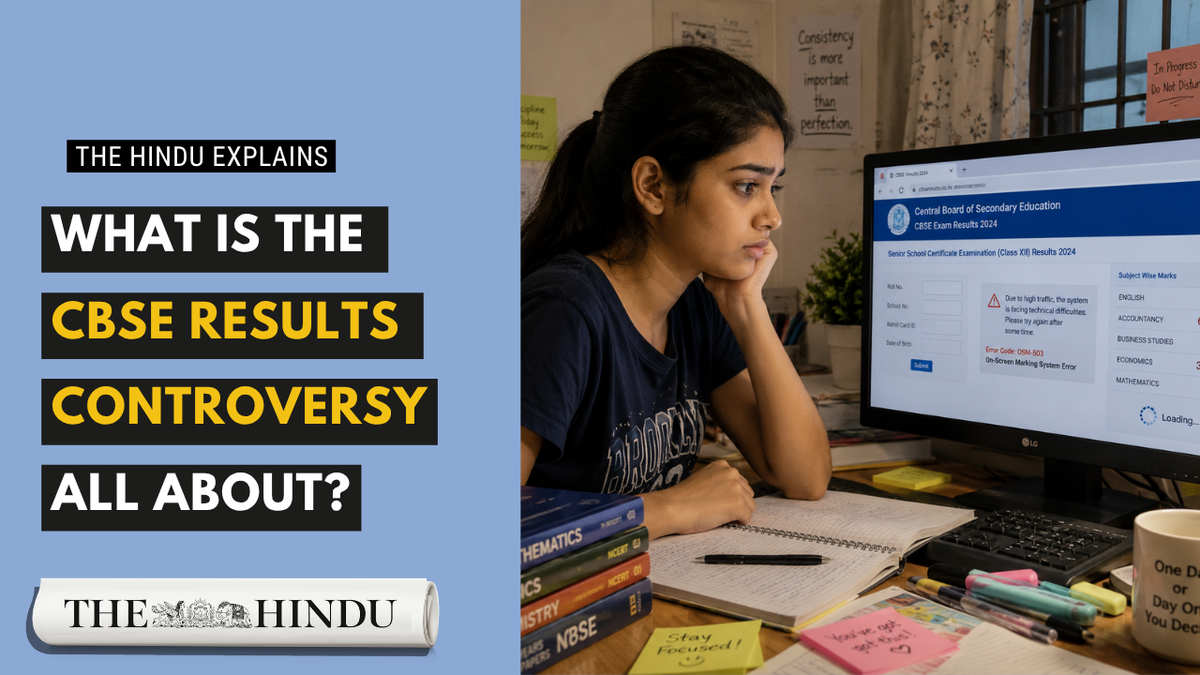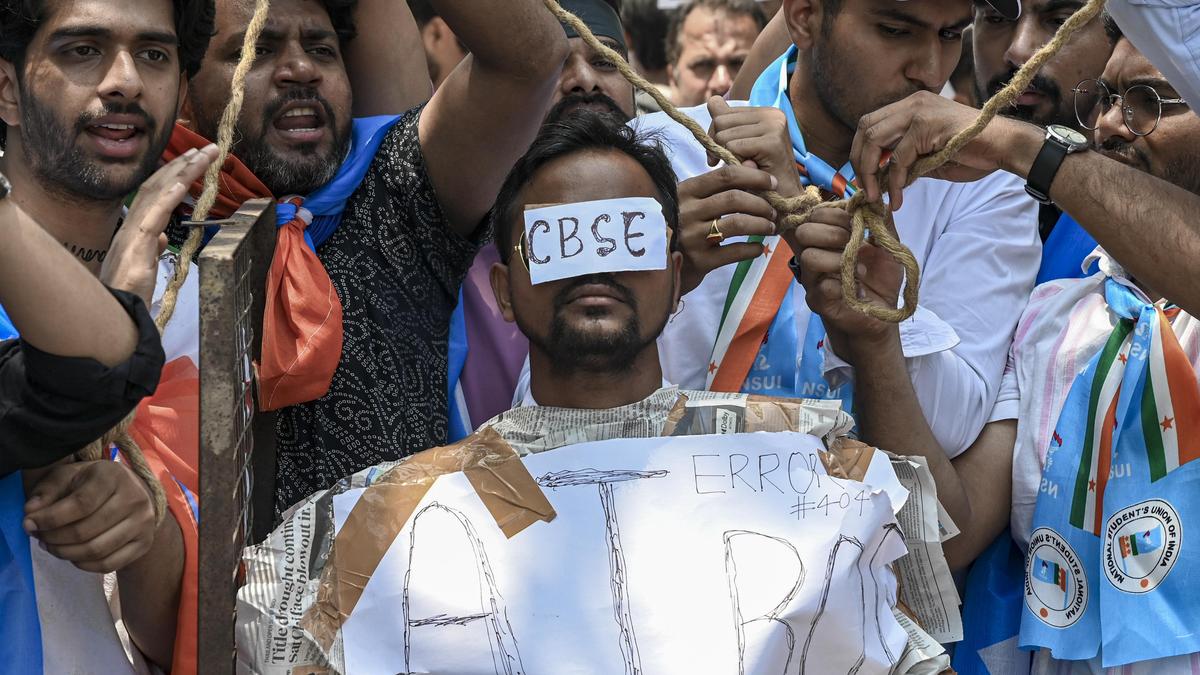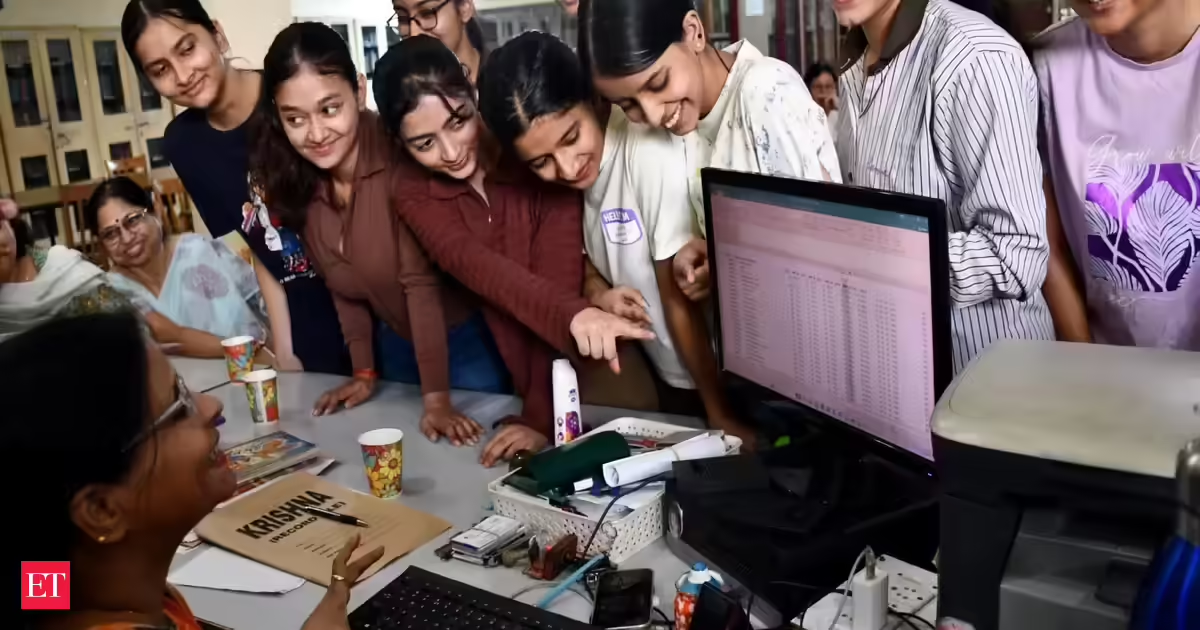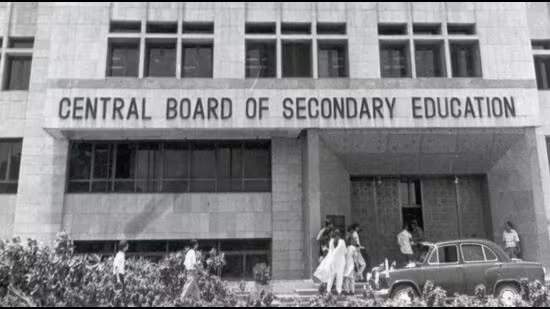
When Class 12 results for the Central Board of Secondary Education (CBSE) were declared on May 13, the pass percentage was at its lowest in seven years. Some explained the drop as the outcome of a more transparent new evaluation system — on-screen marking of answer scripts, deployed for the first time for all 1.76 million students who appeared. Slowly, however, it emerged that the system was badly broken. Students reported blurred and truncated scans, scripts uploaded under the wrong roll numbers, and answers left unmarked; evaluators encountered copies where hands, water bottles, and pens appeared in the frame alongside answer sheets, as though photographed in a hurry. Many teachers pressed into service as online examiners had not received adequate preparation for the platform.Why CBSE chose to persist with the rushed timeline is yet to be adequately explained. As the controversy grew with each new disclosure, the board’s response followed the same templates: defend the decision, describe the scale of failure as within acceptable parameters, or simply deny the existence of a problem. (HT Archive)It emerged this week that CBSE’s regional offices had sent unsigned messages to all school principals urging them to make social media posts defending the system, complete with a word-for-word script. The document leaves little doubt about CBSE’s priorities: managing perceptions of the failure, not addressing it. The same instinct runs through the rollout’s origins. With barely three months between the qualification of a vendor — as late as November — and the commencement of examinations in February, the procurement record tells its own story. Two rounds failed before a bidder qualified; CBSE secured one only after relaxing quality requirements — lowering minimum scanning resolution, dropping the requirement for specialised scanners, and reducing the software quality certification demanded of vendors. The same tender imposed aggressive penalties for scanning delays. In other words, quality floor lowered, and speed pressure tightened. Members of CBSE’s governing body had recommended wider pilot projects before any full deployment. Teachers who participated in a two-day dry run made the same case, warning the board it needed one to two more years. Neither recommendation was heeded.Why CBSE chose to persist with the rushed timeline is yet to be adequately explained. As the controversy grew with each new disclosure — minutes of its own governing body recommending the rollout be deferred, security vulnerabilities in the portal, the social media directive to principles — the board’s response followed the same templates: defend the decision, describe the scale of failure as within acceptable parameters, or simply deny the existence of a problem. On the procurement failures, a senior official described the specification changes as “correcting shortcomings” in line with government procurement rules. On the toolkit, the board denied having issued any instruction.It is hard not to conclude that this is what the education bureaucracy optimises for: The announcement, not the outcome. Curriculum revisions, infrastructure inaugurations, digital modernisations — each generates a headline, a date, a photograph. The work that generates none of these — sound examinations, reliable learning materials, thorough testing and impact assessment — receives no comparable urgency. A board examination that functions produces no news; one that fails produces a flood of revaluation requests and, eventually, a social media toolkit. NCERT textbooks have drawn persistent criticism for the quality of their lesson content; the response has been reviews and committees. The system is practiced at handling the appearance of failure. Addressing its cause requires more painstaking work, and capacities it has not yet built.
A textbook case of failure
The CBSE toolkit is a showpiece of the education bureaucracy’s failings
580 words~3 min read