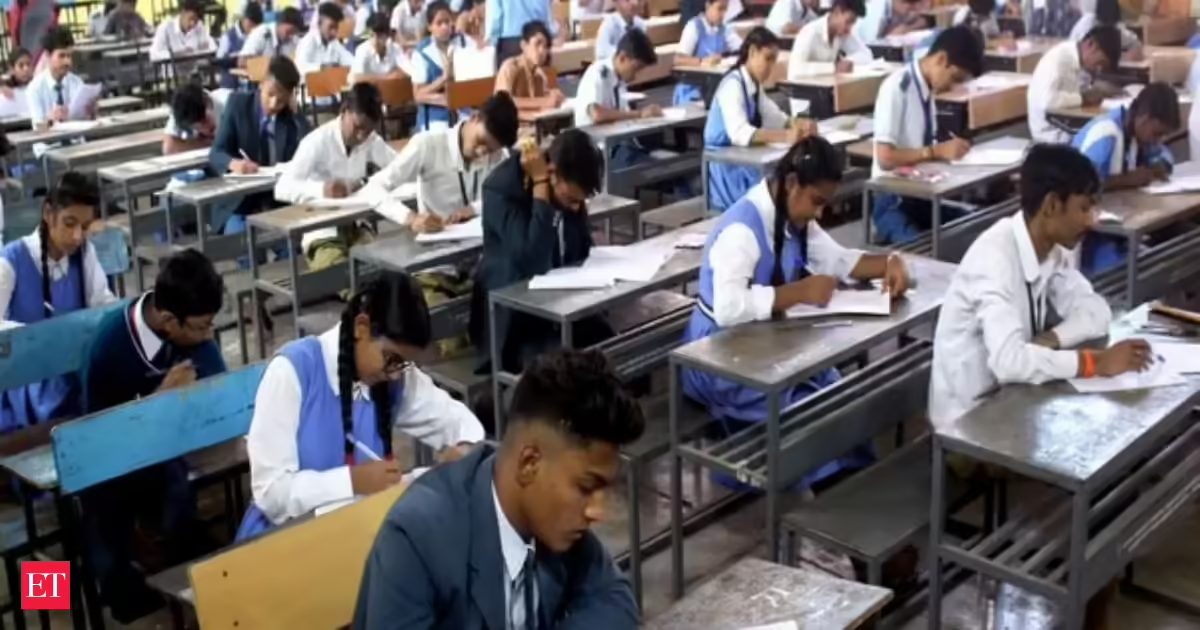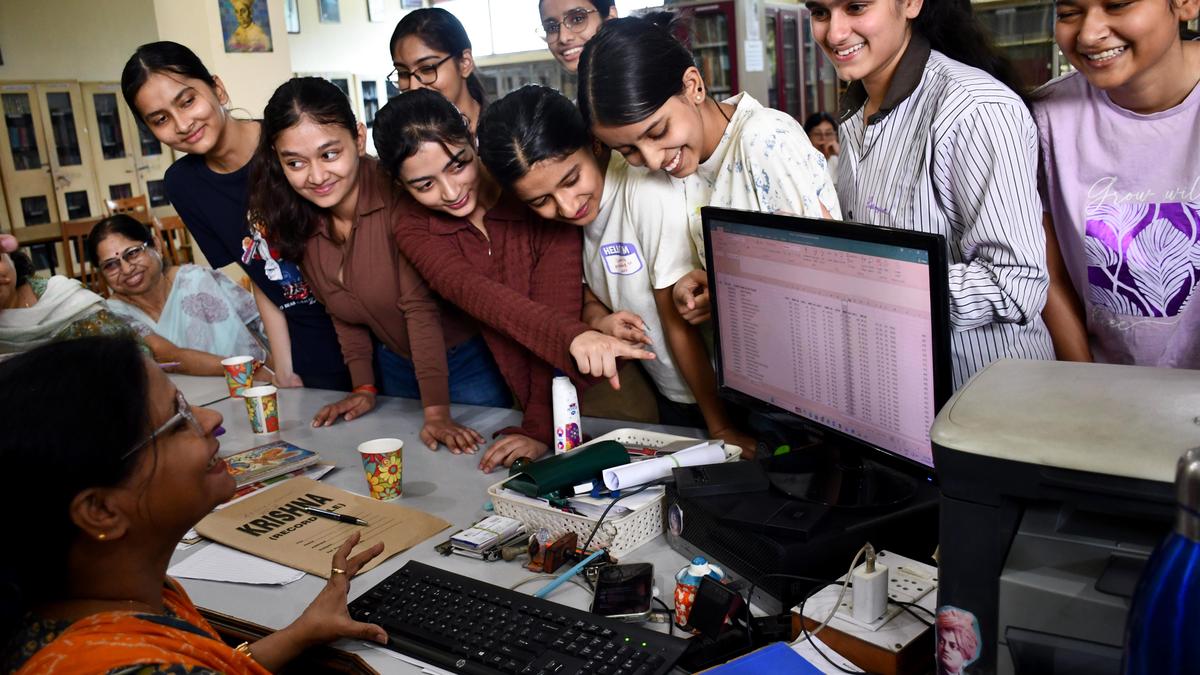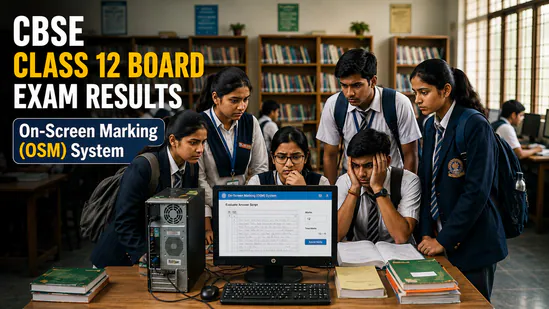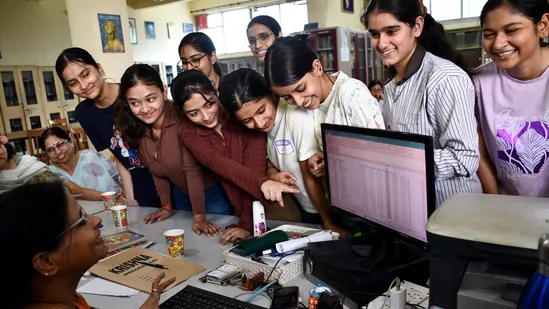
Defending its newly introduced on-screen marking (OSM) system amid criticism over a sharp fall in Class 12 results, officials in the Central Board of Secondary Education and Union ministry of education on Sunday said the technology-driven evaluation process ensured transparent and objective assessment, even as experts and teachers pointed to broader structural shifts in assessment patterns, post-pandemic normalisation of scores, and changing student priorities amid the rise of entrance examinations such as the Common University Entrance Test as factors behind the board’s lowest pass percentage in seven years.CBSE defends OSM system in boards as pass percentage dipsThe board’s overall Class 12 pass percentage fell 3.19 percentage points to 85.20%, down from 88.39% last year, marking the lowest since 2019, when the pass percentage stood at 83.40%. The decline came in the first year of CBSE’s full-fledged OSM system for evaluating Class 12 answer sheets.Under OSM, answer scripts were scanned and uploaded to a secure digital portal where teachers assessed them on computer screens, entered marks digitally and annotated responses online, while totals were auto-calculated to eliminate human error. CBSE evaluated 9,866,622 answer books digitally, while 13,583 copies were checked manually because repeated scanning failed to produce legible images.Addressing a press conference on Sunday, secretary, department of school education and literacy (DoSEL), Sanjay Kumar said variations in Class 12 results had existed since 2019 and that Covid-era relaxations had temporarily inflated pass percentages.“The system is now stabilising and the marking process has become far more objective,” Kumar said, adding that the evaluation process itself had not changed except that answer scripts were now assessed on digital screens instead of physically.CBSE chairperson Rahul Singh said nearly 300,000 teachers logged into the CBSE portal for training, while 77,000 teachers participated in evaluation. “Only teachers evaluated each copy in the OSM and no AI was used in the evaluation of answer scripts,” Singh said.According to Singh, CBSE conducted a dry run on January 20-21 across five schools involving 100 teachers before rolling out demonstrations, webinars and practice sessions on previous years’ answer scripts ahead of the March 7 evaluation process.Even as some principals and students questioned whether evaluators were adequately trained for the digital system, experts and officials said the decline could not be attributed to OSM alone.A Delhi-based school principal, requesting anonymity, said the rollout appeared rushed and many teachers, particularly in government schools, were unfamiliar with the technology. “Ideally, OSM should have been implemented next year after wider preparation,” the principal said.Former director of elementary education in the Ministry of Human Resource Development (MHRD), Amit Kaushik described the result dip as part of a “transition phase” rather than any decline in the relevance of board examinations, dismissing suggestions that CUET had made students take boards less seriously.He said the trend reflected reforms underway since 2018, when CBSE began gradually introducing higher-order thinking skills (HOTS) questions and reducing reliance on rote memorisation. This was followed by the Covid years (2020–22), when relaxed evaluation practices pushed pass percentages unusually high, and now the move to OSM and competency-based assessment under the framework of National Education Policy (NEP) 2020.“Assessment may be changing faster than classroom teaching,” Kaushik said, adding that board exams now test conceptual understanding and written explanation unlike CUET’s objective and MCQ-based format.Dr Manisha Kaushik, managing director, GAV International school, Gurugram, said students today prepare within a far more layered academic environment balancing board exams alongside competitive entrance preparation.“Board assessments increasingly test analytical ability, conceptual understanding and written interpretation, while many entrance tests prioritise speed and accuracy in objective responses,” she said.Teachers involved in evaluation echoed similar concerns.A Delhi government school teacher who evaluated Class 12 answer books said the lower pass percentage reflected how students attempted descriptive analytical papers rather than flaws in OSM. “Many students are more tuned to objective-style preparation because of CUET and other entrance exams. But board papers require developed written responses and reasoning,” the teacher said.Another Delhi government school teacher said students increasingly viewed entrance examinations as more critical for college admissions. “With admissions increasingly tied to CUET, some students shift serious preparation toward entrance exams. That changes their engagement with board-specific writing practice,” the teacher said.Former CBSE chairperson Ashok Ganguly called the fall “a healthy correction after years of marks inflation.” He said stricter evaluation, OSM and a larger share of competency-based and HOTS questions had produced a more realistic picture of student performance.“CUET is objective-based and tests recall under speed pressure. Board exams require students to analyse, synthesise and explain concepts in writing. They demand entirely different preparation,” Ganguly said.The shift aligns with NEP 2020, which calls for moving away from “summative assessment that encourages today’s coaching culture” toward “regular and formative assessment” that is “more competency-based” and tests “analysis, critical thinking and conceptual clarity.”CBSE began introducing competency-based questions in 2021 and has steadily increased their share to 50% this year, according to people aware of the development. Competency-based questions test application of concepts in unfamiliar situations, while HOTS questions require students to analyse, infer and evaluate rather than reproduce memorised answers.Some evaluators also said OSM reduced regional leniency that existed under manual checking. “Under OSM, copies are digitally distributed across regions, reducing local variation in marking patterns,” said a person familiar with the process.The decline in pass percentage was reflected across regions. Patna recorded the sharpest fall of 8.41 percentage points, dropping from 82.86% in 2025 to 74.45% this year, while Prayagraj declined by 7.10 percentage points to 72.43%. Vijayawada fell from 99.60% to 92.77%, Panchkula from 91.17% to 85.73%, and even top-performing Thiruvananthapuram dropped from 99.32% to 95.62%.Some students, however, remained unconvinced that OSM worked smoothly.Rashi Mishra, who appeared for the 2026 exams, said she had expected “at least 80%” but scored 74%.“CUET is mostly MCQ-based and tests quick recall, while CBSE board exams require written answers that test understanding and explanation,” she said. “Even after studying seriously for Class 12, I found CUET difficult because the question pattern is entirely different.”Asked whether the government was considering giving board marks weightage in college admissions alongside entrance scores, Sanjay Kumar said: “It is a policy issue and we are not discussing it today.”
CBSE defends OSM system in boards as pass percentage dips
CBSE defends its new OSM system amid a drop in Class 12 pass rates, attributing the decline to broader changes in assessment and student focus. | India News
1,019 words~5 min read