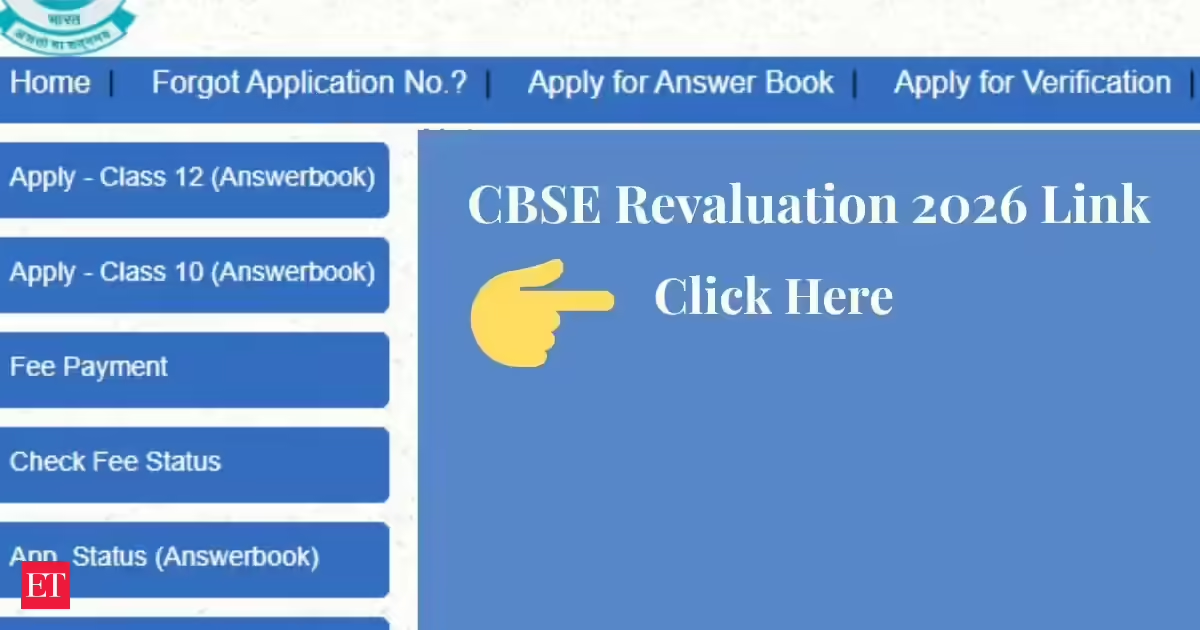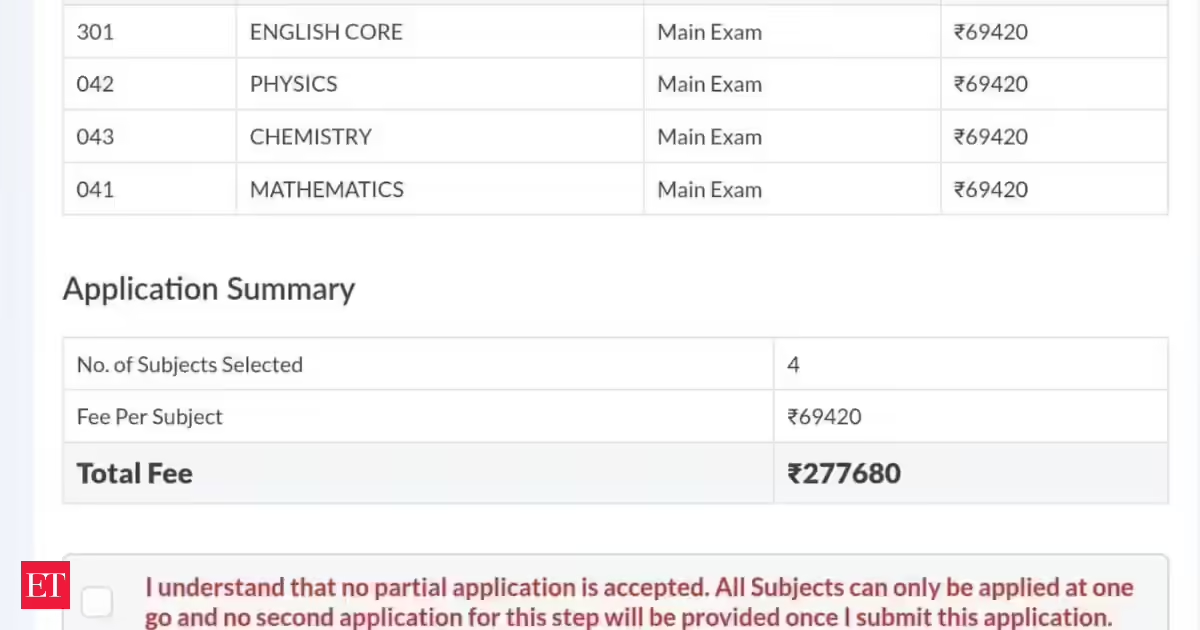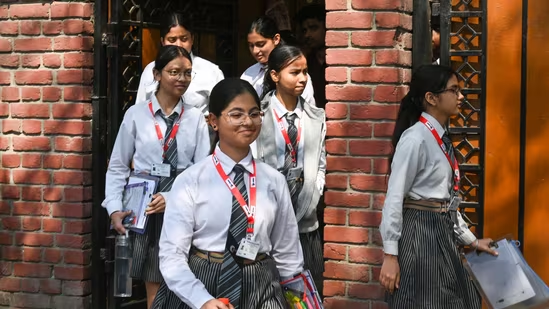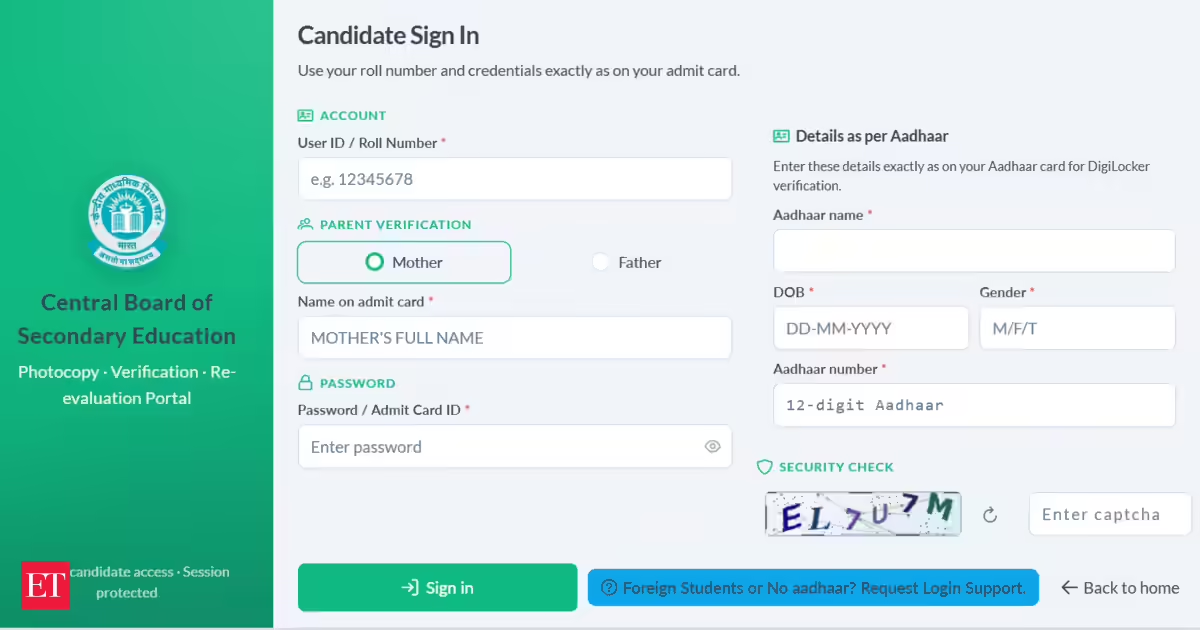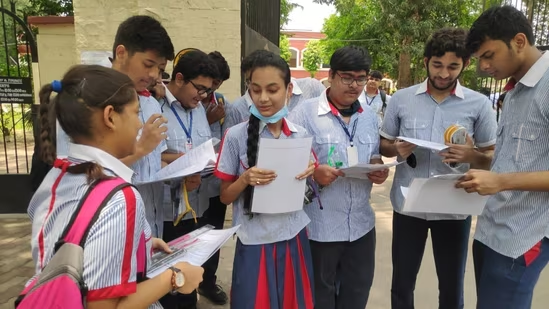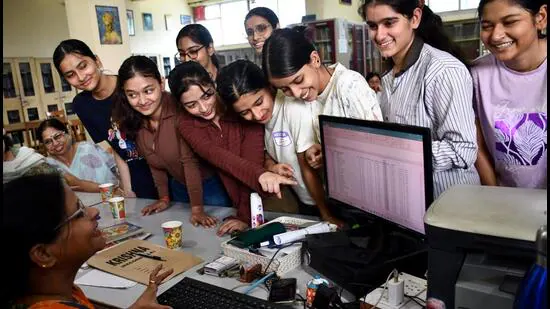
Amid anxiety among students over this year’s Class 12 results evaluated through the new on-screen marking (OSM) system, the Central Board of Secondary Education (CBSE) on Sunday reduced post-result re-evaluation charges and promised full refunds if marks increase after review.Class 12 students can apply for re-evaluation from May 19 to May 22. (ANI)Addressing a press conference on Sunday, Sanjay Kumar, secretary, department of school education and literacy (DoSEL) said the move was aimed at reassuring students and ensuring “no child feels, for any reason whatsoever, that they have received lower marks than they deserve”.“There is anxiety among our children...We are equally concerned about this because whether it is the ministry of education or CBSE, the welfare and concerns of all our children are of utmost importance to us,” Kumar said.Under the revised structure, the fee for obtaining a scanned copy of an evaluated answer sheet is slashed from ₹700 to ₹100 per subject, while the charge for verification of marks-- which checks clerical errors such as totalling and unchecked responses-- is reduced from ₹500 to ₹100. The fee for re-evaluation of specific questions is cut from ₹100 to ₹25 per question.“If for any reason the re-evaluation process reveals that your marks have increased, we will refund the entire amount you paid back to you. We are more concerned about the well-being, welfare and mental state of our children. Money is important, but it is not the priority,” Kumar said.Dr Jyoti Arora, principal, Mount Abu Public School, Rohini, Delhi said the fee reduction in the re-evaluation process is a “thoughtful and progressive step” that reinforces transparency and student confidence.Also Read:What is on-screen marking system at centre of row over CBSE Class 12 results?Rahul Kumar a student from Ghaziabad who appeared for Class 12 board exams this year said, “I was expecting at least 70 marks in physics but got 55. I will apply for re-evaluation and hope my marks increase after I point out mistakes in checking.”Class 12 students can apply for re-evaluation from May 19 to May 22.Unlike the earlier system, where students first sought verification and then waited days to receive scanned copies, the new process begins with students applying directly for the scanned copy of their answer script, which can now be made available within hours as all Class 12 answer books have already been digitised under OSM, officials said.Students can compare their evaluated scripts with official marking schemes for each question paper uploaded on the CBSE website, identify discrepancies and flag specific objections. A subject expert committee will then review these observations and communicate its decision.“We will simply provide you with a copy of your answer sheet. By merely looking at the answer sheet, it will become evident how the marking was carried out,” Kumar said, adding that since scripts are already scanned, there is “no need or any alternative method for a further re-examination”.The changes follow concerns raised after the Class 12 pass percentage dipped by 3.19 percentage points to 85.20%, down from 88.39% last year, marking the sharpest decline in seven years and the lowest since 2019, when the pass percentage stood at 83.40%. The decline prompted some students and teachers to question whether OSM affected marking standards.Kumar said OSM was “neither a novel concept nor the first time it has been implemented”. CBSE had first piloted the system in 2014, evaluating major Class 10 subjects across most regions and only two Class 12 subjects—English Core and Economics—in the Delhi region. The initiative was later scaled back because of infrastructure and connectivity limitations before being revived this year after technological and software upgrades and large-scale teacher training.According to CBSE chairperson Rahul Singh, nearly 300 thousand teachers logged into the CBSE portal for training, while 77,000 teachers participated in evaluation.“Only teachers evaluated each copy in the OSM and no AI was used in the evaluation of answer scripts,” Singh said.Under OSM, answer scripts were first sent to CBSE regional offices, scanned and uploaded to a secure digital portal. Teachers assessed them on computer screens, entered marks digitally and annotated responses online, while totals were automatically calculated to eliminate human error.Kumar said the system introduced flexibility and objectivity by allowing answer scripts from one region to be evaluated elsewhere, unlike the earlier region-bound manual checking system. OSM is already used by institutions such as University of Delhi, University of Mumbai, Visvesvaraya Technological University, the Institute of Chartered Accountants of India, and international boards including Cambridge Assessment International Education and the International Baccalaureate, he added.CBSE officials also acknowledged initial technical glitches, including login issues, system overload and scanning deficiencies. A total of 68,018 answer books were rescanned due to poor image quality.Kumar said about 13,583 answer books had to be checked manually because repeated scanning failed to produce legible copies. “No matter how many times we scanned them, there was some illegibility because the ink used was of very light colour,” he said.
CBSE slashes answer sheet review fees amid OSM, assures refund on improved marks
Students can compare their evaluated scripts with official marking schemes for each question paper uploaded on the CBSE website | India News
815 words~4 min read