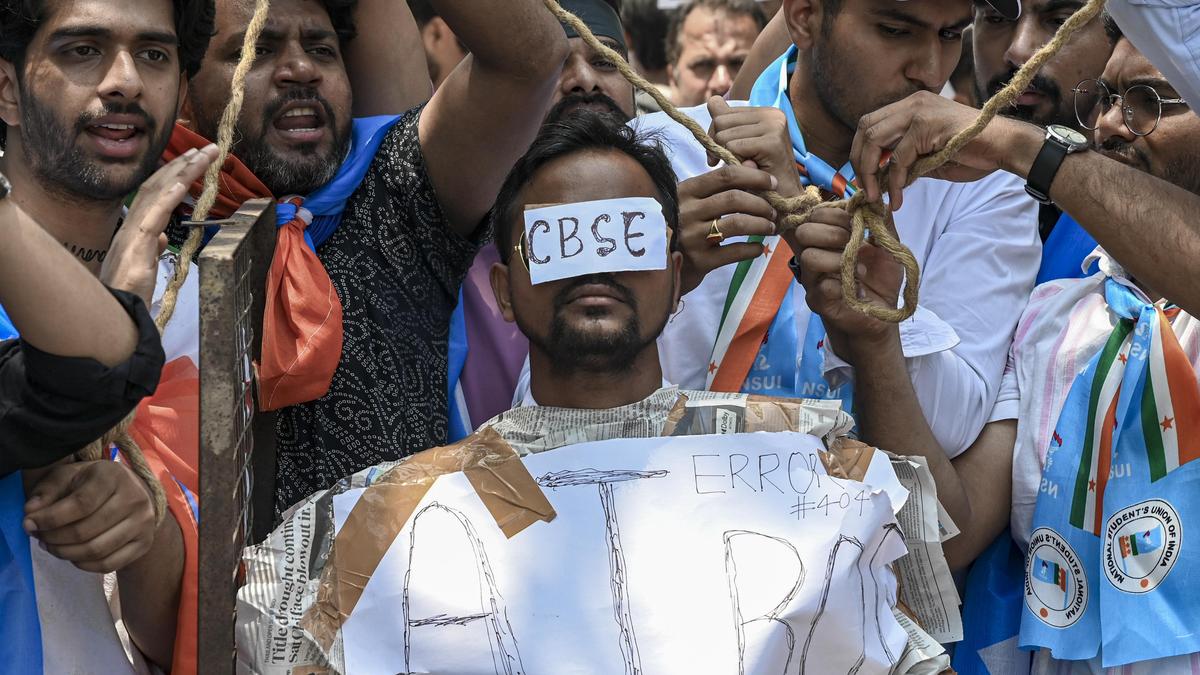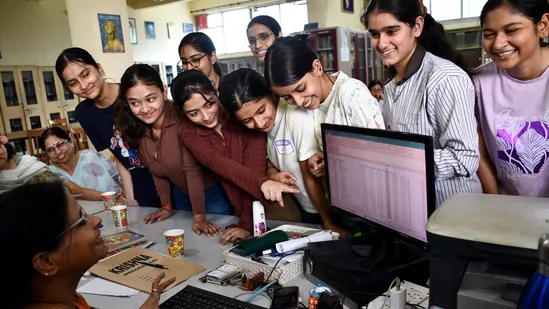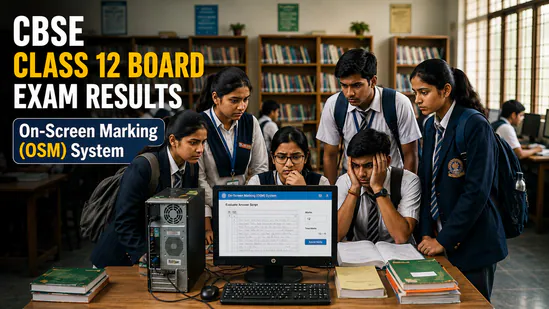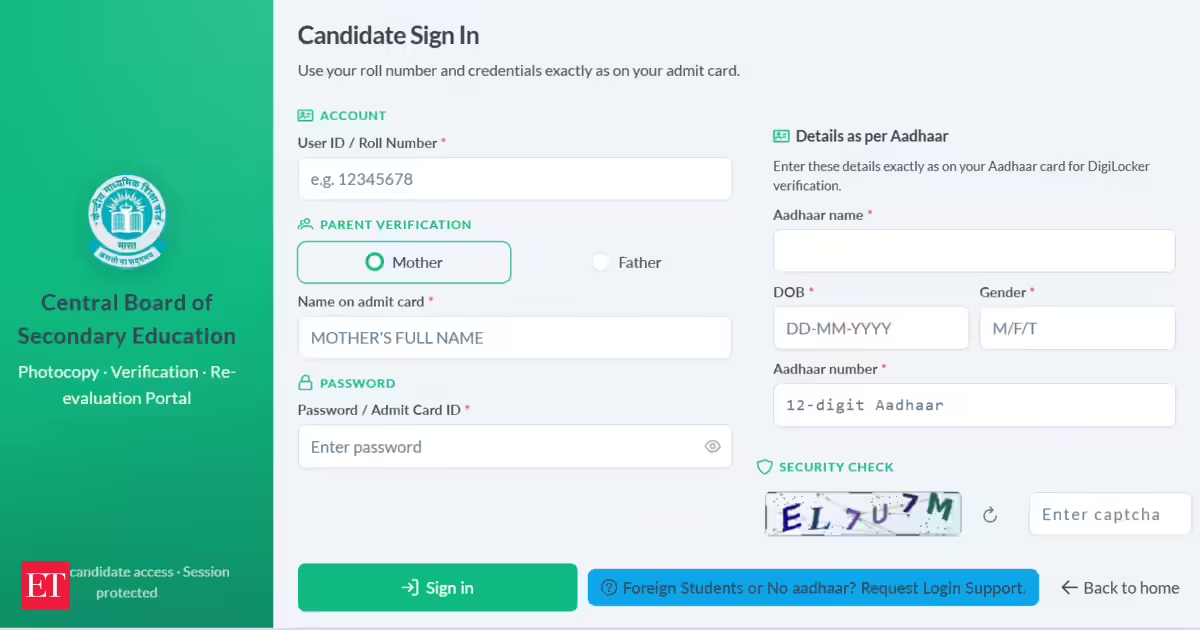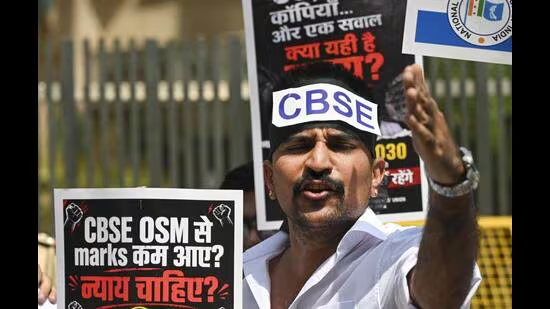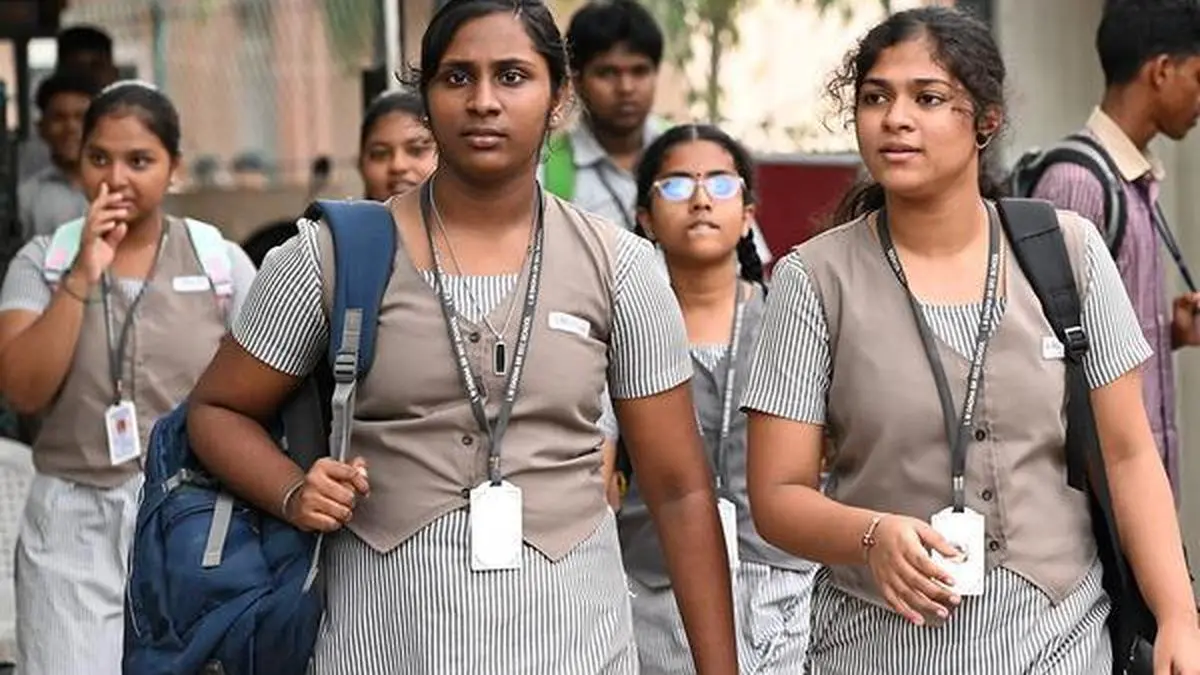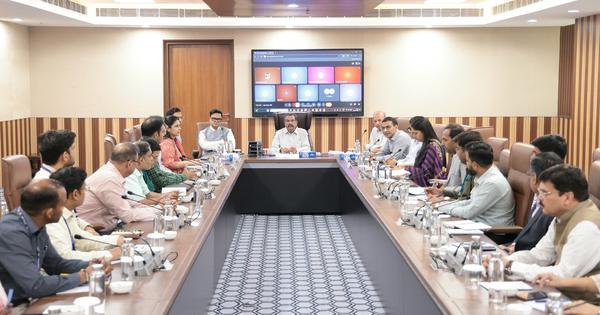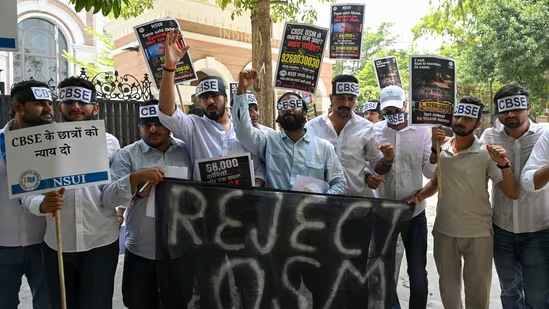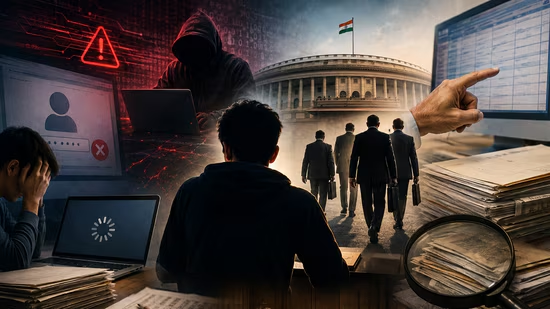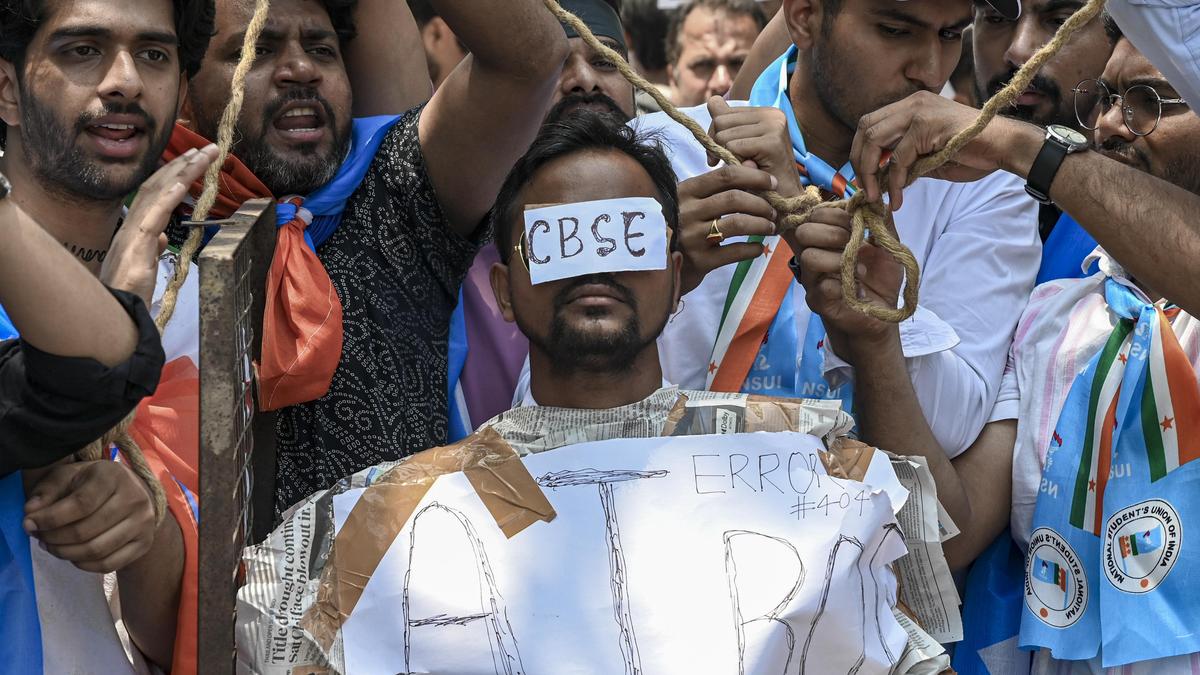
The story so far:Following the release of the Class 12 Board exam results, the Central Board of Secondary Education (CBSE) has been under fire for discrepancies in the evaluation of answer scripts and malfunctioning of the re-evaluation process. The newly introduced On-Screen Marking (OSM) system is under scrutiny, given the widespread sense among students that the marks they received did not match their expectations. The CBSE’s pass percentage has dipped to 85.29% this year from 88.39% last year, with the number of students scoring above 90% also dropping.Due to the sheer volume of requests for answer book copies, the post-results verification portal crashed. As for students who did manage to obtain scanned copies of their answer books, they got a shock when they discovered blurred or missing pages, and unmarked answers. Many even received answer books of other students. The Parliamentary Standing Committee on Education, Women, Children, Youth, and Sports has summoned senior officials from the Union Education Ministry and CBSE Chairman Rahul Singh for a meeting on June 2 to review the use of OSM and the problems faced by the students.What is On-Screen Marking?It is a form of digital evaluation of exam answer sheets. Hand-written answer books are digitally scanned, anonymised, and uploaded online. Instead of checking paper copies with a pen, teachers log into a dedicated platform to access the scanned answer books and correct papers on a computer screen, under video surveillance.What is the history of OSM in India?The CBSE tried out OSM on a smaller scale in 2013-14. Due to inadequate digital infrastructure and limited digital literacy, the experiment was not a big success. Then it proposed testing the OSM in 2024-25 on “small-volume subjects” where there would be fewer candidates. The idea was to sort out glitches before scaling up. In June 2025, members of the CBSE’s governing body suggested that OSM “may be implemented in all subjects only after completion of pilot projects in some subjects across various regional offices of the board.” But the CBSE ignored the advice of its own governing body. Without adequate pilot testing, it went in for full-scale adoption of OSM across all subjects in 2026.Were teachers able to familiarise themselves with OSM before it was rolled out?The first Class 12 Board exam was on February 17, but teachers were informed of OSM implementation barely 10 days earlier. This was a time when teachers were busy with exams in schools, and many had duties as Booth Level Officers as well. Many did not get enough time to familiarise themselves with the user interface of the portal, and learn how to scroll, how to mark, and how to go back and recheck if they had missed something. As a result, many did not have enough practice by the time they came to the evaluation centres for the OSM.What was the CBSE’s rationale for switching from physical marking to OSM?In a circular dated February 9, the CBSE listed several benefits of moving to OSM. These included elimination of totalling errors, reduced manual intervention, faster evaluation, elimination of the need for post-result verification of marks, and reduced manpower requirements for verification. But these benefits did not materialise. Class 12 exams were given by 17 lakh students. This meant that 98 lakh answer books, or 40 crore pages, had to be manually scanned in record time. These also had to be checked for legibility before being made available for evaluation. The benefit of reduced manual intervention did not appear to have materialised. Nor is there evidence that OSM reduced totalling errors or accelerated evaluation. Contrary to CBSE’s claims, requests for “post-result verification” have shot up compared to previous years.Has OSM been used successfully elsewhere? If yes, why did CBSE struggle?Yes, it has been used successfully by exam boards such as Cambridge (U.K.) and International Baccalaureate (IB) and in countries such as Singapore and Australia. But these have far fewer exam centres and students, and more centralised scanning infrastructure, than CBSE. OSM has been known to work well in an ecosystem of well-resourced, digitally ready private schools, such as those under Cambridge and IB. In contrast, CBSE’s 33,000 affiliated schools include government, rural, and semi-urban schools with uneven digital infrastructure and teacher training.What is the controversy with the firm contracted to deliver OSM for CBSE?Opposition leader Rahul Gandhi has alleged corruption in CBSE’s selection of COEMPT Eduteck as the OSM vendor and demanded a judicial inquiry. In a video statement, he said, “The company that did the OSM for your exams was actually called Globarena. And Globarena has carried out this scam twice in Telengana... [in 2019 and 2023].” He claimed that though this company’s track record was known, for “some hidden” reason, the CBSE chose it for the assignment. The CBSE has claimed that COEMPT was chosen “in accordance with the procurement policy” of the government.What was Sarthak Sidhant’s viral blog on CBSE about?A Class 12 student, Sarthak Sidhant, published an investigative blog post which appeared to show that COEMPT Eduteck was the beneficiary of a rigged tendering process. After poring over CBSE’s tenders and multiple Request for Proposals, he claimed to have found that the “CBSE did not just pick a bad software vendor by accident. They lowered financial baselines. They dropped software security certifications. They cut the corrupt practices cooling-off period in half. They removed the physical server isolation requirement. They erased the word ‘blacklisting’ from their penalty matrix via a last-minute corrigendum, before bidding, and they bypassed their own mandatory CERT-In production audits. They gambled with our data security, our marks, and our mental health.”What were the problems with the re-evaluation portal?CBSE’s portal for obtaining copies of answer sheets went live on May 19. As more than 4 lakh students requested scanned copies of answer sheets, the portal crashed, forcing CBSE to put the site under maintenance.How did the CBSE respond?Amid the ballooning crisis, the CBSE extended the deadline for requesting scanned copies, and also kept revising the fees for these services, leading to confusion among parents and students. Following a public uproar, it began responding individually on social media to affected students. It roped in experts from the Indian Institutes of Technology, Madras and Kanpur to resolve the technical challenges, and has announced that the designated portal for verification and re-evaluation will now go live from June 1 to “ensure a transparent and glitch-free process.” Meanwhile, it has also launched a public relations campaign by circulating a social media messaging kit to school principals, directing them to post reels defending OSM and CBSE. These included a statement describing CBSE as “highly proactive, empathetic, and communicative regarding these teething issues.”
Why is CBSE’s evaluation system facing flak?
CBSE's evaluation system faces criticism for flaws in the On-Screen Marking process and declining student performance post-exams.
1,101 words~5 min read