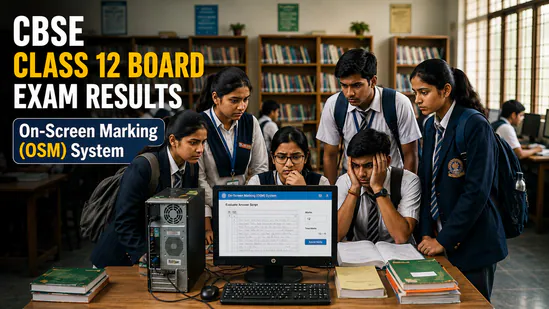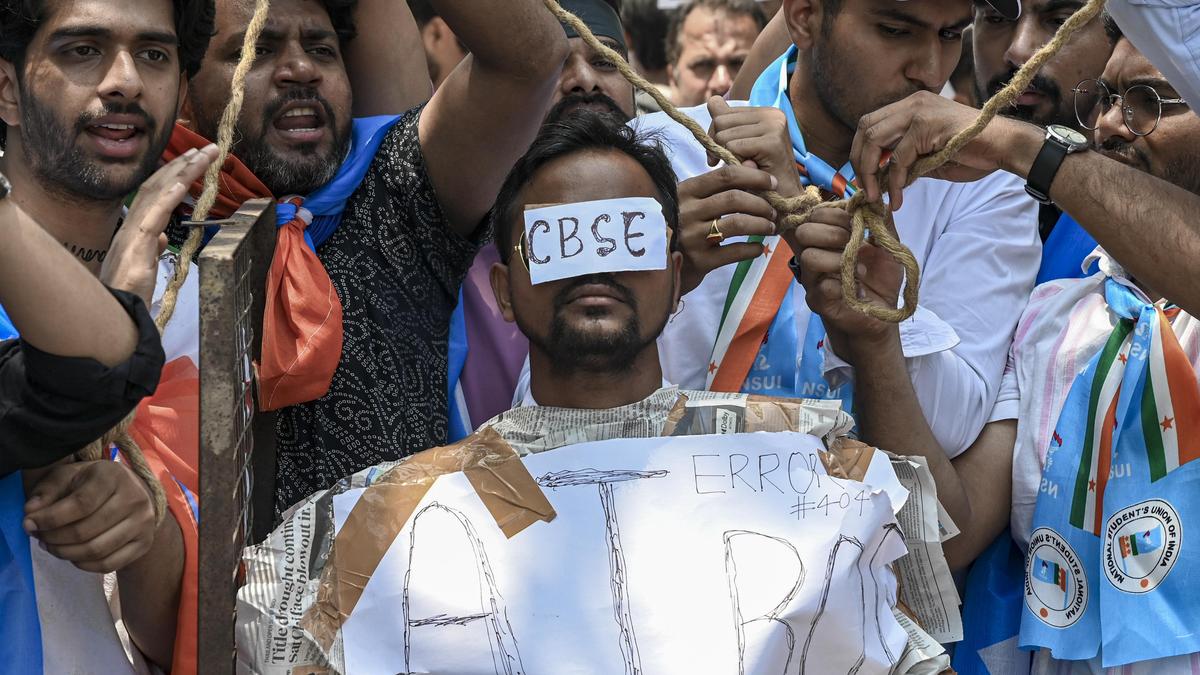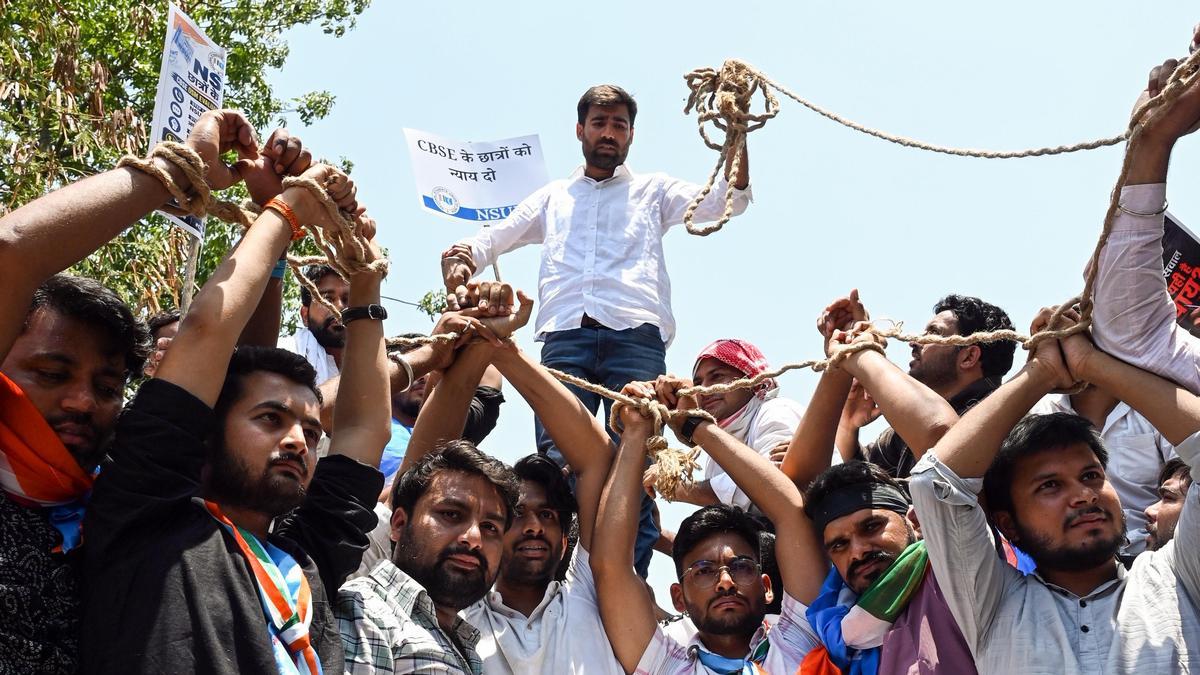
CBSE's decision to introduce On-Screen Marking (OSM) for Class 12 board examinations this year was intended to modernise the evaluation process. The digital platform was designed to reduce human errors in marking and score compilation while creating a transparent, traceable system where answer scripts could be securely stored and retrieved for re-evaluation when required, according to Manash Pratim Gohain's Times of India report. However, what was envisioned as a step towards digitisation soon became mired in controversy. Introduced barely a week before examinations, OSM drew criticism from teachers who claimed they had little time to familiarise themselves with the new system. The rollout was followed by allegations of result discrepancies, technical glitches, portal crashes and concerns over data privacy. Students also questioned CBSE's decision to appoint COEMPT Eduteck, a company that had reportedly faced evaluation-related controversies in other states.What is OSM?OSM, or On-Screen Marking, is CBSE's digital evaluation system introduced for Class 12 examinations this year. The platform replaces conventional paper-based checking with digital assessment of scanned answer scripts.How the system worksOnce examinations conclude, answer sheets are collected from centres and transported securely to CBSE's regional offices. The digitisation process begins with "spine-preserving" scanning, which allows answer booklets to be scanned without damaging their stitched binding.Every script undergoes two levels of quality checks before being released for evaluation. Pages that fail to scan properly are re-scanned to improve image quality.The next stage involves anonymisation. Student identities are concealed, barcodes are attached and answer sheets are uploaded to a secure evaluation portal to ensure that evaluators cannot identify candidates.Evaluators access the scripts through credentials generated via CBSE's Online Affiliated School Information System (OASIS). Using a standardised marking scheme, they assess responses onscreen. The software is designed to enforce stepwise marking, automatically total scores and ensure that no attempted answer is overlooked. Once evaluation is completed, head examiners and additional head examiners conduct random quality audits.The final marks are compiled digitally and uploaded through CBSE's evaluation platform, known as OnMark. Every action on the system is recorded with user details and timestamps, and answer scripts are locked after submission to prevent tampering.Where the problems emergedBlurred scans and missing pagesAccording to CBSE, nearly 40 crore pages were scanned during the evaluation exercise, with around 30,000 pages — roughly 0.01 per cent — posing quality issues.Complaints included blurred or unreadable scans, cropped margins, missing pages, supplementary sheets not appearing in digital copies and instances of answer-sheet mix-ups.Challenges for evaluatorsTeachers faced difficulties assessing handwritten responses, diagrams and lengthy answers in a digital format. Common complaints included faint handwriting, unclear diagrams, eye strain caused by prolonged screen use, portal glitches and slow page loading.Questions over marking and score compilationAlthough OSM automatically totals marks and is designed to prevent evaluators from skipping questions, some students alleged discrepancies after obtaining scanned copies of their answer sheets. Complaints ranged from lower-than-expected marks in multiple-choice questions to unchecked answers and mismatches between awarded marks and visible evaluations.CBSE has not publicly released any technical audit report identifying a system-wide cause behind these complaints.Steps taken by CBSERe-scanning answer scriptsCBSE said 68,018 answer scripts out of approximately 98 lakh required re-scanning due to quality concerns. Of these, 13,583 eventually underwent manual evaluation after repeated scanning attempts failed."If 'any ambiguity was found, the answer script was rescanned'," the board said.Data security measuresTo strengthen cybersecurity and prevent disruptions, CBSE transferred all scanned data to its own secure servers and implemented strict service-level agreements with IT and evaluation vendors. Contracts included penalties of Rs 1 lakh for every 15 minutes of downtime. Examiner sessions were also monitored through video surveillance.Student access and re-evaluationThe digital platform enabled students to access scanned copies of evaluated answer scripts online or through formal requests.More than 4 lakh students — about 23 per cent of candidates — applied to obtain scanned copies of their answer books. The board also processed approximately 6.3 lakh re-evaluation requests.Earlier adopters of OSMWhile CBSE piloted OSM for select Class 10 examinations in 2014 and described itself as the first national examination body to adopt the technology, the system had already been implemented by Visvesvaraya Technological University (VTU) in Karnataka two years earlier.VTU used on-screen evaluation for first- to fourth-semester undergraduate examinations, covering nearly 20 lakh answer scripts of around three lakh students across 193 colleges.The technology first gained traction among technical and health-science universities that handled large volumes of answer scripts and faced pressure to declare results quickly.Institutions that have used OSM include VTU, Rajiv Gandhi University of Health Sciences, IK Gujral Punjab Technical University, Maulana Abul Kalam Azad University of Technology, Dr APJ Abdul Kalam Technical University and Chhatrapati Shahu Ji Maharaj University, among others.Despite its promise of greater efficiency and transparency, CBSE's first full-scale deployment of OSM has highlighted the operational and technological challenges that accompany large-scale digitisation of examination systems.(With TOI inputs)
What’s on-screen marking, and where did CBSE go wrong?
CBSE's new digital marking system for Class 12 exams faced significant challenges. Teachers struggled with the new technology. Students reported result discrepancies and technical problems. The board has taken steps to address these issues, including re-scanning answer scripts and enhancing data security. This marks a complex transition to digitisation.
799 words~4 min read