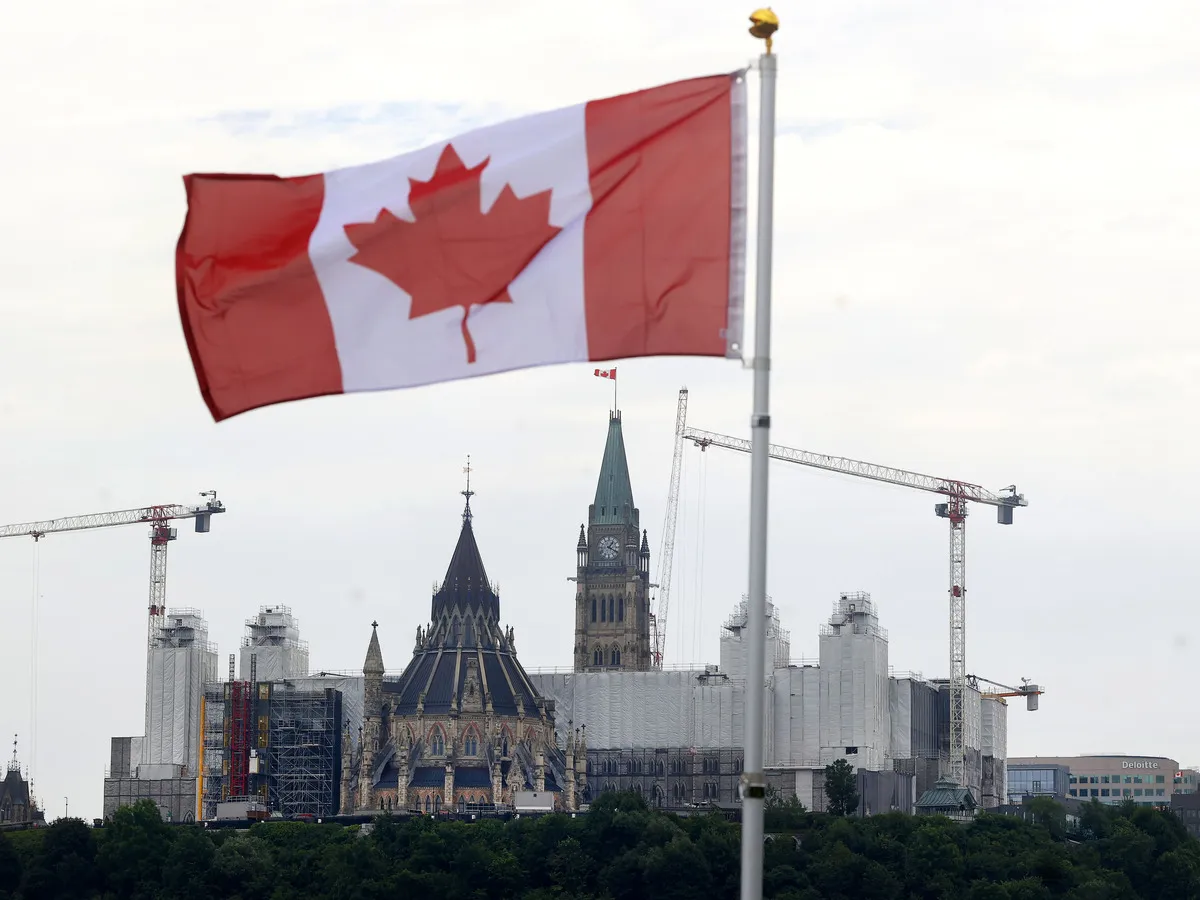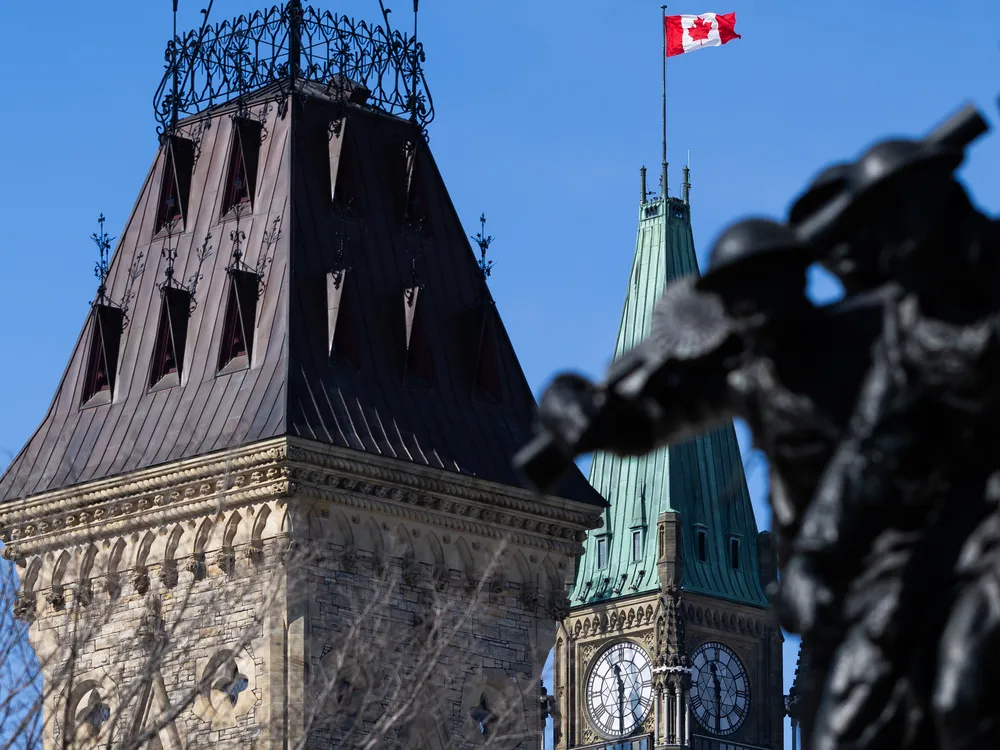
Skip to Content News Archives Economy Energy Oil & Gas Renewables Electric Vehicles Mining Commodities Agriculture Real Estate Mortgages Mortgage Rates Finance Banking Insurance Fintech Cryptocurrency Work Wealth Smart Money Wealth Management Investor Personal Finance Family Finance Retirement Taxes High Net Worth FP Comment Executive Women Puzzmo Newsletters Financial Times Business Essentials More Innovation Information Technology FP500 Podcasts Small Business Lives Told Tails Told Shopping Financial Post Store Obituaries Place a Notice Advertising Advertising With Us Advertising Solutions Postmedia Ad Manager Sponsorship Requests Classifieds Place a Classifieds ad Working Profile Settings My Subscriptions Saved Articles My Offers Newsletters Customer Service FAQ News Economy Energy Mining Real Estate Finance Work Wealth Investor FP Comment Executive Women Puzzmo Newsletters Financial Times Business Essentials HomeFP CommentJack Mintz: Rising government debt will hit Canada, tooDefence needs and demographics mean that without deficit discipline, government debt will keep rising, which it cannot do foreverLast updated 1 hour ago You can save this article by registering for free here. Or sign-in if you have an account.Peace Tower at the Centre Block on Parliament Hill is seen from the National War Memorial in Ottawa on March. 4, 2026. Photo by HYUNGCHEOL PARK/PostmediaA potential sovereign debt crisis looms as governments continue to ramp up their spending and deficits. In 2024, the latest year for which data are available, global gross public debt hit 95 per cent of world GDP, 32 points higher than in 2001. The G7 countries, which make up 30 per cent of the world’s economy, are even worse, with gross public debt now at 124 per cent of GDP. And defence needs, demographic pressures and a desire to support the vulnerable will likely lead to even more debt.Subscribe now to read the latest news in your city and across Canada.Exclusive articles from Barbara Shecter, Joe O'Connor, Gabriel Friedman, and others.Daily content from Financial Times, the world's leading global business publication.Unlimited online access to read articles from Financial Post, National Post and 15 news sites across Canada with one account.National Post ePaper, an electronic replica of the print edition to view on any device, share and comment on.Daily puzzles, including the New York Times Crossword.Subscribe now to read the latest news in your city and across Canada.Exclusive articles from Barbara Shecter, Joe O'Connor, Gabriel Friedman and others.Daily content from Financial Times, the world's leading global business publication.Unlimited online access to read articles from Financial Post, National Post and 15 news sites across Canada with one account.National Post ePaper, an electronic replica of the print edition to view on any device, share and comment on.Daily puzzles, including the New York Times Crossword.Create an account or sign in to continue with your reading experience.Access articles from across Canada with one account.Share your thoughts and join the conversation in the comments.Enjoy additional articles per month.Get email updates from your favourite authors.Create an account or sign in to continue with your reading experience.Access articles from across Canada with one accountShare your thoughts and join the conversation in the commentsEnjoy additional articles per monthGet email updates from your favourite authorsSign In or Create an AccountorIt’s no surprise that 10-year treasury bond interest rates have returned to levels not seen since just before the 2008 financial crisis. The U.S. 10-year rate averaged 4.52 per cent in May, more than double its May 2019 average of 2.4 per cent. Borrowing charges are taking up a larger share of taxpayer dollars.Get the latest headlines, breaking news and columns.By signing up you consent to receive the above newsletter from Postmedia Network Inc.A welcome email is on its way. If you don't see it, please check your junk folder.The next issue of Top Stories will soon be in your inbox.We encountered an issue signing you up. Please try againCanada is by no means immune from excessive borrowing. Our general government gross debt has reached 111 per cent of GDP, up from 67 per cent in 2001. We are fourth highest in the G7 and seventh highest amongst advanced economies — though at least we are less leveraged than the United States, where general government debt is 126 per cent of GDP.The Fraser Institute estimates that federal and provincial net debt (i.e., gross debt minus financial assets) totals almost $2.5 trillion, equal to three quarters of our GDP. Wisely, and unlike the federal budget, the Institute does not subtract almost a trillion dollars in CPP and QPP net assets to get to net debt. Those assets are spoken for. They have to fund our future pension liabilities, which the feds simply ignore in measuring net debt. In a crisis, net debt is meaningless anyway: the market value of financial assets plummets as interest rates rise. For this reason and because tangible government assets like roads and buildings are illiquid and therefore hard to dispose of, rating agencies focus on government gross debt in assessing stress risk.But these calculations omit hidden debt-drivers that we ignore at our peril.Weakening productivity: Growth in GDP per hour worked has dropped steadily among OECD countries, from annual growth of 2.4 per cent in 2000-2007 to 0.8 per cent in 2021-2023. With weaker growth, taxes don’t rise as quickly, producing higher deficits when government spending continues to grow. Since 2016 Canada’s general government expenditure has risen by 3.4 percentage points of GDP, reaching 44.2 per cent in 2025. Over the same period, revenues grew only 2.1 percentage points, to 42.4 per cent. With per capita income almost flat, the increase in revenue was solely from tax hikes and population growth. Overall, Canada’s general government deficit rose 1.3 percentage points of GDP.Public-sector spending is humongous — equal to two-fifths of Canada’s economy and hurting productivity since taxes discourage work and investment. Canada is also the 10th highest spender on social services among OECD countries (at 24.9 per cent of GDP). Social services do help vulnerable people but government transfers reduce the incentive to work or save.Military needs: Because of rising international tensions, countries are ramping up military spending. That will bring higher deficits — unless taxes are raised or other spending, including social services, curtailed. Prime Minister Mark Carney pledged this week that Canada will increase military spending to four per cent of GDP by 2030 and five per cent by 2035. If other spending and tax policies remain unchanged, Canada’s indebtedness could in five years exceed 120 per cent of GDP. More guns needs to mean less butter.Aging populations: The IMF forecasts rising pension and health spending due to population aging and rising real health-care costs. It calculates that in the G7 countries, the present value of higher pension and health spending is 96 per cent of GDP. The present value of unfunded pension and health-care liabilities is 50 per cent of GDP in Canada and 55 per cent in the U.S. Though these higher costs could be partly offset by lower education spending as demographic changes reduce student enrolments, governments have generally been reluctant to cut education spending. In Canada, real spending per student rose almost six per cent from 2013-14 to 2022-23.Falling tax levels: Because the elderly earn and spend less in their retirement years the rise in average age means tax levels decline as a share of GDP. The elderly also benefit from tax breaks like pension-splitting, the pension deduction and the age credit. The GST/HST provides exemptions for food, shelter and other necessities that account for a larger share of elderly consumption compared to those who work. A 2015 study I co-authored estimated that total taxes drop almost nine points as a share of income when people shift from work to retirement. I estimate the tax/GDP ratio will fall almost a half point in just 10 years simply due to aging.If we think we have a sovereign debt problem now, just wait. My bet is voters will do what they always do — shift burdens to the future. Without deficit discipline, the effect this time may well be to trigger a sovereign debt crisis. Join the Conversation This website uses cookies to personalize your content (including ads), and allows us to analyze our traffic. Read more about cookies here. By continuing to use our site, you agree to our Terms of Use and Privacy Policy.
Jack Mintz: Rising government debt will hit Canada, too
Defence needs and demographics mean that without deficit discipline, government debt will keep rising, which it cannot do forever. Read on.
1,366 words~6 min read