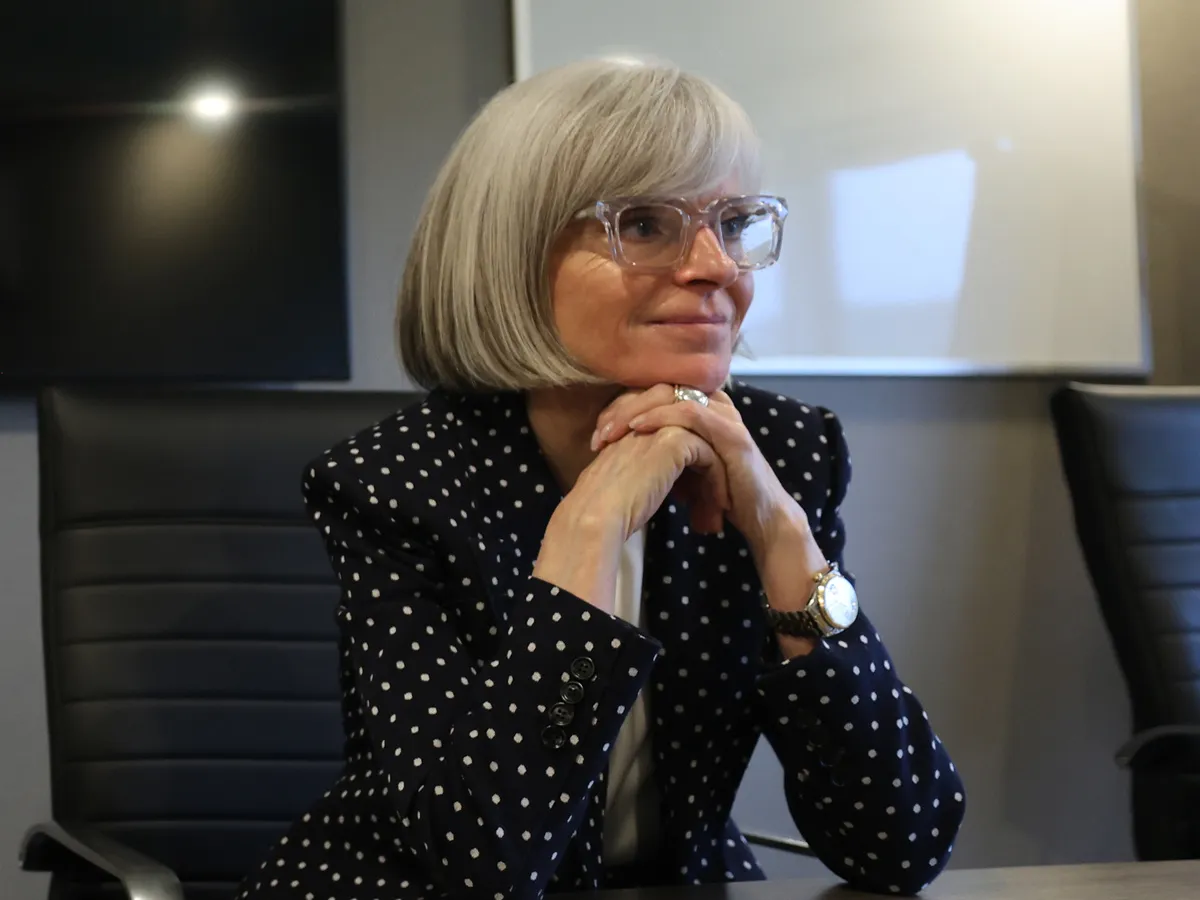
Skip to Content News Archives Economy Energy Oil & Gas Renewables Electric Vehicles Mining Commodities Agriculture Real Estate Mortgages Mortgage Rates Finance Banking Insurance Fintech Cryptocurrency Work Wealth Smart Money Wealth Management Investor Personal Finance Family Finance Retirement Taxes High Net Worth FP Comment Executive Women Puzzmo Newsletters Financial Times Business Essentials More Innovation Information Technology FP500 Podcasts Small Business Lives Told Tails Told Shopping Financial Post Store Obituaries Place a Notice Advertising Advertising With Us Advertising Solutions Postmedia Ad Manager Sponsorship Requests Classifieds Place a Classifieds ad Working Profile Settings My Subscriptions Saved Articles My Offers Newsletters Customer Service FAQ News Economy Energy Mining Real Estate Finance Work Wealth Investor FP Comment Executive Women Puzzmo Newsletters Financial Times Business Essentials HomeNewsBDC chief says Canada can no longer afford to be ‘shy’ about defence investmentIsabelle Hudon says Canada must rethink investment, productivity and defenceLast updated 9 minutes ago You can save this article by registering for free here. Or sign-in if you have an account.Business Development Bank of Canada chief executive Isabelle Hudon, right, and British Business Bank CEO Louis Taylor before the CVCA conference in Halifax, N.S. on May 28. Photo by TIM KROCHAKCanada is no longer being “shy” about investing in defence, says Business Development Bank of Canada chief executive Isabelle Hudon, as Ottawa pushes billions of dollars toward strategic industries, supply chains and economic sovereignty.Subscribe now to read the latest news in your city and across Canada.Exclusive articles from Barbara Shecter, Joe O'Connor, Gabriel Friedman, and others.Daily content from Financial Times, the world's leading global business publication.Unlimited online access to read articles from Financial Post, National Post and 15 news sites across Canada with one account.National Post ePaper, an electronic replica of the print edition to view on any device, share and comment on.Daily puzzles, including the New York Times Crossword.Subscribe now to read the latest news in your city and across Canada.Exclusive articles from Barbara Shecter, Joe O'Connor, Gabriel Friedman and others.Daily content from Financial Times, the world's leading global business publication.Unlimited online access to read articles from Financial Post, National Post and 15 news sites across Canada with one account.National Post ePaper, an electronic replica of the print edition to view on any device, share and comment on.Daily puzzles, including the New York Times Crossword.Create an account or sign in to continue with your reading experience.Access articles from across Canada with one account.Share your thoughts and join the conversation in the comments.Enjoy additional articles per month.Get email updates from your favourite authors.Create an account or sign in to continue with your reading experience.Access articles from across Canada with one accountShare your thoughts and join the conversation in the commentsEnjoy additional articles per monthGet email updates from your favourite authorsSign In or Create an AccountorShe said Canada is also helping lead the creation of the proposed Defence, Security and Resilience Bank (DSRB), a multilateral institution aimed at expanding financing for defence-sector small businesses and strategic industries across allied countries.“What BDC is trying to do and where we’re trying to contribute with our defence platform is to contribute to the growth of our economy’s sovereignty,” she said.Breaking business news, incisive views, must-reads and market signals. Weekdays by 9 a.m.By signing up you consent to receive the above newsletter from Postmedia Network Inc.A welcome email is on its way. If you don't see it, please check your junk folder.The next issue of Posthaste will soon be in your inbox.We encountered an issue signing you up. Please try againThe DSRB, which Hudon said could officially launch as early as the North Atlantic Treaty Organization summit in Ankara in July, is intended to address the financing challenges facing small and mid-sized businesses operating within defence supply chains.“It’s one thing to have big companies producing defence products and services, but they cannot do this alone,” she said. “They need SMEs along the way to fully participate in the journey.”Hudon, who served as Canada’s lead negotiator for the proposed institution, said the goal is for the bank to be operational before year-end. Canada secured the right to host the bank, though its final location has not yet been determined. Various cities are vying to be its home, including Toronto, Montreal and Vancouver.The DSRB is part of a broader push by Canada and its allies to expand investment into defence, strategic industries and industrial supply chains as governments rethink economic security amid rising geopolitical tensions.Hudon said the multilateral bank is expected to launch with roughly $20 billion in capital, potentially supporting as much as $200 billion in lending capacity. Canada’s contribution could exceed $1 billion.“We’ve negotiated in the charter that each country will benefit equal to at least the minimum of their capital requirements,” she said.The shift is also reshaping BDC itself. Hudon said the Crown corporation significantly expanded its focus on defence and strategic industries over the past year after determining it had relatively limited exposure to those sectors in its roughly $55-billion portfolio.“When we dug into our portfolio last year to see how much exposure we had to the defence sector, we only had $400 million,” she said.BDC announced a $6-billion defence financing and investment platform in March to help expand support for companies tied to defence, security and dual-use technologies.Hudon said BDC has been studying aspects of how the British Business Bank (BBB) supports defence-sector companies.Much like BDC, the BBB is also a government-owned economic development bank focused on improving financing access for smaller businesses, but has more experience supporting defence-related companies and supply chains, she said.BBB chief executive Louis Taylor said governments and public investment banks are increasingly trying to channel private investment into sectors that have traditionally struggled to attract financing, including defence-related businesses, supply-chain companies and smaller companies developing new technologies.“We’re trying to be catalytic to the private sector and get them into parts of the economy that they’re not currently in,” he said.Aside from defence financing, Hudon pointed to Canada’s productivity challenges and dependence on the United States economy as major concerns for the country’s long-term competitiveness.“Life was easy,” she said, referring to years when Canada benefited from strong access to U.S. markets and favourable trade conditions. “But things have changed.”Hudon said Canada needs to continue diversifying trade relationships, strengthening domestic industrial capacity and accelerating adoption of artificial intelligence technologies among small businesses.“If we don’t solve for productivity, then we will be losing ground faster and faster,” she said. Join the Conversation This website uses cookies to personalize your content (including ads), and allows us to analyze our traffic. Read more about cookies here. By continuing to use our site, you agree to our Terms of Use and Privacy Policy.
BDC chief says Canada can no longer afford to be ‘shy’ about defence investment
Canada is no longer being 'shy' about investing in defence, says Business Development Bank of Canada CEO Isabelle Hudon. Find out more.
TL;DRAI
BDC launched a $6B defence platform (up from $400M in its $55B portfolio) and is co-leading the DSRB bank, targeting $20B capital for allied SMEs. For dual-use tech vendors, this signals a new government-backed capital channel launching before year-end.
1,104 words~5 min read