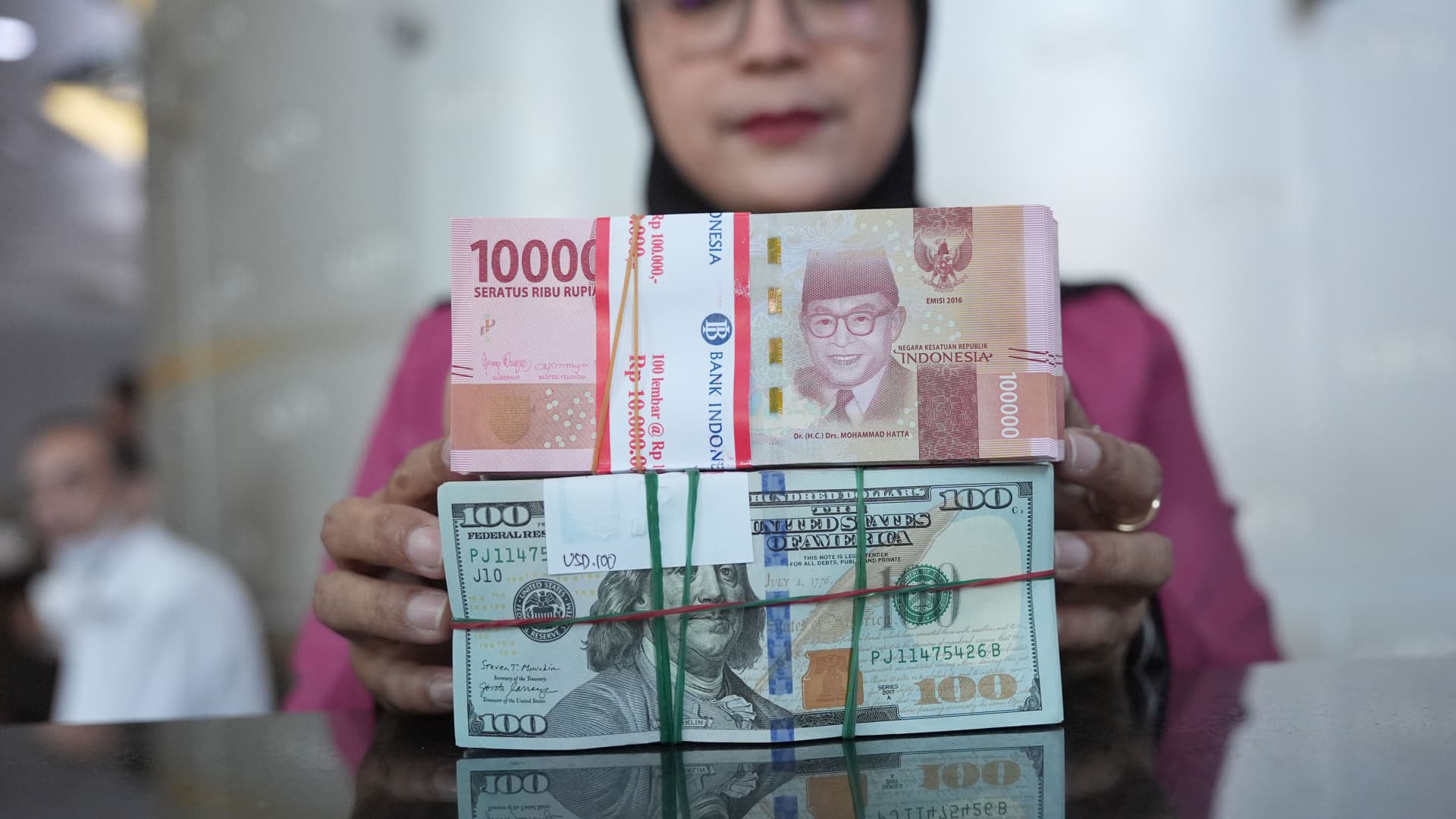
Two of Asia’s largest emerging economies are burning through central bank firepower to keep their currencies from sliding further. Indonesia and India both intervened in foreign-exchange markets to prop up the rupiah and rupee, respectively, as rising energy prices and a strengthening US dollar applied relentless pressure.
What Indonesia is doing, and what it’s costing
Bank Indonesia confirmed it was active across multiple market segments, including spot and non-deliverable forward markets, both onshore and offshore, to cushion the rupiah’s fall.
BI raised its benchmark interest rate by 50 basis points to 5.25%, marking the first rate hike since 2024. Higher rates are the textbook playbook for currency defense: they make holding rupiah-denominated assets more attractive to foreign investors, theoretically slowing capital outflows.
Indonesia also imposed stricter rules on dollar purchases, capping monthly buys at $50,000 per individual.