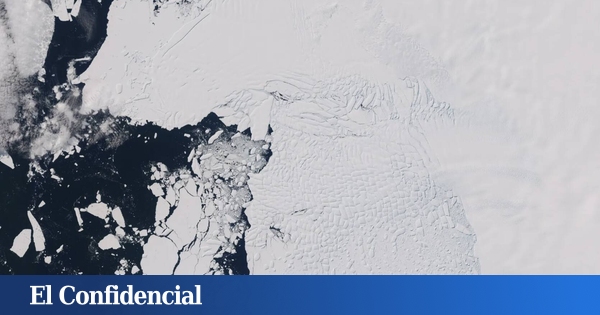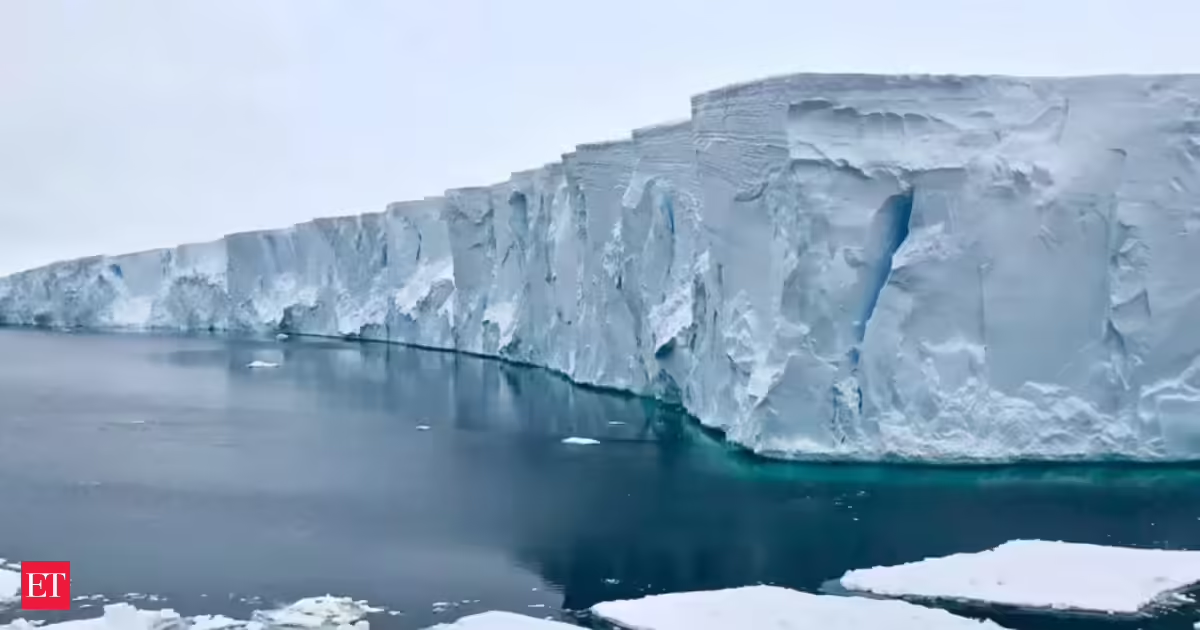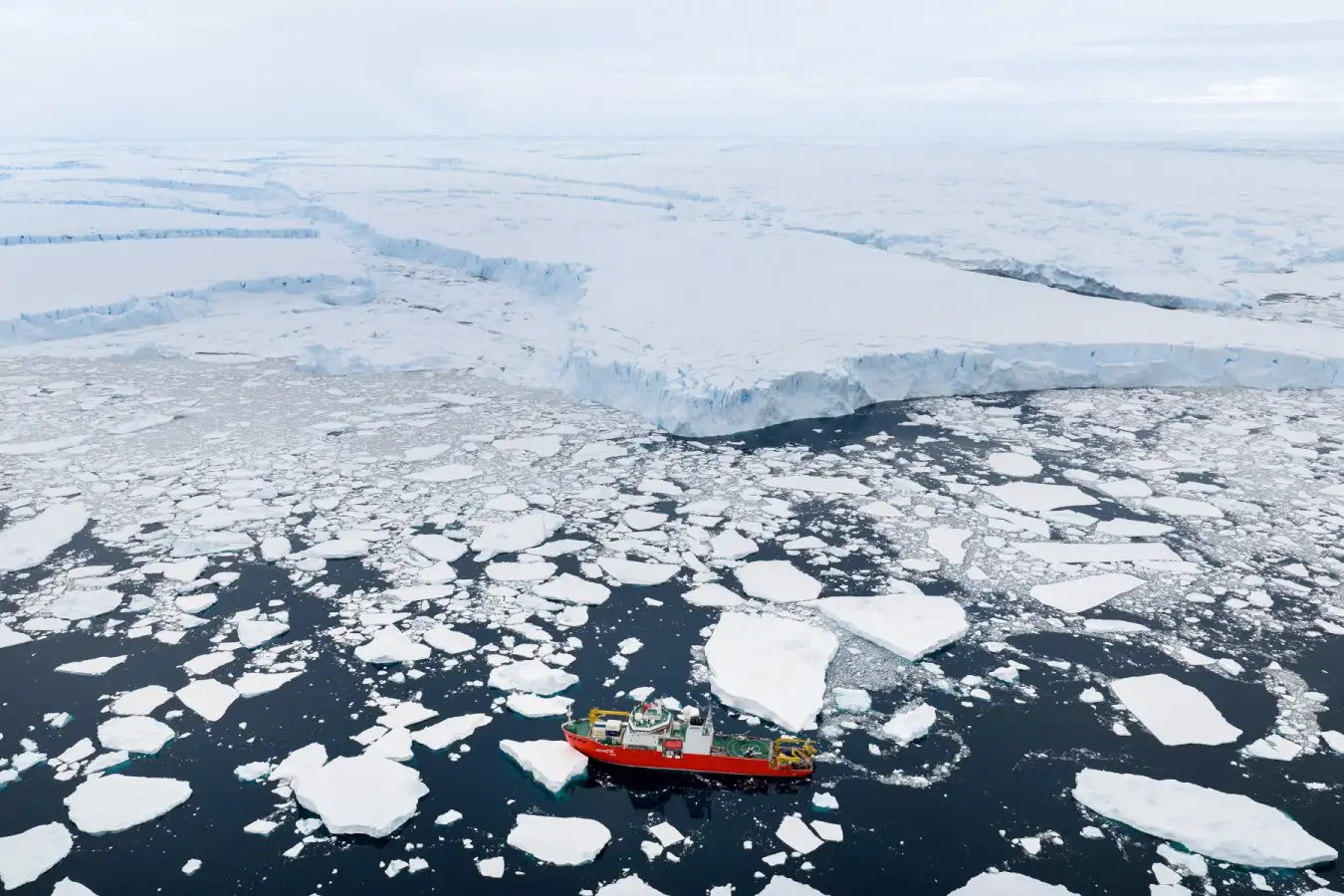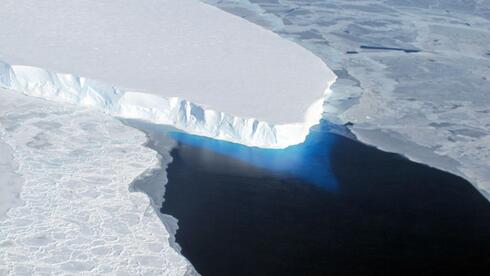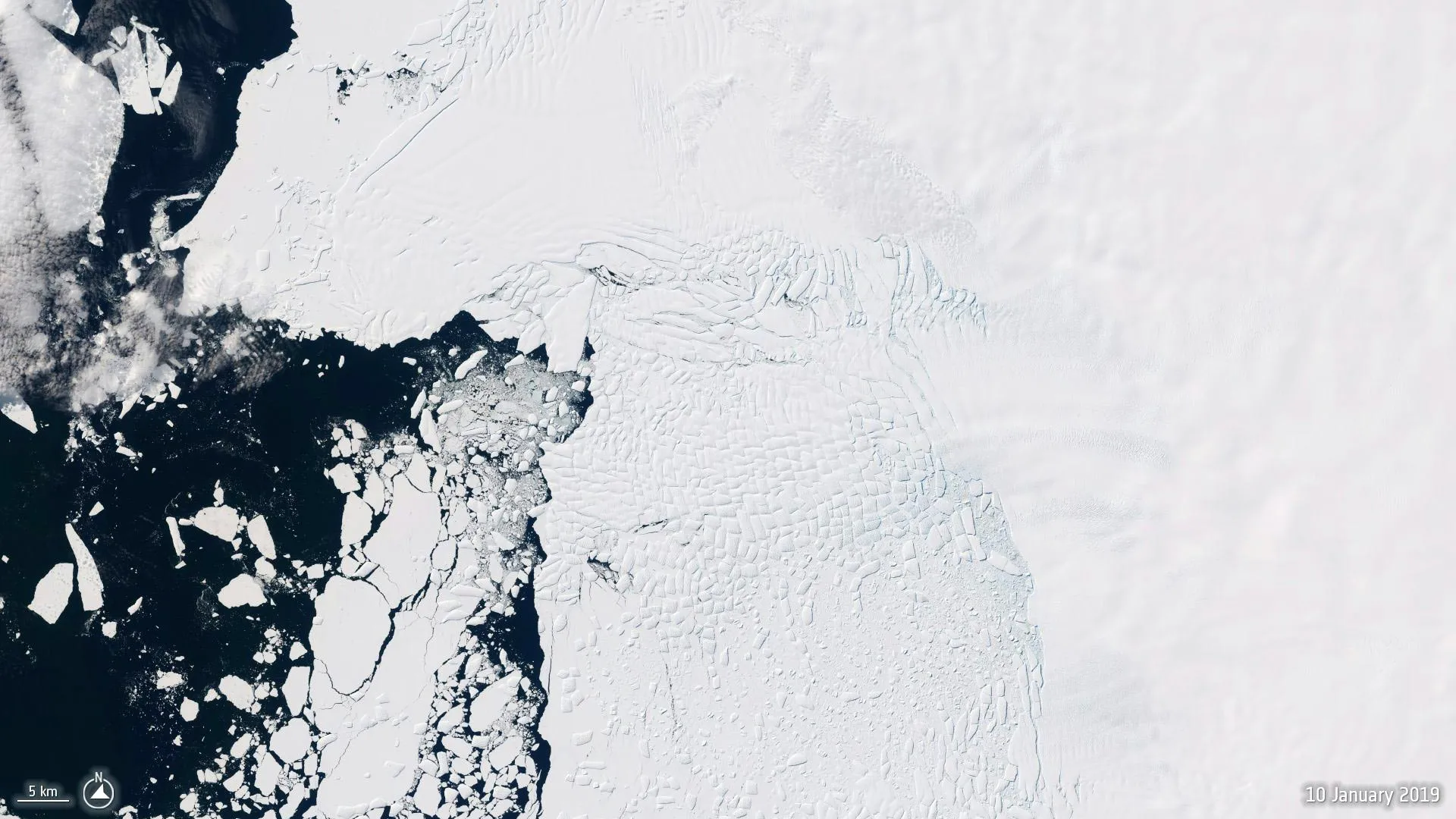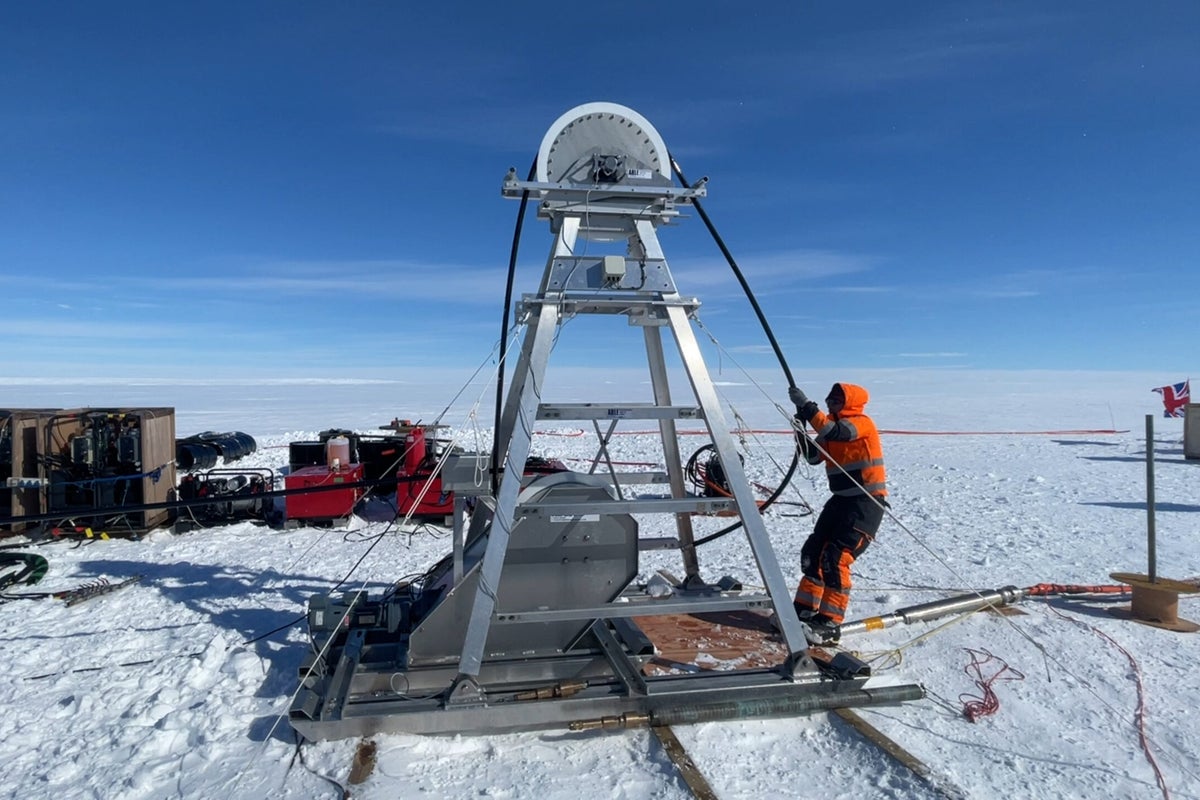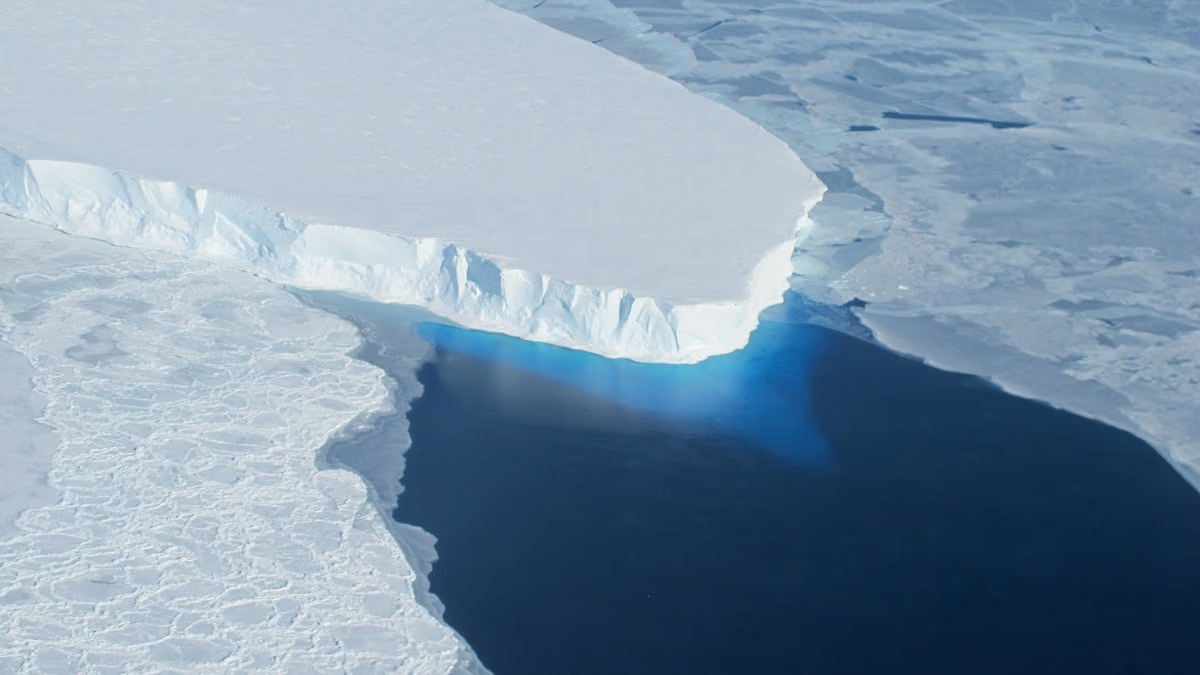
Antarctica's Doomsday Glacier is tipping towards total collapse – and could lose its entire ice shelf this year, scientists have warned.The Thwaites Glacier is one of the largest glaciers in the world, covering an area equal to that of Great Britain.If it were to collapse completely, it has the potential to raise sea levels by a staggering 26 inches (65 centimetres) and wreak havoc on the world's coastal regions.Now, researchers say that the glacier's floating 'buttress' of ice could crumble away within months.The Thwaites Eastern Ice Shelf (TEIS) is a wall of ice attached to the glacier's eastern flank, holding back the flow of ice into the sea. This supporting barrier is over 1,150 feet (350 metres) thick and covers 580 square miles (1,500 square kilometres) – about the area of Greater London.However, the Antarctic's warming oceans are now thinning this frozen bulwark at an alarming rate. Dr Robert Larter, marine geophysicist at the British Antarctic Survey, warns that the shelf's breakup is 'very likely to happen sometime this year'.Scientists say that the Doomsday Glacier's eastern ice shelf (pictured) is likely to collapse this year as it thins due to warming waters While scientists don't think the collapse of the entire Thwaites Glacier is imminent, multiple studies now suggest that the TEIS is on the brink of failure.Speaking in an interview with Live Science, Dr Larter says: 'The last bit of ice shelf in front of the glacier is poised to disintegrate.'We don't know quite how this ice shelf is going to break up, but it's definitely going to go.'The main reason for this dramatic transformation is that the ice shelf is thinning from below as warm water flows beneath the ice. A recent expedition to drill through the ice sheet found that the waters flowing beneath Thwaites are warming, driving the thinning process and weakening its structure.Satellite images show that new fault lines are opening up in the ice shelf at an increasing rate.Critically, these fissures are now forming along the 'grounding line', the point where the floating ice shelf meets the bedrock below.This suggests that the physics deep within the ice has changed, and that the shelf is now tearing itself apart as ice is rammed into this 'pinning point'.
Antarctica's Doomsday Glacier could lose its ice shelf this year
Dr Robert Larter, marine geophysicist at the British Antarctic Survey, warns that the shelf's breakup is 'very likely to happen sometime this year'.
1,265 words~6 min read