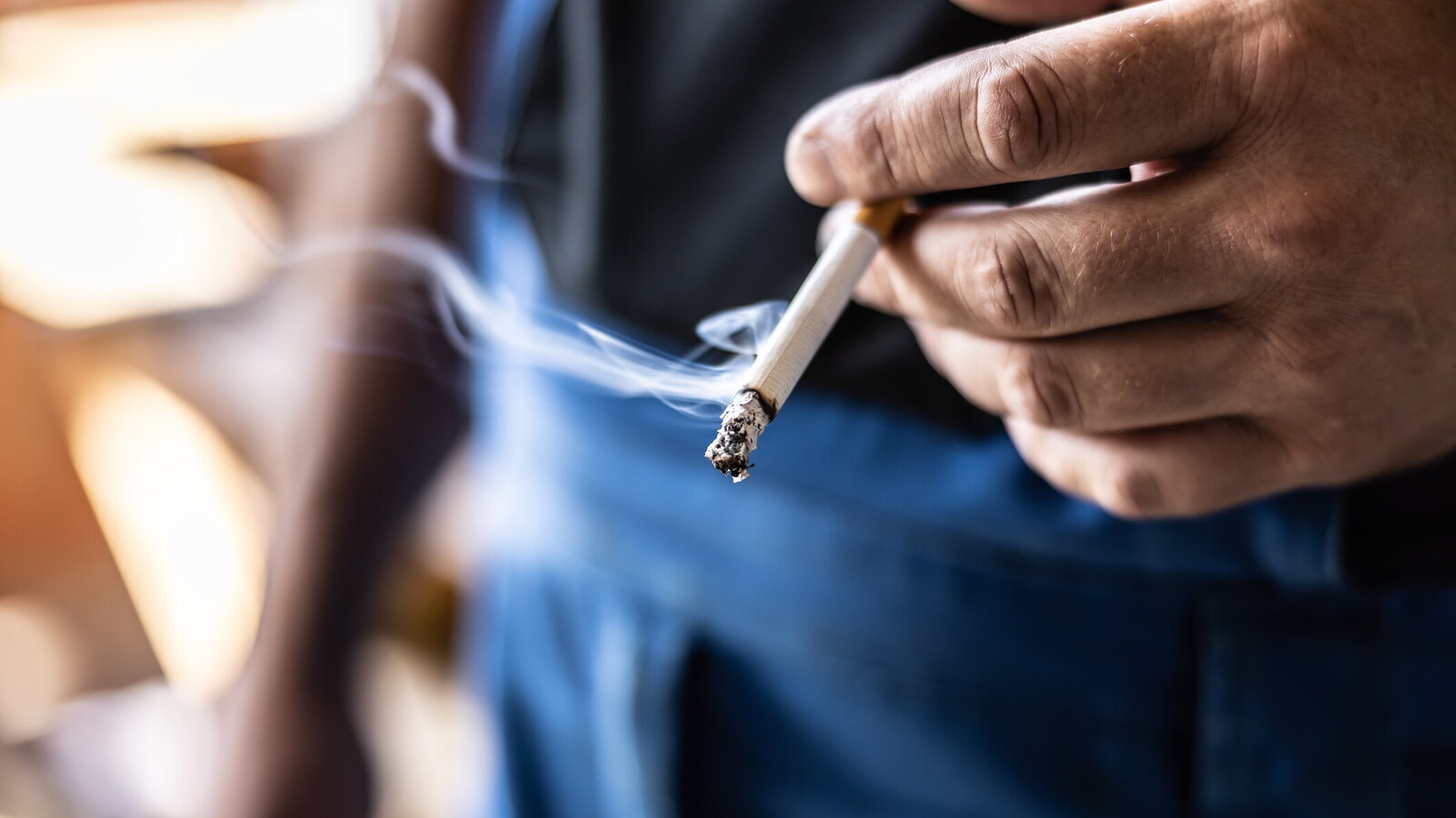
Most of India’s smoked tobacco problem is bidis, not cigarettes. Of the 267 million adults who used tobacco in India in 2016-17, 72 million were bidi smokers — just over a quarter of all tobacco users in the country. Bidis are concentrated among older men, rural households, and those with the lowest incomes and least education. The tax rate on bidis is 22% of the retail price, compared to 51% for cigarettes, but both are far short of the World Health Organization (WHO) recommendation that tobacco taxes constitute at least 75% of the retail price. This differential treatment of bidis has no basis in public health, and is costing the country dearly.Male bidi smokers are about 60% more likely to die prematurely than non-smokers, while female bidi smokers face more than double the risk. (Shutterstock)The health consequences of bidi smoking are, if anything, worse than those of cigarettes. Bidi smoke delivers more tar and carbon monoxide than cigarette smoke because tendu leaves are less combustible than paper, forcing smokers to draw harder and more frequently to keep the bidi lit. Studies in India show that bidi smoking sharply increases the risk of early death. Male bidi smokers are about 60% more likely to die prematurely than non-smokers, while female bidi smokers face more than double the risk. In some studies, these risks are as high as those reported for cigarette smokers, if not higher.Bidi smoking imposes a massive public health and economic burden on India. A meta-analysis of 33 Indian studies estimated nearly 478,000 deaths and 11.7 million disability-adjusted life years (DALYs) annually from bidi-related disease. Yet, despite these costs which are equivalent to about 0.5% of India’s GDP, bidi taxes recover only a negligible share of the damage.Why, then, are bidis taxed so lightly? Three arguments are commonly made to support the current policy. The first is that bidis are smoked disproportionately by the poor, and taxing them, the argument goes, is regressive. But, this line of thinking fails to acknowledge that bidi-related illnesses drive catastrophic health expenditure which fall more heavily on the poor. Approximately 25% of Indian households already spend more than 10% of their household budget on health care annually, and medical costs from smoking-related diseases are a significant driver of that figure. The cost of not taxing bidis is borne by the same households that the low-tax regime claims to protect.A second argument against higher bidi taxes concerns employment. Estimates suggest that the bidi industry employs between 2.9 and 4.75 million workers, many of them women engaged in poorly paid, home-based rolling in the informal sector. Industry groups often cite these jobs as a reason to avoid stronger tobacco taxation. Yet, the sector’s economic contribution is relatively small, while bidi workers themselves face constant exposure to tobacco dust and serious respiratory hazards. Economic analyses suggest that reducing tobacco consumption need not reduce overall employment: One study estimated that a 10% fall in tobacco use could generate a net employment gain of roughly 1.36 million jobs, once lower health care costs and reduced premature mortality are taken into account.The third argument is administrative. Much of the bidi industry operates in the informal sector, making taxation more difficult than in the cigarette industry. Under the GST system, small producers with an annual turnover below ₹4 million are exempt from tax liability. In 2018, nearly one-third of the bidi market reportedly fell under this exemption, generating no GST revenue. Critics argue that this threshold not only complicates tax collection, it also creates incentives for larger firms to divide production across nominally separate units, in order to remain below the cutoff. In effect, the exemption may encourage fragmentation, and weaken the purpose of the tax system itself.A recent study by researchers at the One Health Trust and the Rajagiri College of Social Sciences estimates that stronger bidi taxation in India could produce substantial long-term health and economic gains. The study projected that a 30% tax-driven increase in bidi prices, combined with the removal of tax exemptions for small producers, could prevent nearly 48 million years of life lost over the next 50 years. It also estimates more than ₹1.2 trillion in reduced health care expenditure and total economic gains exceeding ₹5.5 trillion through lower medical costs, reduced illness, and fewer premature deaths.The findings are especially important because bidi smoking is concentrated among lower-income households, which also face the greatest financial vulnerability to illness and medical expenses. The study argues that higher bidi taxes would likely reduce smoking most sharply among poorer users, potentially delivering the largest health and economic benefits to the populations most affected by tobacco-related diseases. The benefits would be greatest in high-burden states such as Uttar Pradesh and West Bengal, while poorer households which are most affected by bidi smoking could see the largest improvements in health and financial security.India’s bidi tax policy is no longer defensible, on public-health or economic grounds. Bidis remain undertaxed despite causing hundreds of thousands of deaths each year, and imposing large health care and productivity costs on the very households the current system claims to protect.The ministry of finance should move toward parity between bidi and cigarette taxation, eliminate exemptions for small producers that encourage tax avoidance and fragmentation, and introduce automatic inflation indexing so that bidi taxes do not steadily erode in real terms. Tax reform should also be paired with stronger enforcement measures, including licensing, digital track-and-trace systems, and stricter compliance monitoring in the informal sector. Evidence increasingly suggests that maintaining artificially cheap bidis is not a pro-poor policy. It is a subsidy for disease, premature death, and long-term economic loss.Ramanan Laxminarayan is president, One Health Trust. The views expressed are personal
Low bidi taxes protect industry, not the poor
The health consequences of bidi smoking are, if anything, worse than those of cigarettes, imposing a massive public health and economic burden on India
944 words~4 min read