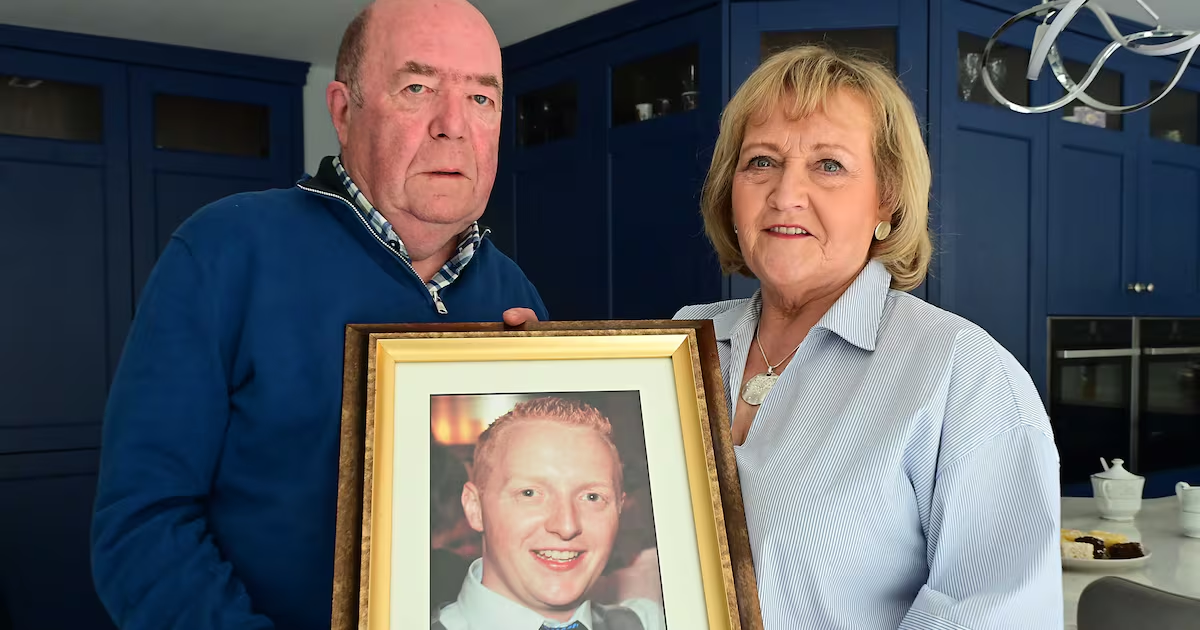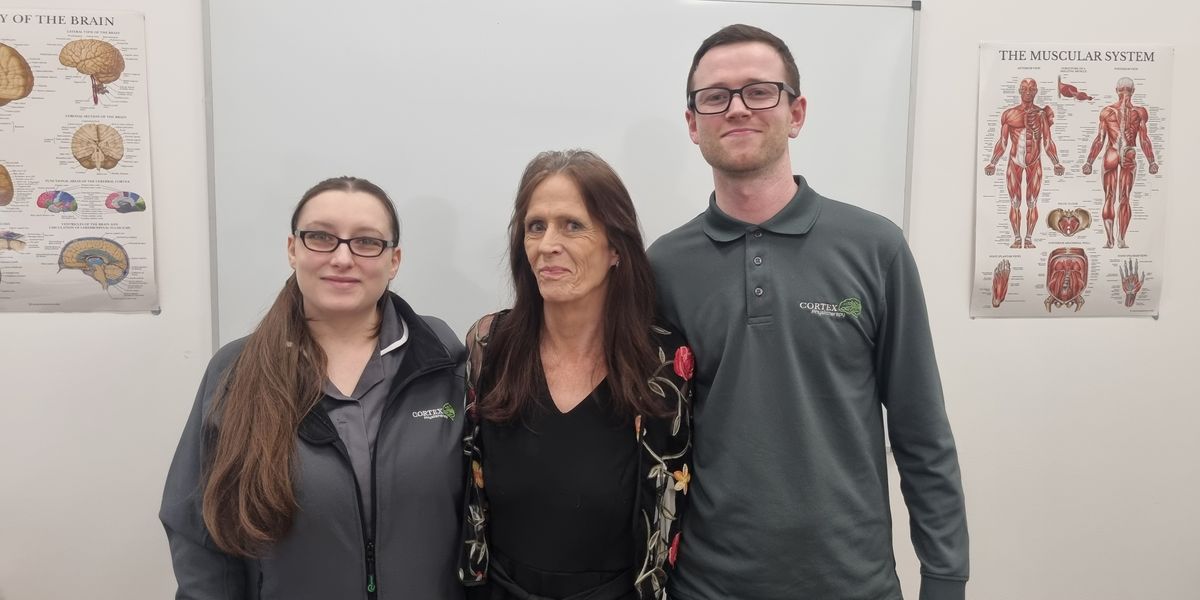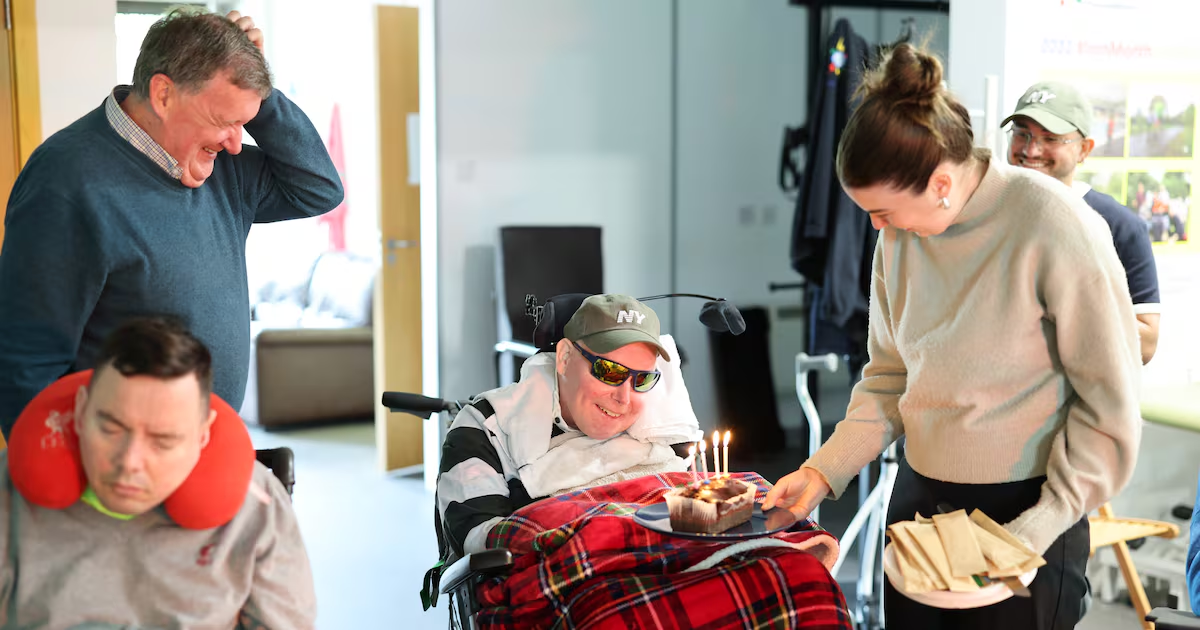
An Saol Foundation was set up by couple whose son was badly injured. Now the service is planning to expandService user Robert Flynn celebrates his birthday with father Brendan, left, and staff at An Saol in Santry, Dublin. Photograph: Dara Mac Dónaill Fri May 29 2026 - 06:00 • 3 MIN READRobert Flynn was 32 when, after a relationship broke up, he decided to move to Jamaica to work for telecoms firm Digicel. He loved life in the Caribbean, his father Brendan says, but everything changed when Robert suffered a cardiac arrest at Miami Airport in 2011.“He suffered a hypoxic brain injury because his brain was deprived of oxygen,” Brendan says. The health episode left Robert reliant on a wheelchair and peg feeding. After returning to Ireland, he spent time in hospitals and health facilities due to his significant care needs before his parents were able to bring him home. This included eight years in a nursing home. The Flynn family say Robert deteriorated markedly during those eight years due to the lack of specialist care on offer for people with severe acquired brain injuries in such facilities. Attending day services with the An Saol Foundation, a registered charity helping people with severe acquired brain injuries, has allowed Robert access to specific rehabilitation. Brendan says his son is “so different” now in comparison to when he started going to the centre in Santry, north Dublin.“She [the cognitive therapist] would get him to indicate what letter comes after C, what number comes after three. With regard to the saying things, he got to the stage where one blink was yes and two blinks were no,” Brendan says.“Now she says, ‘I’m not taking that’. It’s getting him to say ‘Yes’. ‘No’ is difficult because you can’t say ‘no’ unless the tongue is up behind the top front teeth. We’re trying to get him to the point where he’s making the effort.”Robert, who recently celebrated his 47th birthday, is one of the organisation’s 28 clients. Pádraig Schaler with parents Reinhard and Patricia, who founded An Saol. Photograph: Dara Mac Dónaill An Saol Foundation was established by Reinhard Schaler and his wife Patricia O’Byrne after their son Pádraig experienced a severe acquired brain injury and they realised there was little support available to them. It opened in 2020 on a pilot basis.Located inside a nondescript building in an office park, the organisation, which aims to be a voice for people who cannot advocate for themselves, is planning to expand and move to a much larger, purpose-built facility.The new facility will be 3,000sq m and provide services such as therapy, socialisation and respite. It is forecast to cost €12 million to €13 million to build, with an expected opening date in 2028 or 2029.The charity receives €600,000 from the HSE a year. It has 10 staff members, including physiotherapists, a holistic therapist and a learning support or cognitive specialist. While the service is a lifeline for many families, Schaler says it is not enough.Pádraig Schaler, with Mark Brennan, his personal assistant, and Paula Carnevali, senior physio and clinical lead, at An Saol. Photograph: Dara Mac Dónaill “Without these services, they will die,” he says. “What happens in cases with people who are long-term severely affected, they’re written off. What happens is, they get contractures, they’re in pain, bed sores.“We look after the mind, body and soul. The body is really half of what we offer to clients and then the mind is cognition work, so memory work, communication mainly. The holistic therapy is around sound, relaxation and mindfulness.”Catherine and Peter Cahill’s son David was on holiday on the Greek island of Crete in 2008 when they got a phone call to say he was on life support.He was just 21 at the time and had three heart attacks, which resulted in a severe acquired brain injury and the loss of his sight. David requires around-the-clock care. Catherine and Peter have been providing much of it for the past 18 years. “It’s hard for us because of our age now. I don’t think there’s enough support,” Peter says. Catherine says: “We get carers in, but they’re always changing. Some of them aren’t trained and we have to train them ourselves.” David Cahill with mother Catherine and Gordan Tuka, rehabilitation assistant at An Saol. Photograph: Dara Mac Dónaill David has been attending An Saol Foundation since it opened. He enjoys music therapy, robotic therapy, gait training and stretching, as well as having a pump, which contains medication to treat his spasms, refilled.Before his injury, David was an active gym-goer, fit and independent.“I feel so sorry for him. He keeps me going, but it was heartbreaking to see the outcome,” Catherine says. Peter says: “If it wasn’t for this place, we would be completely lost, as everyone else will tell you. It’s somewhere to bring him in the morning and he’s going to get something out of it with physiotherapy, etc. It’s good for us and it’s good for our son.”IN THIS SECTION
‘We look after mind, body and soul’: The acquired brain injury charity transforming lives
An Saol Foundation was set up by couple whose son was badly injured. Now the service is planning to expand
835 words~4 min read