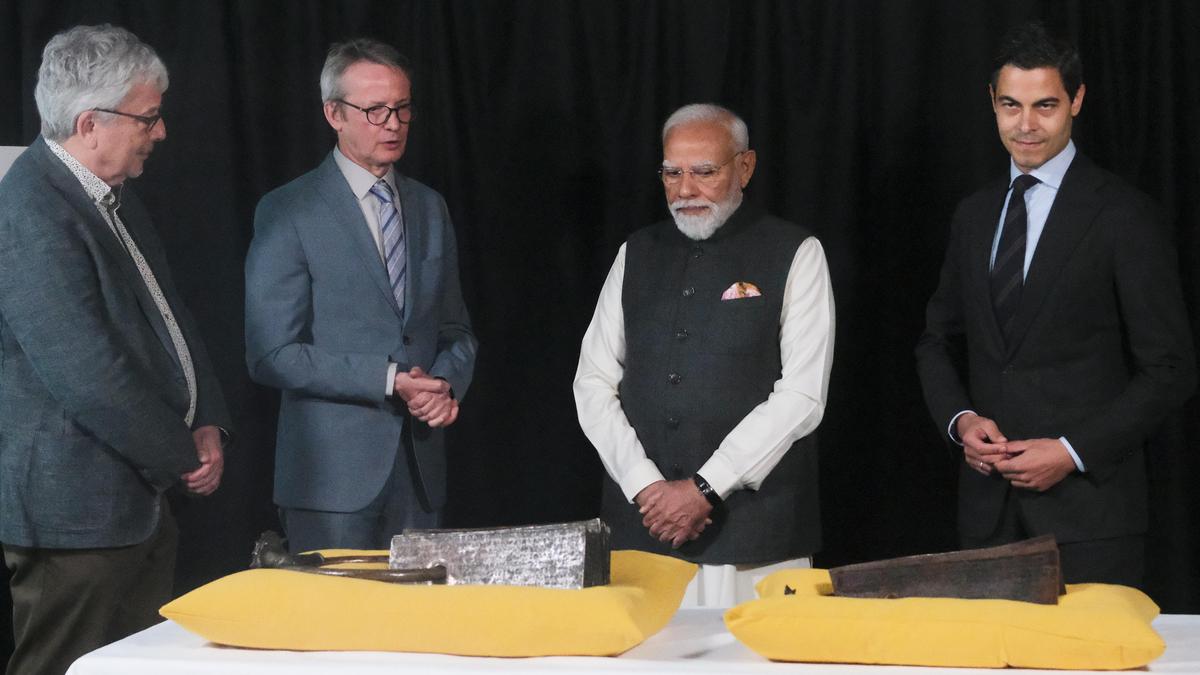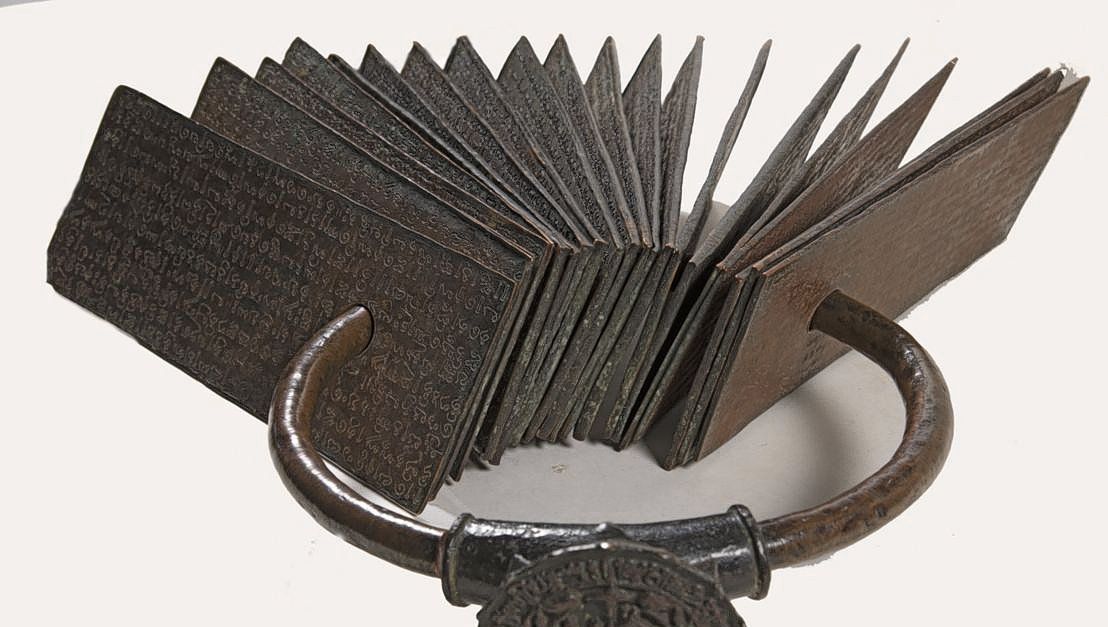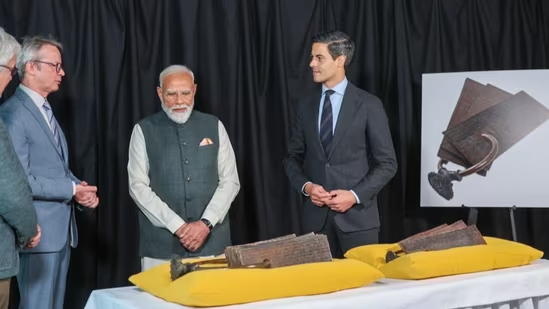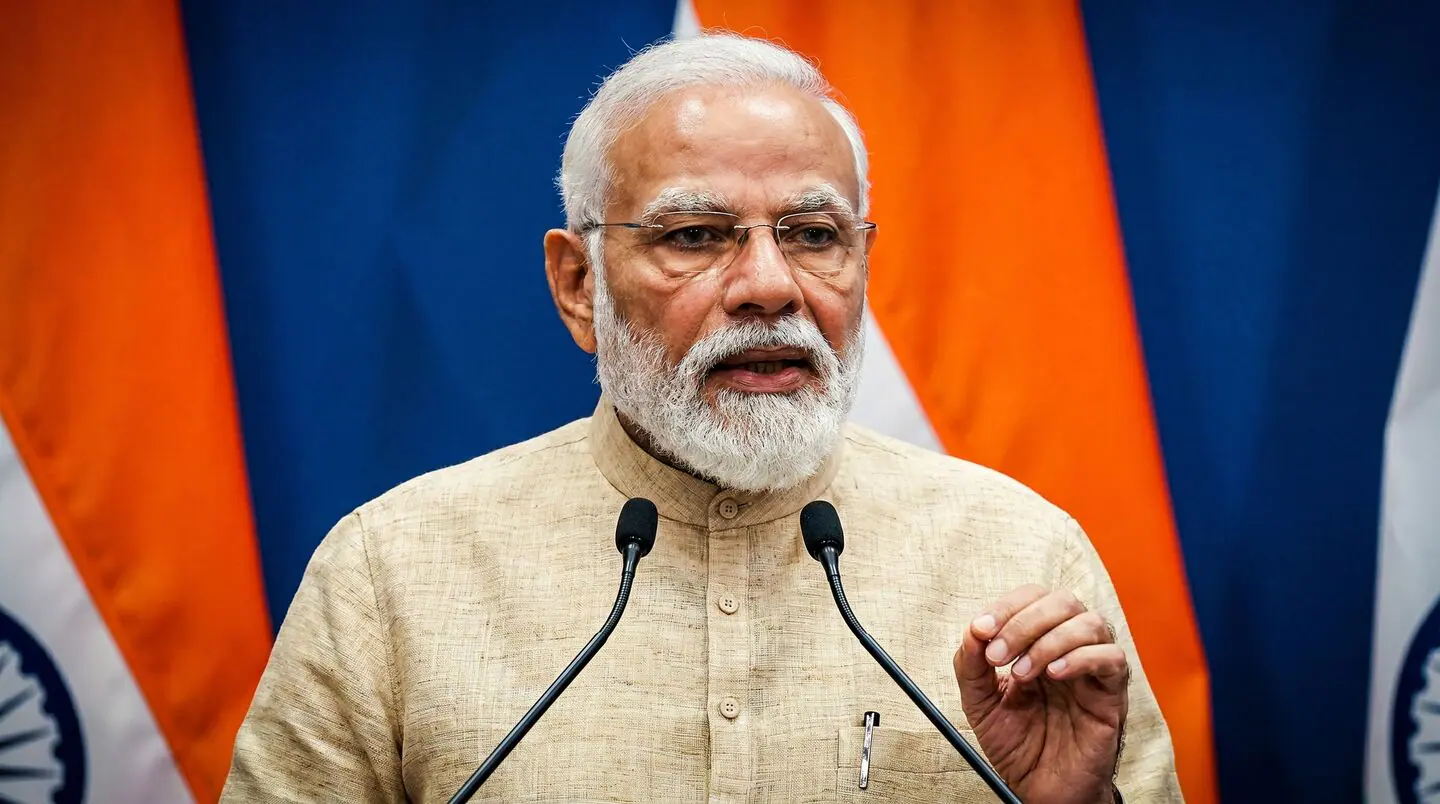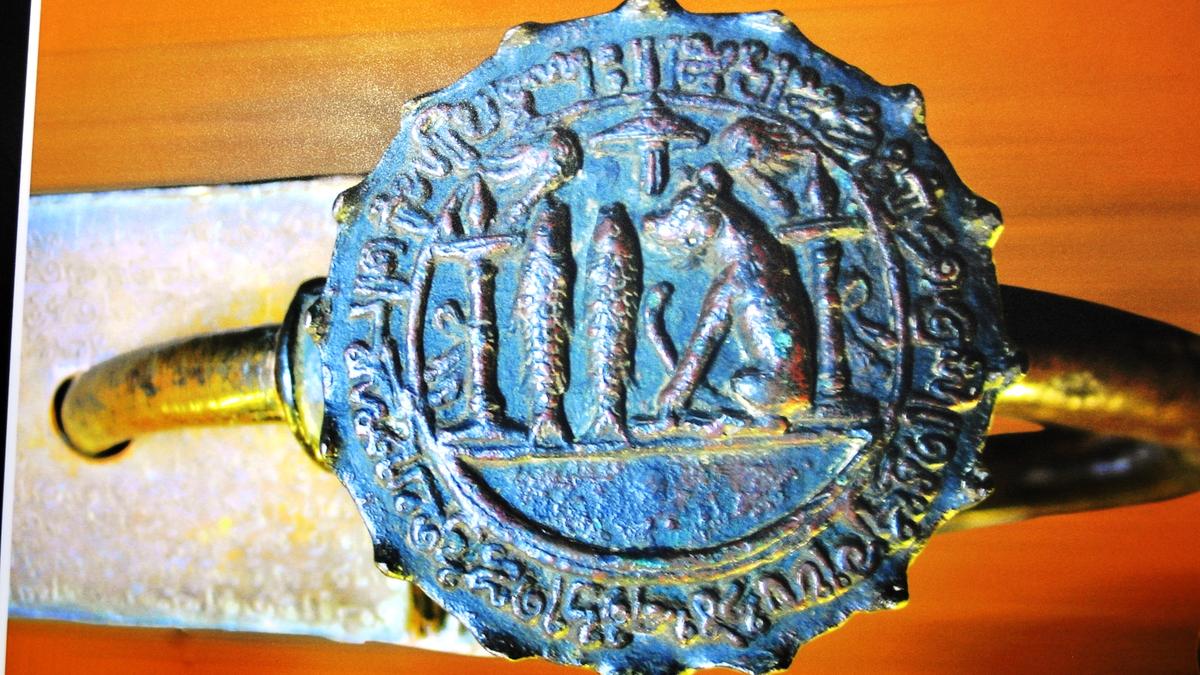
When the priceless Chola bronzes from Sivapuram and Pathur villages in Tamil Nadu were returned to India in 1986 and 1991 after protracted legal battles in the U.S. and U.K., it created a sensation. A formidable team of experts from diverse fields helped repatriate the bronzes after they were smuggled abroad. On February 17, 1988, Justice Ian Kennedy of a London court, awarding the idol to Tamil Nadu, praised R. Nagaswamy, who testified in the case, as “an acknowledged expert in the field of Chola bronzes.” Then Director of the Tamil Nadu State Department of Archaeology, Nagaswamy was an epigraphist, iconographer, archaeologist, and scholar of Tamil and Sanskrit.It was celebration time again for epigraphists and scholars of Chola history when Leiden University in the Netherlands handed over the Anaimangalam copper-plate charter, popularly known as the Leiden plates, to Prime Minister Narendra Modi at The Hague on May 16, 2026.
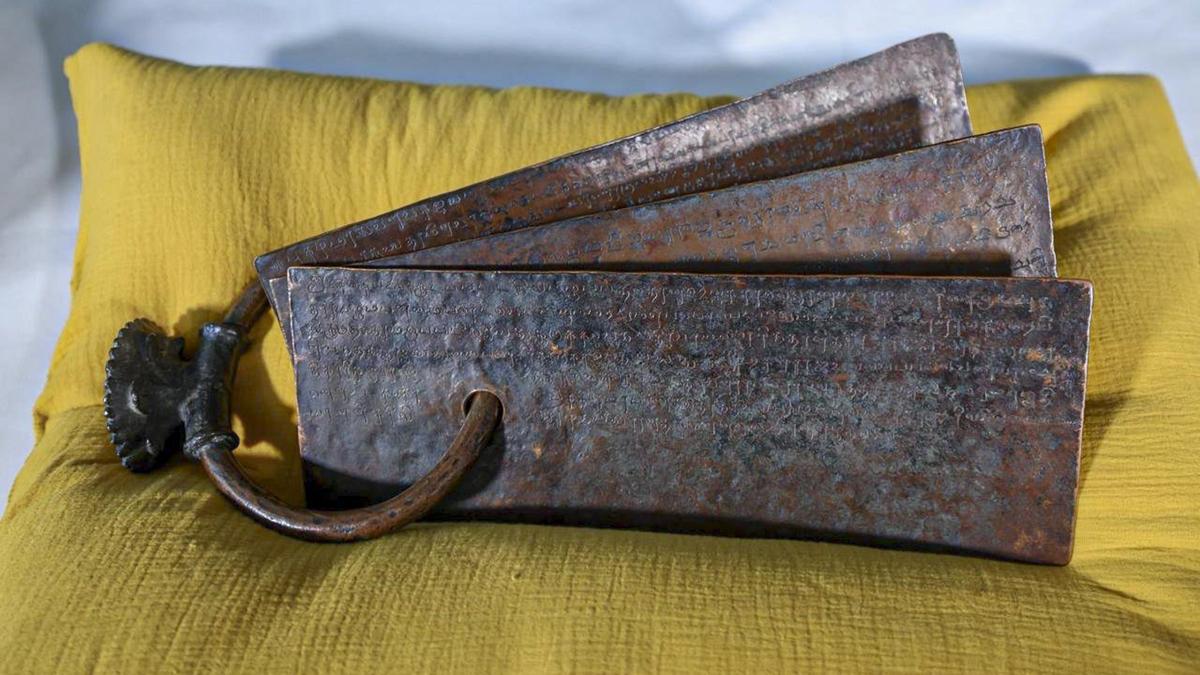
The Pallava, Pandya, Chola and Chera copper plates from the collections of the Government Museum, Chennai and the Department of Archaeology, Chennai.
| Photo Credit:
The Hindu Archives
Repatriating smuggled artefacts to their countries of origin is a tedious process. It involves prolonged court battles and testimonies from scholars, iconographers, epigraphists, forensic specialists and police officers. More importantly, the country in which the artefacts are discovered must be willing to return them, noted K. Muniratham, Director of Epigraphy, Archaeological Survey of India (ASI), Mysuru.The roles played by ASI Director General Y.S. Rawat, S. Swaminathan, epigraphist and Professor Y. Subbarayalu, a scholar of Chola history, were crucial in persuading The Netherlands to return the plates to India. “We had been trying for the past 14 years. The real process began in 2024, when UNESCO asked me to prepare a dossier on the Leiden plates. I did so, with the help of epigraphist Swaminathan. We worked closely with UNESCO,” said Munirathnam. The ASI also prepared a video presentation and successfully established the provenance of the plates, proving that they belonged to Tamil Nadu but had been taken to Holland. “We have brought back 155 artefacts in the last 13 years,” he added.Lennart Bes, assistant professor, Indian and Asian History, Institute for History (Colonial and Global History), Leiden University, wrote to Subbarayalu, seeking clarifications.According to Subbarayalu, “South Indian historians regard the two sets of Leiden copper plates, weighing about 30 kg and held by the university since 1862, as important sources for 11th‑century history. While thousands of stone inscriptions document Chola history, copper‑plate grants are comparatively rare. These plates, therefore, are invaluable records.”The statement of Leiden University’s Colonial Collections Committee (CCC), which conducted an independent provenance investigation before deciding to return the plates, noted that the artefacts were “most likely excavated during the construction of Fort Vijf Sinnen and the redevelopment of the site at the Chinese Pagoda in Nagapattinam by the Dutch East India Company (VOC) between 1687 and 1700. At the time, the VOC had captured Nagapattinam. The plates had been carefully buried in the ground, most likely to protect them during a period of upheaval.” Florentius Camper “brought” the plates to the Netherlands in 1712, and they were later donated to Leiden University in 1862.