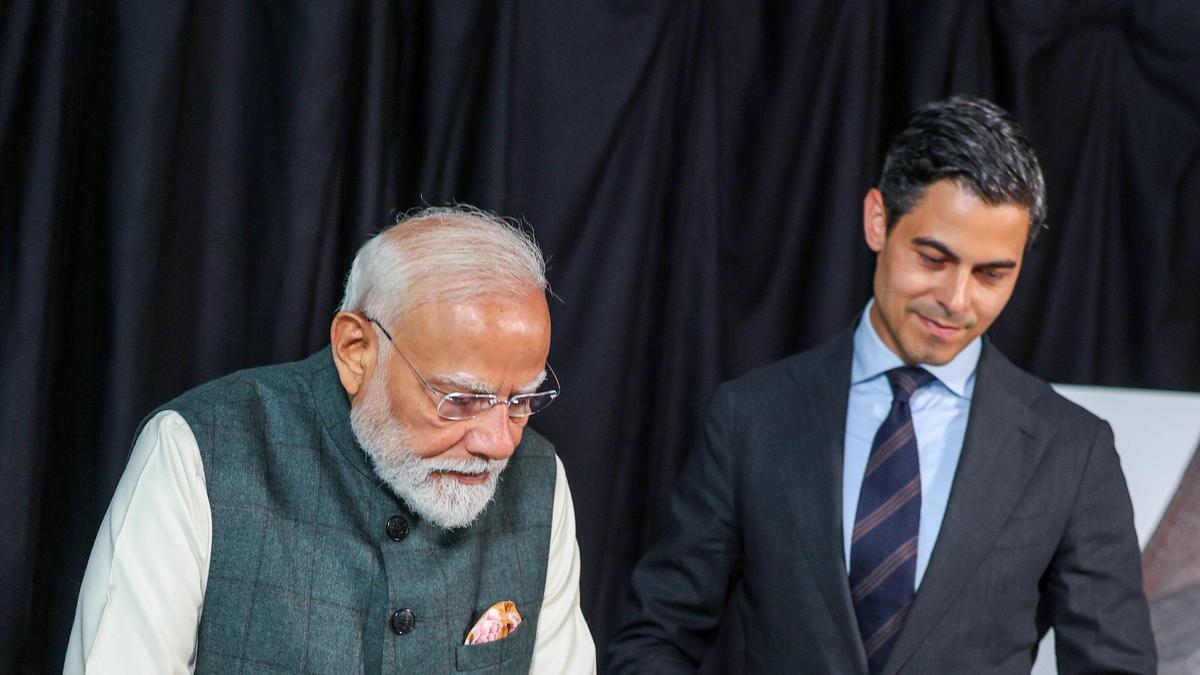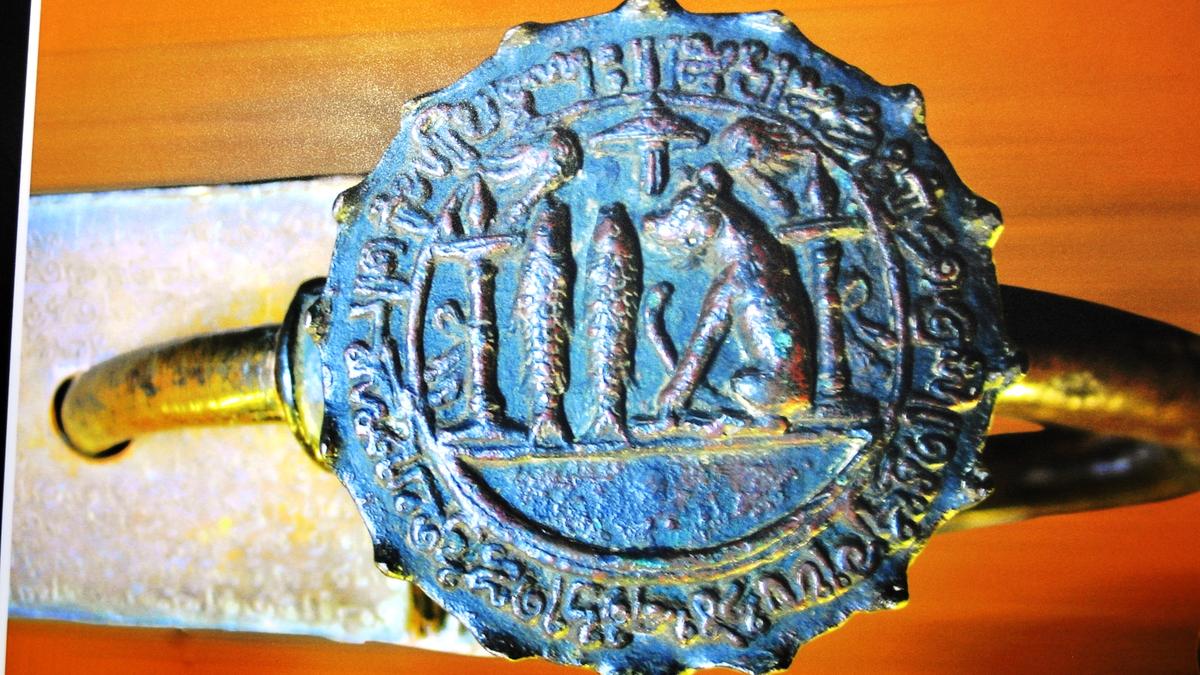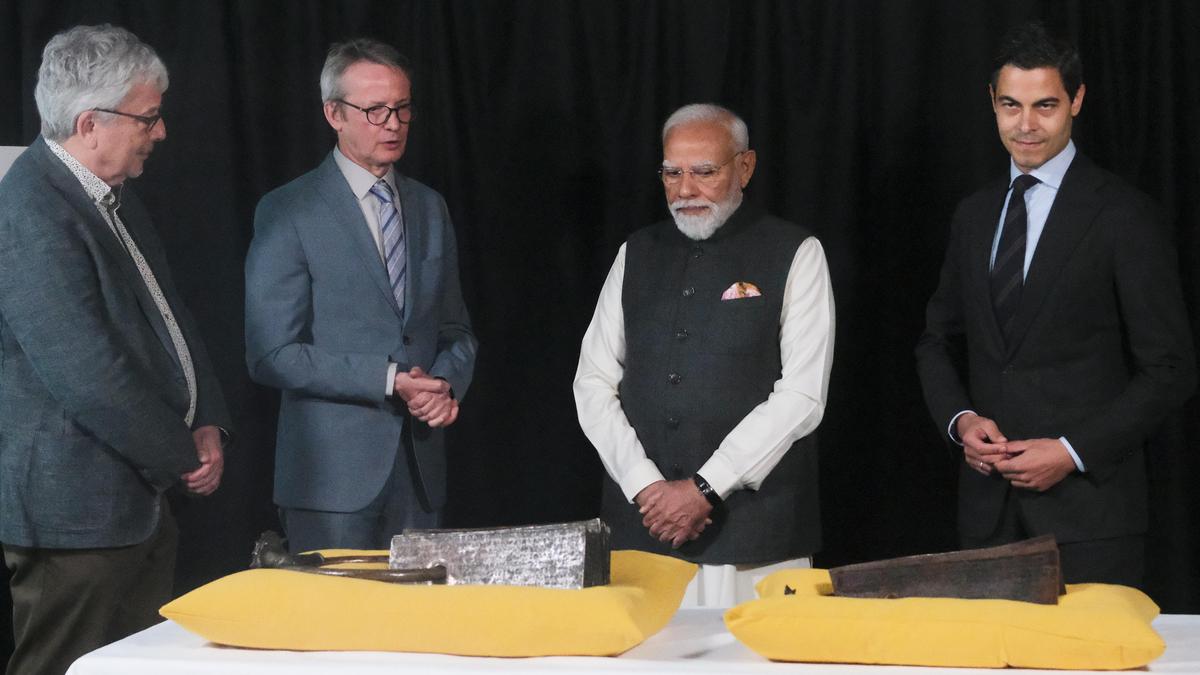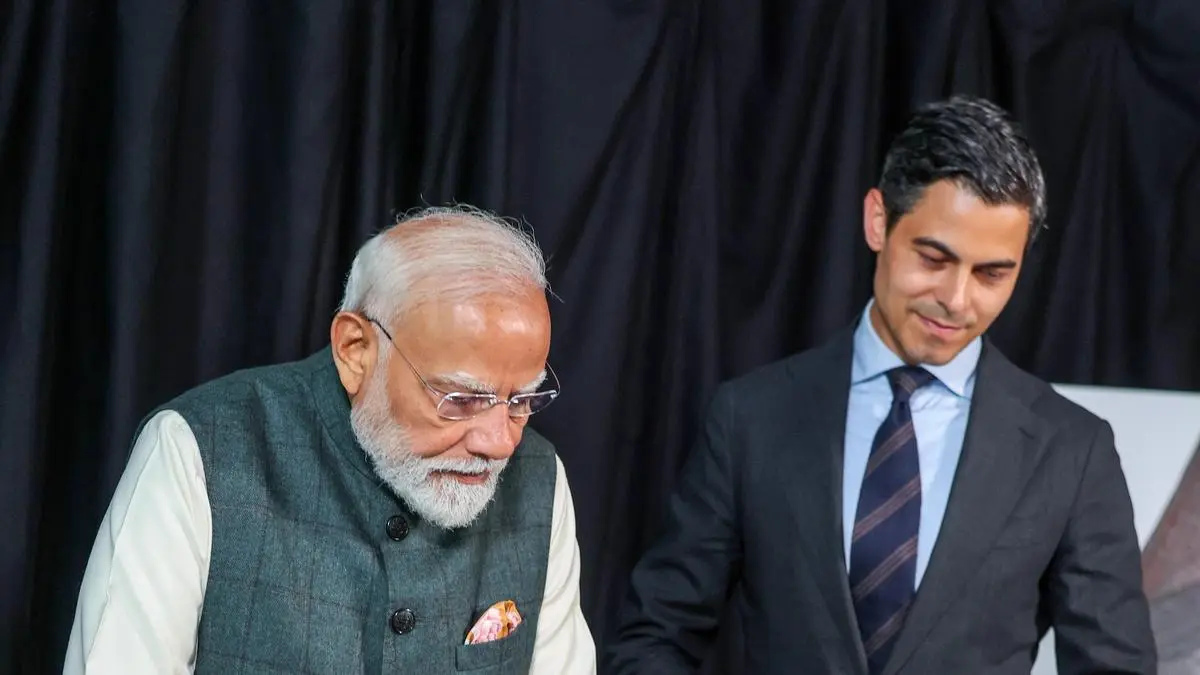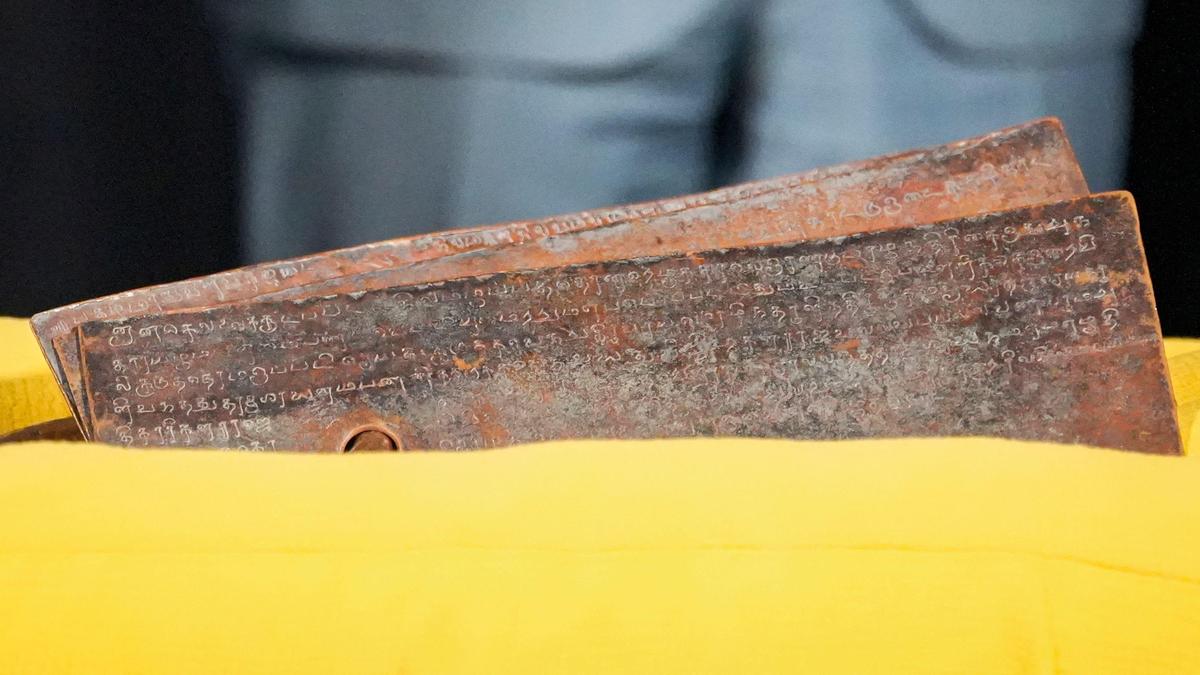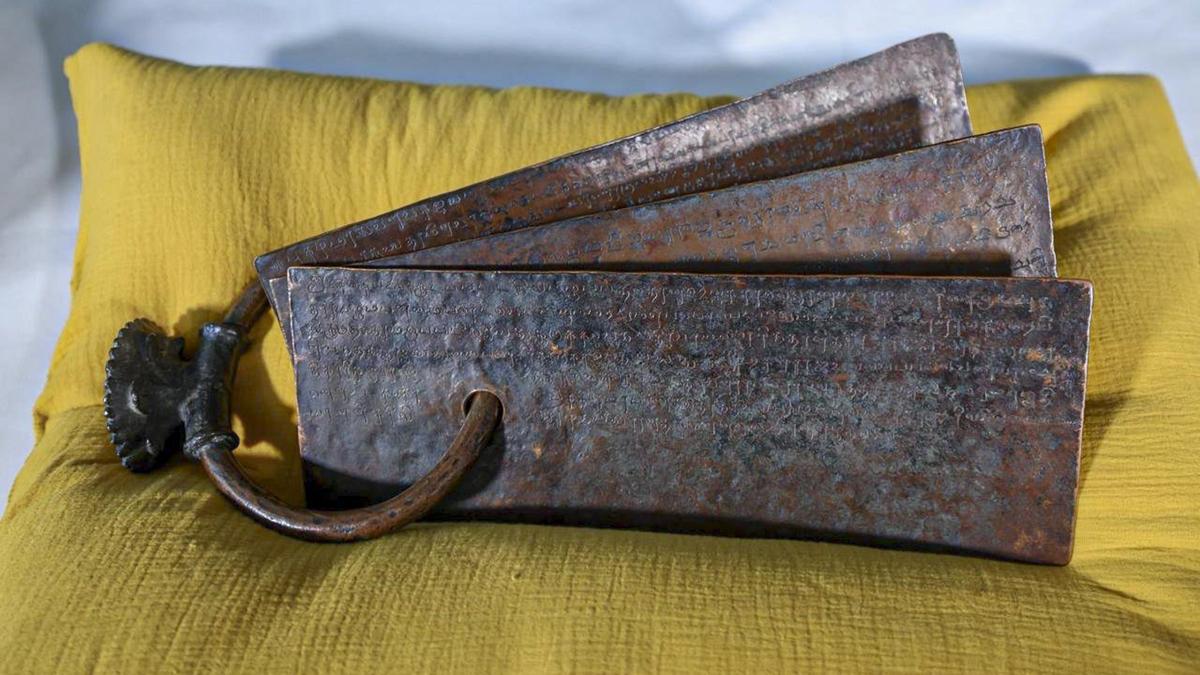
The 11th-century Chola dynasty copper plates displayed in The Hague. File
| Photo Credit: X/@narendramodi
The celebrated Anaimangalam copper plates—commonly known as the Leiden plates—are expected to return to India soon. This historic repatriation brings renewed focus onto a centuries-old mystery: what actually became of the grand, Chola-backed Buddhist monastery and the tax-free lands recorded in these famous inscriptions?In the 11th century, Rajaraja Chola I donated the village of Anaimangalam and its surrounding lands to the Chudamani Varma Vihara in the port city of Nagapattinam. The construction of this monastery was initiated in 1005 CE by King Chudamani Varman of Kadaram (the Sri Vijaya Kingdom) and was completed by his son, King Maravijayottunggavarman, who dedicated it to his father’s memory.Rajaraja made the land grant during the 21st year of his reign, but following his demise, it was his son, Rajendra Chola I (Madhurantakan), who officially documented the boundaries of the gift on 21 copper plates in 1035 CE. The land was designated as Pallichchandham (tax-free land gifted to non-Hindu religious institutions). Decades later, around 1090 CE, the ruler of Sri Vijaya dispatched two envoys to Kulothunga Chola I—Rajendra’s grandson. The envoys requested a fresh charter to reaffirm the gift, evict external squatters, and hand exclusive territorial custody back to the monastery. Kulothunga issued a secondary set of three copper plates accordingly.Eventually finding their way to Europe, these historic documents were preserved at Leiden University in the Netherlands. They were fully deciphered by epigraphists Pandit Natesa Aiyar in the late 19th century and K.V. Subrahmanya Aiyar in the 1930s.In the late 1960s, historian Achyuthan Govindan Kutty (K.A.) Menon joined the university and conducted extensive research by correlating the plates with later Dutch and local records. “I went there in September 1968,” Mr. Menon explained to The Hindu. “At that time, it was easy to access and examine those copper plates. Since they had already been deciphered, I analysed their data alongside later Nayak-period records and Dutch documents.”Mr. Menon published his findings in a research paper titled, “Copper plates to silver plates: Cholas, Dutch and Buddhism,” which provides critical details on the Vihara’s nomenclature, the transformation of the village names, and the eventual destruction of the monastery.By the 19th century, Buddhism had long vanished from the Coromandel Coast, but the imposing brick skeleton of the monastery still stood. Known locally as the “Pudhuveli Gopuram”, the structure served as a coastal landmark for international ships sailing the Bay of Bengal.In 1846, British civil servant Sir W. Elliot surveyed the ruins, deeply impressed by its unique architectural design. In an 1878 record, Elliot described the Vihara as: “...a somewhat four-sided tower of three stories, constructed on bricks closely fitted together without cement, the first and second stories divided by corniced mouldings, with an opening for a door or window in the middle of each side... The top was open.”Erasure of pastDespite its immense archaeological value, the ancient tower met a tragic end. In 1859, French Jesuit priests petitioned to clear the historic structure. Overriding initial hesitations from regional authorities, a final demolition order was signed on August 28, 1867. The three-story tower, which had survived nearly nine centuries of coastal weather and changing dynasties, was completely levelled.While the physical monastery was erased, what happened to the vast lands given to support it?By tracking land deeds across Chola edicts, 17th-century Nayak and Maratha silver plates, and Dutch East India Company treaties, Mr. Menon mapped out a fascinating linguistic and political transformation.While ‘Anaimangalam’ and ‘Anaimangalam Brahmadeyam’ are mentioned in both the Larger and Smaller Leiden copper plates, the name ‘Anaimangalam’ disappears from documents written after the Smaller Leiden plates. Conversely, the name ‘Sangamangalam’ appears in these later post-Leiden records. Based on this, K.A. Menon suggests that after Anaimangalam village was gifted to the Buddhist Vihara and its monastic community (Sangha), its name likely morphed into ‘Sangamangalam’.Mr. Menon’s research notes that when Buddhism ultimately faded from the region, subsequent rulers repurposed the properties. The same villages were donated to the Portuguese with the same kind of rights and conditions as in the time of the Cholas. Published - June 10, 2026 06:00 am IST