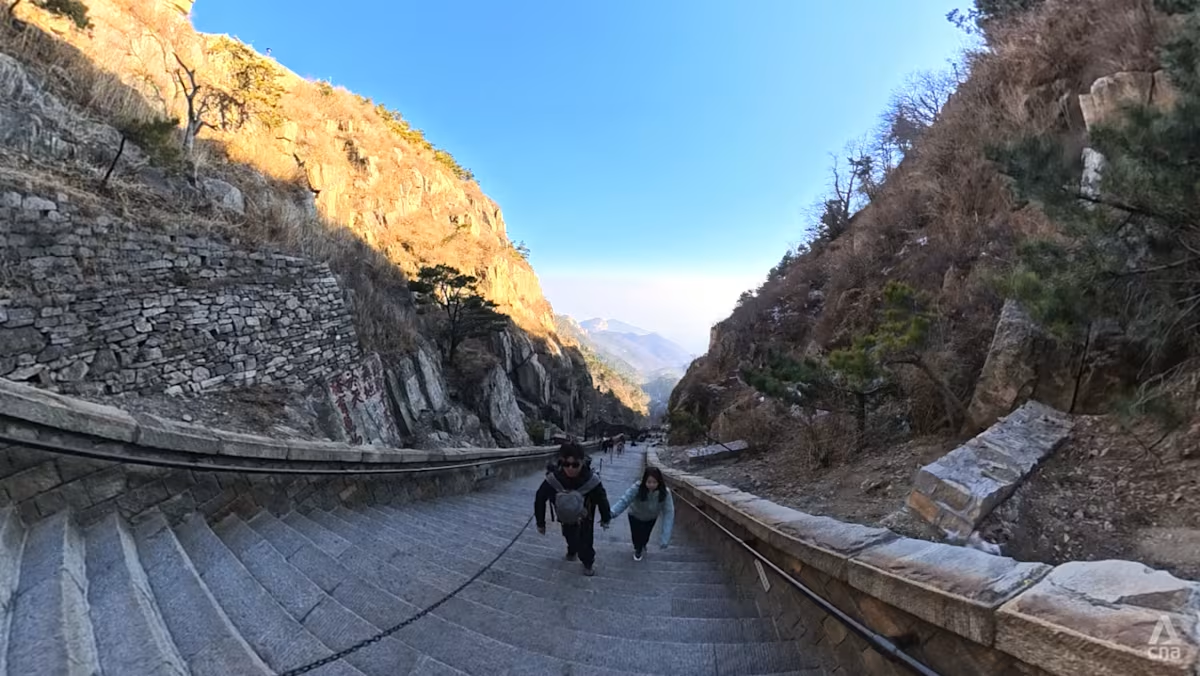
TAI’AN, Shandong: Along the 7,500 stone steps of Mount Tai, 24-year-old Xiao Meng is making his 200th ascent of the sacred mountain. Dubbed the leader of China's Five Great Mountains, Mount Tai rises 1,545m above sea level in the eastern Shandong province. For more than 2,000 years, Chinese emperors visited the mountain to pray. Today, it is a popular destination among domestic travellers and seen as a test of one's physical and mental endurance.
Despite carrying two bags – his own and his client's – Xiao Meng climbs steadily past other fatigued hikers struggling along the ascent. “As long as clients want to climb, we guarantee that we can bring them to the peak, 100 per cent,” he said, extending his hand to support his exhausted client. Xiao Meng, as he only wants to be known, is not a typical tour guide, but a “pei pa” – literally, a “companion climber”. He does everything a tour guide does: explains the area’s history and landmarks, takes photographs and ensures his clients’ safety. But he also provides physical and emotional support. He provides the essentials such as food and water, holds clients' hands, keeps conversations flowing, offers endless encouragement and, if requested, even carries exhausted climbers for short stretches.