view more
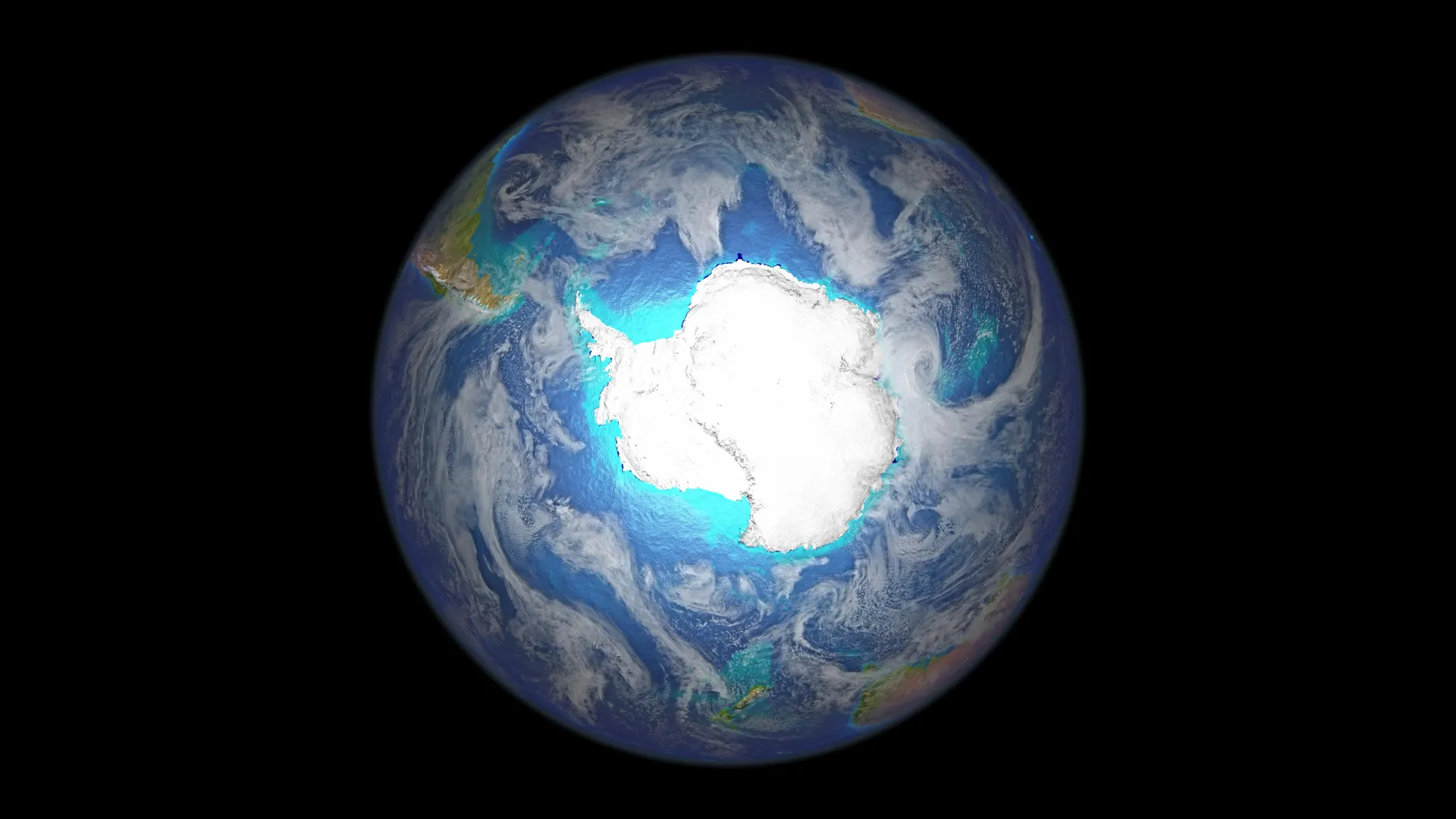
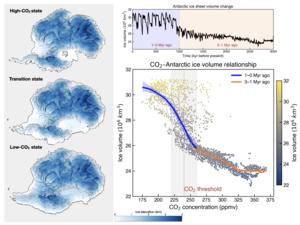
A new study published in the journal Nature Geoscience [1] by researchers at the IBS Center for Climate Physics (ICCP) at Pusan National University in South Korea shows that the Antarctic ice sheet became more sensitive to climate forcing following a major shift in Earth’s ice age cycles about one million years ago, providing new insight into how ice sheets respond to long-term climate change.
Antarctica currently holds the largest ice mass on Earth and plays a key role in global sea level change. About one million years ago, Earth’s climate system underwent a major shift, with ice ages becoming longer and more intense. This transition, known as the Mid-Pleistocene Transition, fundamentally altered the behavior of large ice sheets, yet how they responded to this change remains poorly understood. A key challenge has been the lack of long-term, realistic temperature and precipitation data needed to run ice sheet models under such conditions.
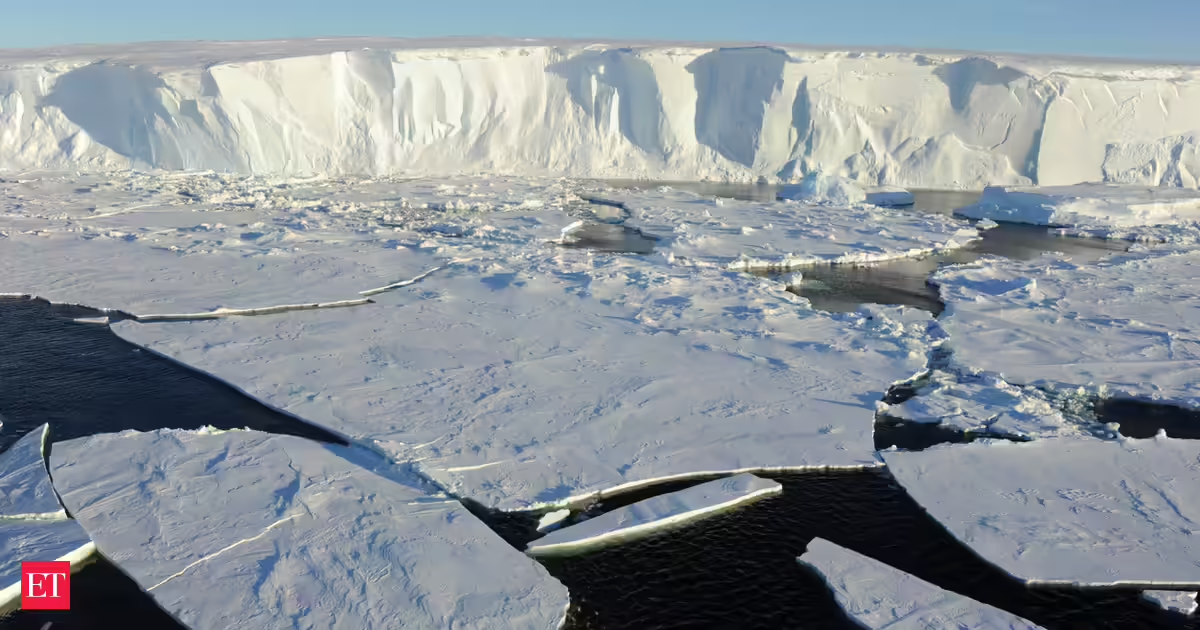
To overcome this limitation, the researchers used a realistic paleoclimate computer simulation [2], recently conducted at the ICCP, that reproduces the global climate history over the last 3 million years. Temperature and rainfall data from this simulation were then used as input for the Penn State University ice-sheet–ice-shelf model. This model simulates changes in ice sheet flow, temperature, and height for the Northern Hemisphere ice sheets and Antarctica. It also captures the dynamics and movement of floating ice shelves, such as in the Ross and Weddell Seas. Running the ice-sheet model on one of South Korea’s fastest computers dedicated to basic science, the researchers obtained a physically consistent and spatially continuous representation of the global ice-sheet evolution under time-evolving climate conditions.