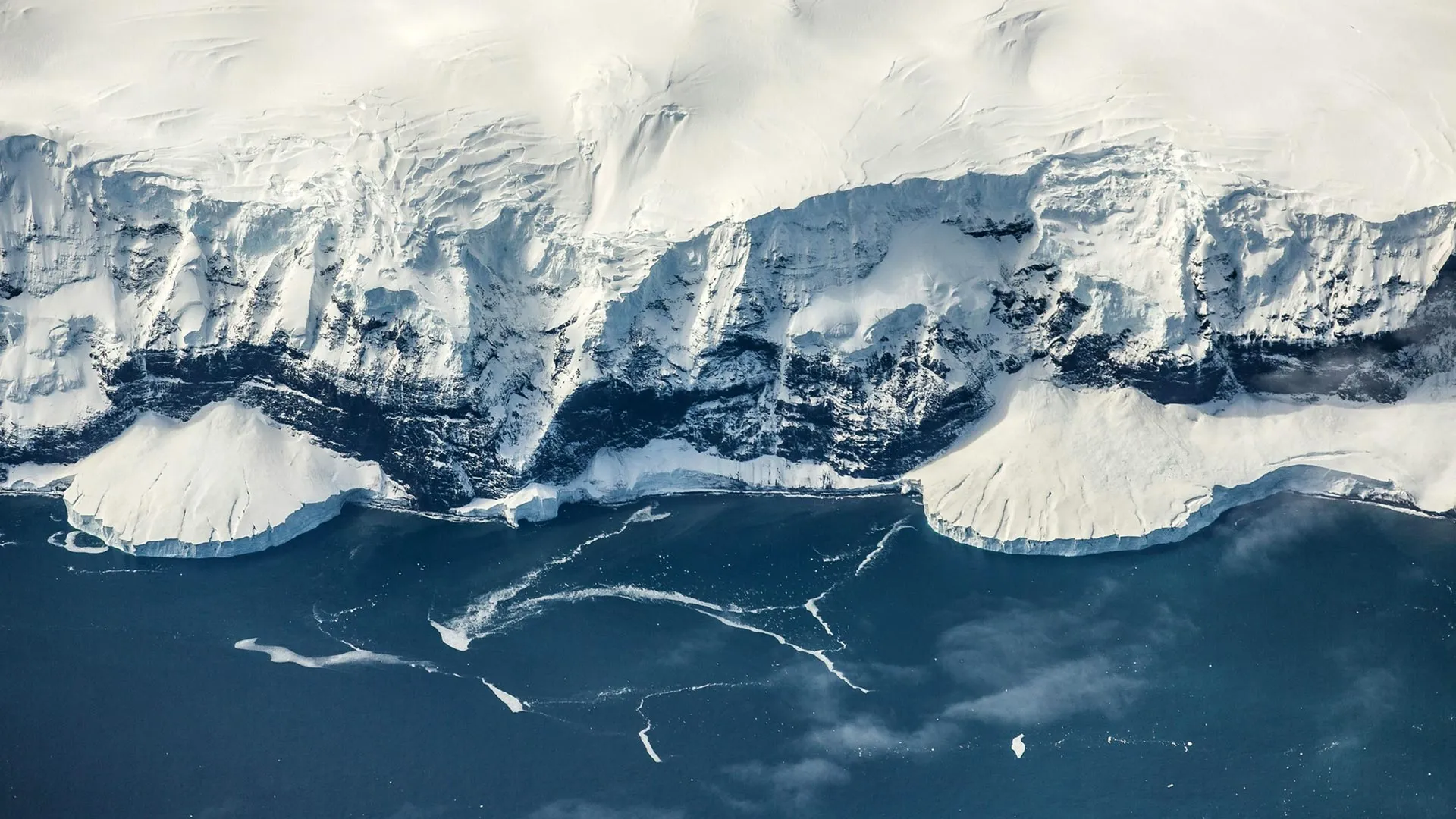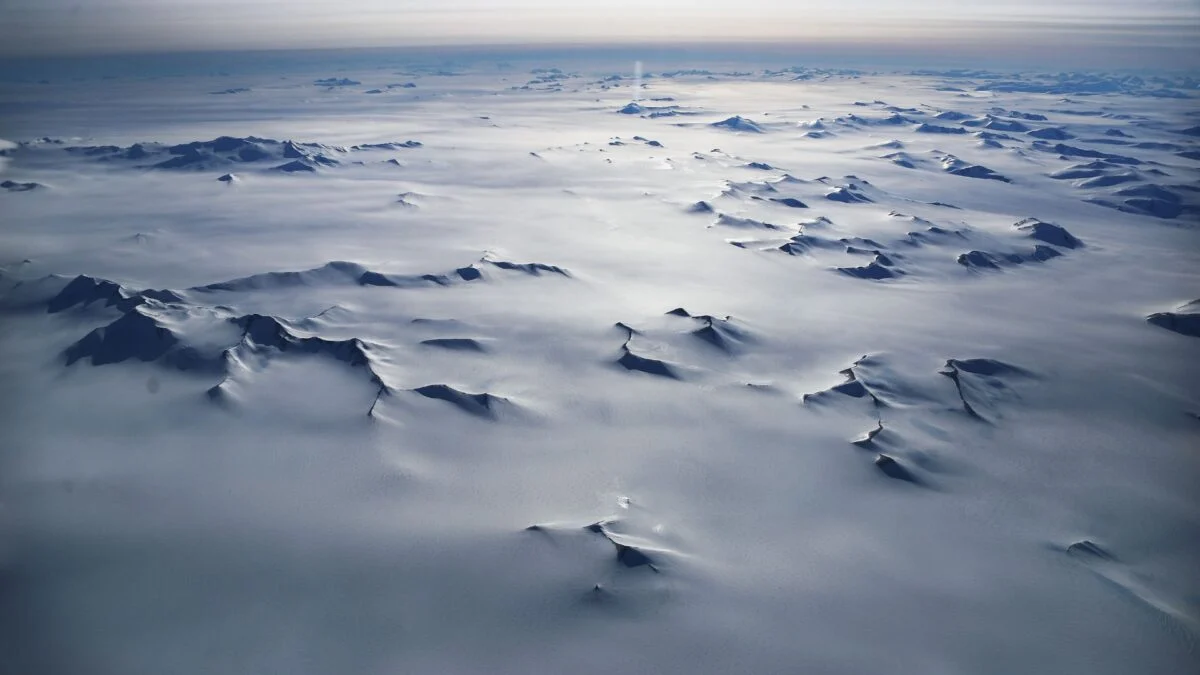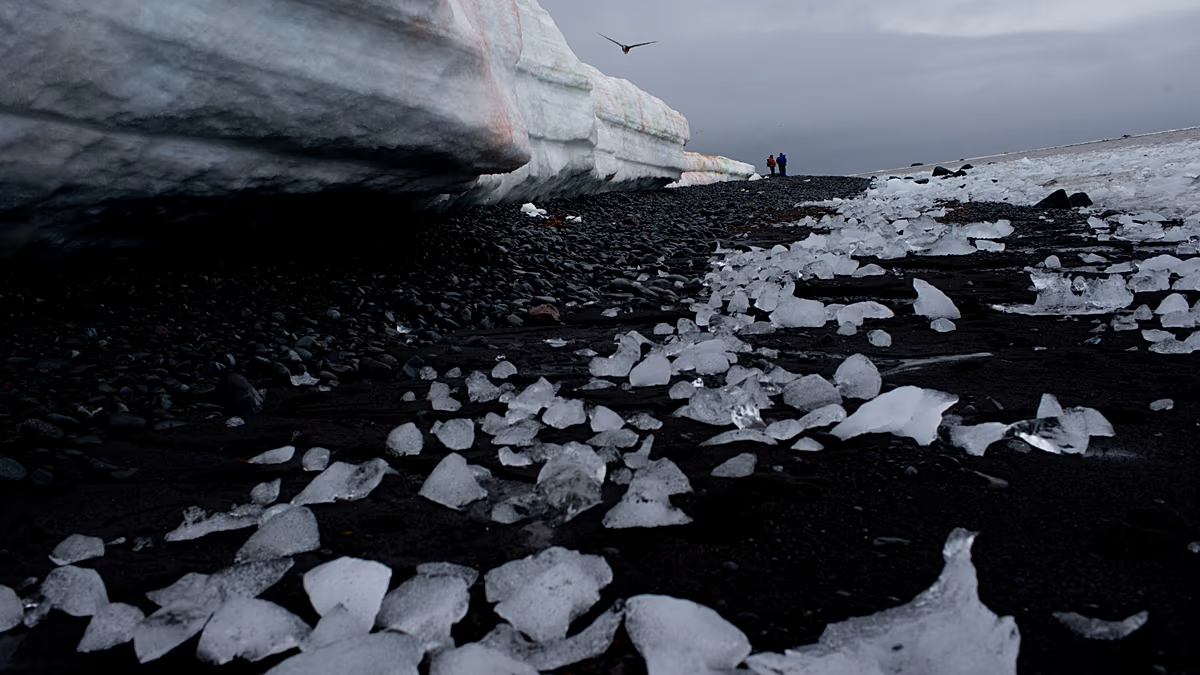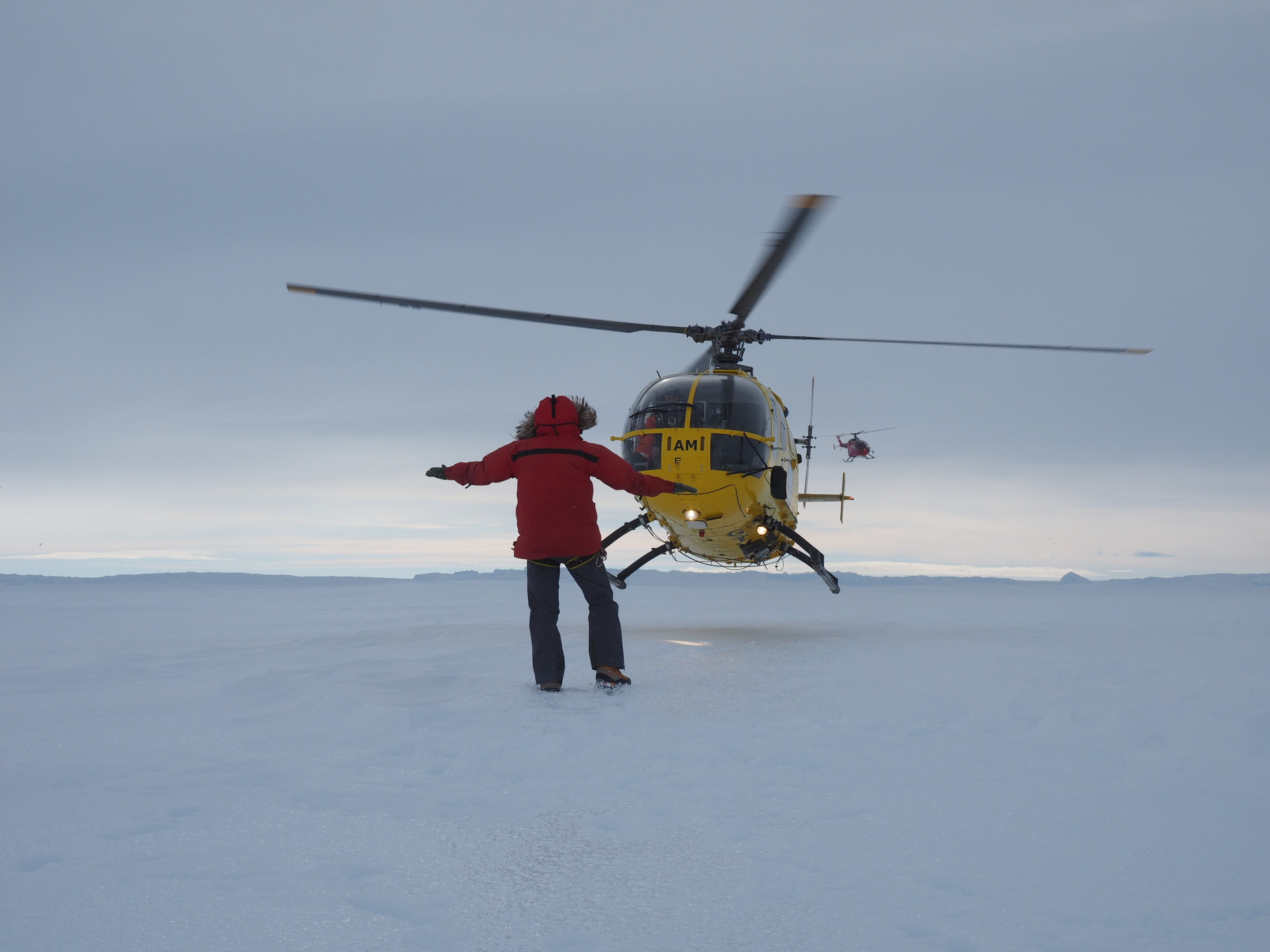
A helicopter lands at an ice core drilling site in Antarctica. Credit: Bradley Markle/CU Boulder
A decade ago, Bradley Markle, an assistant professor at the Institute of Arctic and Alpine Research at the University of Colorado Boulder, noticed an odd pattern while sifting through temperature records from the end of the last ice age in Antarctica. The records seemed to defy prevailing theories of how temperatures vary across the Antarctic continent.
The anomaly piqued Markle's interest, but he had to file it away in favor of finishing his Ph.D. at the University of Washington. Now, ten years later, Markle has resolved the mystery.
Along with his former advisor, Eric Steig, Markle has published a paper in Proceedings of the National Academy of Sciences, outlining a new principle of Antarctic temperature variation. The authors found that the greenhouse effect—the process by which atmospheric gases trap heat—explains why some places in Antarctica tend to warm or cool more dramatically than others.
"Because the greenhouse effect is nonlinear, it amplifies changes in warmer places more than colder places," Markle said. "Water vapor is the strongest greenhouse gas, and its concentration increases as the temperature goes up."