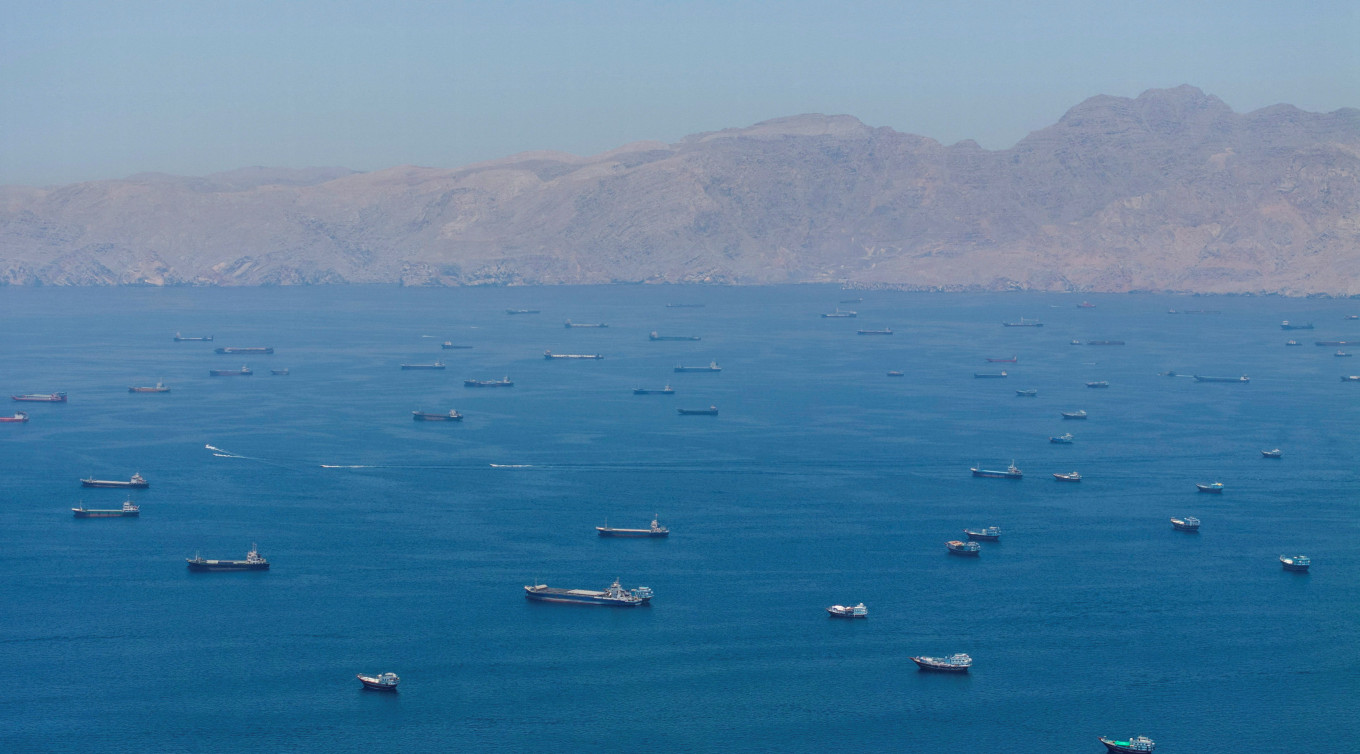
World·NewIran targeted a U.S. airbase on Thursday after the U.S. military struck one of its drone operations near the Strait of Hormuz, an escalation in hostilities that dampened hopes for a peace deal and sent oil prices surging again.Kuwait, which hosts a large U.S. base, condemns missile and drone attacks from IranThomson Reuters · Posted: May 28, 2026 6:38 AM EDT | Last Updated: 1 hour agoListen to this articleEstimated 4 minutesThe audio version of this article is generated by AI-based technology. Mispronunciations can occur. We are working with our partners to continually review and improve the results.Future of U.S., Iran ceasefire in doubtMay 26|Duration 2:08Iran has accused the U.S. of breaking a fragile ceasefire, raising questions about a possible peace deal and the reopening of the Strait of Hormuz.Iran targeted a U.S. airbase on Thursday after the U.S. military struck one of its drone operations near the Strait of Hormuz, an escalation in hostilities that dampened hopes for a peace deal and sent oil prices surging again. The Islamic Revolutionary Guard Corps (IRGC) said it targeted a U.S. base in response to what it described as an early morning U.S. attack near Bandar Abbas airport, Tasnim news agency reported. The IRGC did not identify the base. But Kuwait — which hosts a large U.S. base — said Thursday it was responding to Iranian missile and drone attacks, which its Foreign Ministry condemned as a serious escalation and blatant violation of its sovereignty and security. The ministry demanded that Iran immediately and unconditionally halt the attacks, saying it held Tehran fully responsible. U.S. officials said late Wednesday in Washington that forces launched more strikes on Iran. On Monday, the U.S. said it had conducted what the Pentagon called "defensive" strikes on missile launch sites and minelaying boats in southern Iran.U.S. forces intercepted five one-way attack drones that were launched by Iran, and prevented a sixth drone launch from an Iranian ground control site in Bandar Abbas, the U.S. Central Command (CENTCOM) said in an X post on Thursday. Oil prices, having fallen five per cent on Wednesday, rebounded after reports of the escalation in hostilities. U.S. crude futures gained more than three per cent, while stocks fell and the dollar rose.Iran stands by Oman The war has killed thousands and sent global energy prices sharply higher since it began on Feb. 28 with U.S. and Israeli strikes.Israel, which has been fighting Iran-backed Hezbollah militants in southern Lebanon, also reported sounding sirens regarding hostile aircraft activity in northern Israel. The Israel military said it had carried out a Thursday strike in Lebanon's capital Beirut.A man checks the site of destroyed buildings that were hit in Israeli airstrikes in the southern port city of Tyre, Lebanon on Thursday. (AP Photo/undefined)U.S. President Donald Trump has repeatedly said the end of the war is close but told media at a cabinet meeting on Wednesday he was not yet satisfied on a deal with Iran. He dismissed an Iranian state TV report that it had obtained an unofficial draft of an agreement to restore commercial shipping through the strait to prewar levels within a month, with Iran and Oman jointly managing traffic.Trump said no single country would have control over the waterway, and appeared to threaten Oman, a country with which the U.S. has decades-long military and economic ties."It's international waters and Oman will behave just like everybody else or we'll have to blow them up," he said. "They understand that, they'll be fine."The White House and Oman's embassy in Washington did not immediately respond to a request for comment.LISTEN | What’s happening with peace talks?:The Current18:28Will a US-Iran deal happen?There were reports on the weekend about an imminent deal to end the U.S. war with Iran — but those hopes were dimmed by fresh airstrikes Monday. What’s happening with talks between Washington and Tehran? And what does it mean for the war between Israel and Hezbollah in Lebanon? Guest host Catherine Cullen talks to Gregg Carlstrom, Middle East correspondent for The Economist; and Hussein Ibish, a senior resident scholar at the Arab Gulf States Institute in Washington, D.C.Tehran condemned the U.S. attack on Bandar Abbas, and also expressed solidarity with Oman.Ongoing sanctions, the dismantling of Iran's nuclear capacity and the blockage of the Strait of Hormuz, which handled one-fifth of the world's oil and liquefied natural gas traffic before the war, are the major sticking points in talks to end the three-month conflict.The waterway is covered by international law that guarantees foreign vessels the right to pass through. Meanwhile, the U.S. Treasury Department added the Persian Gulf Strait Authority, the Iranian body set up to manage passage through the strait, to a list of sanctioned people and entities seen as posing threats to U.S. national security. WATCH | Both sides experiencing losses amid negotiations:Iran war is a 'lose-lose,' says international relations expertMay 26|Duration 5:41Munk School founding director Janice Stein says the U.S.-Israel war with Iran is a mutually negative scenario, with none of the objectives of either side being met.A report on Iranian state TV said any deal to restore shipping would also have the U.S. withdraw military forces from the immediate vicinity, and that the issue of U.S. troops in the region needed further discussion. The White House dismissed the report as a "complete fabrication." Tehran did not comment.The Iranian TV report did not mention Iran's nuclear program, which the U.S. wants disbanded. Iranian sources have said talks on the nuclear issue will come in a second round of negotiations — something that may not be acceptable to some of Trump's closest supporters. Iran says its nuclear program is for peaceful purposes only. "The bottom line is Iran's never going to have a nuclear weapon," U.S. Secretary of State Marco Rubio said at the cabinet meeting.With files from the Associated Press
Iran targets U.S. airbase, oil prices tick back up as strikes are exchanged again | CBC News
Iran targeted a U.S. airbase on Thursday after the U.S. military struck one of its drone operations near the Strait of Hormuz, an escalation in hostilities that dampened hopes for a peace deal and sent oil prices surging again.
968 words~4 min read