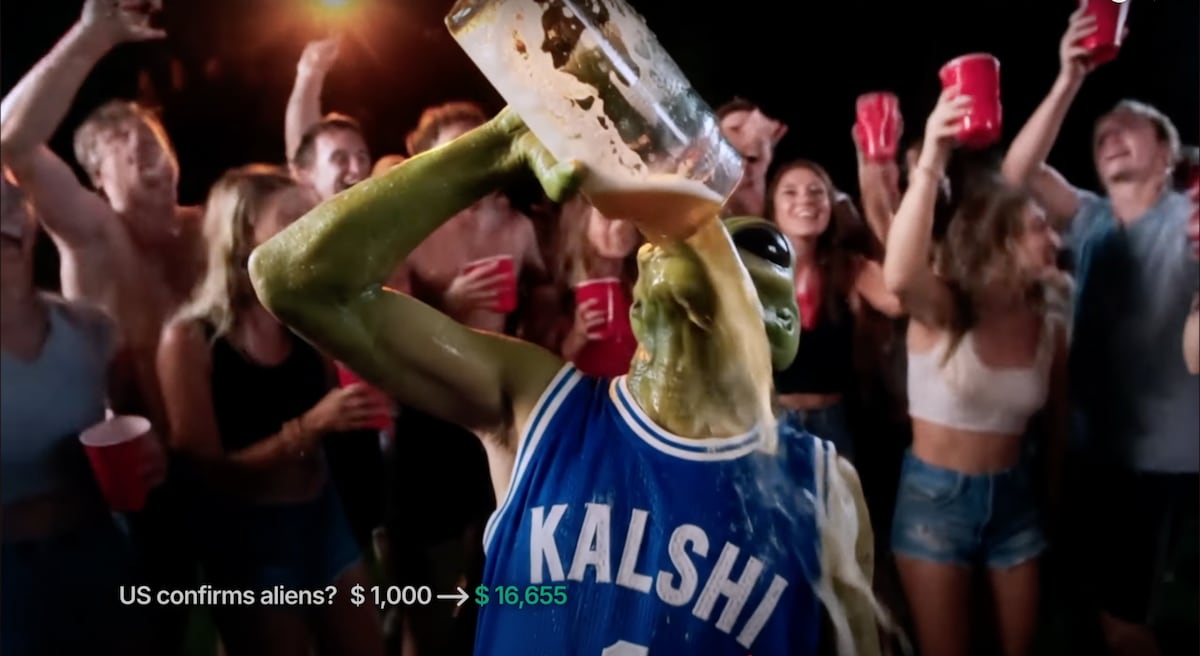
When Rory McIlroy won the Masters for the second year in a row, Kalshi shared a photo of him on Instagram with the words, “Wait he’s goated.” When a video of NBA player Damian Lillard recovering from an injury circulated online, Kalshi’s main competitor Polymarket posted, “The league is cooked.”
If you don’t know what either of those phrases mean, it’s because you may not be the target audience.
The posts and hundreds of others like it are exposing younger people to prediction market platforms, where users can put money on the line for the outcomes of real-world events — or absurd ones like when the U.S. will confirm that aliens exist or whether Jesus Christ will return before 2027.
Once on the platforms, companies keep users hooked with what they market as low-stakes, casual opportunities to make an easy buck, creating an environment that some say feels more like a game and less like a risky financial transaction with potentially harmful consequences. Indeed, recent academic research looking at 588 million trades on Polymarket found that profits were concentrated to just a very small group of top traders while the majority of users — 69% — lost money.
The playbook has a precedent. In 1988, R.J. Reynolds launched Joe Camel — a cartoon mascot the FTC would later allege was designed to attract underage smokers and “induced many young people to begin smoking.” By 1991, research published in the Journal of the American Medical Association found that Joe Camel was more recognizable to six-year-olds than Mickey Mouse, and that the campaign was “far more successful at marketing cigarettes to children than to adults.” R.J. Reynolds maintained the ads targeted adults. The campaign ran for nine more years before lawsuits, FTC pressure, and a congressional investigation forced it to stop.