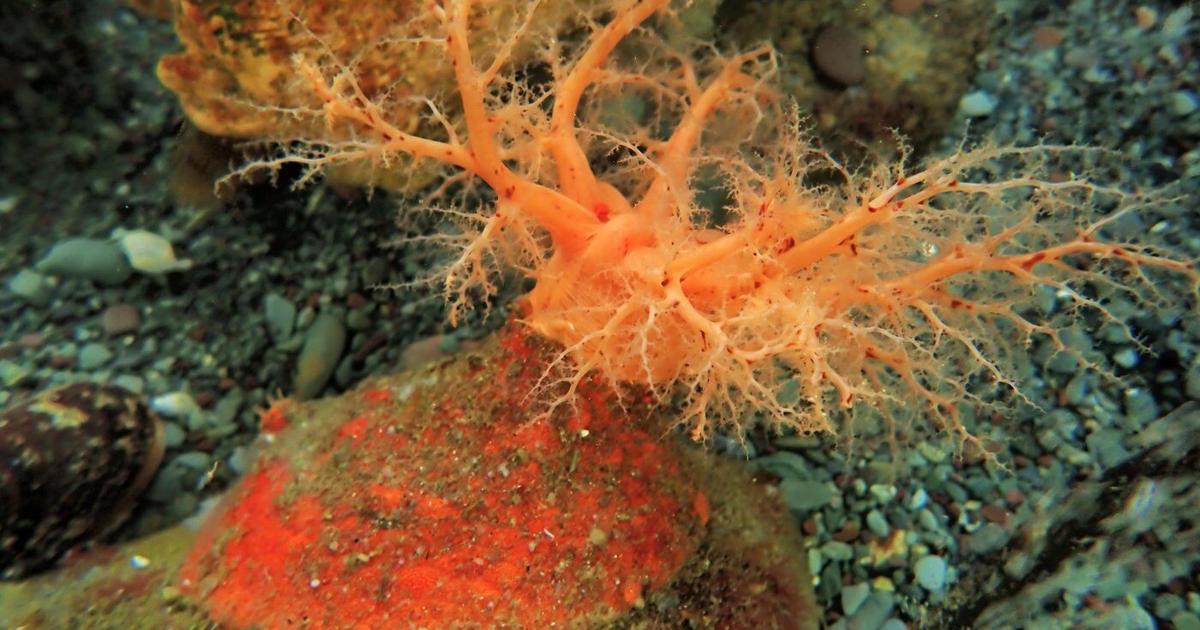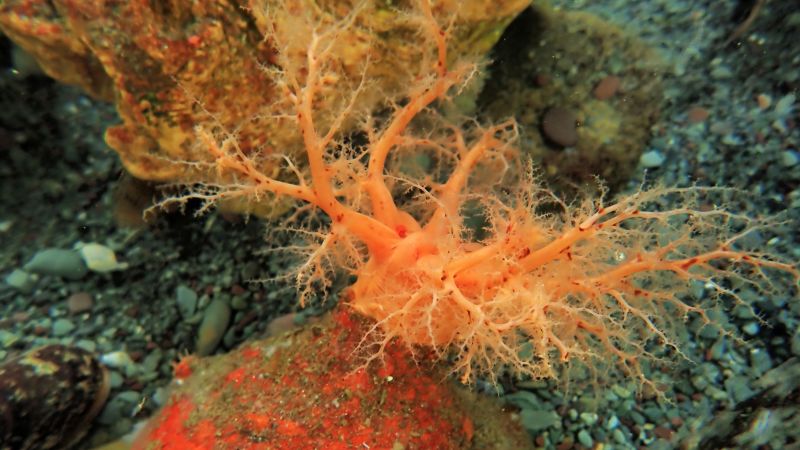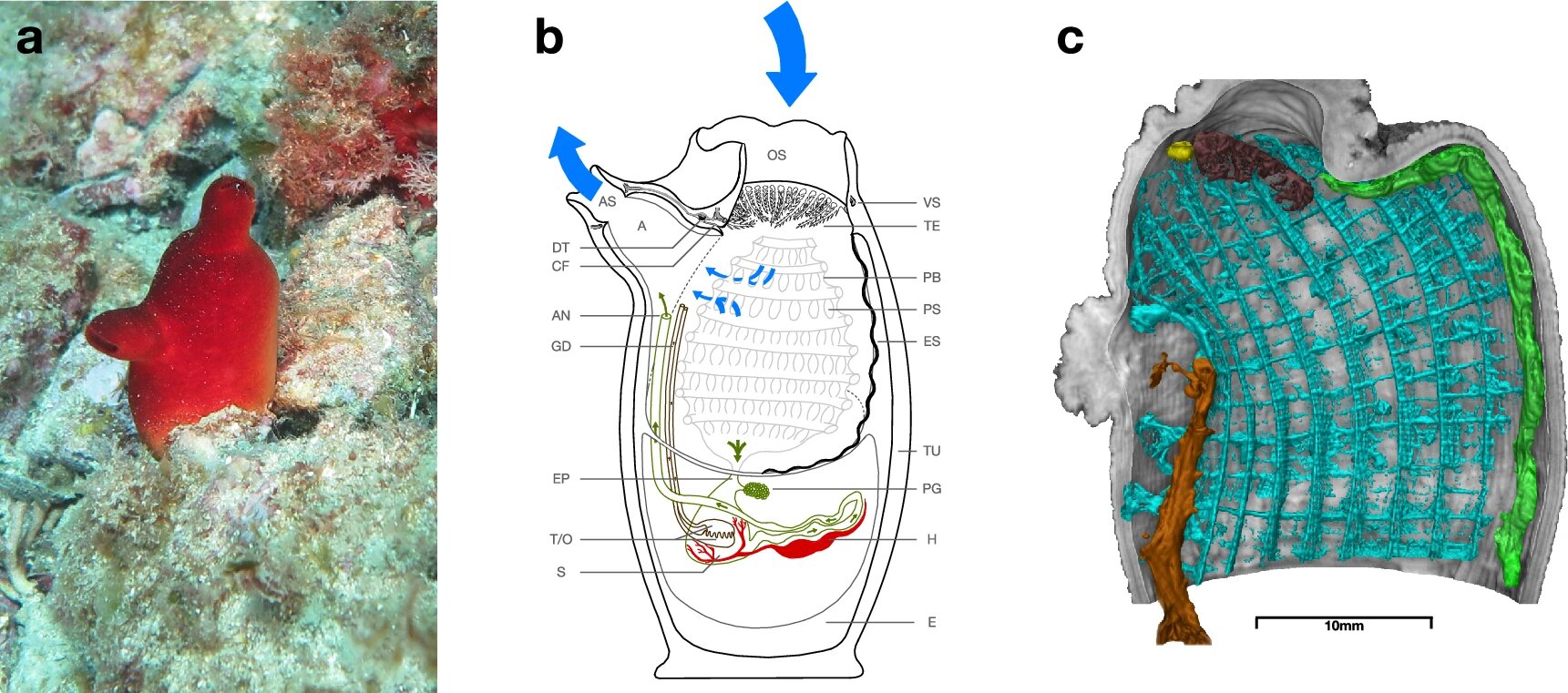
General anatomy of Halocynthia papillosa. Credit: Communications Biology (2026). DOI: 10.1038/s42003-026-10102-5
Ascidians, also known as sea squirts, are the evolutionary link between vertebrates and invertebrates, making them valuable subjects of biological studies. For the first time, researchers at Ruhr University Bochum have detected pronounced autofluorescence in Halocynthia papillosa, one of more than 3,000 species. Furthermore, the study provides comprehensive insights into the anatomy of this sea squirt.
The study demonstrated the potential of modern, multimodal imaging—from light and confocal microscopy to MRT and high-resolution synchrotron tomography, which facilitates three-dimensional imaging of even low-contrast tissues. The study was published in the journal Communications Biology on April 22, 2026.
Detailed characterization of the tunic
One key finding is the detailed characterization of the tunic that encases the animal. "For the first time, we were able to detect pronounced autofluorescence in the cuticular spines and reconstruct the complex, spirally organized cellulose architecture of the mantle," explains Dr. Mareike Huhn from the Ruhr University Bochum Department of General Zoology and Neurobiology.