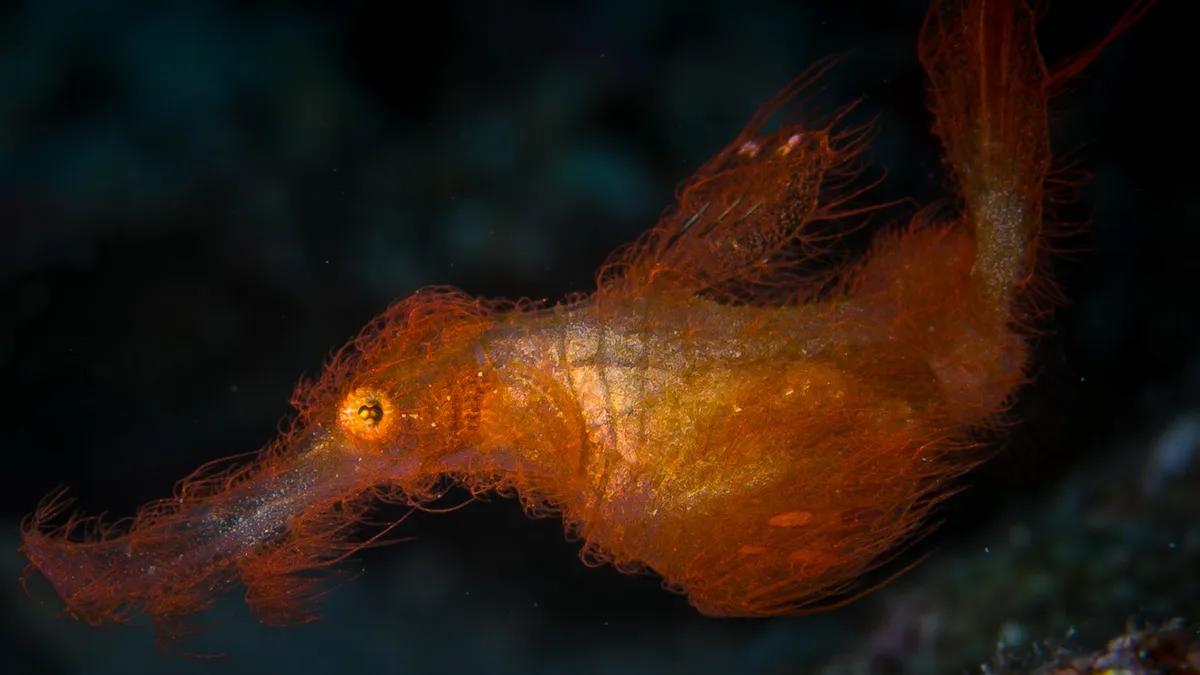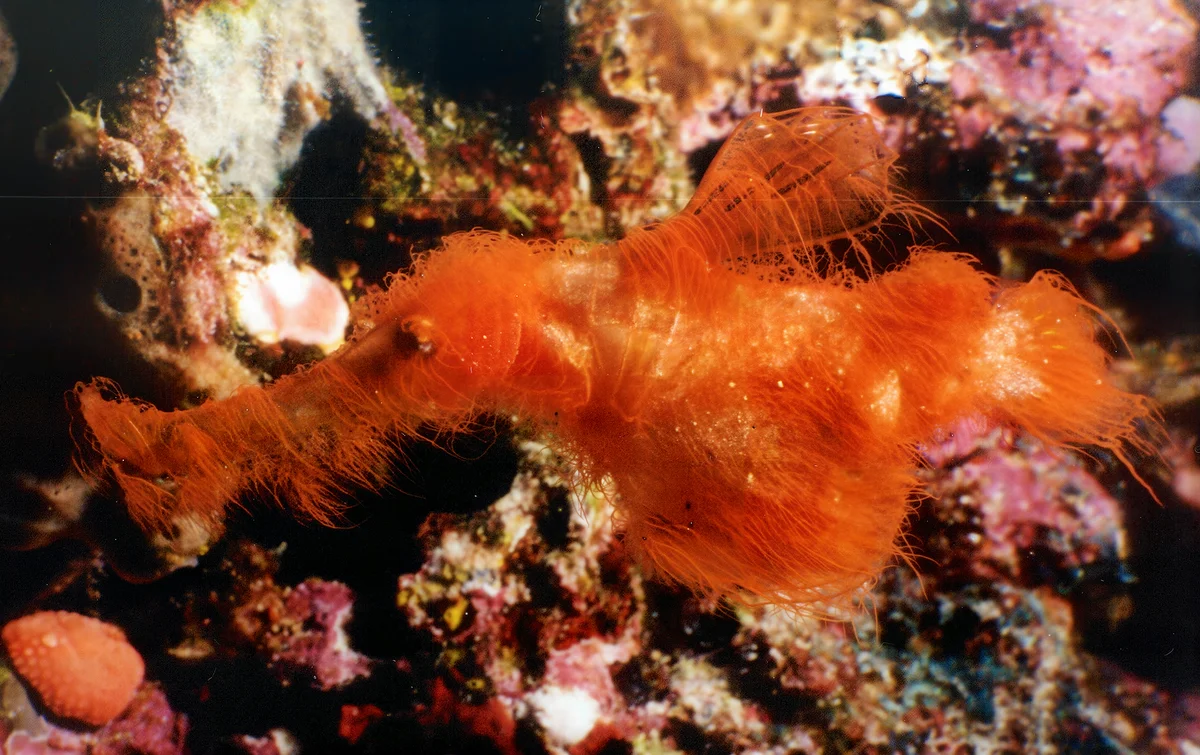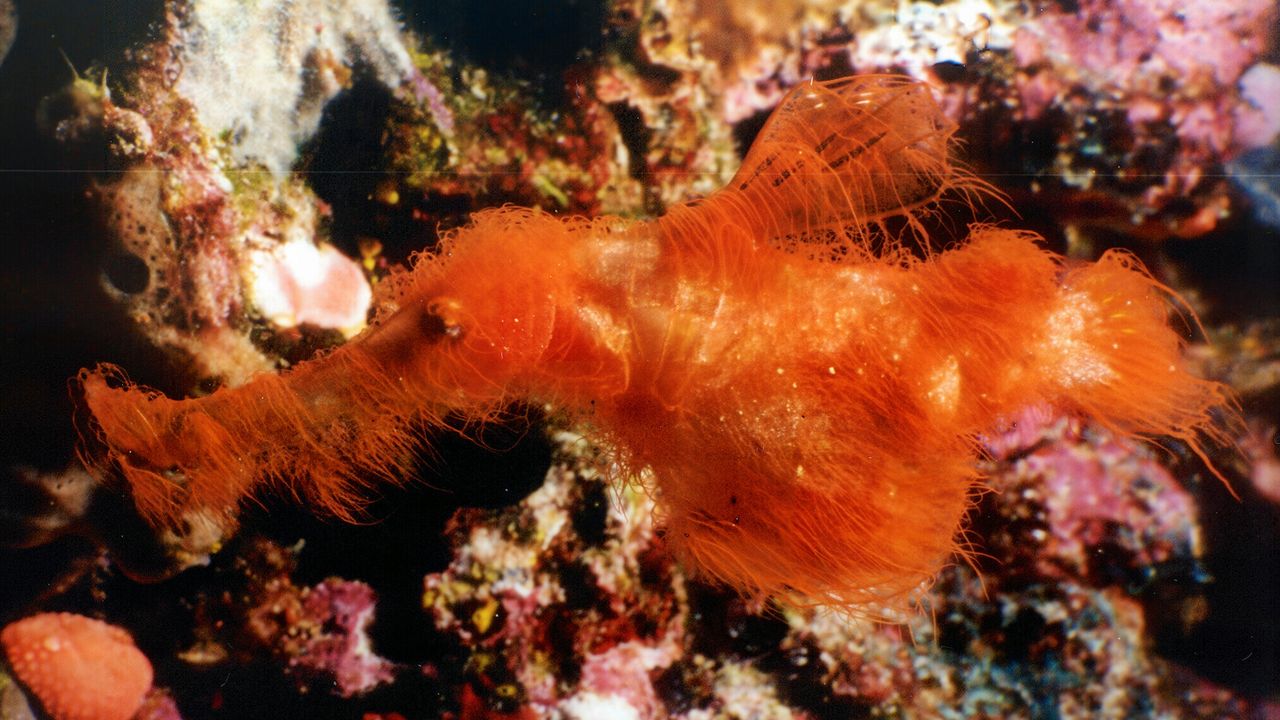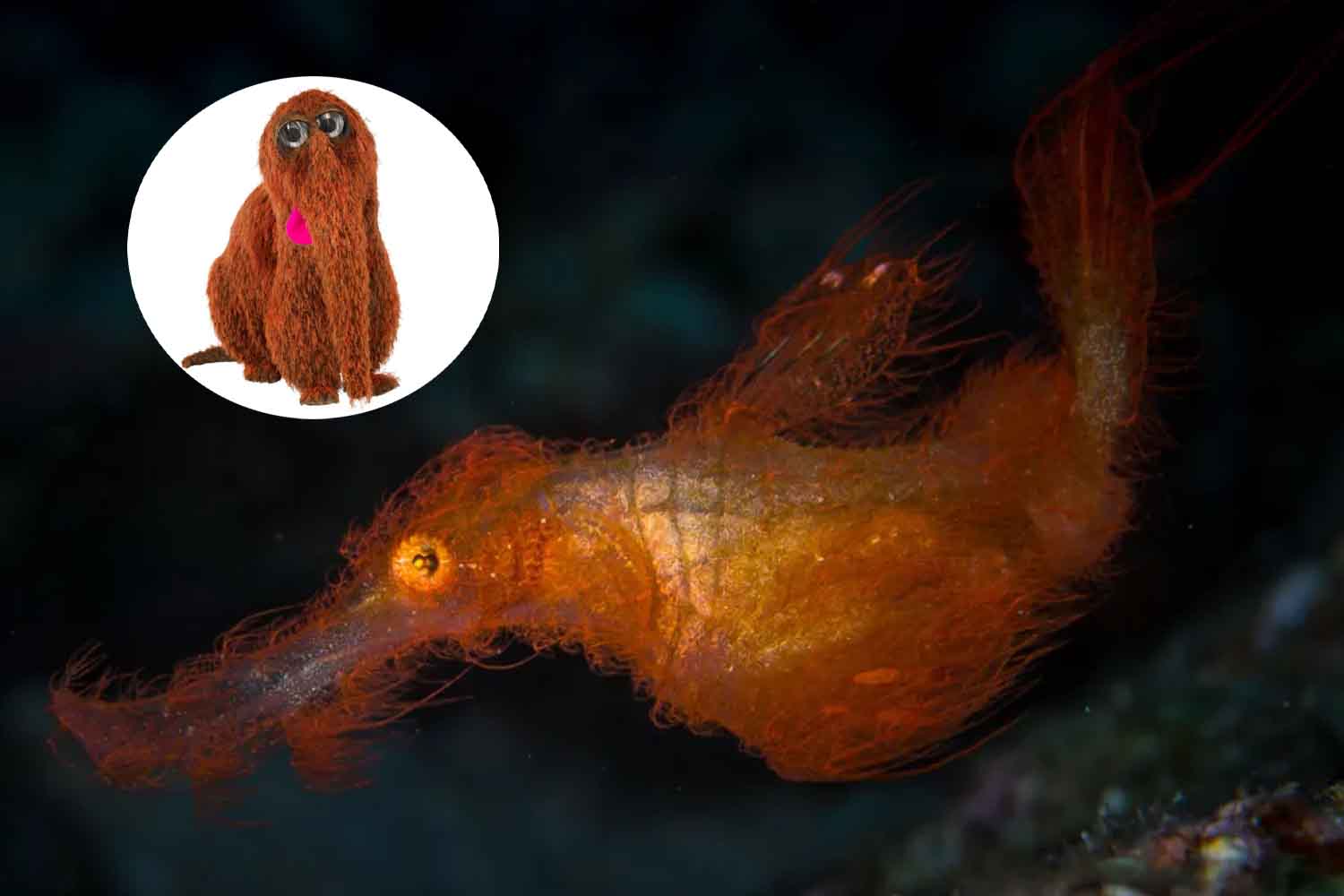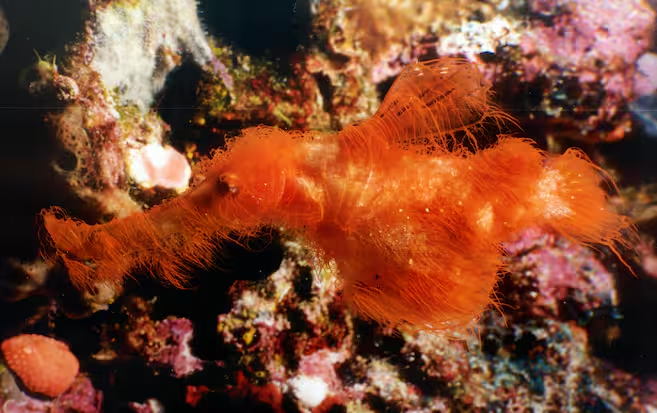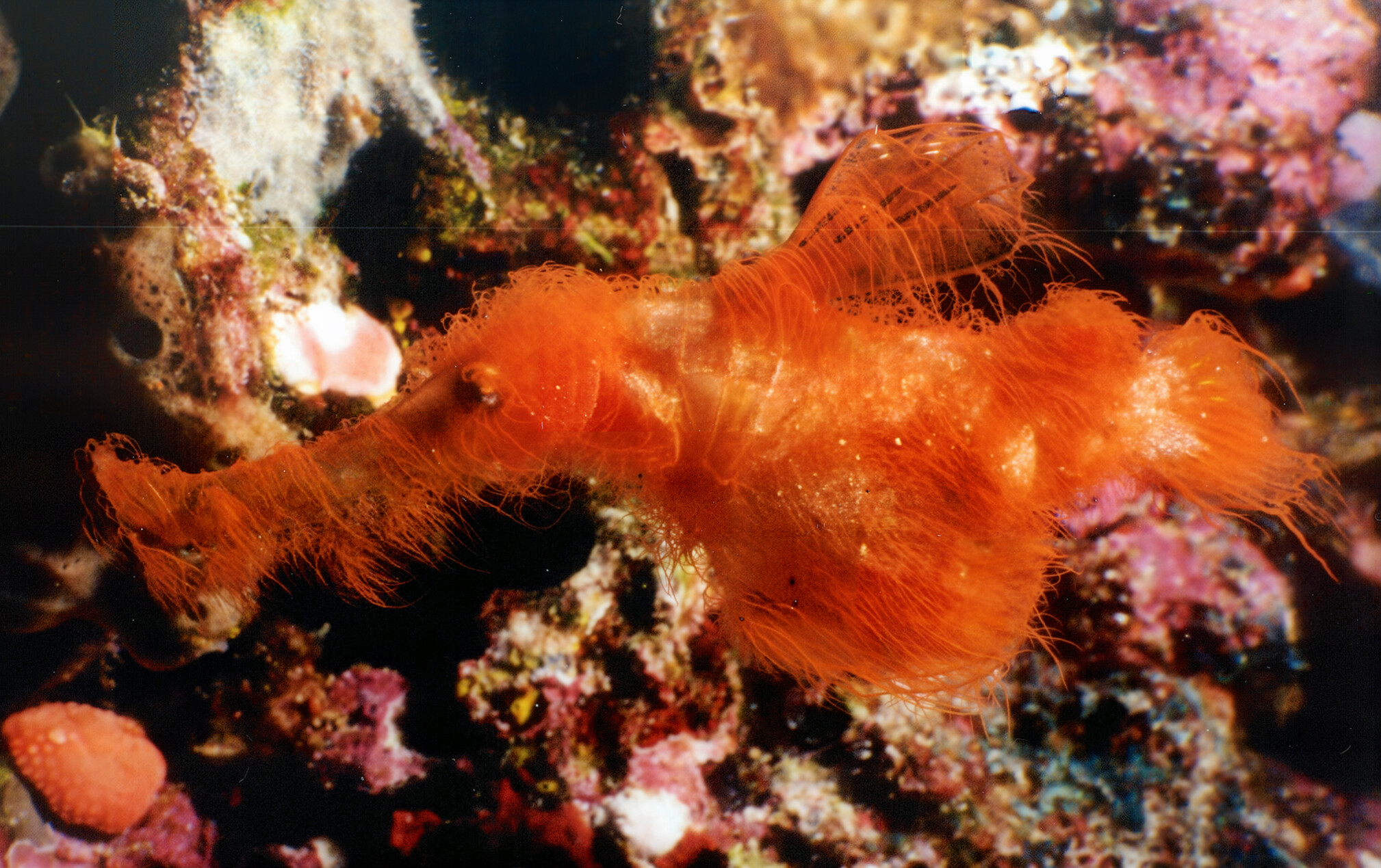
It’s “hairy,” bright orange or red and “exceptional” at camouflaging. Meet the hairy ghost pipefish, whose recent formal description demonstrates that even well-studied marine environments like the Great Barrier Reef still hold remarkable secrets for science.
In a recent study, researchers shared the name of the ghost pipefish, Solenostomus snuffleupagus, for its “conspicuously shaggy appearance,” and long, trunk-like snout that makes it resemble the beloved Sesame Street character, Mr. Snuffleupagus.
Ghost pipefish, with their long pipe-like snouts, are distantly related to pipefishes and seahorses. But they differ in how they reproduce: while males in pipefish and seahorses brood eggs in specialized abdominal pouches; in ghost pipefish, it’s females who do the same.
Found across the tropical Indo-Pacific, ghost pipefish are also very well-camouflaged in their environments of coral reefs, seagrass meadows, and algal beds. Until recently, there were just six known species.
The discovery of a seventh species, the hairy ghost pipefish, led by marine biologists Graham Short and David Harasti, is the culmination of a two-decade search.