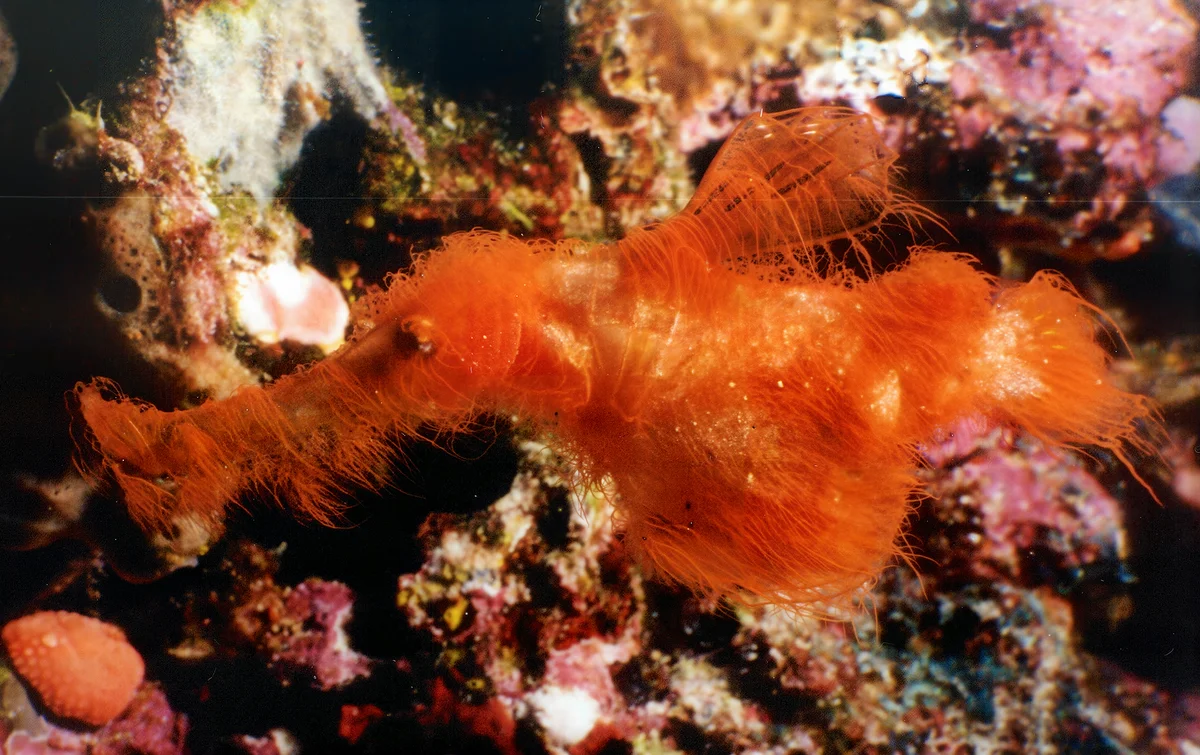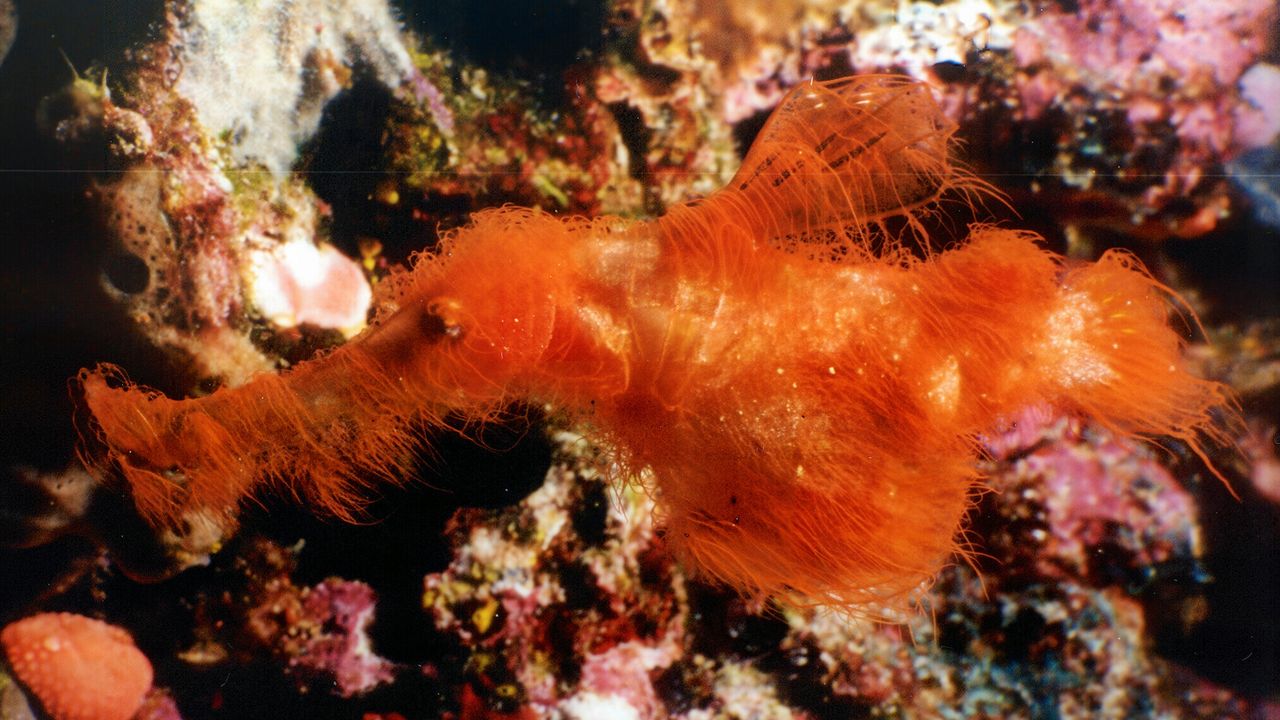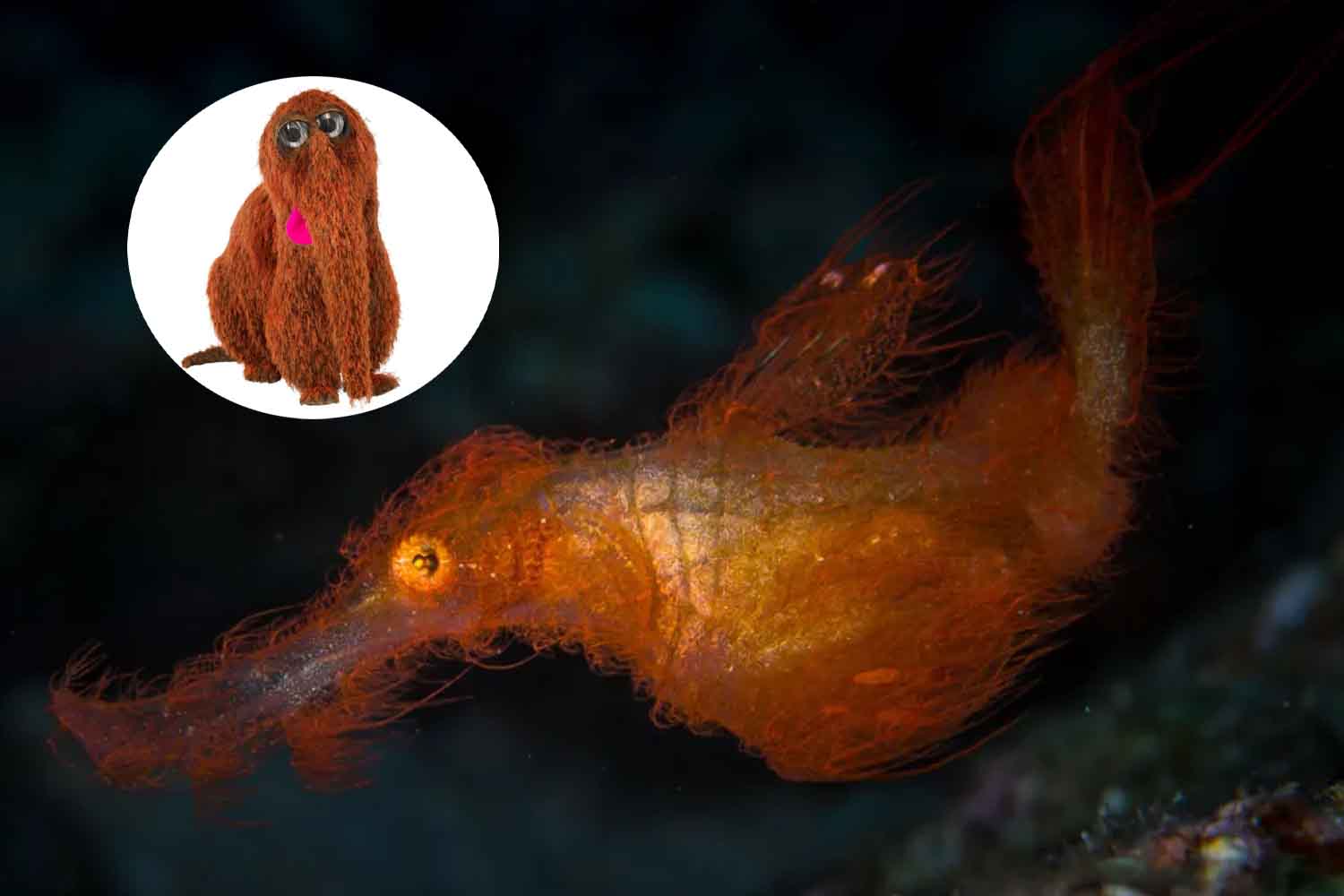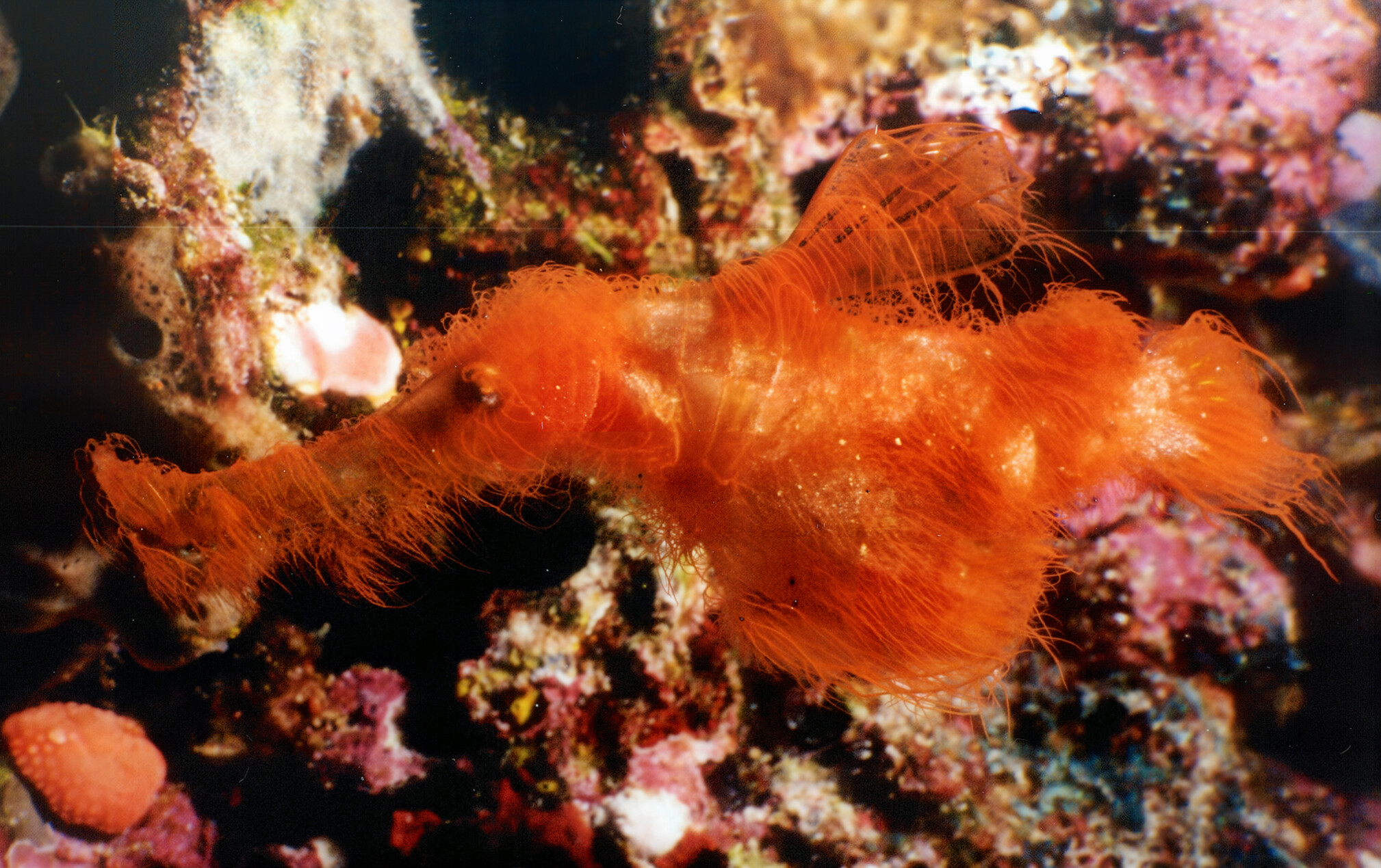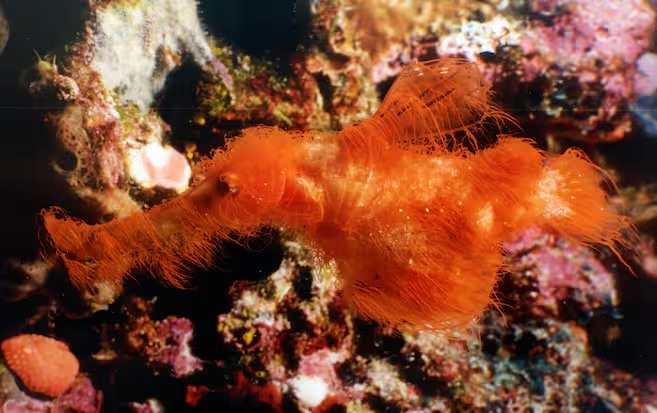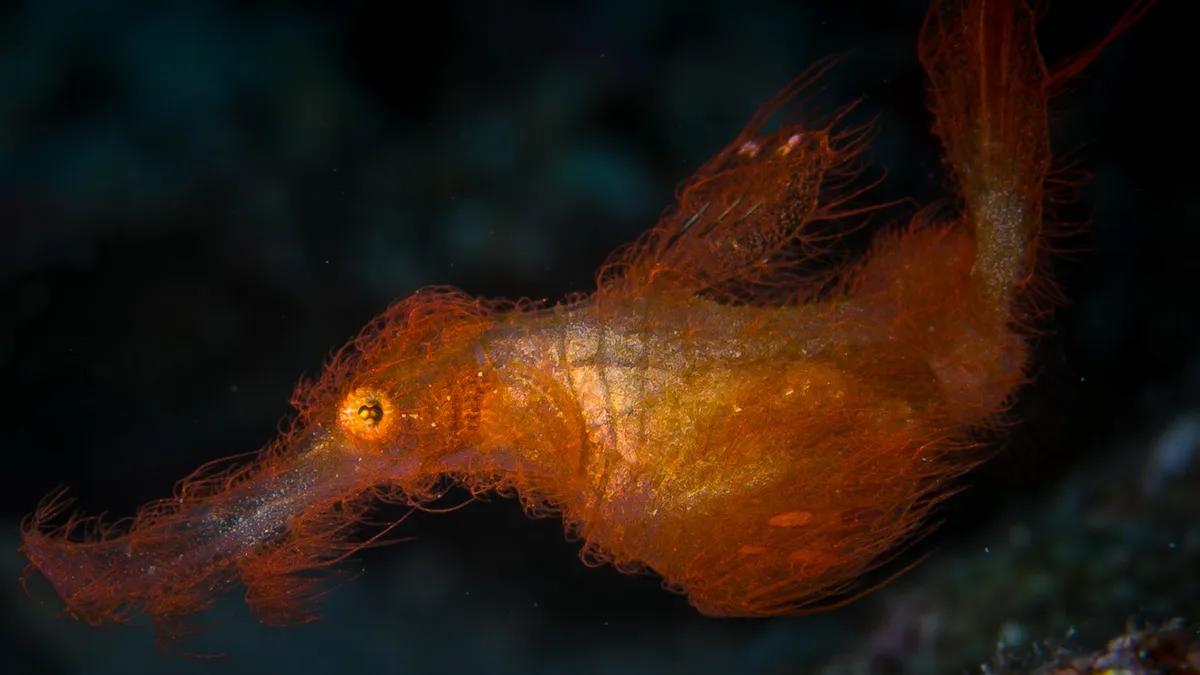
After nearly 20 years of searching, researchers have officially documented the elusive hairy ghost pipefish, subsequently naming the new species after a muppet that's just as shaggy.Solenostomus snuffleupagus is a fish named after the "Sesame Street" character Snuffleupagus, Big Bird's best friend, who looks like a woolly mammoth with long brown fur, a long trunk, long eyelashes but no tusks.Researchers have been looking for the fish since 2002, finally finding it while diving near Queensland, Australia, in 2020, Graham Short, the lead researcher of the study, said in a statement emailed to USA TODAY.Short's findings were published in the Journal of Fish Biology, which documented the discovery.Video of the fish, which Short called Snuffy, shows it underwater and swimming near coral as it bobs along with the current. Also in the footage, the fish is covered in what appears to be bright peach fur. While it looks fuzzy, its fur is actually skin filaments that help it camouflage with the filamentous red algae found on coral reefs, according to Short.See Snuffy swim near coral reefsSee video of a hairy fish named after 'Sesame Street' characterScientists discovered Solenostomus snuffleupagus, a hairy ghost pipefish that resembles "Sesame Street" Mr. Snuffleupagus.Why is the fish named after a muppet?Well, because it looks similar to the hairy muppet from "Sesame Street"."This fish is covered almost entirely in long, shaggy skin filaments and has an elongated snout," Short stated. "The moment you place it next to an image of Mr. Snuffleupagus from Sesame Street, the resemblance is impossible to unsee.""We knew immediately what the name had to be, and Sesame Workshop was genuinely delighted when we approached them for their blessing," he added.Where are hairy ghost pipefish found?The fuzzy fish can be found in coral reefs in Oceania, near Australia, Fiji, Papua New Guinea and New Caledonia, according to the study.In 2002, David Harasti, the study's co-author, first photographed the fish on a coral reef wall in Papua New Guinea, according to Short."When he processed the photographs back home, he could make out an eye and realized he was looking at an animal that did not exist in any of his reference books," Short said. "He spent the next two decades trying to find it again, returning to Papua New Guinea six times and traveling to the Solomon Islands."Each time, however, Harasti came back empty-handed. However, it soon became a "personal obsession," according to Short. Eventually, in 2020, his obsession paid off after Harasti's friends told him they spotted the fish on the Great Barrier Reef and sent him photos.Short and Harasti traveled to the site where the fish was spotted in the Cairns region of Queensland, Australia. On the first dive, they found nothing. But they dove again, and that's when they spotted two hairy ghost pipefish, a male and female, around 50 feet below the water, covered in the red algae on a coral nook."David and I were hugging and high-fiving underwater," Short said. "Two decades of searching had come down to that moment."Hairy ghost pipefish first spotted in 1993Short and Harasti were not the first to discover the hairy ghost pipefish. Initially, researchers from the Field Museum in Chicago, the Australian Museum and the Northern Territory Museum in Australia first spotted the fish while they were surveying a remote part of the outer Great Barrier Reef in 1993, according to Short.Researchers spent three weeks surveying the area and collected specimens of the fish now known as Solenostomus snuffleupagus. Helen Larson, a member of the Australian Society for Fish Biology, recognized that the fish didn't match any previously documented species.Julia Gomez is a Trending reporter for USA TODAY and covers invasive species, space phenomena, scientific studies, natural disasters and trending news. Connect with her on LinkedIn, X, Instagram, and TikTok: @juliamariegz, or email her at jgomez@gannett.com.
See footage of new hairy fish species named after 'Snuffleupagus'
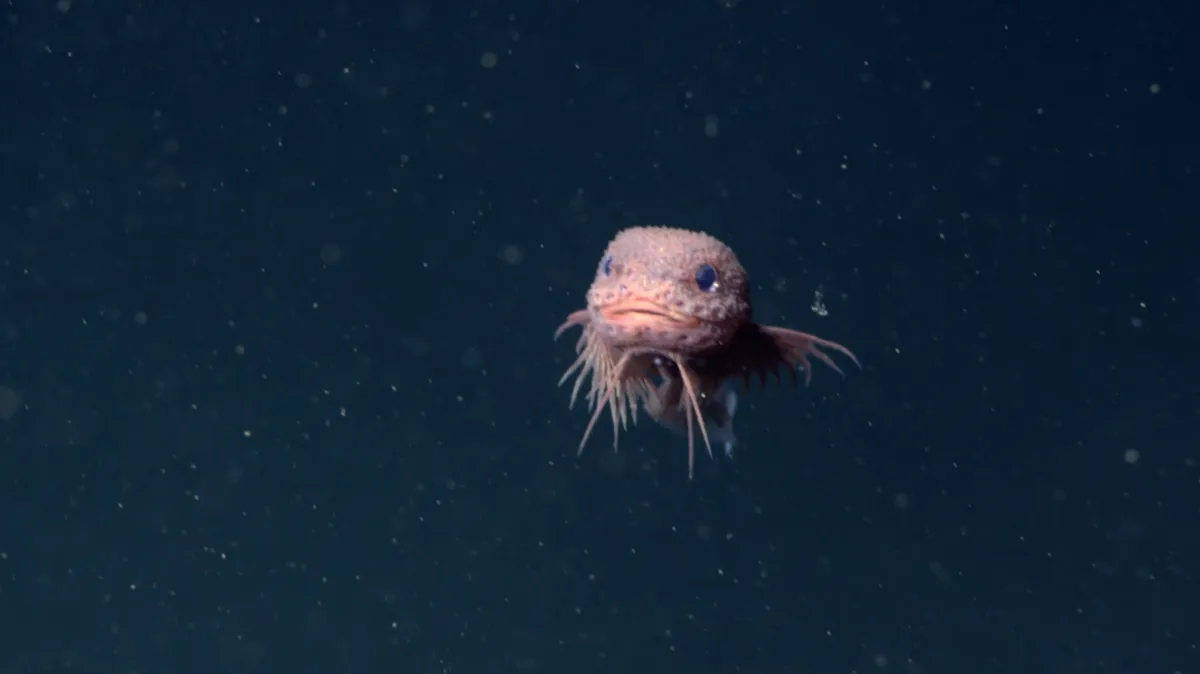
The newly documented hairy ghost pipefish was named after this fuzzy \
635 words~3 min read