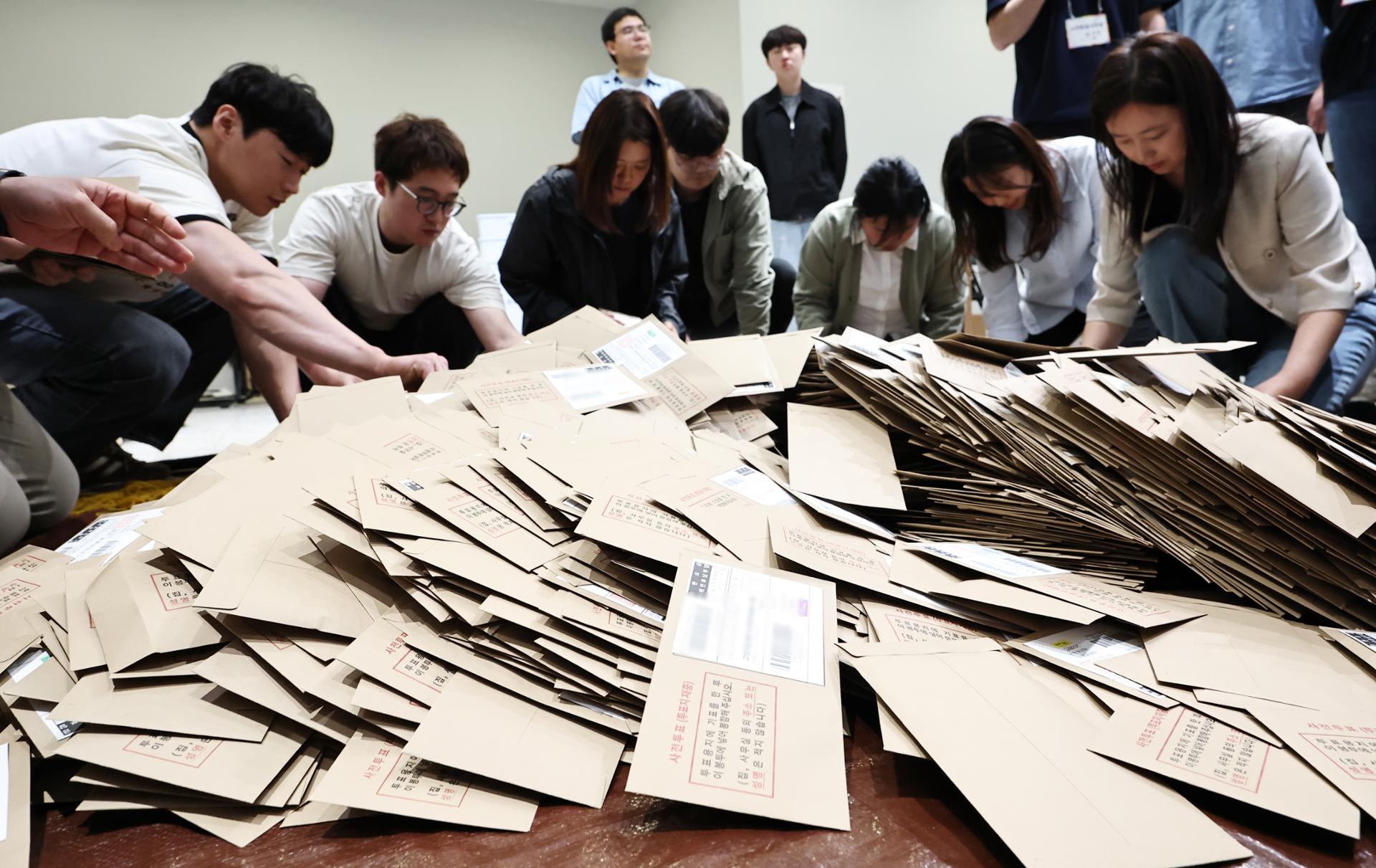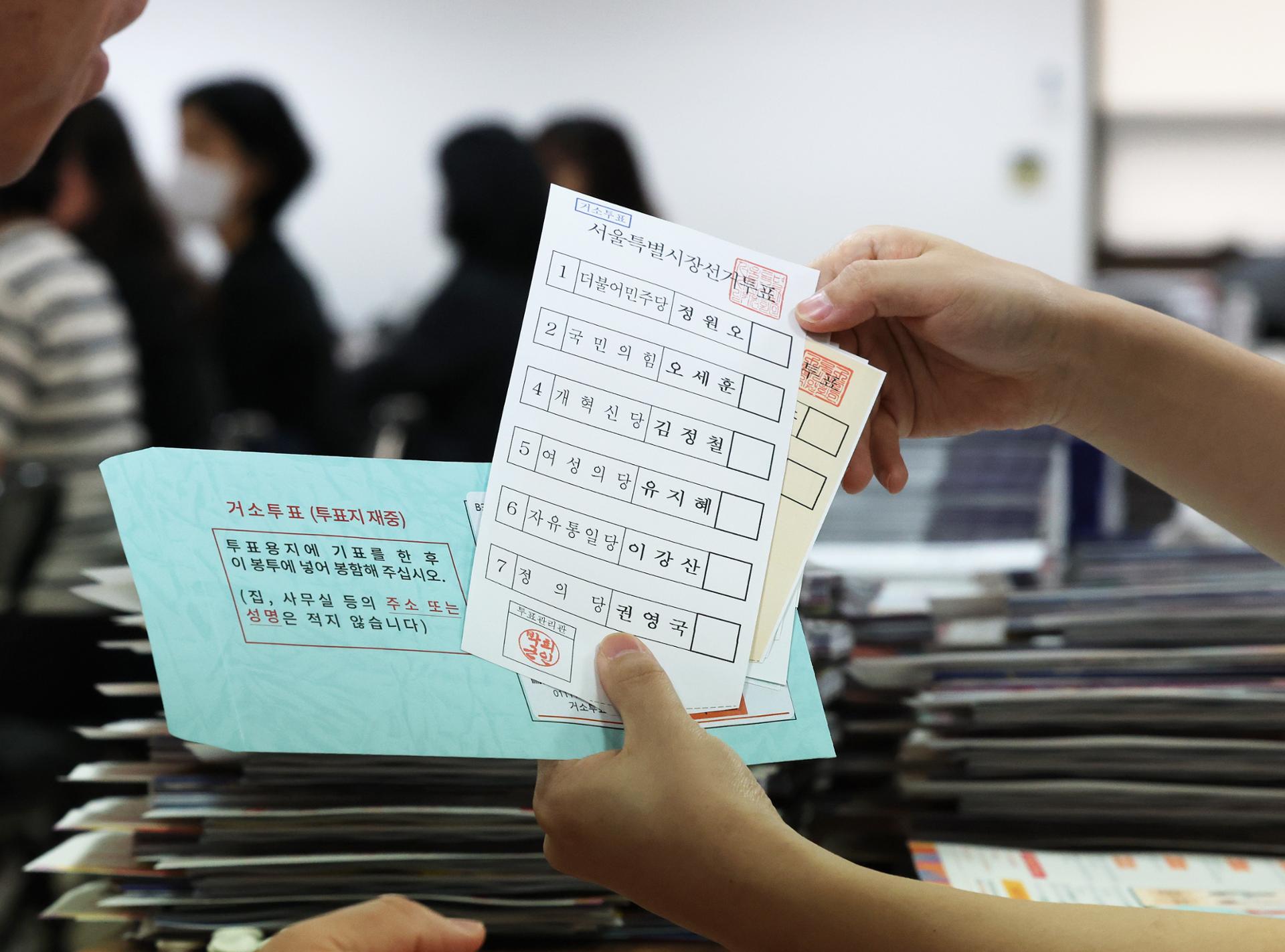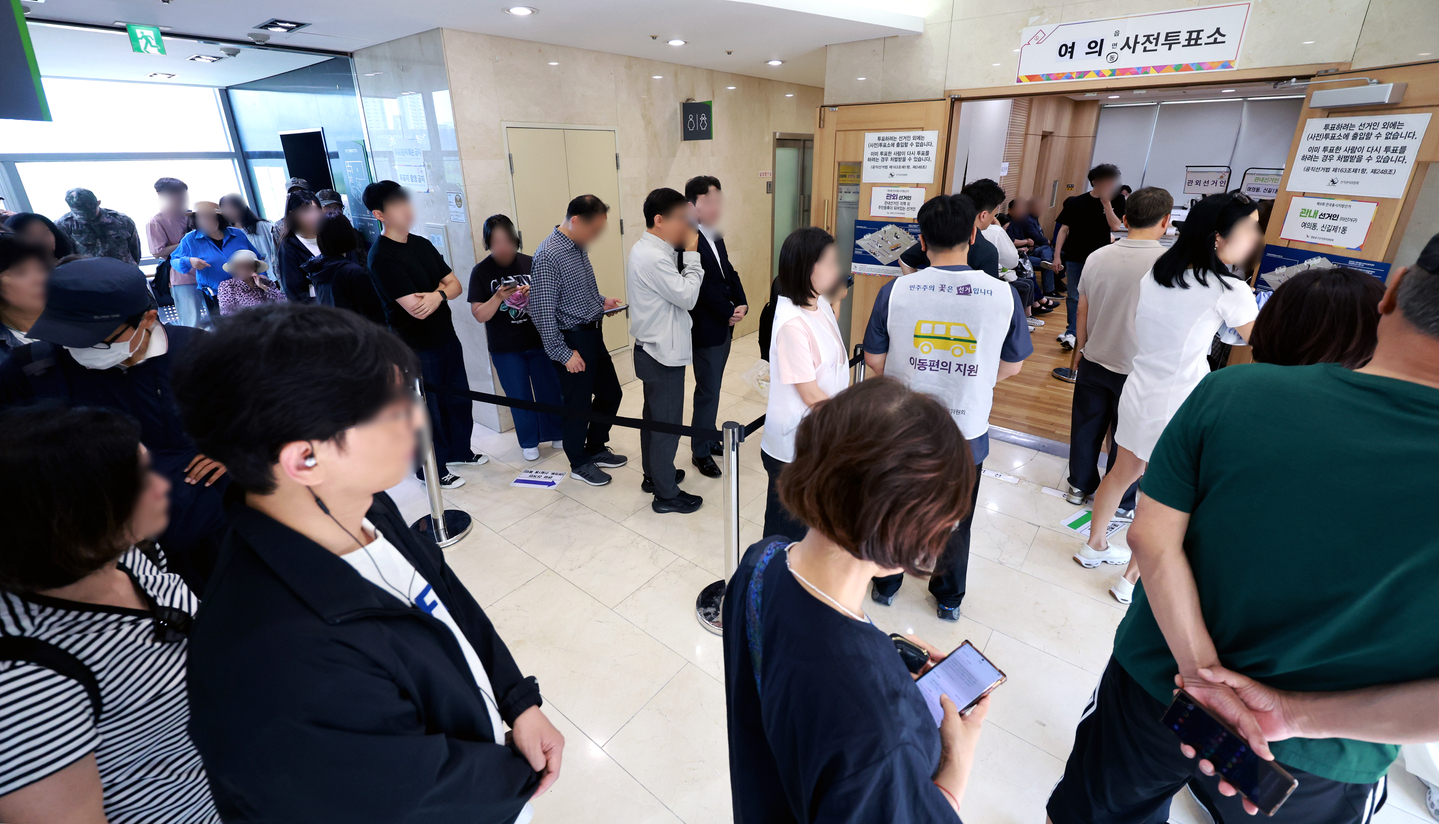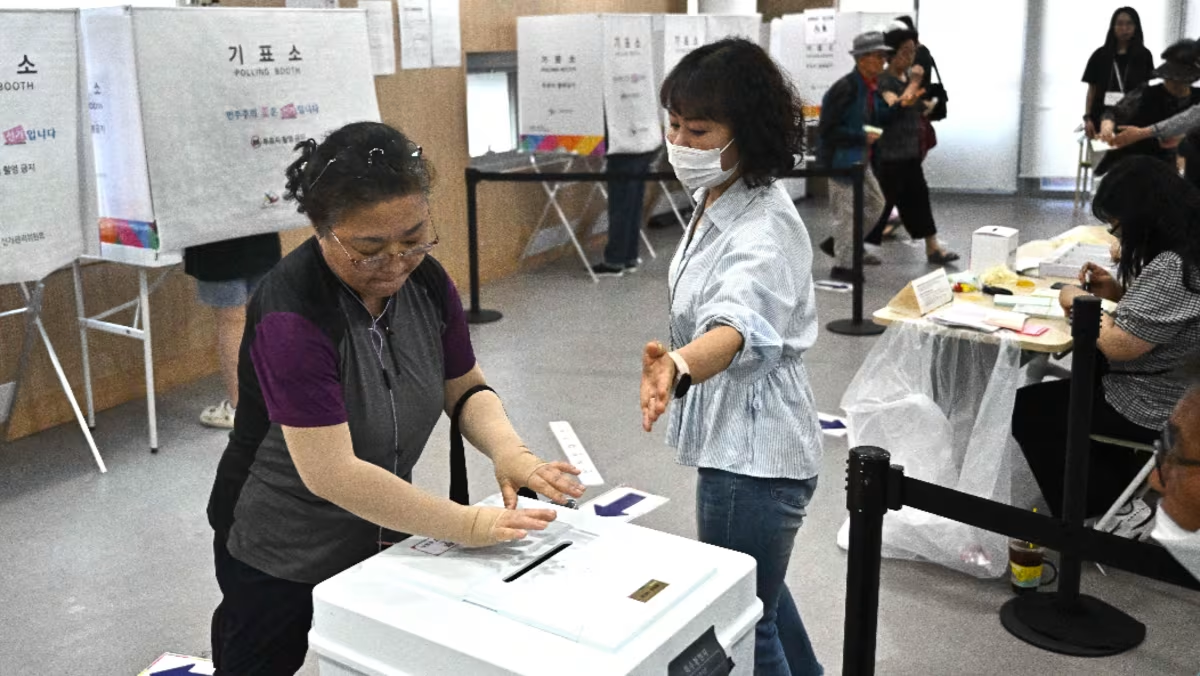
A monument highlighting Ansan’s multicultural population in Gyeonggi Province (Ansan City) The number of foreign nationals eligible to vote in South Korea’s local elections has grown large enough to form a noticeable voting bloc in some major cities. Their overall electoral influence, however, remains limited by persistently low voter turnout.According to data from the National Election Commission, foreign residents account for 1.8 percent of all eligible voters in Ansan and Siheung, industrial cities in Gyeonggi Province with populations of around 600,000 each, ahead of the June 3 local elections.Other major Gyeonggi Province cities also showed notable shares of eligible foreign voters. In Suwon, Hwaseong and Bucheon, foreign nationals make up 0.8 percent, 0.5 percent and 1.3 percent of eligible voters, respectively.While the proportion remains around 1 percent in most areas, the figure is large enough to potentially affect outcomes in closely contested races. In Ansan, the 2022 mayoral election was decided by just 0.07 percentage point, and some local races are also expected to be tight in the upcoming election.The growing presence of foreign voters reflects a continued increase in the number of permanent foreign residents in Korea.Under the Public Official Election Act, foreign nationals aged 18 or older who have held an F-5 permanent residency visa for at least three years are eligible to vote in local elections. They are not allowed to vote in presidential or parliamentary elections.Eligible foreign voters can cast up to seven ballots in local elections, including votes for governors, superintendents of education and local council members. Their number reached a record 151,532 this year, up 18.7 percent from the 2022 local elections and 22.5 times higher than when they first participated in local elections in 2006.Despite their concentration in several areas, foreign voters still account for only 0.34 percent of all eligible voters nationwide.Korea first introduced local voting rights for permanent foreign residents in 2006, partly in hopes of encouraging Japan to grant similar rights to ethnic Koreans residing there. Around 961,000 ethnic Koreans live in Japan, many of whom retain Korean nationality.Although that goal was never realized, the voting system has increasingly been framed as a way to allow foreign residents with established livelihoods in local communities to participate in local governance.Debate over foreign nationals’ voting rights has continued, however, with critics arguing that Koreans living abroad are not granted equivalent rights in many countries. Supporters say local voting rights recognize the stake that long-term foreign residents have in the communities where they live, work and pay taxes.Even with political attention, turnout among foreign voters in Korea has remained low and has continued to decline.Commission data showed that turnout among foreign voters fell from 35.2 percent in 2010 to 13.5 percent in 2018, before slipping further to 13.3 percent in 2022. Overall voter turnout in local elections, by contrast, has remained in the 50 percent to 60 percent range.
Foreign voters hit record high, but low turnout limits influence
The number of foreign nationals eligible to vote in South Korea’s local elections has grown large enough to form a noticeable voting bloc in some major cities.
477 words~2 min read