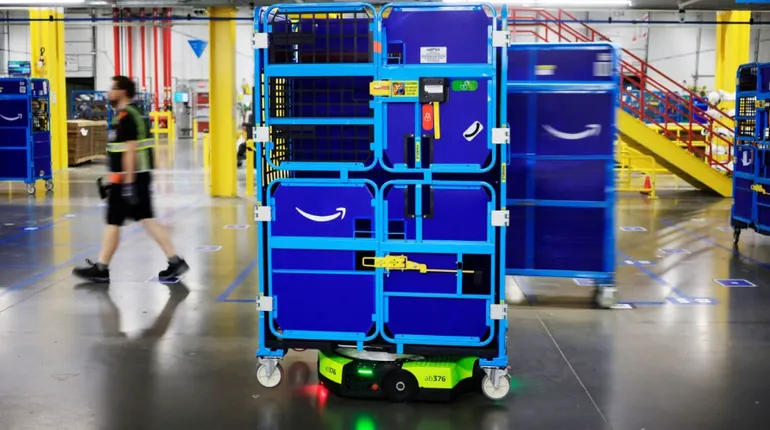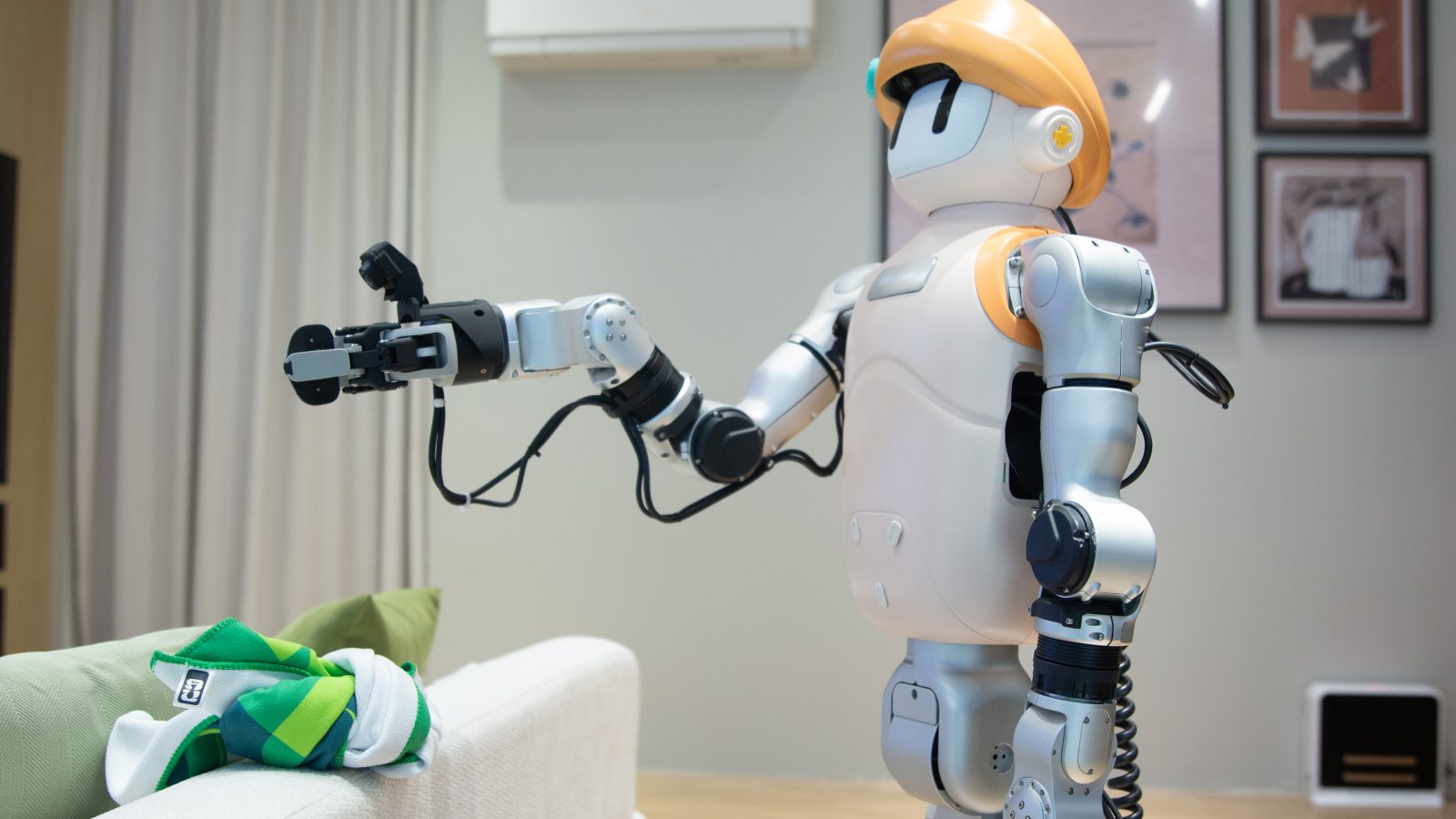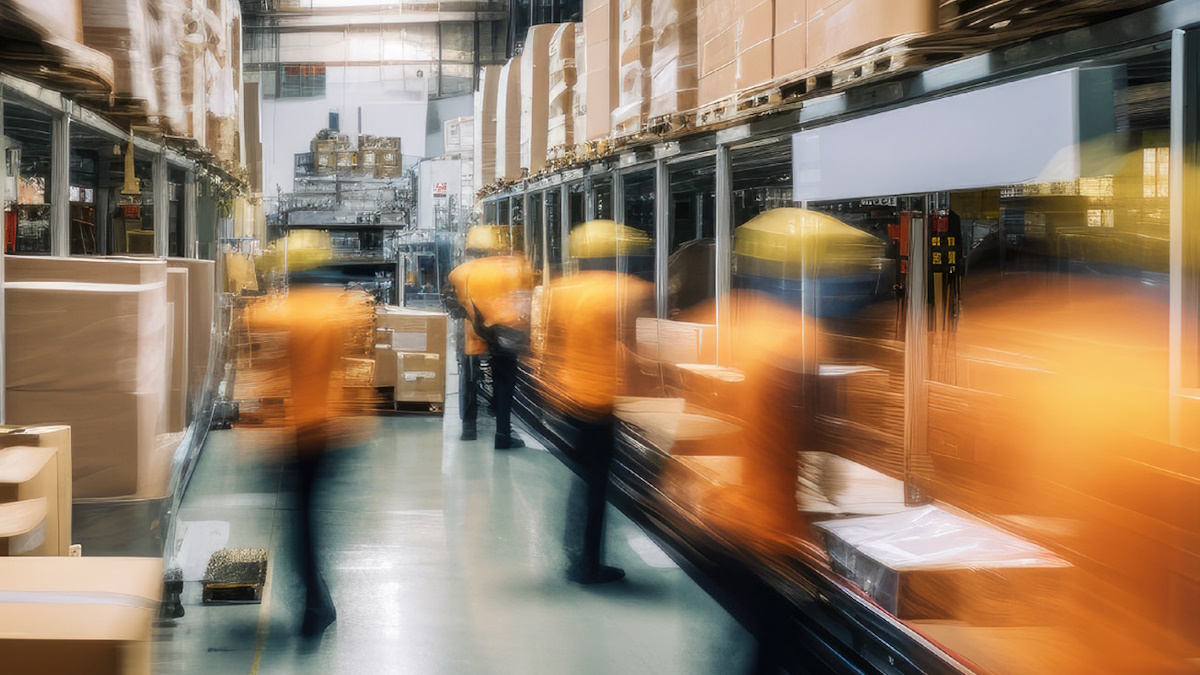
In a massive warehouse in Shanghai, dozens of humanoid robots are being trained to do simple, repetitive tasks. Controlled remotely, these robots work around 17 hours a day, folding T-shirts, making sandwiches, and opening and closing a door. The goal is to generate large amounts of data, use it to train machines, and eventually introduce humanoid robots into factories and warehouses. Amazon bought the Kiva startup for $775mn in 2012. The founders realised that most of warehouse workers’ time was spent walking around to collect items. Its solution was stubby orange robots called Drive Units that navigated the warehouse using barcode stickers on the floor. It could also slide under shelves, lift them, and move them around the warehouse. By 2 017, Amazon had a fleet of 100 000 robots, and in 2026, it has over a million. In some of its advanced fulfilment centres, such as in Shreveport, Louisiana, there are thousands of robots performing a variety of tasks, such as the Hercules, for heavy lifting, or the Sparrow, which picks individual items.A warehouse is a fairly simple operation – the first question
is where do I put stuff, and the second is how do I go and fetch it?Johan du Toit, Syspro Africa Craig Brunsden, CEO of distributer Axiz, says there are several reasons why fully automated warehouses don’t make sense in South Africa, mainly because more automation means fewer jobs. “I believe that our approach must respond to what customers want in a way that helps to solve the socioeconomic problems we face as a country. This conversation may be different in economies that have single-digit unemployment numbers, where the impact of replacing picking and packing with machines isn’t as great.”Craig Brunsden, Axiz Warehouse automation also comes with a high cost barrier. In South Africa, where labour is cheaper than in developed economies, it makes sense to employ people in the warehouse because it’s more affordable than introducing autonomous systems. When Axiz’s lease expired a few years ago, it explored building its own facility elsewhere and investing heavily in automation. “But none of it made economic sense,” says Brunsden. “It was a non-starter. You can only be successful with this kind of thing if you have a massive operation, and for many, that’s just not the case.” According to Gartner, 80% of warehouses and distribution centres will deploy some kind of warehouse automation equipment by 2028. But this doesn’t mean that everything will be automated.This conversation may be different in economies that