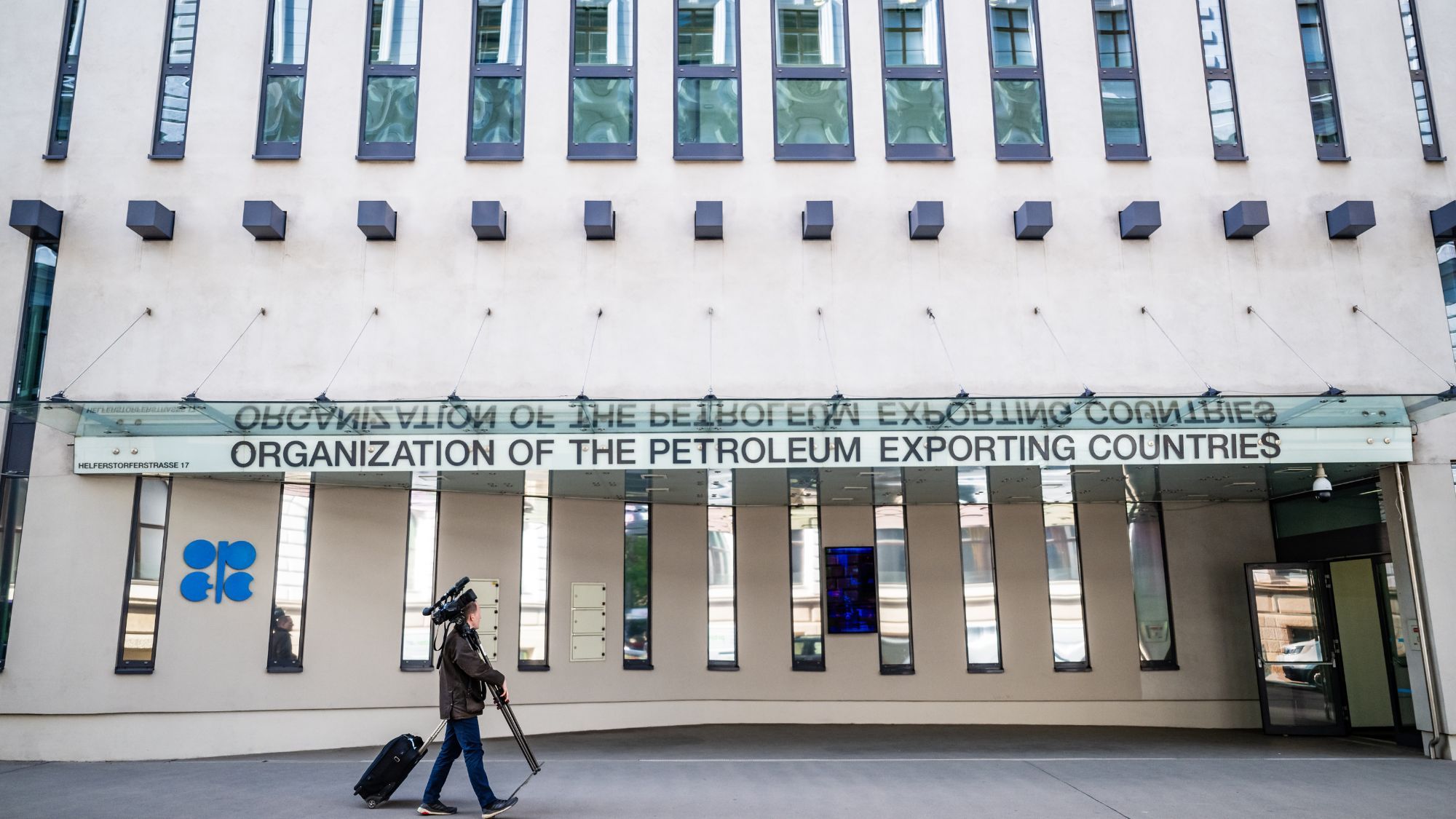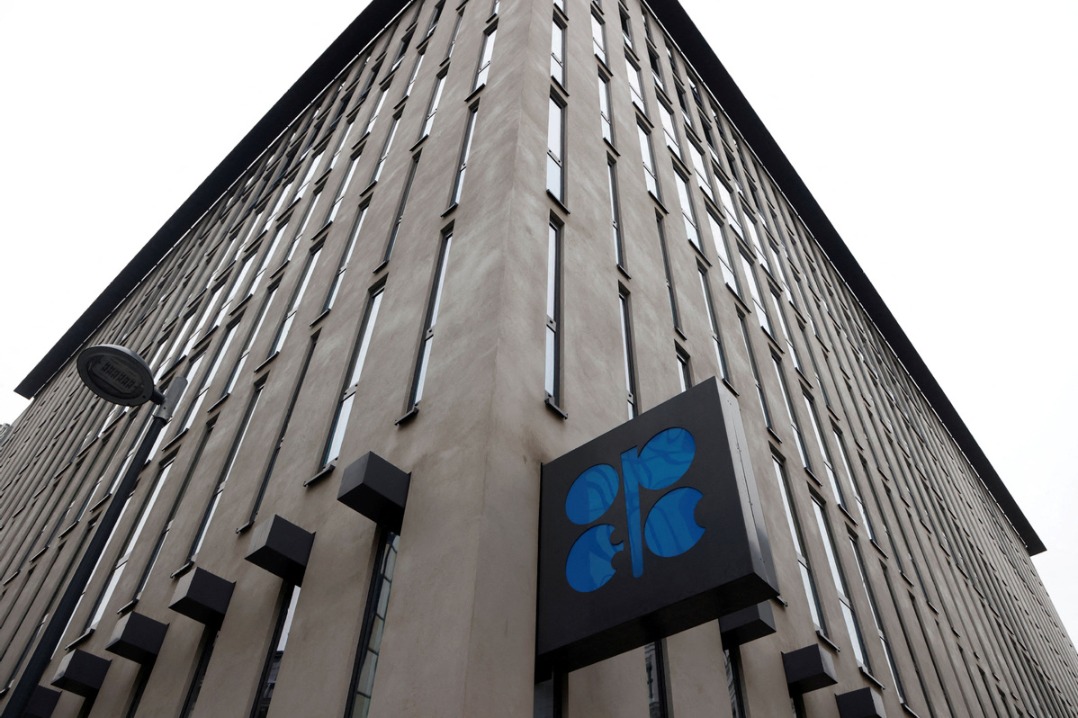
A view of the logo of the Organization of the Petroleum Exporting Countries (OPEC) outside their headquarters in Vienna, Austria, Nov 30, 2023. [Photo/Agencies]
The United Arab Emirates recently left the Organization of the Petroleum Exporting Countries, seven years after Qatar walked away from the same institution. Two Gulf countries have now departed the cartel that coordinated their oil politics for nearly six decades.
The question worth asking is not what this means for OPEC, which will continue in some form. It is whether these twin exits, read alongside the quieter recalibrations underway in Riyadh, Saudi Arabia, tell us something about where Gulf oil politics are heading, and what kind of regional order is taking shape behind the daily news of war, ceasefire and energy disruption.
The two departures were driven by different logics, but they point in the same direction. Qatar's 2019 exit was the move of a state that had become peripheral to OPEC's core business. Doha's future was already in liquefied natural gas, where it was a global leader and where OPEC quotas had no relevance. Leaving was a strategic refocusing rather than a rupture.
The UAE's exit is structurally different. Abu Dhabi was OPEC's third-largest producer, with spare capacity that gave the cartel credibility in moments of supply shock. Its departure represents the loss of a central pillar.