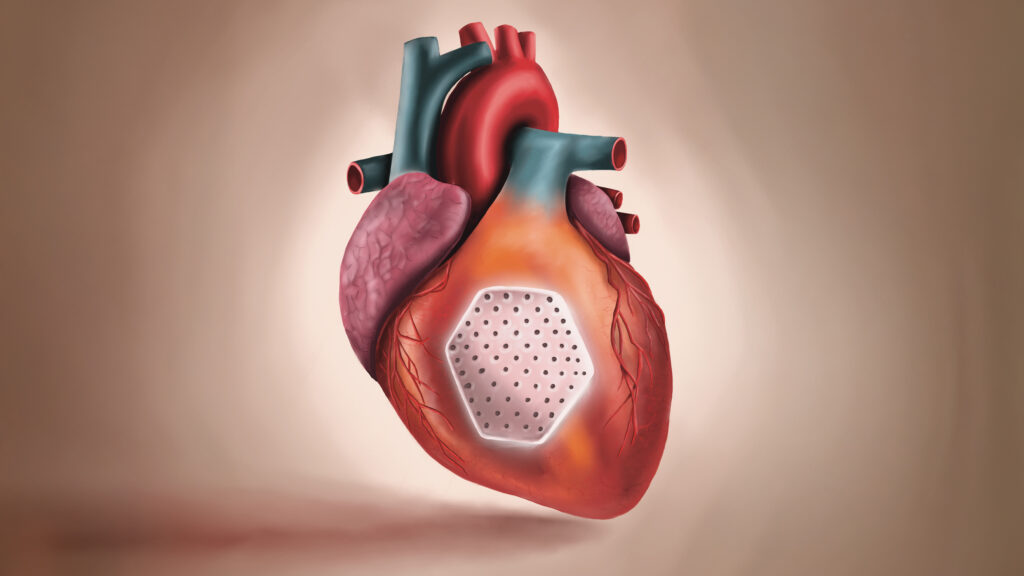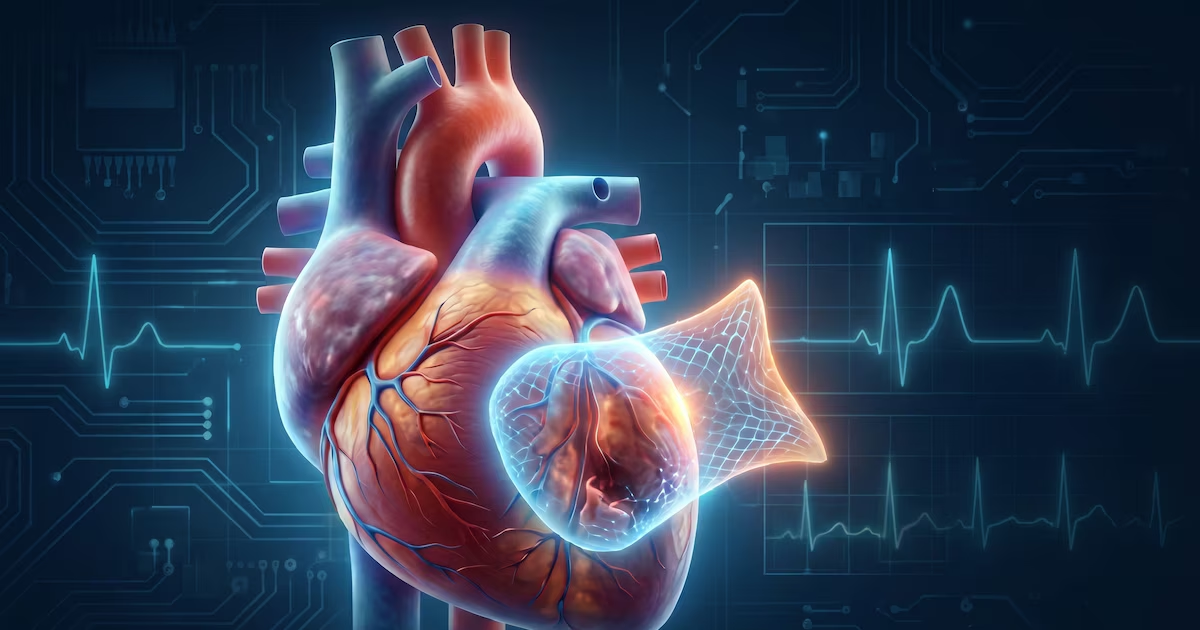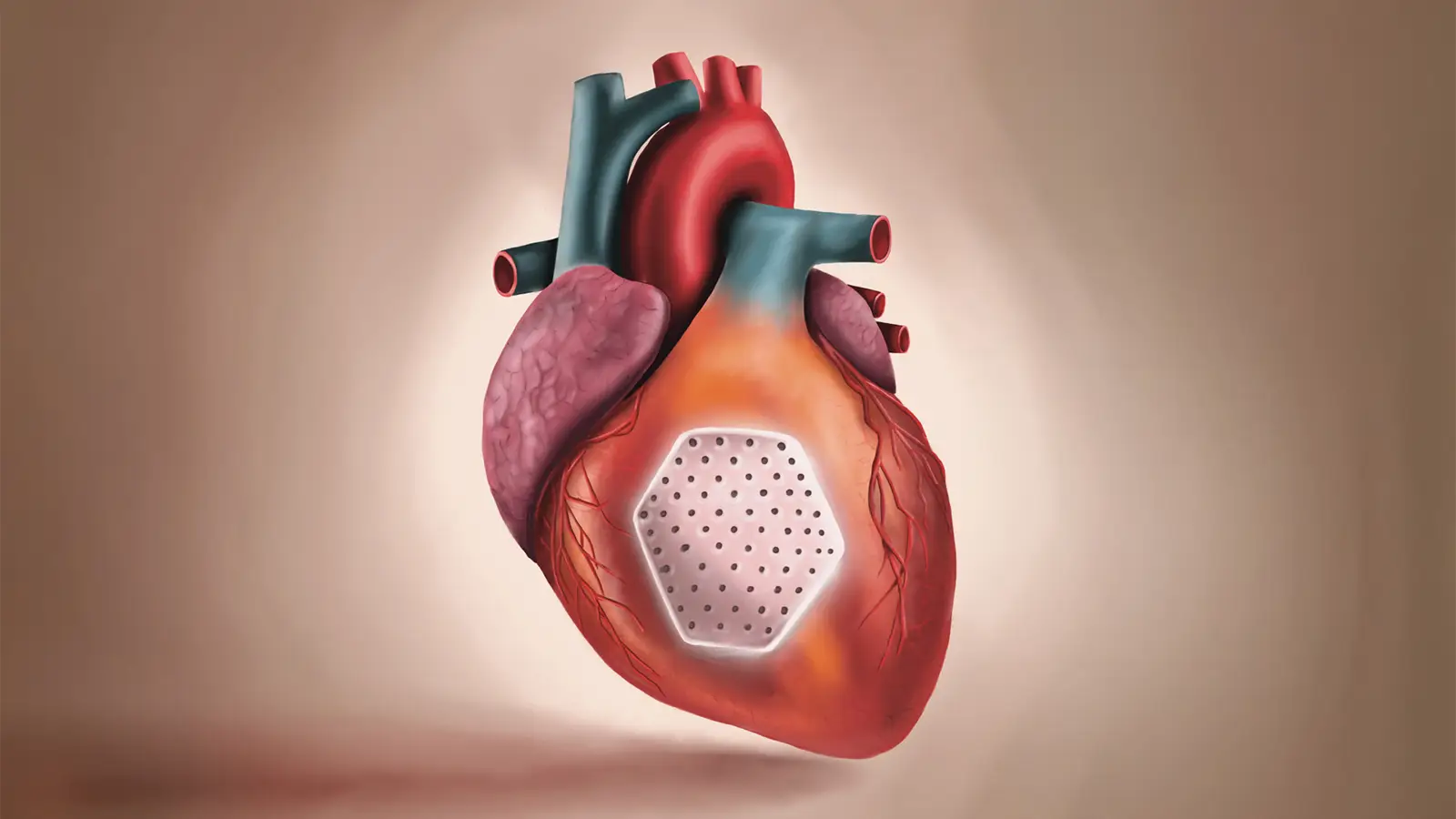
In advanced heart failure, cardiac remuscularization with BioVAT was associated with an increase in the target heart wall thickness, left ventricular ejection fraction, and quality of life in a small early-stage study.BioVAT consists of thin patches of engineered cardiac muscle that can be surgically attached to the outside of the ventricle where cardiomyocytes have been lost.Questions of efficacy and potential electrical dysfunction require longer-term follow-up and further clinical investigation.
For people with advanced heart failure, modular tissue-engineered patches showed promise as a way to remuscularize the heart, according to interim data.
Biologic ventricular assist tissue (BioVAT) was epicardially transplanted in 20 patients with symptomatic heart failure with reduced left ventricular ejection fraction (LVEF) related to ischemic cardiomyopathy, reported Wolfram-Hubertus Zimmermann, MD, of University Medical Center Göttingen-Georg August University in Germany.
For the 16 individuals treated with the safe maximal dose of BioVAT (20 engineered-heart-muscle units), 12 completed the prespecified 3-month interim follow-up and showed significant improvements in:Target wall thickness: least-squares mean increase of 4.5 mm from baseline (90% CI 3.7-5.4)LVEF: increase of 3.9 percentage points (90% CI 0.9-6.8)Quality of life: increase of 6.7 points on the Kansas City Cardiomyopathy Questionnaire-Overall Summary Score (90% CI 1.0-12.5)