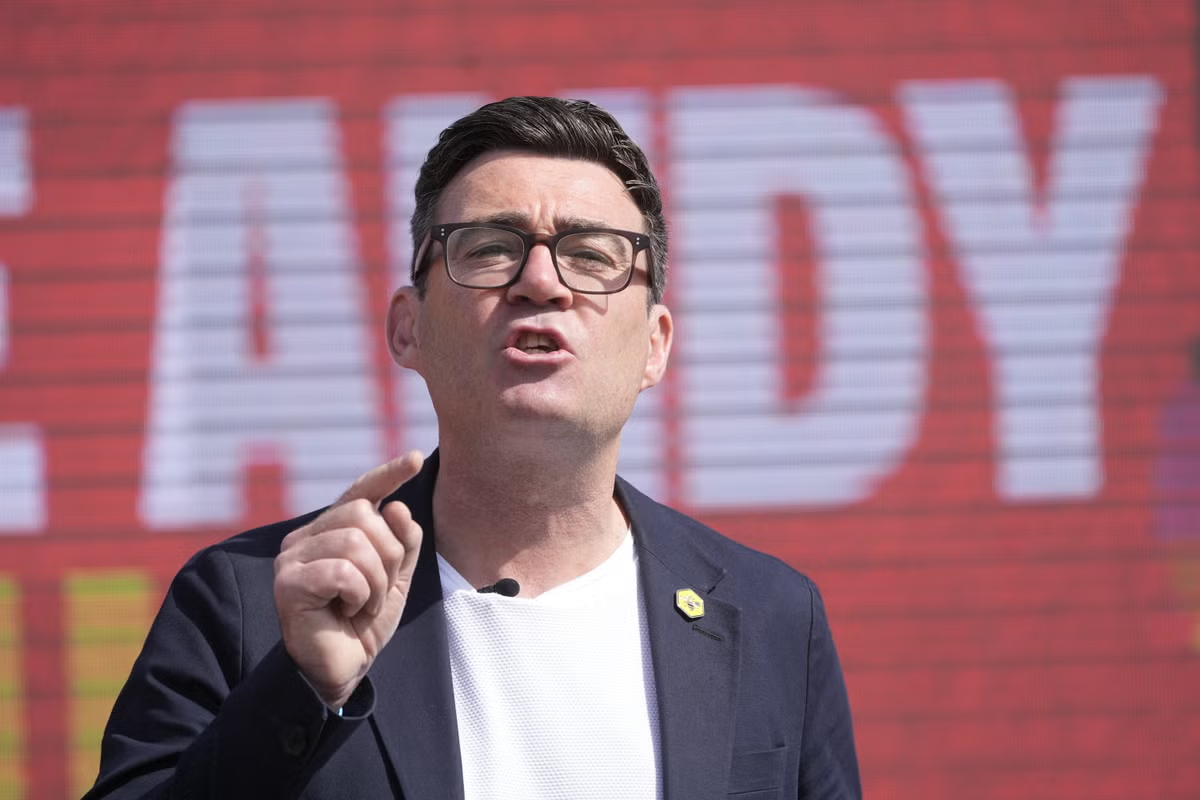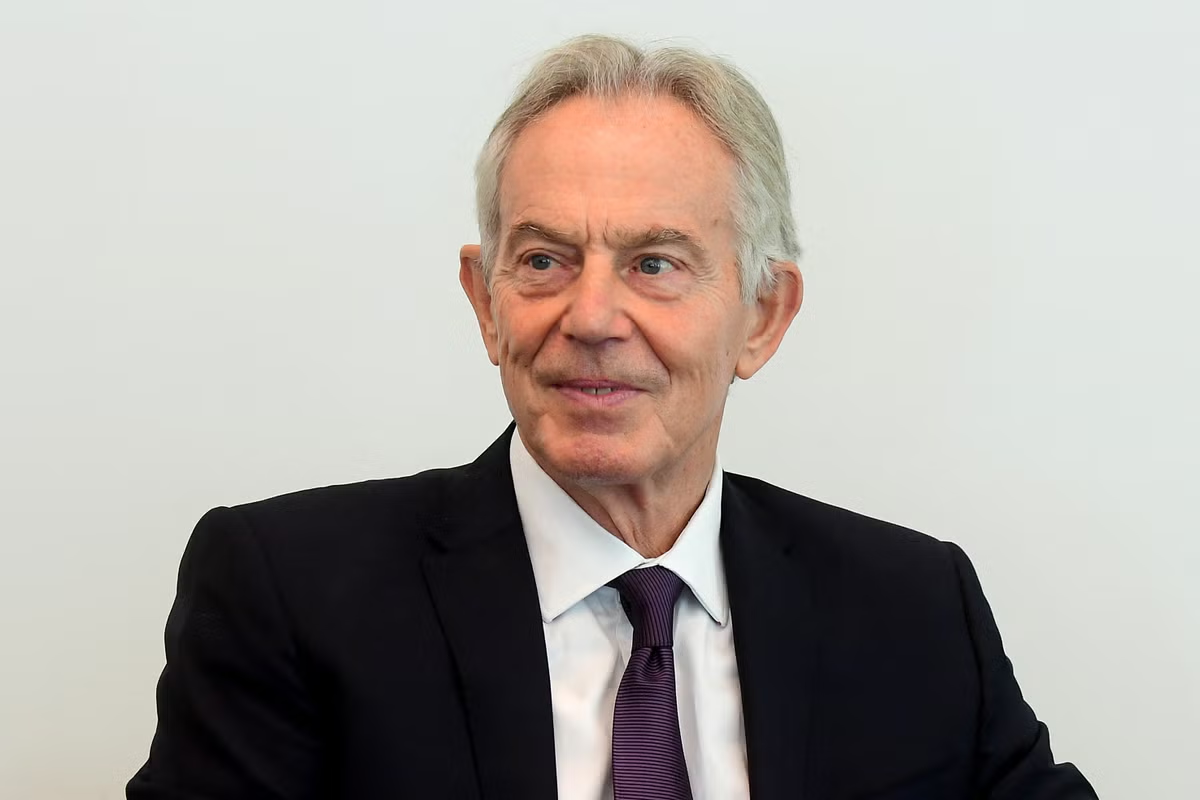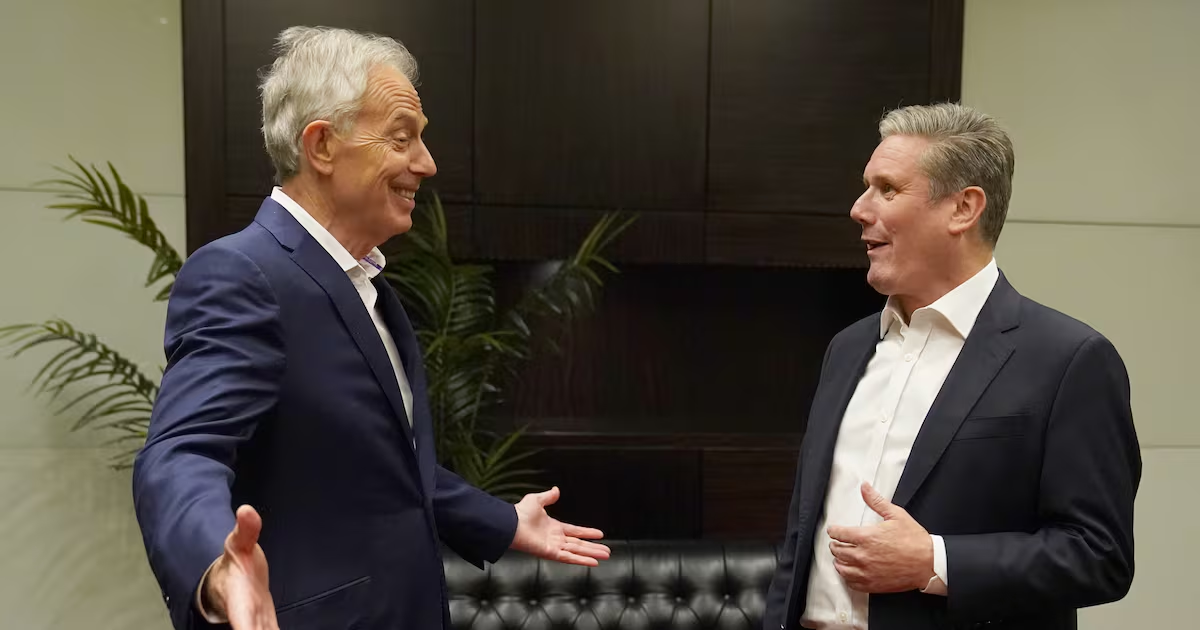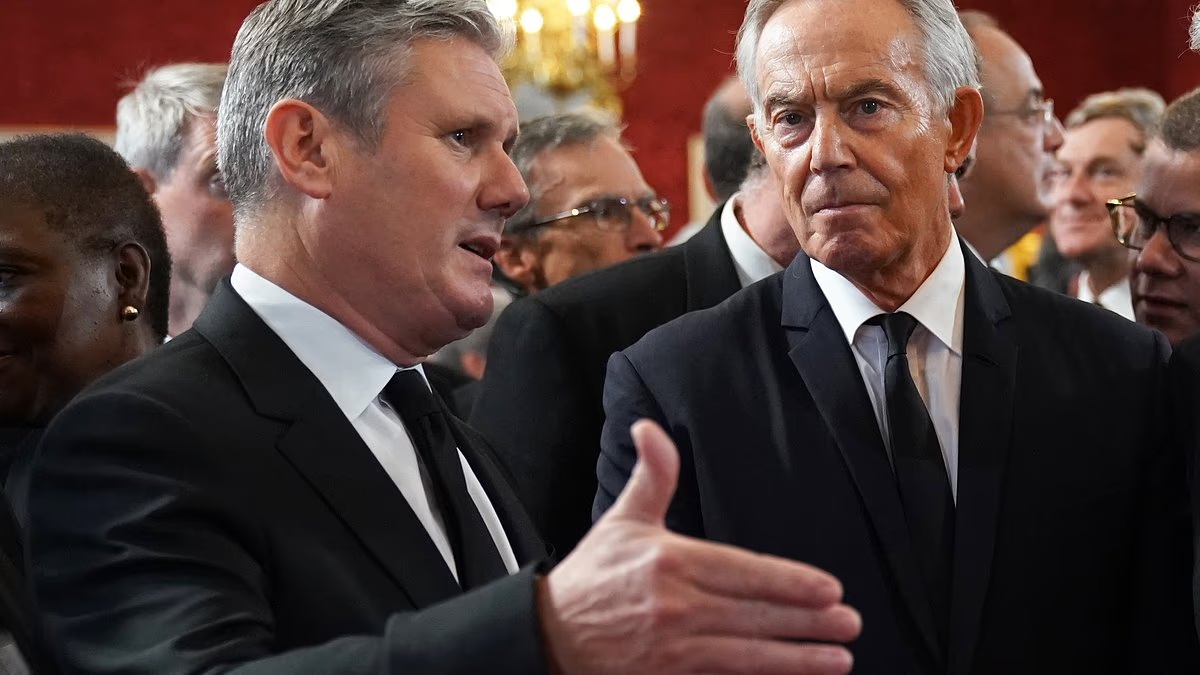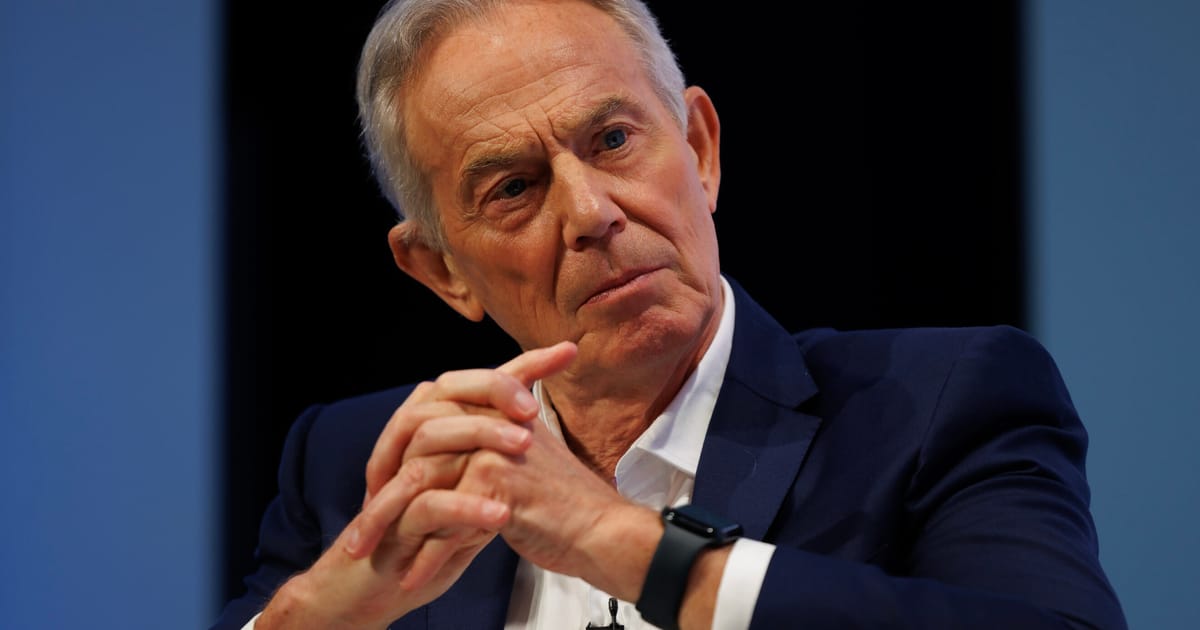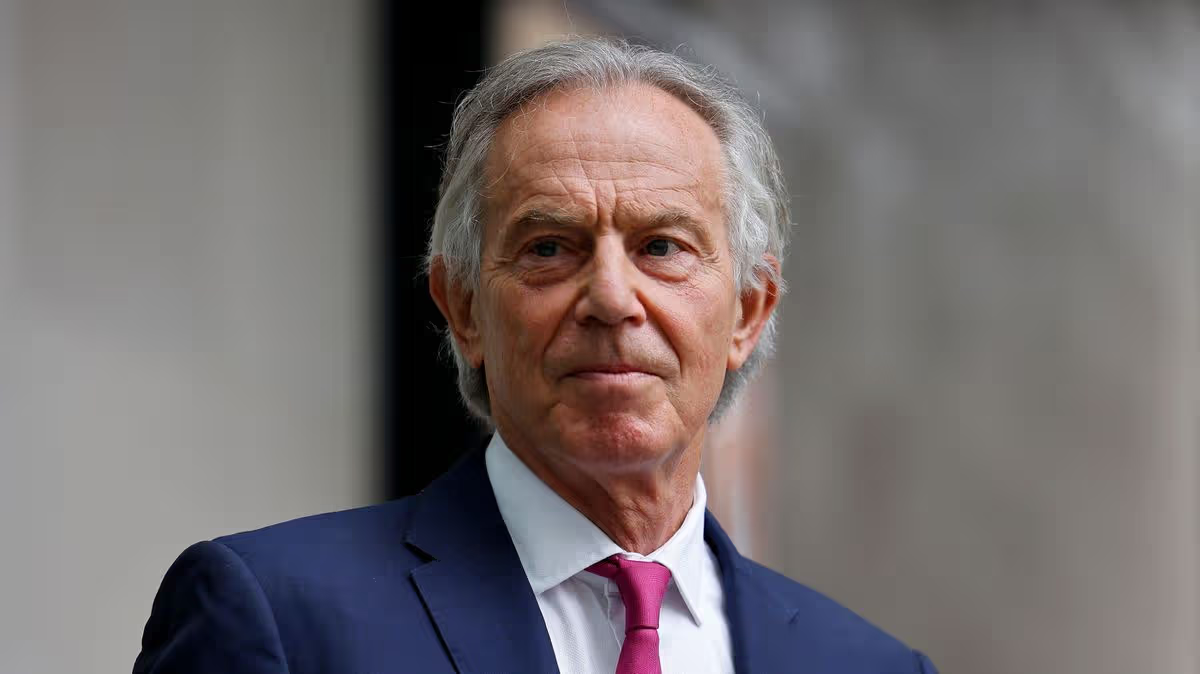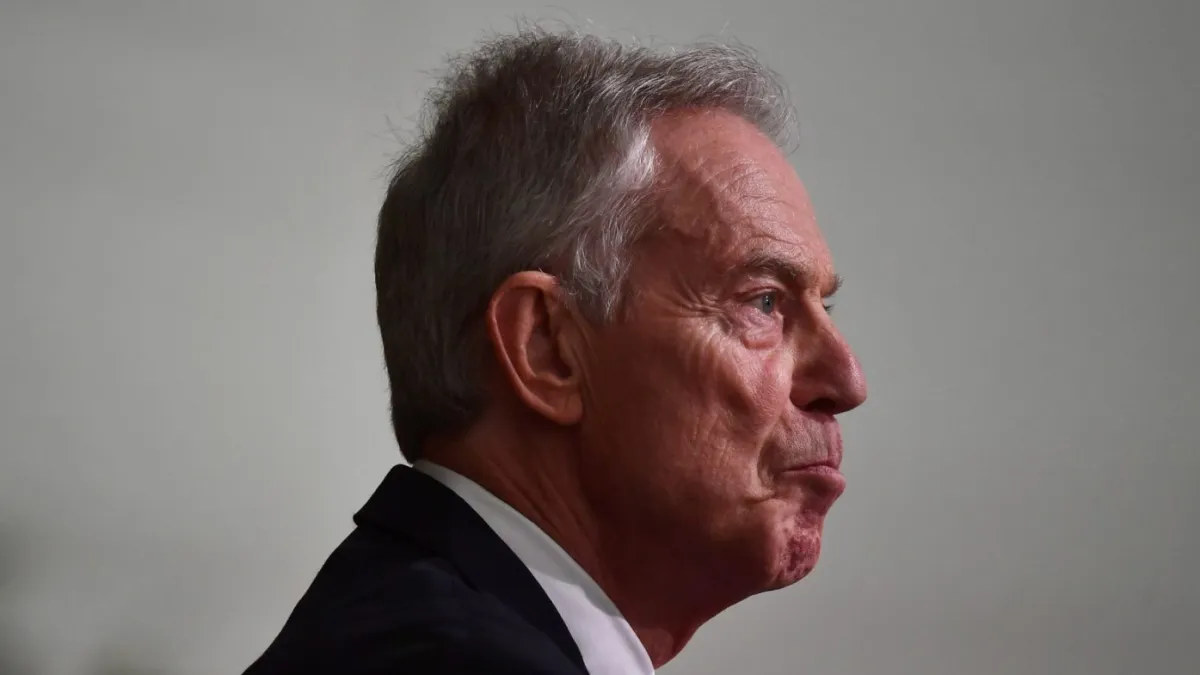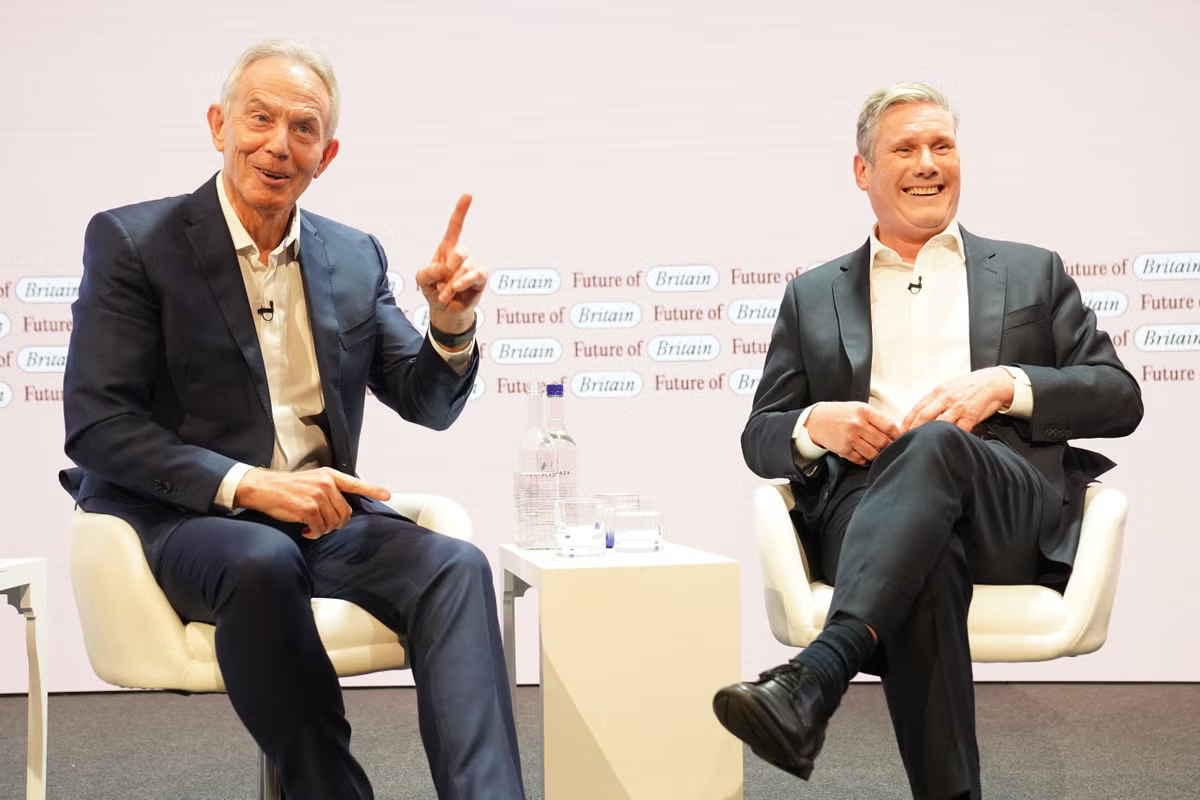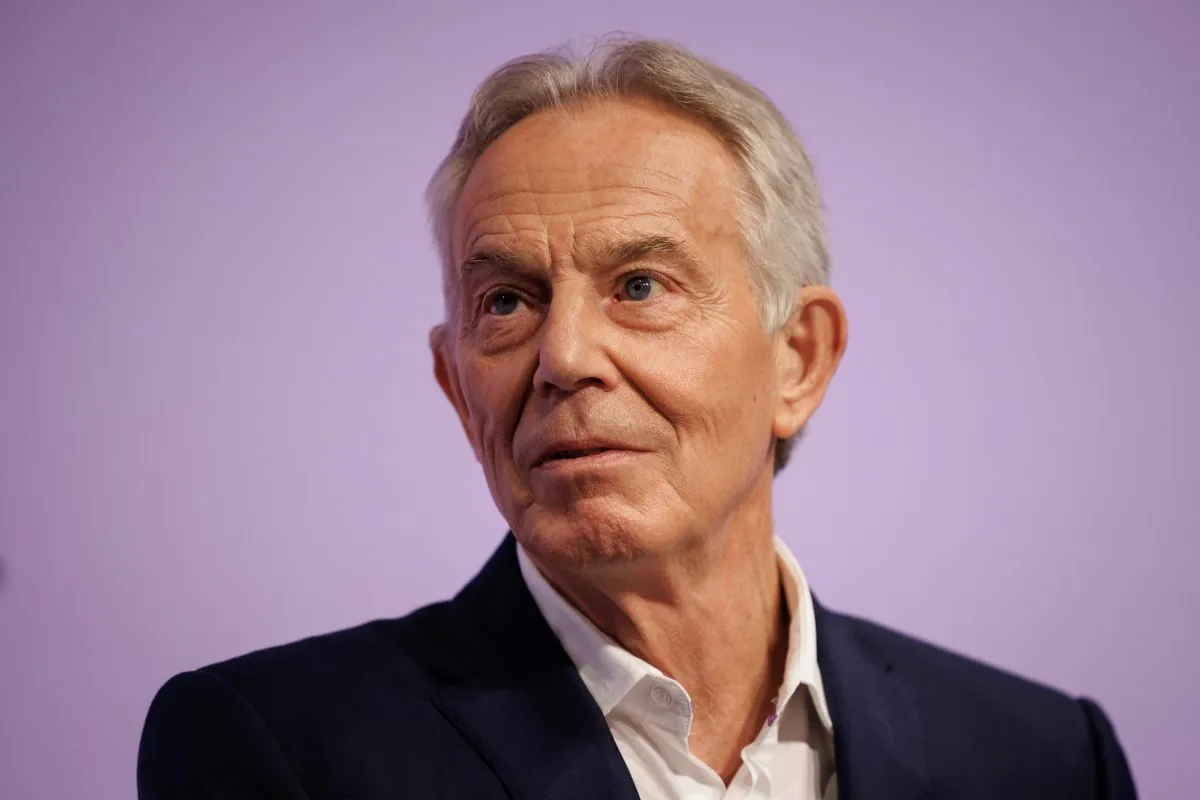
David Blunkett had a chat with his old boss Tony Blair just a few months ago. “I can have very constructive disagreements with him and still stay friendly – as it should be,” the former Labour cabinet minister said with a chuckle.The current generation of senior Labour figures are perhaps a little less warmly disposed towards Blair after his latest intervention in contemporary politics – an essay lashing out at Keir Starmer, Andy Burnham and Wes Streeting, followed by a prime 8.10am slot on the Today programme.To some listeners, it must have felt like a throwback to a previous era – and perhaps it did too for the former prime minister. “If you’re seen on the global stage as still a player, it is hard not to feel that he should be one domestically,” Blunkett said. “I think, like most of us who spend our lives in the public eye, it is very hard to let go.”It is Blair’s proud boast that the Tony Blair Institute for Global Change, set up after his departure from Downing Street nearly two decades ago, today advises 40 countries around the world. He is also on the executive board of Donald Trump’s Board of Peace, a committee of leaders that was initially said to be a vehicle for the reconstruction of Gaza but is apparently seen in the White House as a rival to the United Nations.David Blunkett, the then home secretary, with Tony Blair at Labour’s 2003 conference. Photograph: Chris Ison/PAThe former prime minister nevertheless found time in recent weeks to pen his more than 5,700-word essay, and his message was clear: Labour should seize the potential of artificial intelligence, cut red tape, treasure its relationship with the White House no matter the erratic nature of the incumbent, and put to one side any queasiness with regard to human rights and democratic legitimacy to engage with China and the Middle East.Crucially, Labour must get out of its soft-left comfort zone from which the Starmer government increased national insurance on business and oversaw a rise in the national minimum wage, he said. There was an additional little drive-by at those challenging Starmer: Andy Burnham bore the brunt over his claim that the last 40 years had been a neoliberal disaster, while Wes Streeting took a glancing blow for starting his campaign by endorsing re-entry to the EU.As a manifesto for winning over the Labour party membership, or indeed for coming out victorious in the Makerfield byelection, where Burnham is largely battling Nigel Farage’s Reform UK, Blunkett suggested he was unconvinced. But more than that, he said, there was a hole in the political analysis. The “only impact I can think of”, said Blunkett of the intervention by Labour’s most successful election-winning leader, would be to provoke a counter-argument.“We are on the edge of major technological revolution and the last two big ones, which was the 19th century and the 1980s, saw the most enormous number of victims,” said Blunkett. “The lesson from the 80s, where I was leader of Sheffield at the time, where we lost 50,000 jobs in three years, was that a social democratic government would not block modernisation and change but would be on the side of those navigating their way through it. Make it a positive rather than a negative in their lives.“What was missing from Tony’s essay and his interview was a recognition that government aren’t just there to facilitate the Industrial Revolution, they’re to facilitate people being able to live through it with a degree of dignity and to come out the other end seeing it as a positive gain rather than [being] victims.“The challenge, I think, is what should the future look like not just for the big tech giants but for the people who are turning to Farage. I see Farage and Reform UK as the Luddites who said we can stop this.”‘I can have very constructive disagreements with him and still stay friendly,’ said Blunkett of Blair. Photograph: Don Mcphee/The GuardianThere are still those within the Labour family who believe that both Blair’s diagnosis and prescription are on the money. John Hutton, the Labour peer who was a welfare secretary in the Blair administration, said it was a timely intervention. “MPs should pay attention to his argument because it is persuasive and compelling,” he said. “Rushing into a personality contest without asking the question ‘what direction do we want to take the country’ is putting the cart before the horse.”But within the country at large it was unclear whether there was an appetite for what Blair was saying, said Luke Tryl, the executive director of the research agency More in Common. Recent polling suggested that only 34% of the public believed the government should listen to Blair, and 52% said it was probably or definitely not worth it. “He is the lowest on ‘worth listening to’ among recent prime ministers apart from Liz Truss,” said Tryl. “Cameron, May, Johnson, Major, Brown all score better. From focus groups: it is because of Iraq, it is post-politics money [making]. He went from leaving in not great state to making it worse.”It is questionable too whether there is much of an audience within the parliamentary Labour party, suggested one MP supportive of Starmer. “I think we had it that there was about 40 willing to put their name to Wes Streeting’s bid, so there are those,” the MP said. “There is a peculiar group of young MPs who were hardly old enough to remember the Blair government who are into nostalgia but that’s about it.”Mark McVitie, the director of the Labour Growth Group, an influential backbench caucus of nearly 100 Labour MPs, said Blair’s analysis seemed peculiarly high-handed and unaware of the political challenge facing Labour in the shape of the Greens and Reform UK. “I don’t think there is a constituency of people in the PLP who will sign up wholesale to what he is putting forward,” said McVitie, adding that there was a risk that the valuable parts of Blair’s analysis could be tainted by it being part of a manifesto that includes cosying up to the White House and an energy strategy of “drill, baby, drill”.Tony Blair ‘really doesn’t understand the changes in the British electorate’, said Tim Bale, a professor of politics at QMU, London. Photograph: Stefan Rousseau/PATim Bale, a professor of politics at Queen Mary, University of London, said Blair risked something worse than being an antithetical figure within Labour: irrelevance. “I think that he won three elections gives him a degree of credibility that other leaders wouldn’t have, but ironically I think people within Labour would take more seriously the views of one who lost a couple of elections: Neil Kinnock,” he said.Bale said that was due in part to Blair’s post-premiership life – but also that he appeared “stuck in his glory days and really doesn’t understand the changes in the British electorate that has meant Labour losing more to progressive parties than the Tories or Reform UK”.Bale added: “Obviously people in the Labour party will have some sympathy with the argument it went into the election without a clear plan, but the ‘drill, baby, drill’, bowing down to AI and all the criticism of any attempt to get workers more rights and provide a decent welfare state; the feeling must be that he has moved quite far to the right rather than Labour move to the left. Maybe it is over the top to suggest Blair is an irrelevance or an embarrassment – but I wouldn’t be at all surprised if people think that this is not helpful and not particularly interesting.”In the 2015 leadership election won by Jeremy Corbyn, Blunkett backed Burnham, who was his parliamentary private secretary in 2003-2004.“His forays into old Labour are sometimes more about nostalgia than they are about the visionary thinking, but the thing with Andy is that he delivered in Greater Manchester and with a public-private partnership and support of inward investment and business, but he is seen as improving lives, and that combination is what I think we need,” Blunkett said.“If I sat down with Tony Blair, I think he would agree with that – but his connections are very much with the big tech side and Andy’s connections are with the man or woman in the street. If they could sit down they could probably work out a programme.”Blair was the future once, as David Cameron put it, but today it might be a bit more complicated.
‘Stuck in his glory days’: Blunkett and others cast doubt on Blair’s advice to Labour party
Ex-PM perceived as out of touch and having credibility problem even if parts of analysis are seen as hard to dispute
1,416 words~6 min read