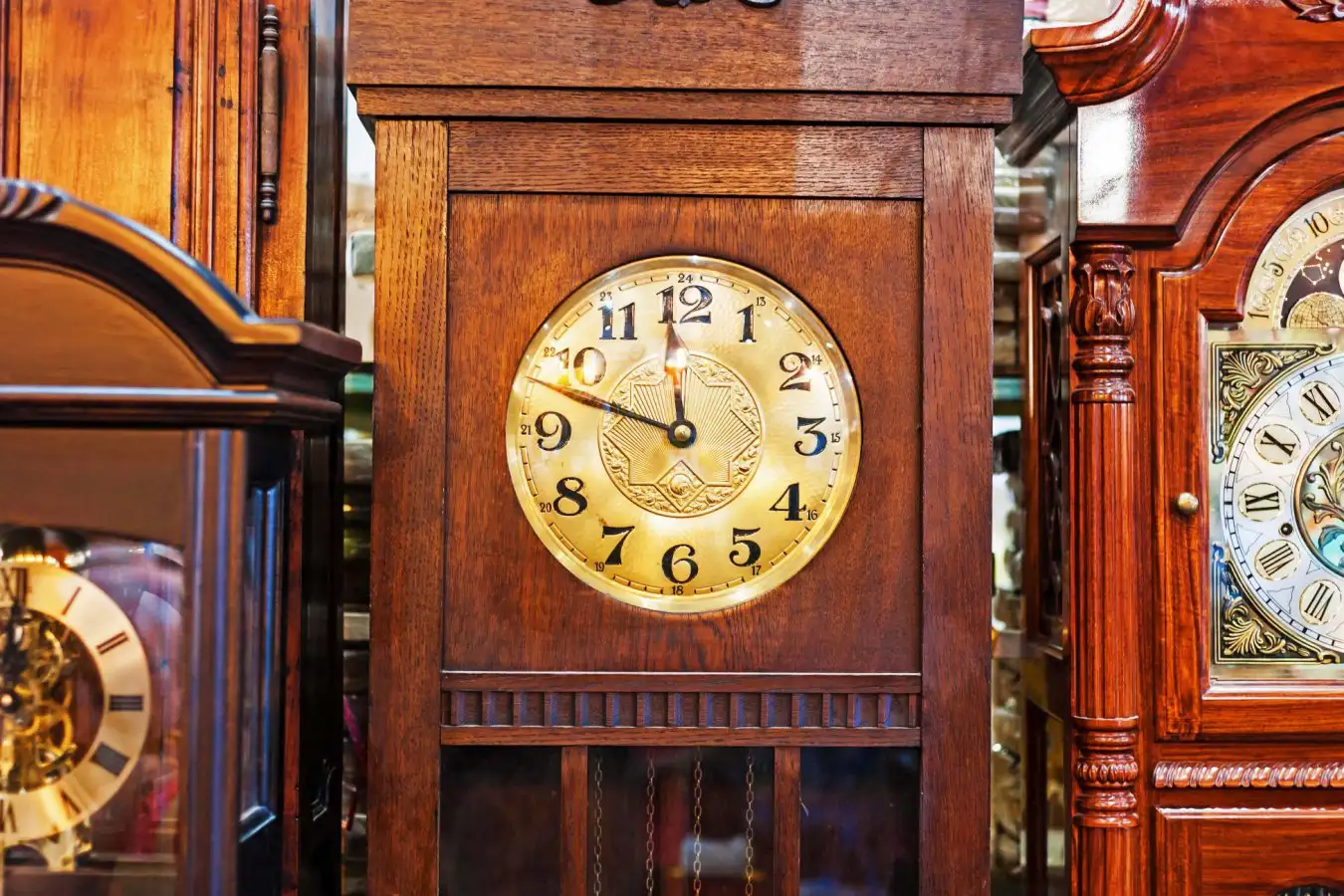
Pendulum clocks were much more accurate than those that came beforePanumas Nikhomkhai / Alamy
The first complete design for a quantum grandfather clock uses a single atom, tiny mirrors and light. Building it could help our understanding of what makes any clock accurate in the quantum realm and explore ideas at the edge of physics.
At the most rudimentary level, time can be measured with something simple, like sand trickling through an hourglass. But timekeeping became a lot more accurate once mechanical clocks, like the grandfather or pendulum clock, were invented in the 17th century. Matteo Brunelli at Collège de France and his colleagues have now shown that such clocks have a quantum equivalent.
“We asked ourselves the question: ‘Can a pendulum clock work according to the laws of quantum mechanics?’ We couldn’t be sure,” he says.
Each pendulum clock has three basic elements, starting with the pendulum that defines the clock’s ticks with its swings. Next are the weights within the clock that leverage gravity’s downward pull to make the pendulum move. Finally, a pendulum clock requires an “escapement mechanism”, which converts the pendulum’s swings into the motion of the clock’s arms and provides the pendulum with little kicks of energy to prevent friction from slowing it down. Specifically, for the pendulum to keep swinging left-to-right by the same amount every time, the escapement mechanism must control the up-and-down motion of the weights.