Few concepts in physics are as familiar, or as puzzling, as time itself. Einstein's theory of relativity showed that time is not fixed or universal. Instead, it changes depending on speed and gravity. When scientists combine relativity with quantum mechanics, however, the picture becomes even stranger. Quantum theory suggests that time itself could exist in a superposition, meaning it may flow both faster and slower simultaneously.
A newly published study suggests researchers may soon be able to test this bizarre idea in the lab. The paper, titled "Quantum signatures of proper time in optical ion clocks," appeared April 20, 2026 in Physical Review Letters. The research was led by Assistant Professor Igor Pikovski of Stevens Institute of Technology, working with experimental teams led by Christian Sanner at Colorado State University and Dietrich Leibfried at the National Institute of Standards and Technology (NIST).
Atomic Clocks and Quantum Time
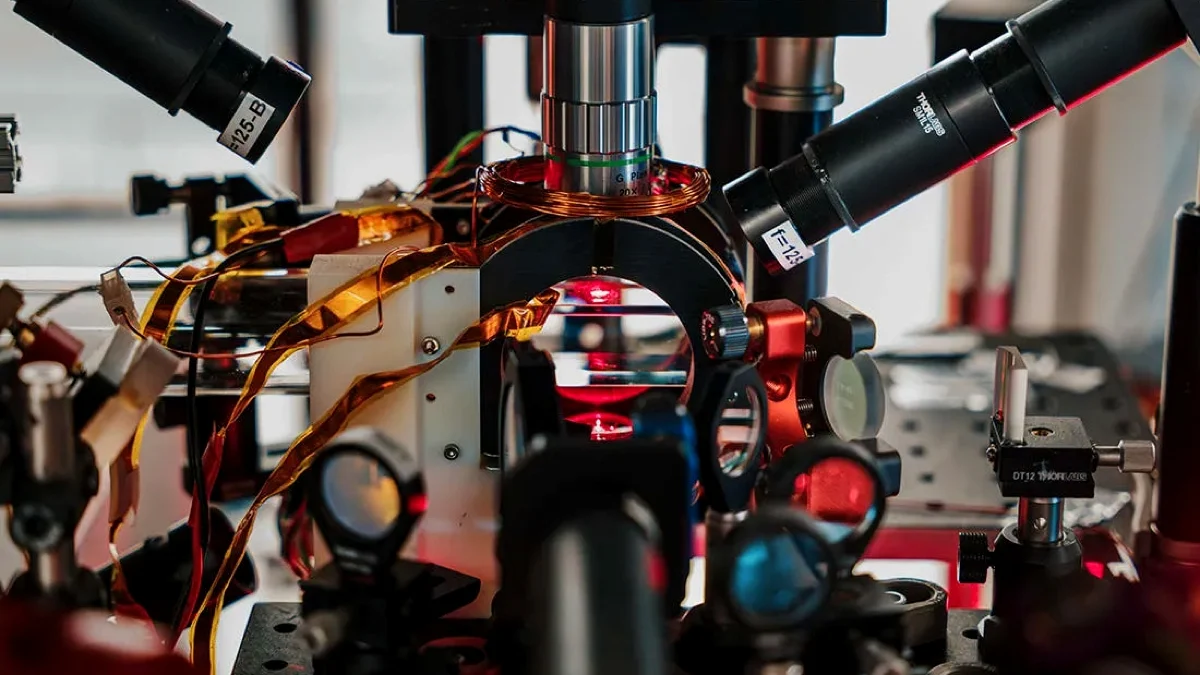
The researchers explored how advanced atomic clocks could reveal hidden quantum effects connected to the flow of time. According to their findings, the same technologies being developed for next generation clocks and quantum computers may also allow scientists to investigate whether time itself behaves according to quantum rules.