Treasuries rose across the curve after a holiday on optimism over a potential US-Iran deal that could ease inflation concerns, even as tensions in the Middle East remain high.
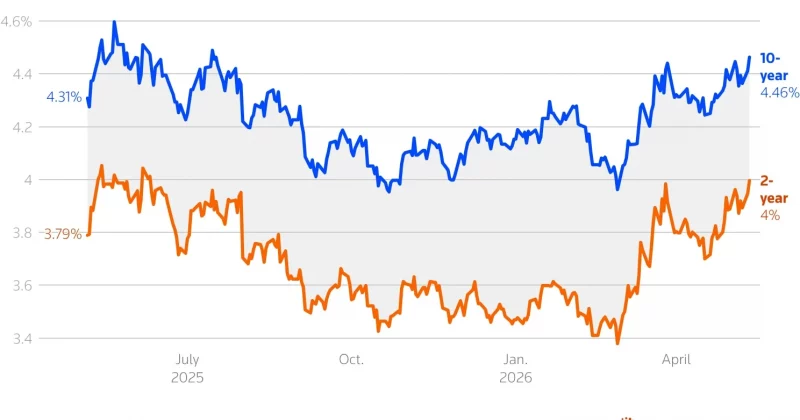
Yields on US 10-year debt dropped six basis points to 4.50% while UK counterparts slid three basis points to 4.86%. Cash trading was closed in the US and UK on Monday. German bund yields rose three basis points to 2.98%, paring a nine-basis-point slide the previous day.President Donald Trump said Monday that negotiations with Iran on an interim deal to extend their ceasefire and reopen the Strait of Hormuz were “proceeding nicely.” But hours later, US and Israeli jets struck a number of Iranian vessels in the Strait of Hormuz, highlighting the fragile nature of the truce.
While benchmark Brent oil prices briefly rose above $100 per barrel on Tuesday, they remained 4% lower than Friday’s close.“The idea of a deal rather than the actual deal is helping to keep the bid in Treasuries,” said Pooja Kumra, senior UK and European rates strategist at Toronto Dominion Bank. “That said, we doubt that there will be this permanent relief rally until there is an ‘actual deal.’”US yields spiked this month as the Iran war spurred the biggest inflation surge since 2023, leading traders to ramp up bets that the Federal Reserve will need to keep interest rates higher for longer under new chairman Kevin Warsh.What Bloomberg Strategists Say…“Global yields have peaked as the damage delivered to the global economy starts to overwhelm the initial inflationary impulse created by the long closure of the Strait of Hormuz.”“With central banks also willing to hike rates in order to combat inflation, longer-dated government bonds offering the fattest yields in almost two decades are set up to rally from here.”— Garfield Reynolds, Markets Live strategistFollowing the latest developments in US-Iran talks, markets have pared back expectations for near-term Fed tightening, with overnight-indexed swaps now fully pricing in a rate hike by March 2027 instead of December 2026 as seen at the end of last week.The extra yield investors demand to hold 30-year bonds over five-year notes also rebounded from the lowest level since May 2025 as some of the market’s more hawkish Fed expectations eased.“A large part of the bond selloff has been due to heightened inflation expectations on higher energy prices,” said Abbas Keshvani, director of Asia macro strategy at RBC Capital Markets in Singapore. Progress in US-Iran talks “could lead to further reduction in energy prices, inflation expectations, and therefore yields,” he added.BlackRock Inc. is among those arguing the Fed has sufficient reason to cut rather than hike rates. Navin Saigal, the firm’s head of global fixed income for Asia Pacific, said on Bloomberg TV Monday that pressure on the labor market could justify the Fed staying on hold or cutting rates. His comments contrast with investors betting Warsh will prioritize the Fed’s inflation-fighting credibility over Trump’s push for lower rates.Meanwhile, the latest US strikes on sites in Iran and the Islamic Revolutionary Guard Corps firing on a US fighter jet tempered broader market optimism over a potential deal with Tehran. Stocks pared gains and Brent crude oil climbed, while the dollar strengthened against almost all of its Group-of-10 peers.–With assistance from James Hirai.