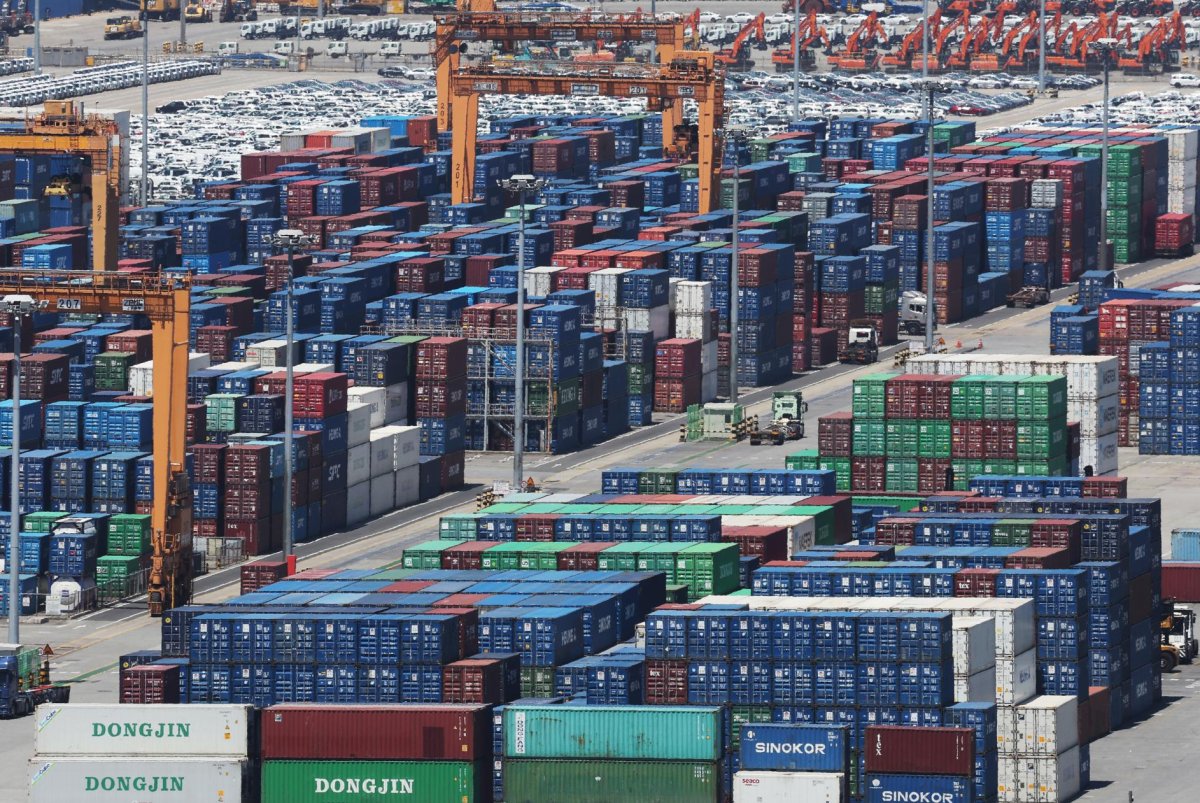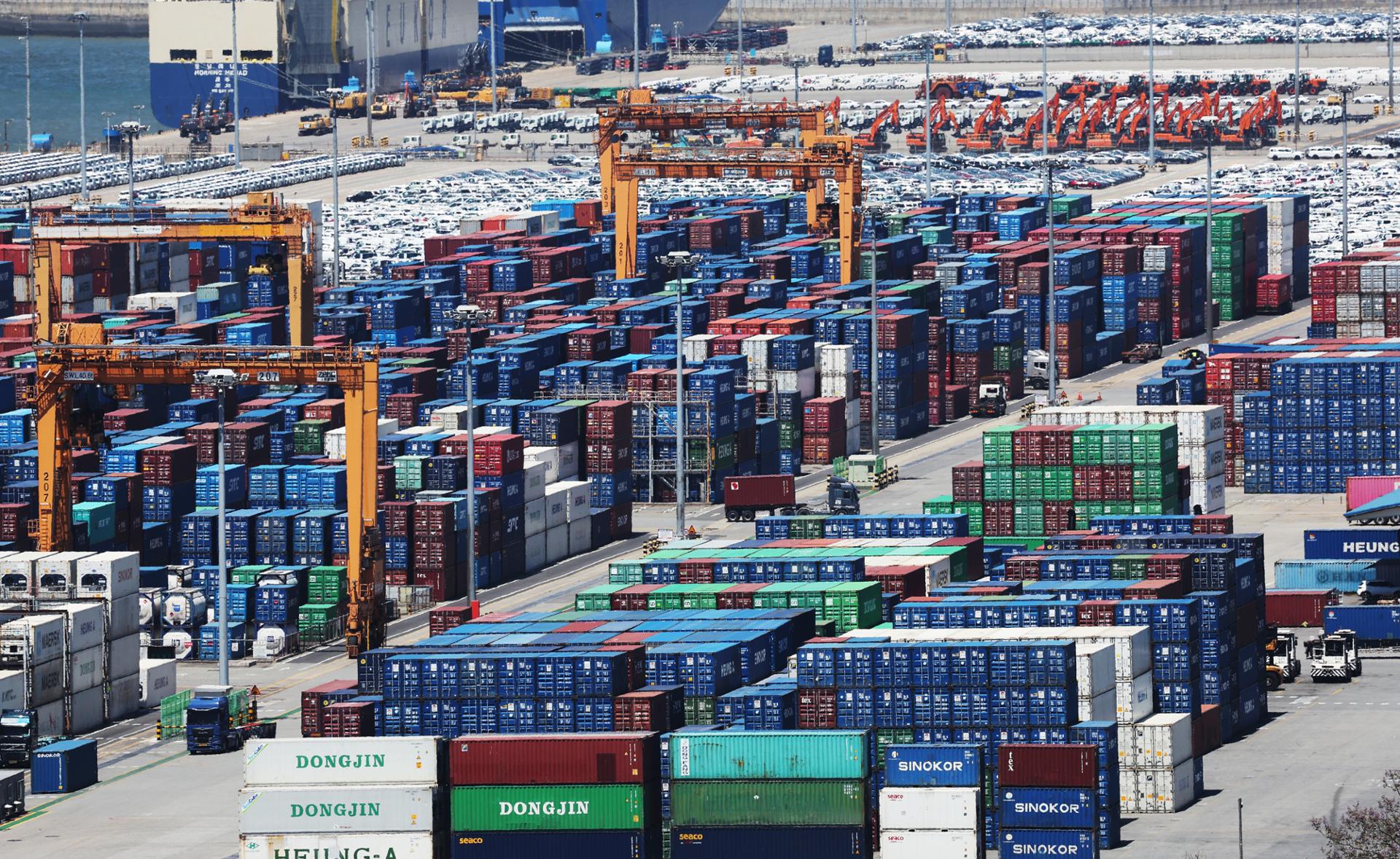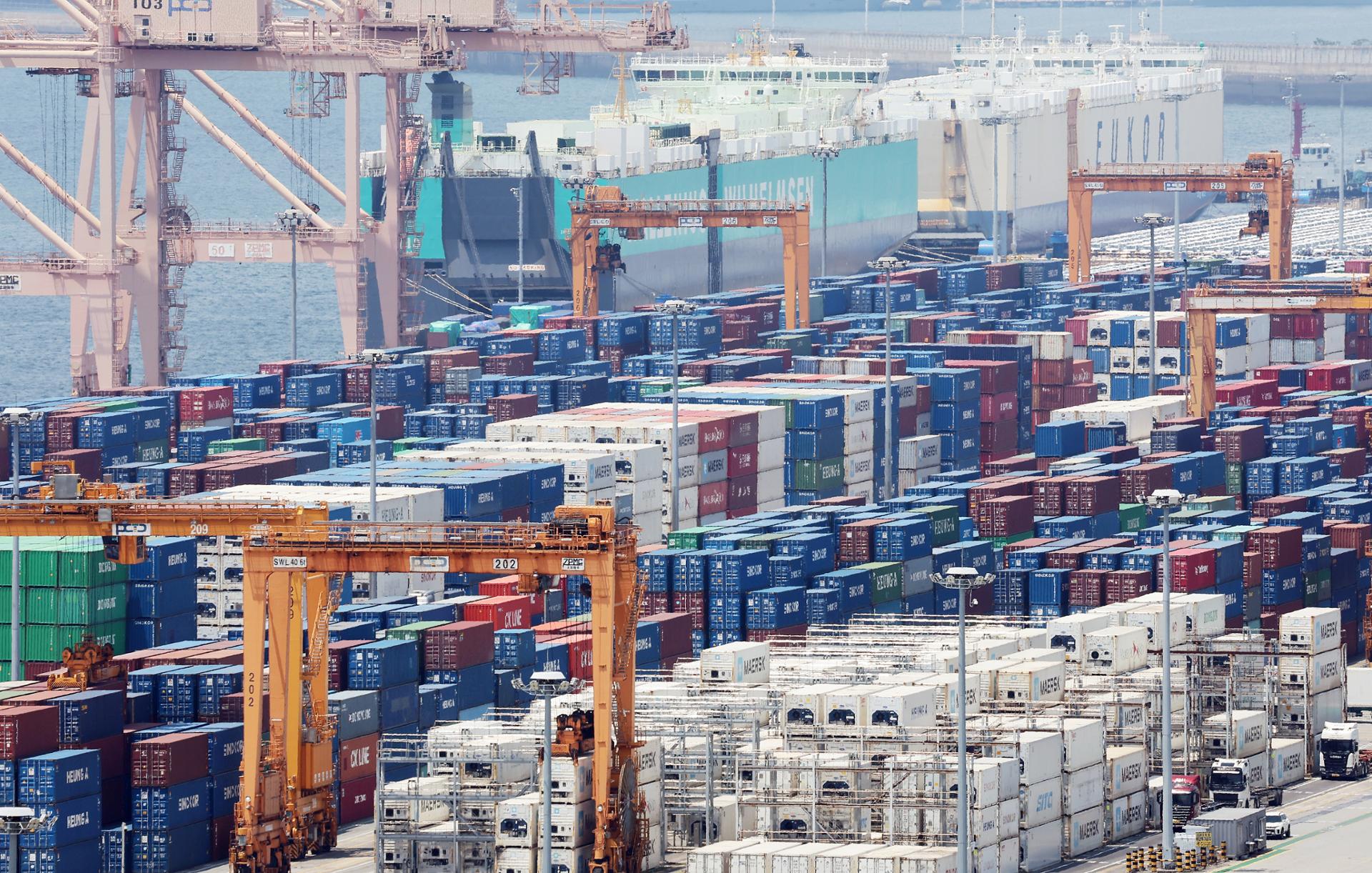
Bank says semiconductor rally is spreading beyond exports into consumption, capex and tax revenue Containers are stacked a port in Pyeongtaek, Gyeonggi Province, on May 8. (Yonhap) Bank of America has sharply raised its 2026 growth forecast for South Korea, citing an artificial intelligence-driven semiconductor boom that it said is strong enough to lift exports, investment, consumption and government revenue.The bank upgraded its 2026 GDP growth forecast for Korea to 3.1 percent from its previous estimate of 1.9 percent, calling the revision "a clear shift to above-trend expansion," according to its report released Tuesday.It also raised its current account surplus projection to 15 percent of GDP, citing stronger-than-expected momentum in the global tech cycle.The revision marks one of the more bullish calls on Korea's economy, as surging demand for memory chips used in AI servers continues to power exports and corporate earnings. BofA said its DRAM price forecast for this year had been raised by 48 percent from its March projection.Year to date, Korea's exports rose 41 percent, with semiconductors contributing 36 percentage points to that figure. "This semiconductor-driven upswing has continued to underpin headline growth," the report said.BofA expects net exports to contribute 1.3 percentage points to GDP growth both this year and next, anchoring its upgraded outlook.The report suggests the chip cycle is beginning to spread beyond exports. Facility investment rebounded in the first quarter, helped by rising chip-related spending, while combined capital expenditure by Samsung Electronics and SK hynix is expected to rise 41.9 percent this year.Consumption is also showing signs of recovery. Retail sales rose 7.3 percent on-year in March, the strongest pace since August 2022, while department store sales climbed 10.5 percent. BofA said the stock market rally may be strengthening Korea’s traditionally weak equity wealth effect, particularly among middle- and higher-income households.The semiconductor boom is also improving the government's fiscal position. BofA estimated that Samsung Electronics and SK hynix could collectively contribute over 100 trillion won ($66.68 billion), or about 4 percent of GDP, in tax revenue this year, more than 10 times their 10-year average.That could give the government room for another supplementary budget of about 25 trillion won in the second half, following the 26.2 trillion won package passed in April, the bank said."This sets up a rare alignment of strong private-sector capex and public fiscal stimulus, reinforcing the growth upside while helping to offset the energy shock," BofA said.But the stronger outlook also comes with a policy twist. BofA now expects the Bank of Korea to raise interest rates twice in the second half, taking the terminal rate to 3 percent.The bank cited above-trend growth, inflation expected to average around 2.7 percent, higher oil prices from the prolonged Middle East conflict and continued won weakness near the 1,500 level against the US dollar, while pointing to a more hawkish composition of the central bank's monetary policy board.Risks remain centered on whether the AI-led chip cycle can last into next year, as well as energy shocks, geopolitical spillovers and possible policy overtightening. Still, BofA said fiscal buffers and limited production disruption so far suggest those risks remain "tail risks rather than cycle-breakers."
Bank of America sharply lifts Korea outlook on AI chip boom
Bank of America has sharply raised its 2026 growth forecast for South Korea, citing an artificial intelligence-driven semiconductor boom that it said is strong
521 words~2 min read