Chung Un-chan
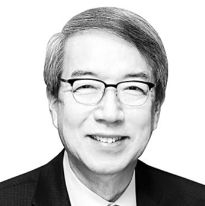
The author, a former president of Seoul National University and former prime minister, is the chairman of the Korea Institute for Shared Growth.
A recent proposal by the presidential policy office for a so-called national dividend sparked intense debate across Korea. The idea was to return excess tax revenue generated by the booming AI industry to the public. Financial markets reacted sharply and the Kospi fluctuated significantly.
During the debate, however, some media outlets improperly dragged in the concept of “profit-sharing,” portraying it as something entirely different from its original meaning. Critics framed the system as a “communist-style redistribution scheme” or an infringement on private property rights, using it to attack broader policies aimed at shared growth between large corporations and smaller firms. Such a distorted framing of profit-sharing, one of the central mechanisms of co-existence-oriented growth policy, deserves correction.
Han Seong-sook, fourth from left, minister of SMEs and Startups, joins attendees including Lee Dal-gon, fifth from left, chairman of the Korea Commission for Corporate Partnership, during a performance at the 2025 Shared Growth Week ceremony held at the Korea Federation of SMEs in Yeongdeungpo District, western Seoul, on Nov. 25, 2025. [PROVIDED BY THE MINISTRY OF SMES AND STARTUPS]