D-Wave’s Quantum Supremacy Result Stands
Recent classical simulation work represents progress, but does not overturn D-Wave’s peer-reviewed demonstration of beyond-classical quantum simulation
D-Wave Quantum Inc. (NYSE: QBTS), (“D-Wave” or the “Company”), the only dual-platform quantum computing company providing both annealing and gate-model systems, software and services, today issued the following response to recent claims that newly published classical simulation work has “overturned” D-Wave’s demonstration of quantum computational supremacy in quantum simulation.
The claim that D-Wave’s achievement has been overturned is inaccurate and not supported by the scientific record.
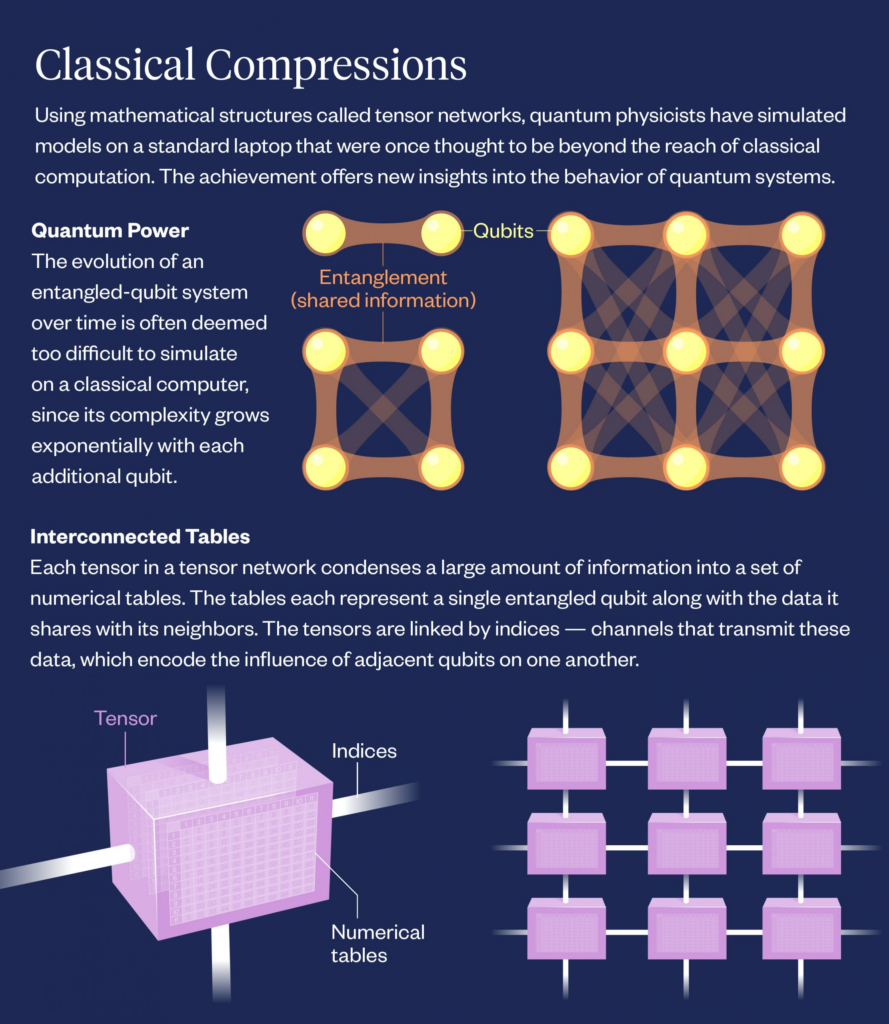
D-Wave welcomes advances in classical algorithms, including recent tensor-network work from researchers at the Flatiron Institute and collaborators. Scientific progress in quantum computing depends on rigorous comparison between quantum and classical methods. However, the recently published work does not reproduce the full scope of D-Wave’s peer-reviewed Science result, nor does it solve the hardest problem instances and measurements reported in that work. The only major change in the Flatiron work that has now been published in Science is the addition of large diamond lattice data. This supports the claim that they are using BP-TNS to extract a Kibble-Zurek exponent in a 3D system, but the same criticisms apply as a year ago: they don’t compute the same observables, nor all the geometries, nor the largest size geometries, nor all the couplings computed by D-Wave and its collaborators.