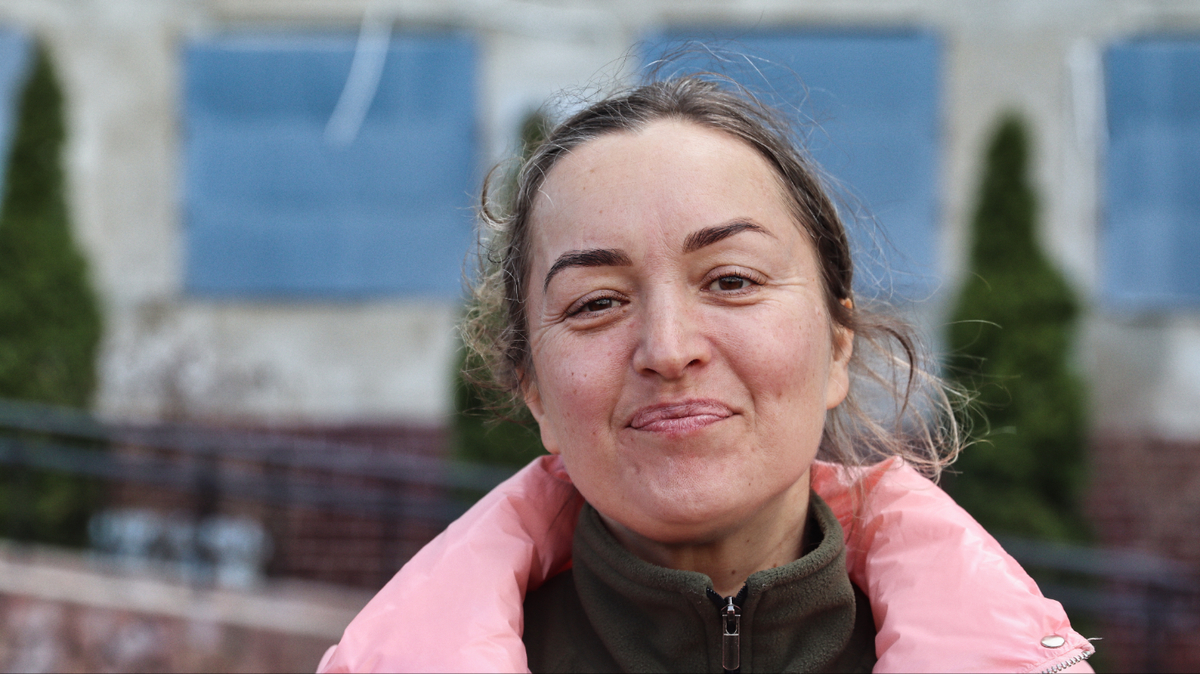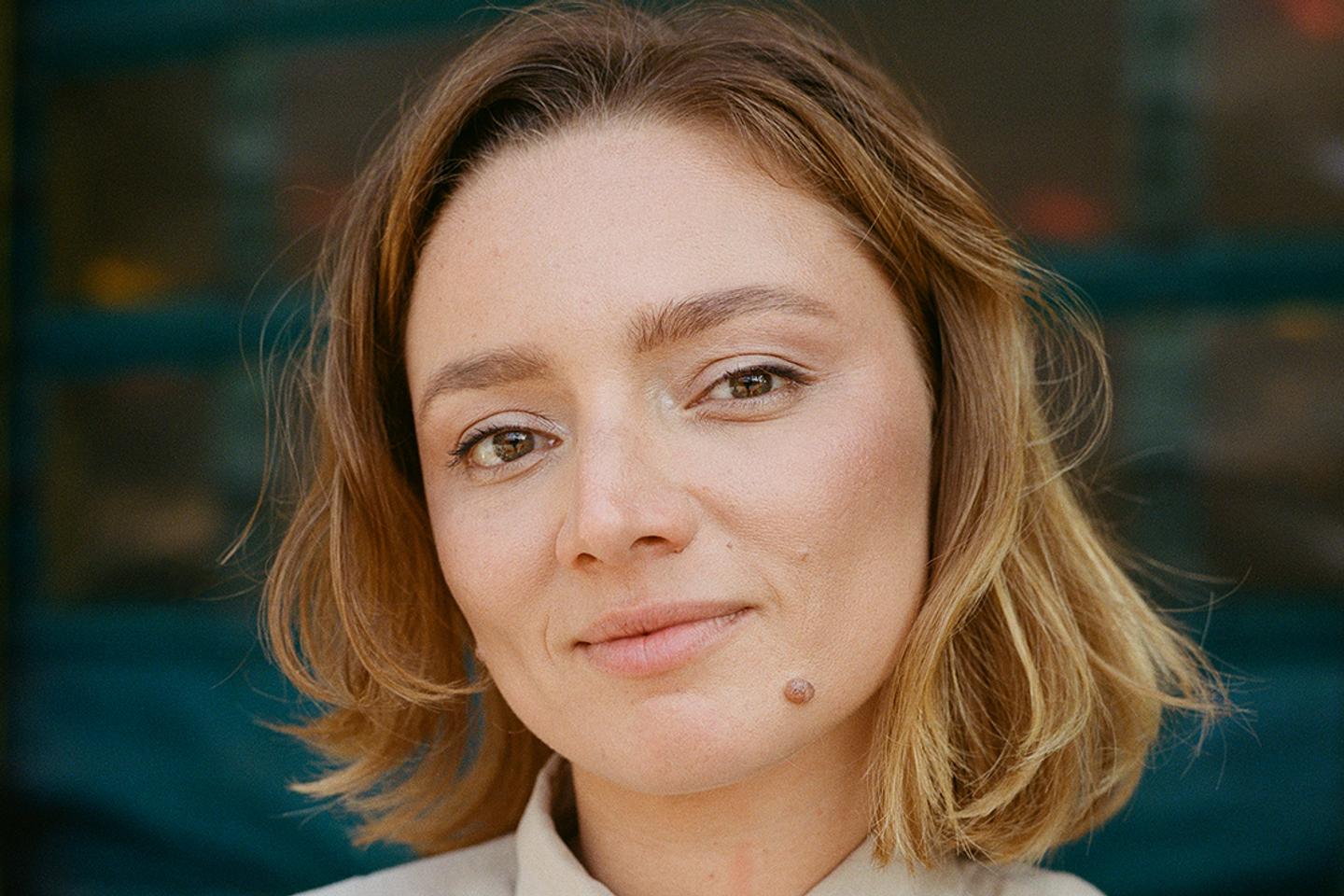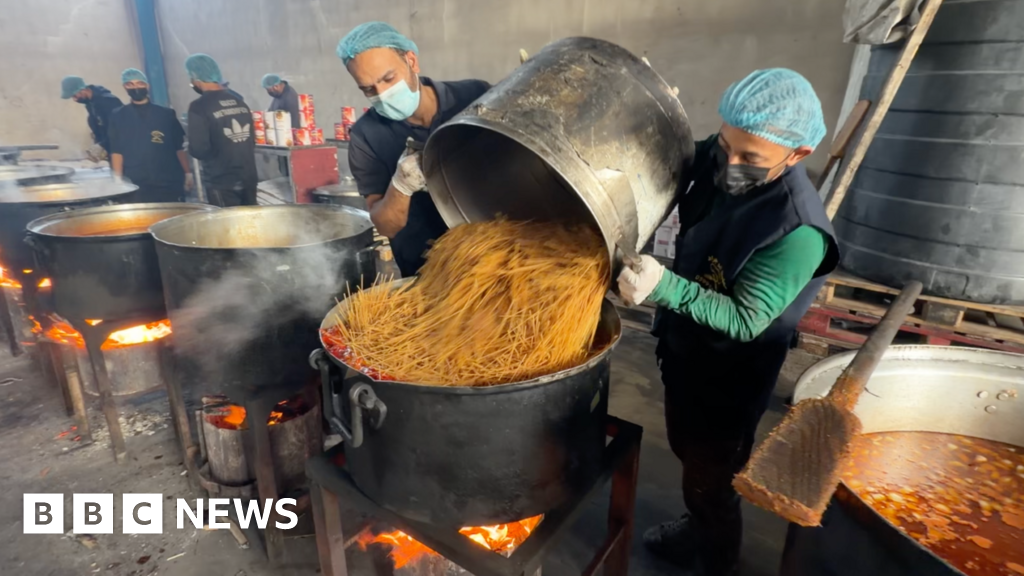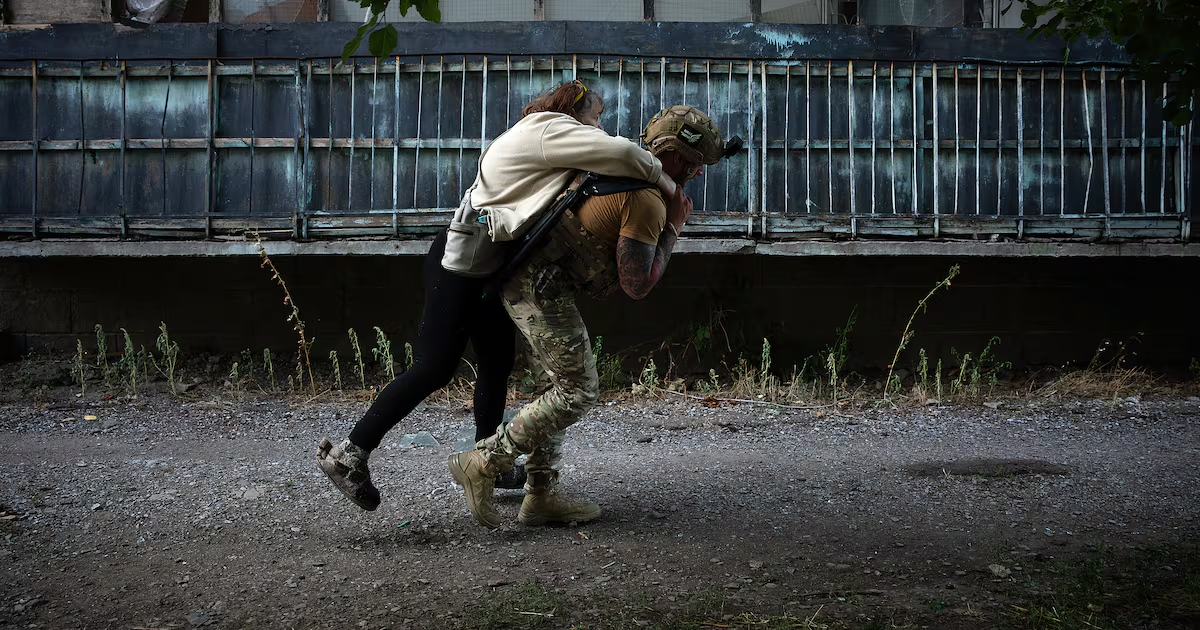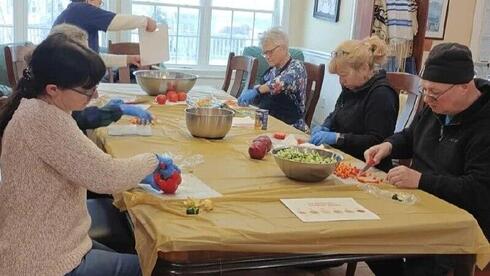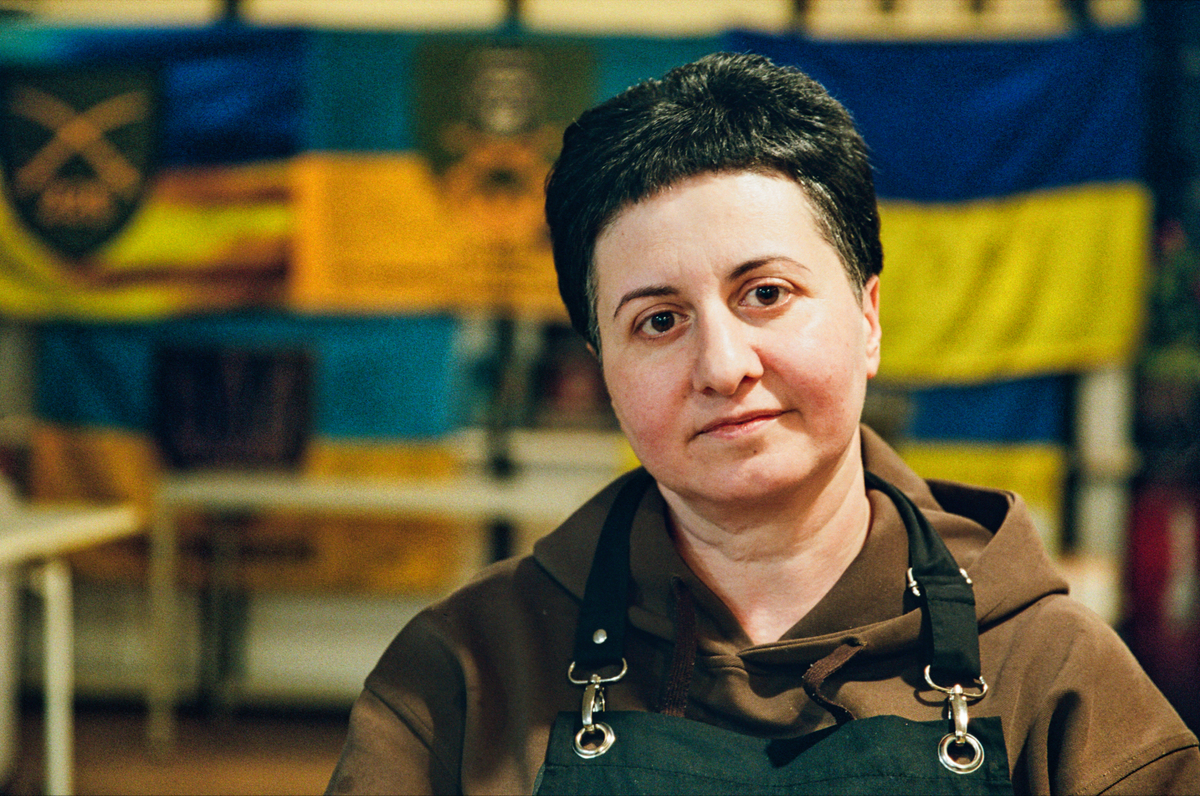
No longer ad hoc, but organized as Soul of Kharkiv, the effort Roxana Pavlenko leads has grown into a network feeding thousands across the city and beyond. It runs on routine and on calls: rapid responses to impact sites, where tea and food are handed out to those emerging from basements and rubble. In those first moments, what they provide is not only nourishment, but something that still resembles home. A few kilometers outside the city center of Kharkiv, an inconspicuous door set into a small annex at the edge of a large parking lot opens. In the wall beside it, shrapnel scars mark the concrete – small, dark impacts, easy to miss if you don’t look closely.JOIN US ON TELEGRAMFollow our coverage of the war on the @Kyivpost_official. More than a kitchen Inside, the space resists clear boundaries. Kitchen equipment stands alongside stacks of food supplies: bulk packages of pasta and rice, nets of mandarins, bundles of bread and toast, jars of garlic mayonnaise, powdered broth, boxes piled on top of one another. Large industrial pots stand along the back wall, gas canisters one side. Flags and certificates hang in between, marking something that is not quite a workplace, but not something else either. Rows of empty meal trays prepared for distribution at the headquarters of Soul of Kharkiv in Kharkiv. April 2026 (Photo by Korbinian Leo Kramer)
Just a Kitchen, Decision to Stay: Woman Feeding Kharkiv – Body and Soul
What began as a decision to stay has become a lifeline. From a single kitchen, a woman has been cooking for those in shelters, on the streets, and at the front since the first days of the war.
2,456 words~11 min read