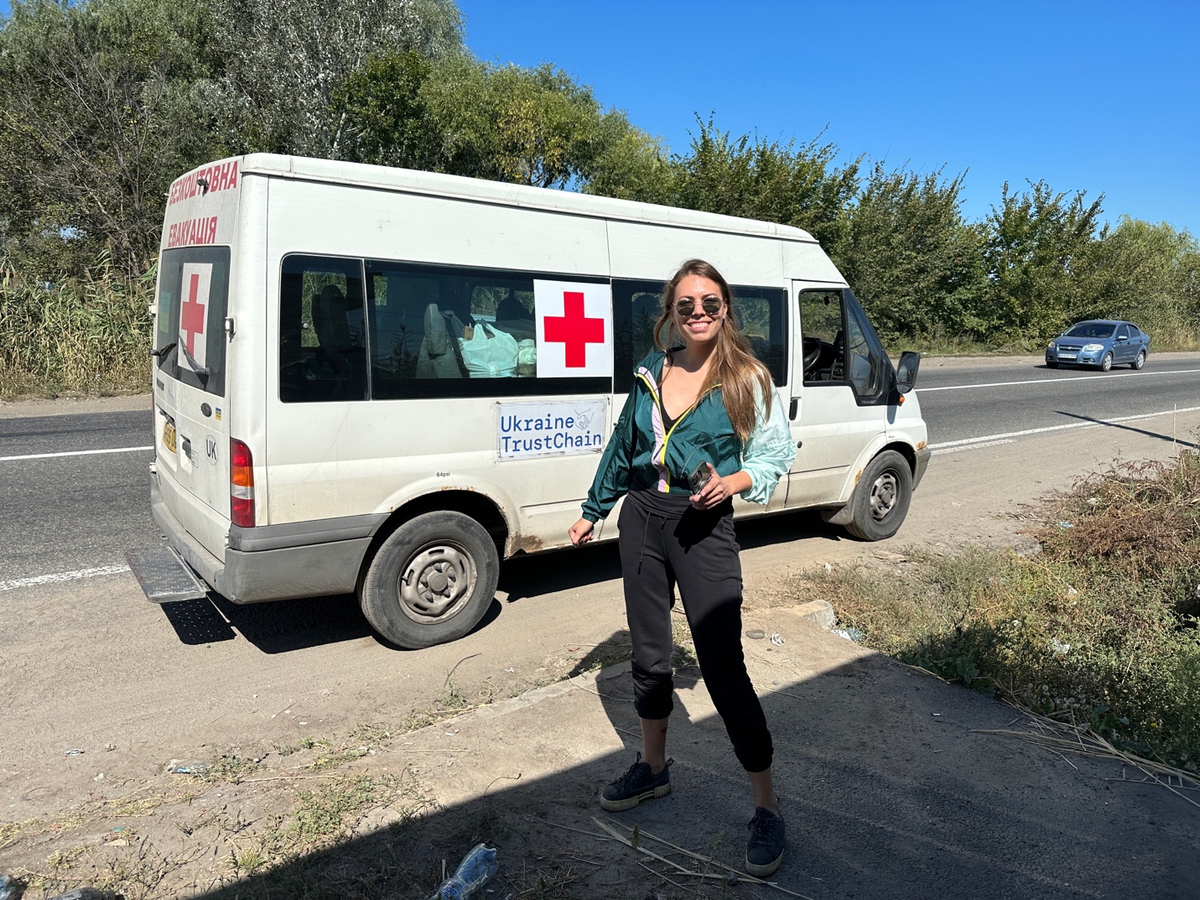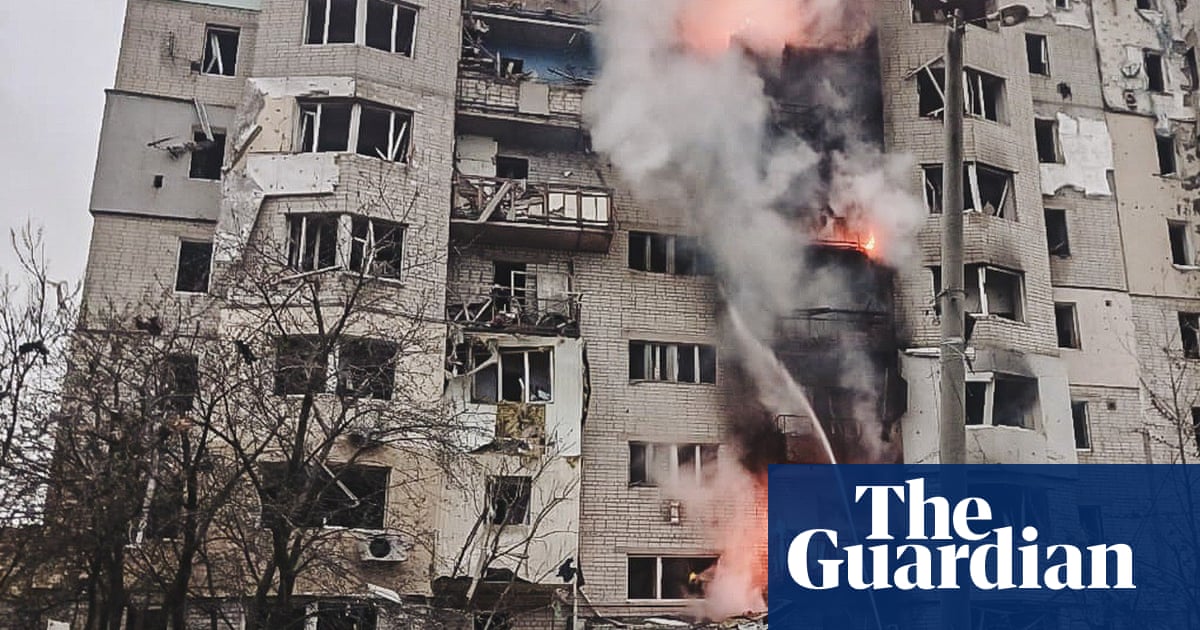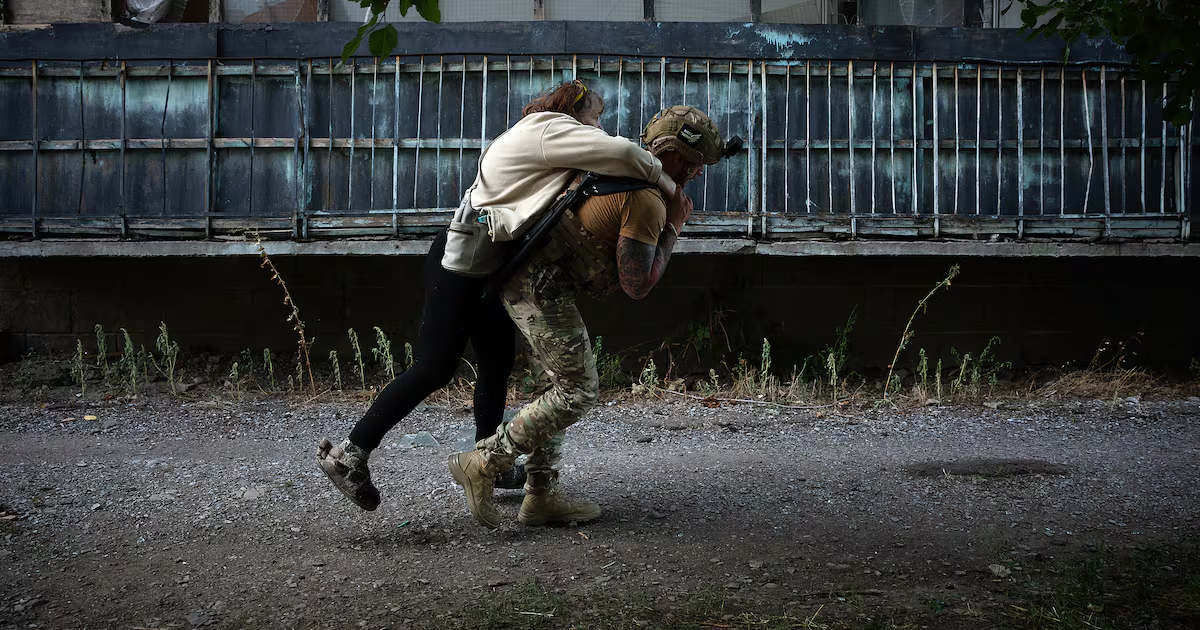
The team carried lists of people who had signalled that they were ready, at last, to evacuate a place so ravaged by Russian bombardment that it had no power, gas, heat or running water, and little food or intact shelter.The rescuers also called up to windows and balconies, shouting “evacuation,” as they tried to convince other stragglers, most of them old and infirm, that their lives here were finished, that they should grab their essentials and leave, too. They carried a disabled woman and her wheelchair to a waiting van.Driving into Kostiantynivka “is like Russian roulette”, said Evgeny Tkachev, a worker with a United Nations-supported humanitarian group, Proliska. Rubble chokes the streets, which are pocked by craters, and drones are always overhead.Kostiantynivka had about 67,000 residents before the war. By January, there were about 2,000. The city had become a prime target of the Russian offensive, a strategic node the Ukrainians were determined to defend.Last autumn, as Russian forces blasted their way ever closer, a police team called the White Angels and civilian groups like Proliska evacuated as many of the remaining residents as they could. For some, it was too late. The parents of Evdokimov Andriy (44) watched as two officers carried away his remains, zipped into a body bag, a day after a strike killed him.The grieving parents of Evdokimov Andriy (44) watch as his remains are removed, a day after a strike killed him in Kostiantynivka, Ukraine. Photograph: The New York Times
‘I help, save lives, and try to forget’: Rescuers risk everything in Ukrainian kill zone
Kostiantynivka is a ruined frontline city where terrain changes hands slowly but the bloodshed is constant
1,224 words~6 min read