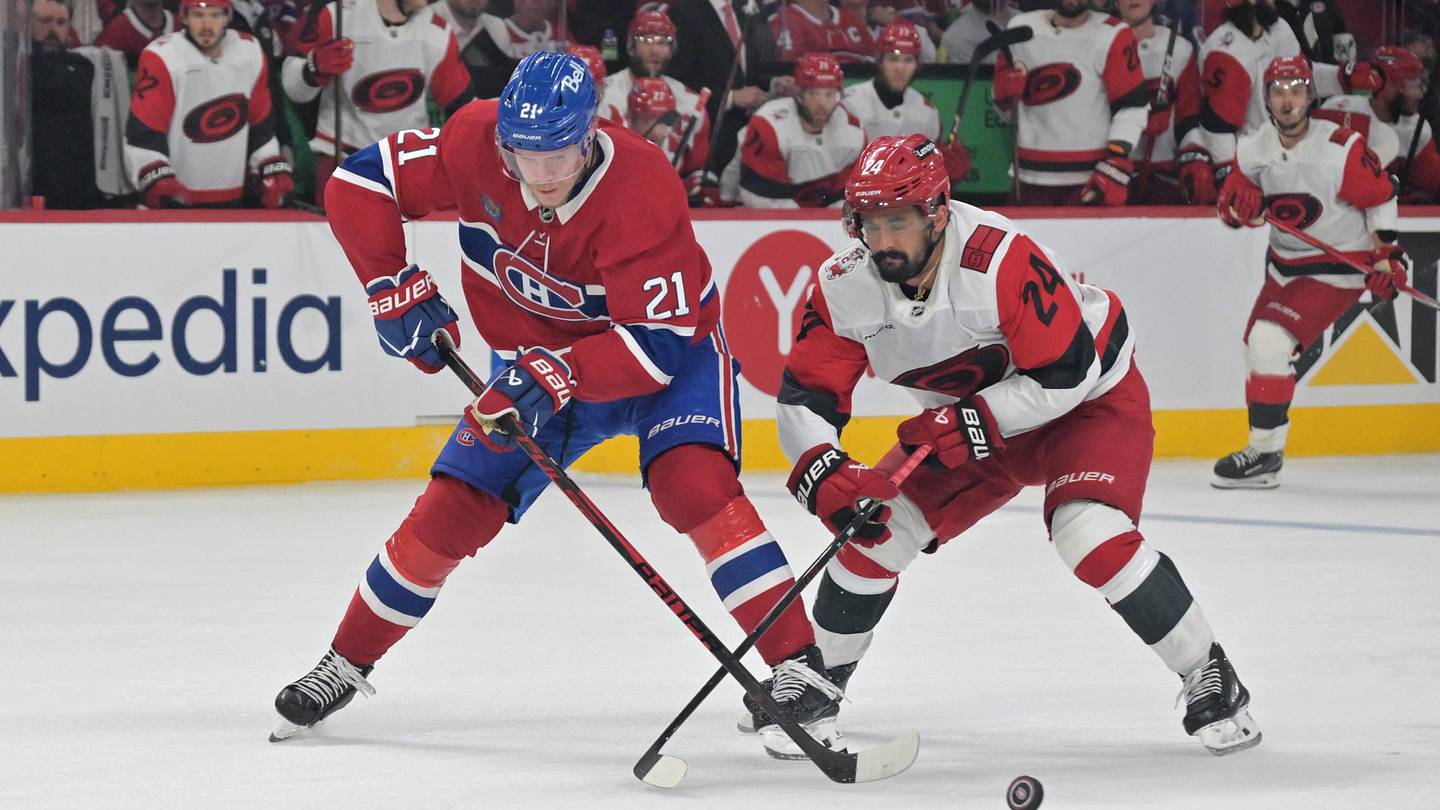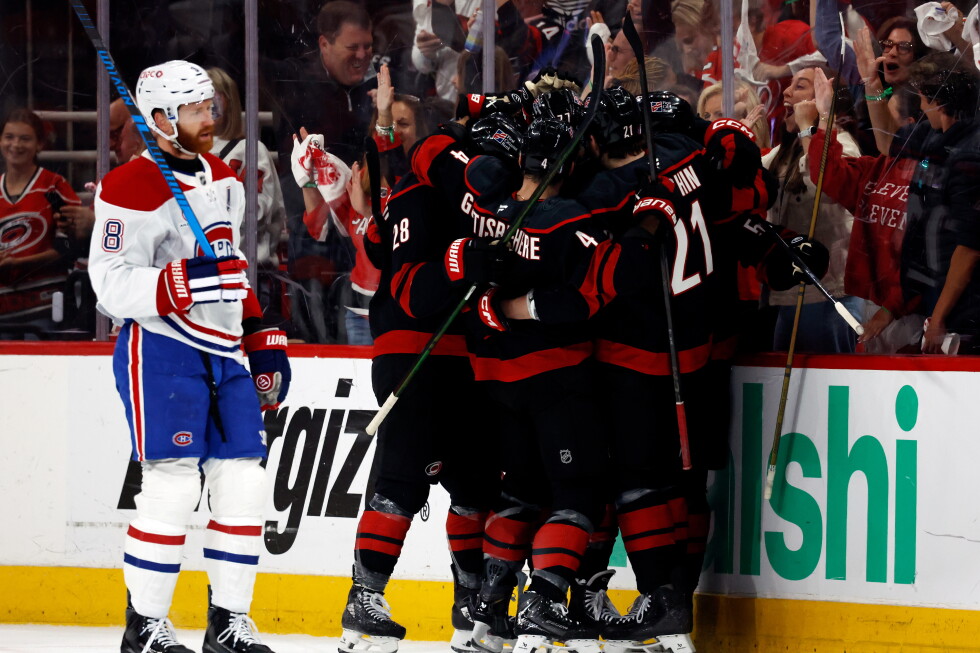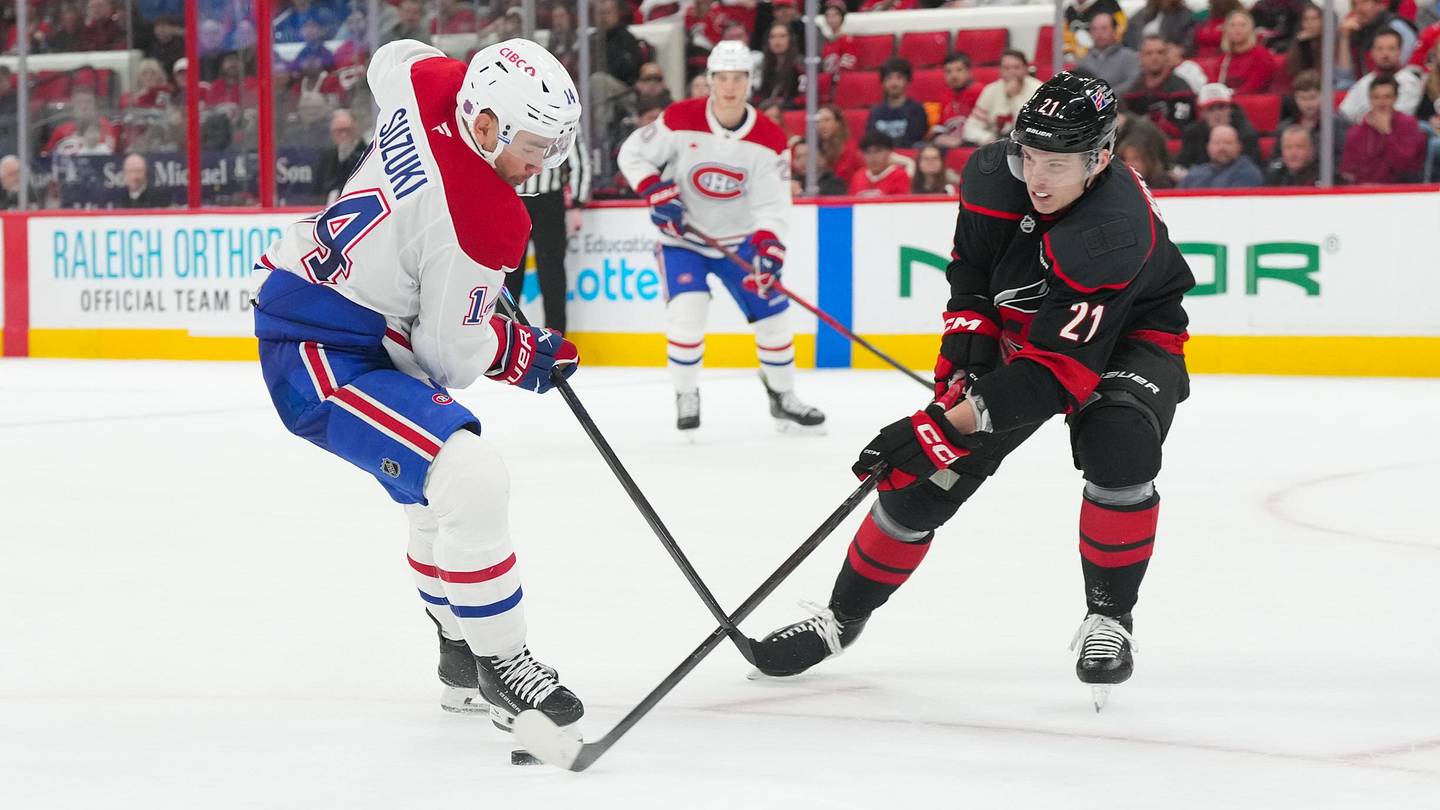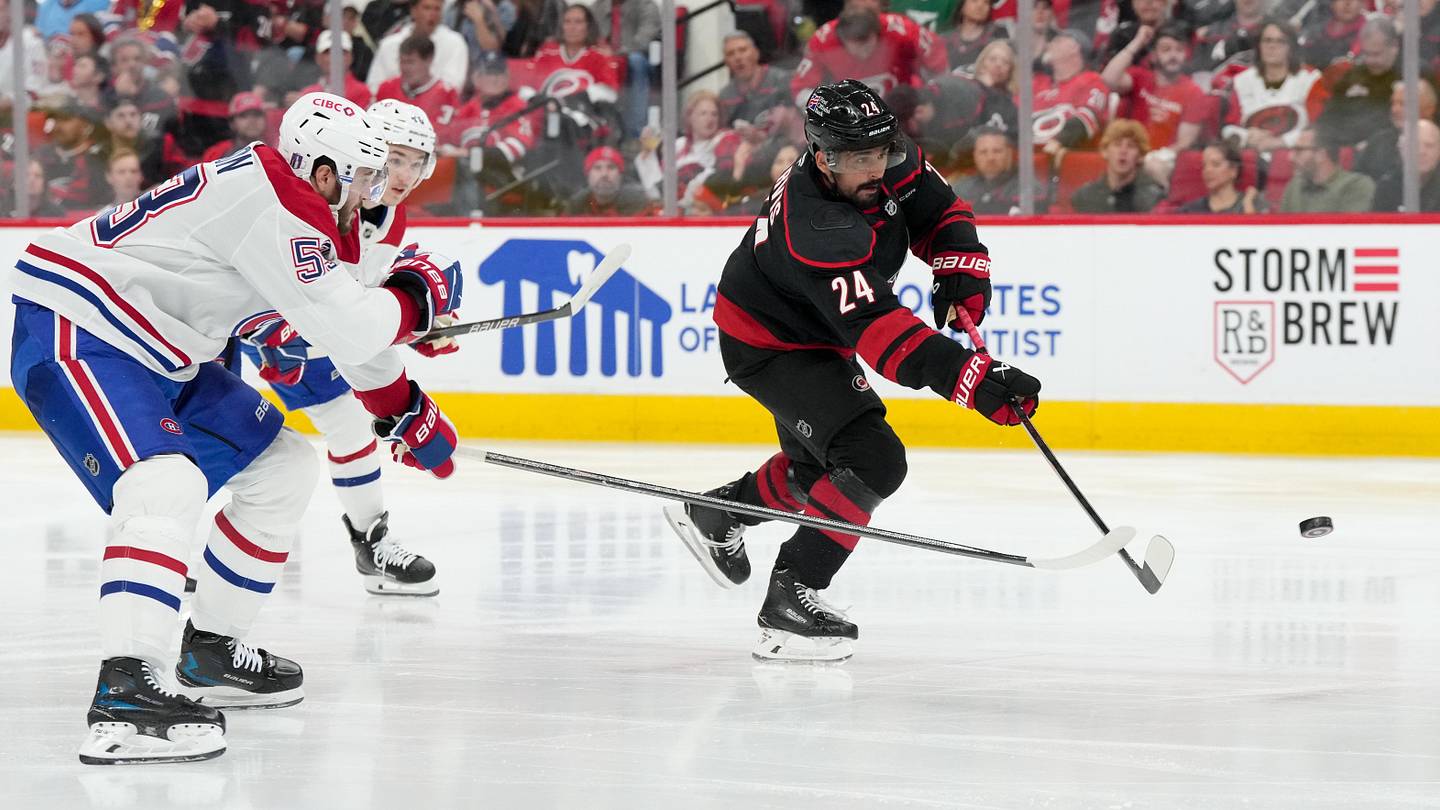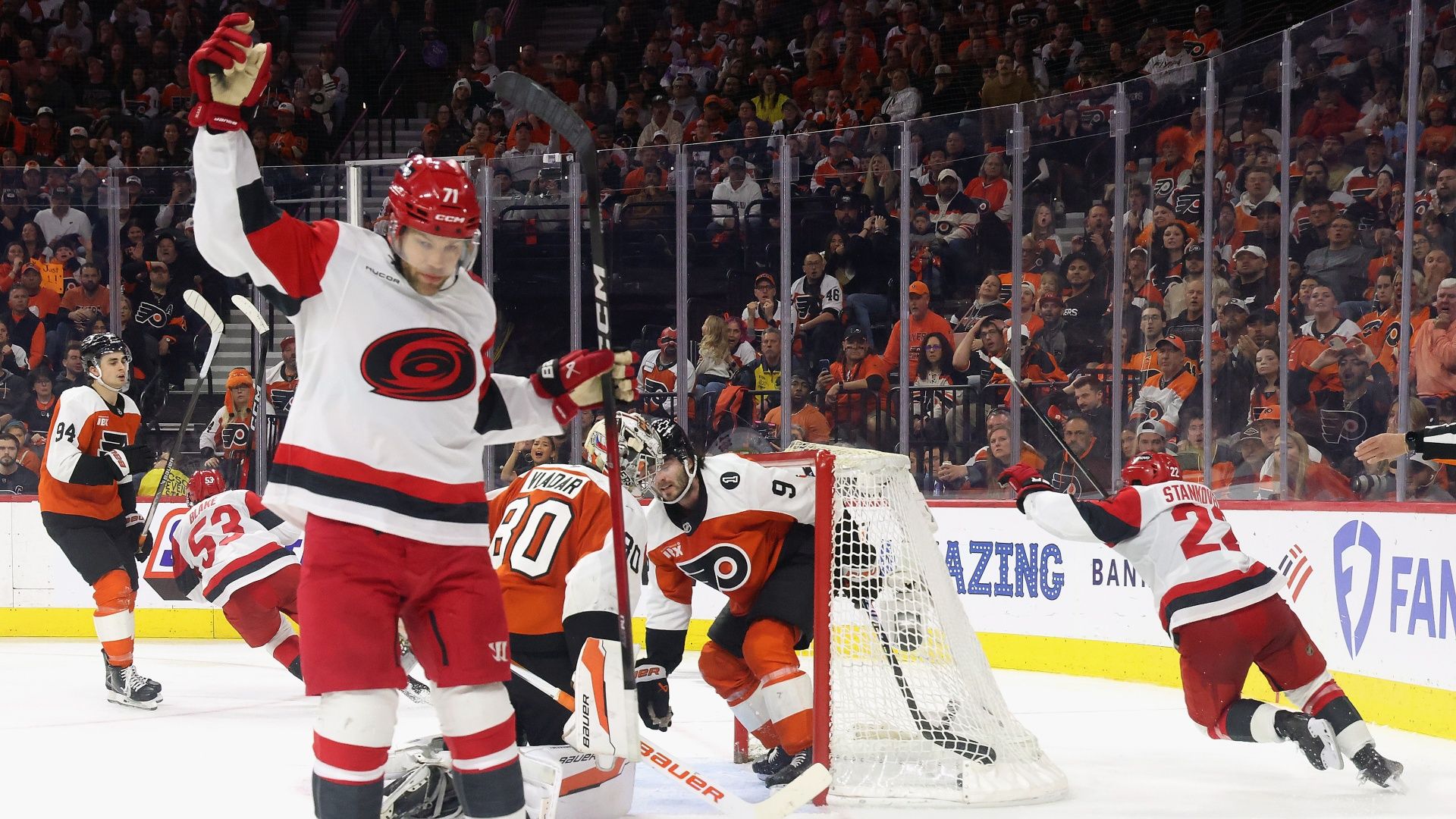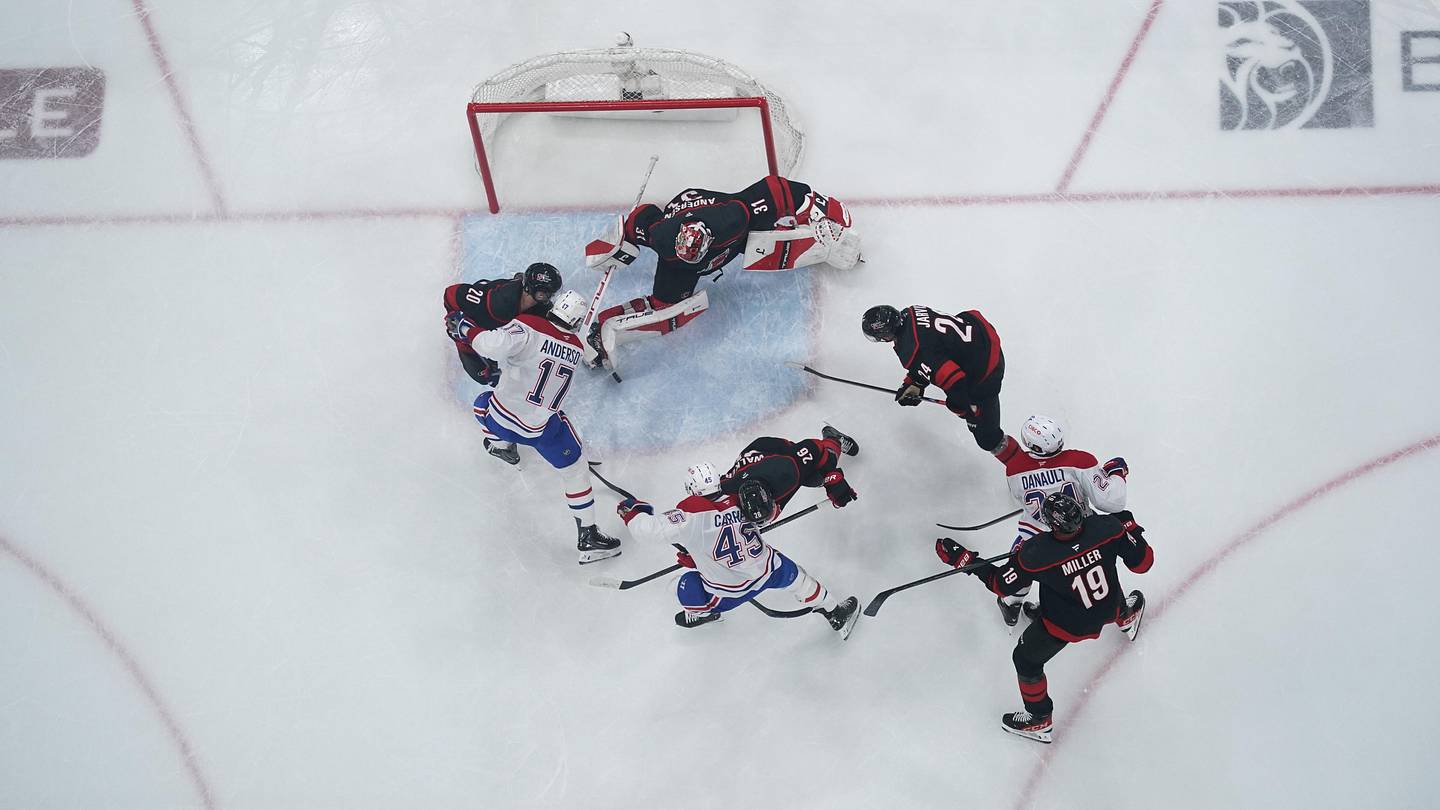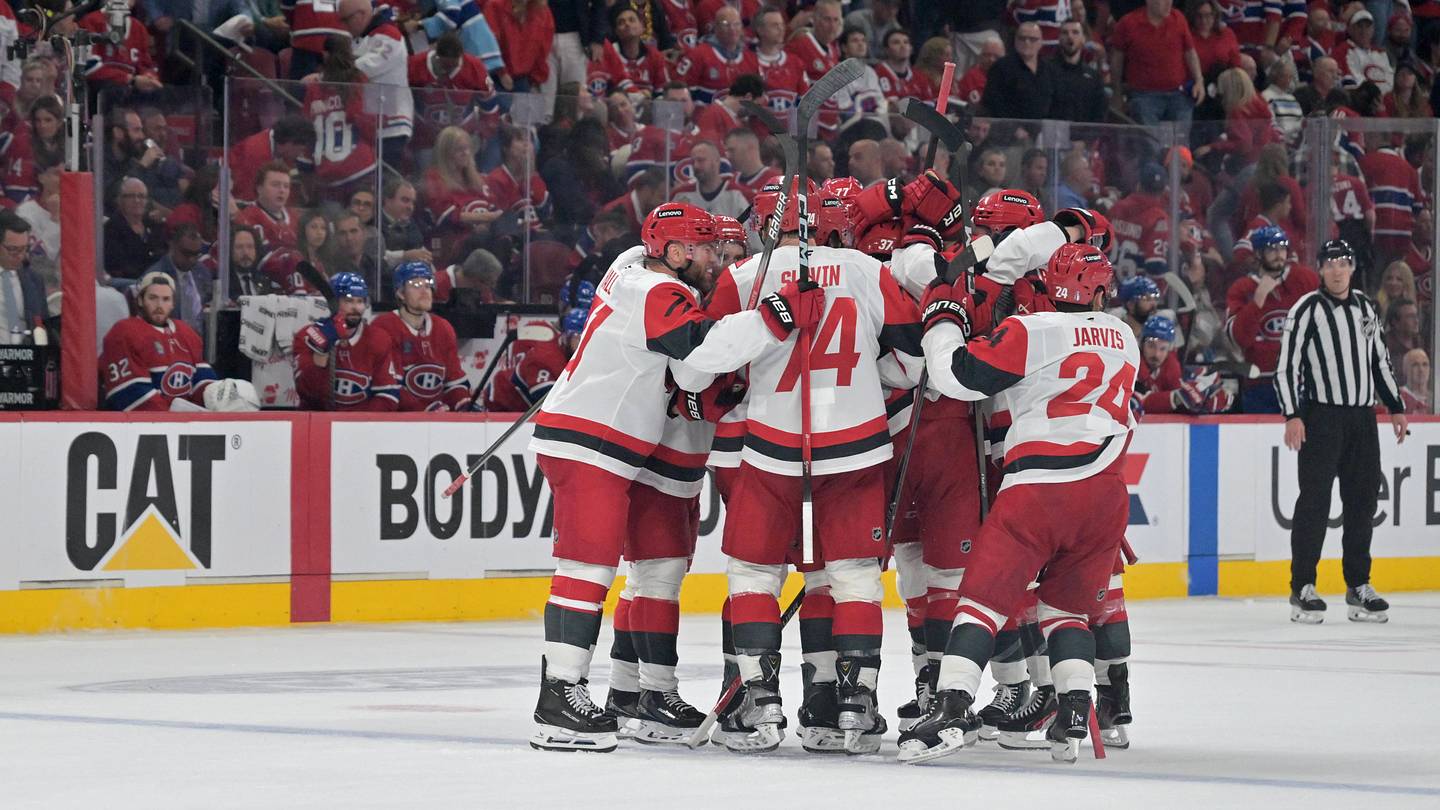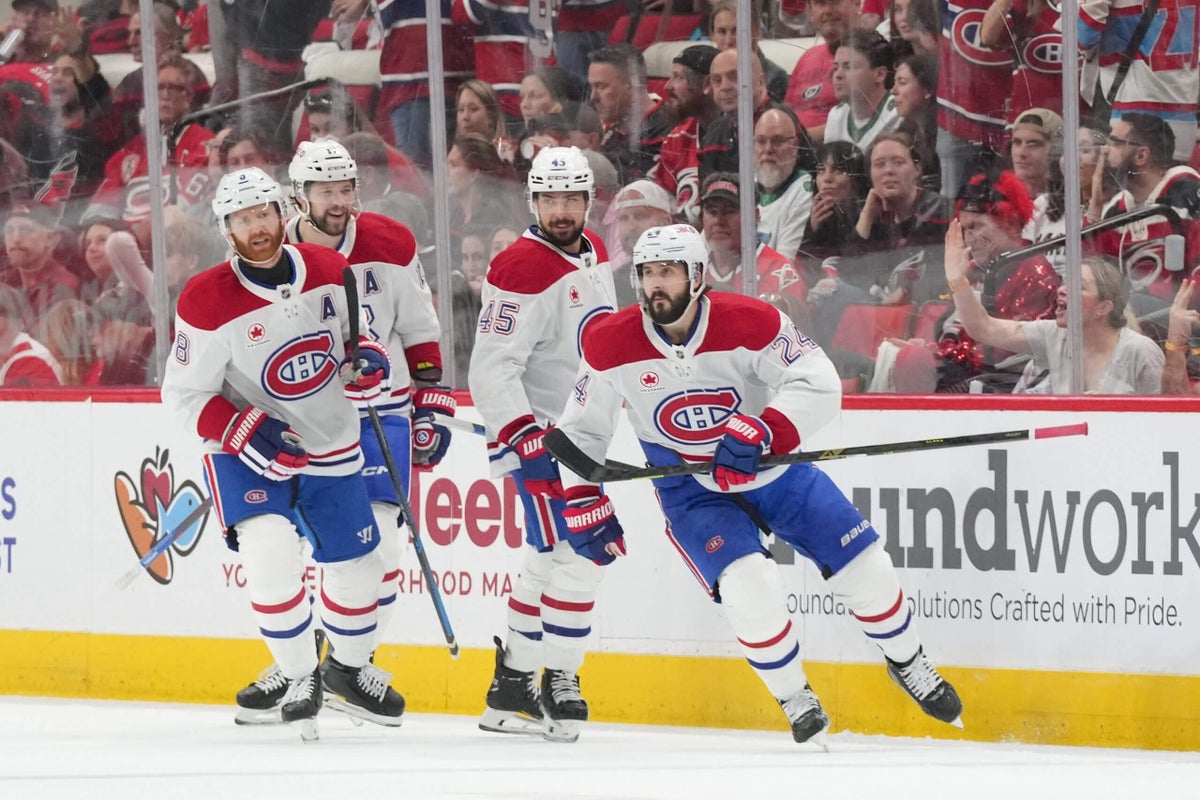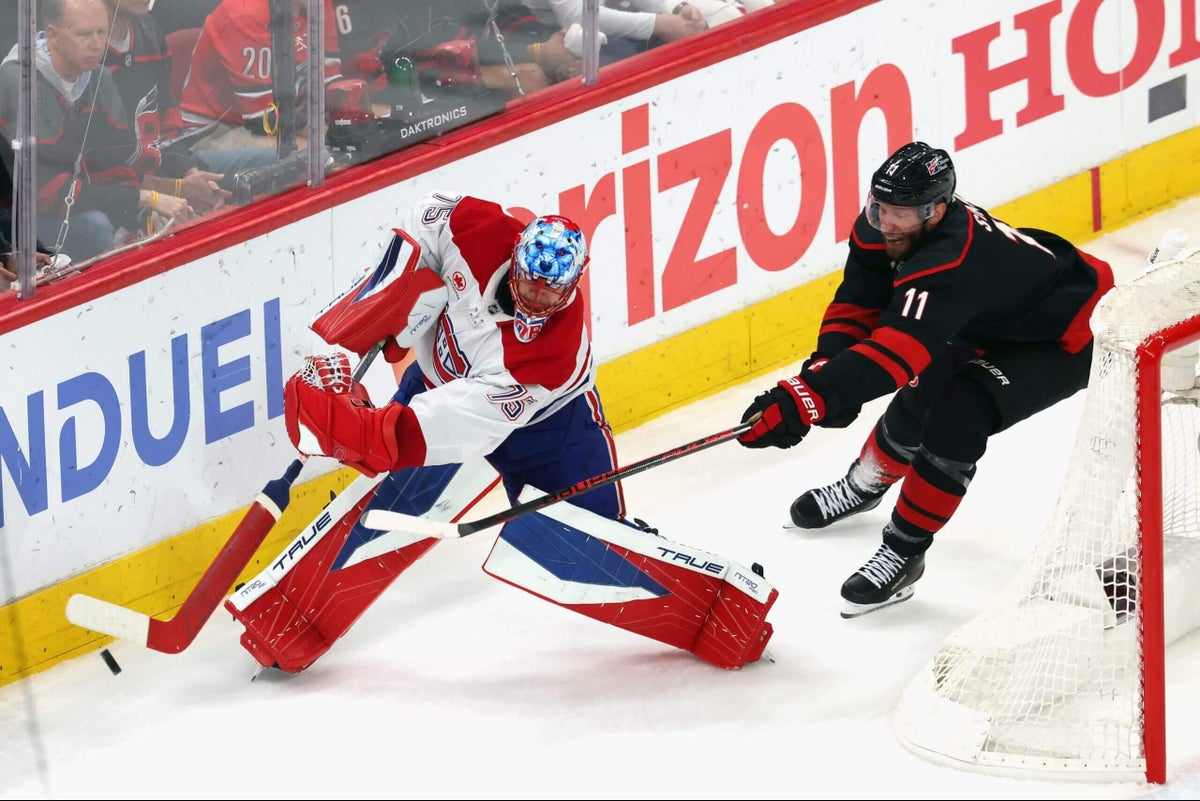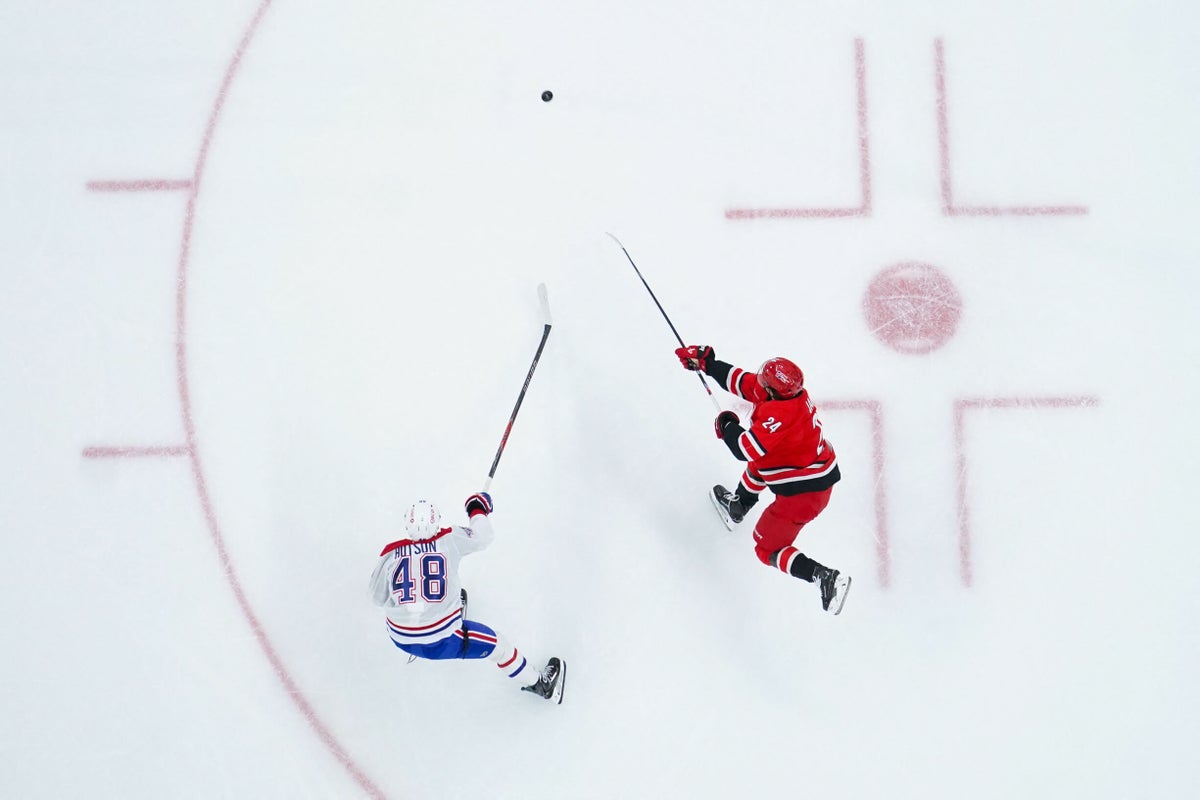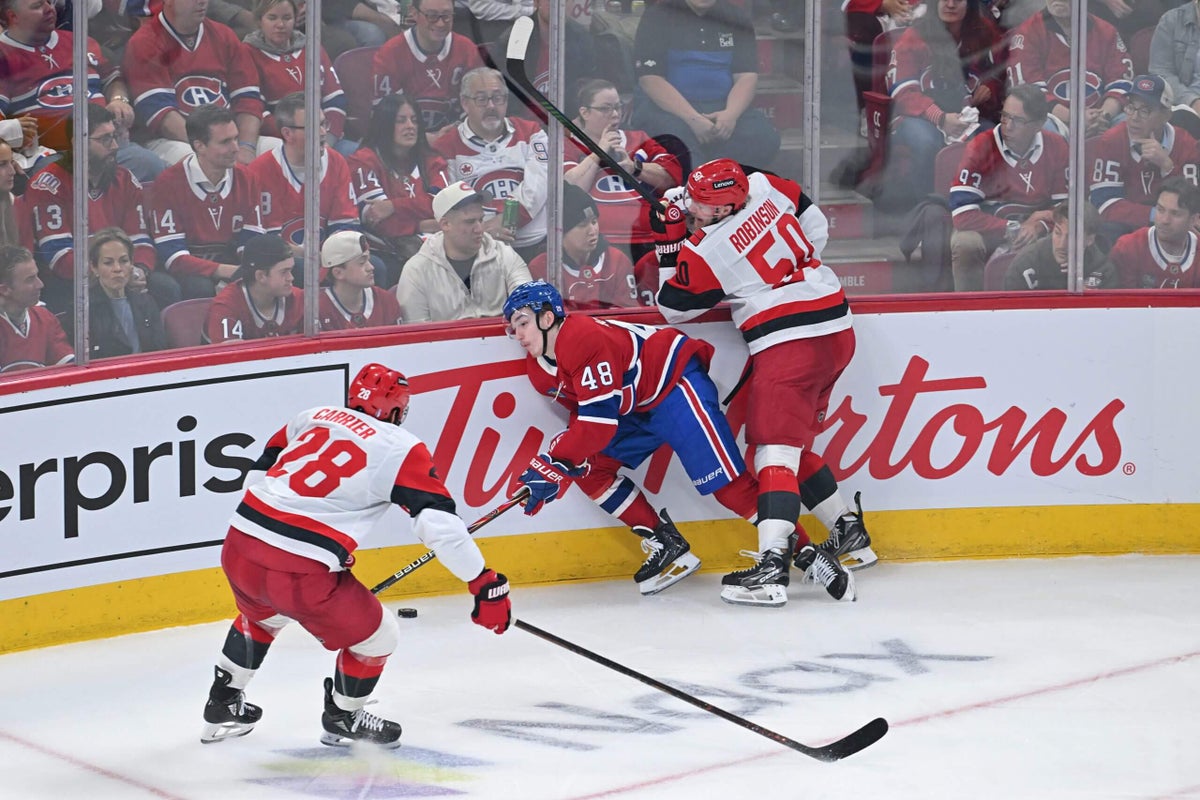
MONTREAL — What an unusual yet fascinating Eastern Conference final this is turning out to be.In Game 1, the Montreal Canadiens earned full marks for catching the rusty Carolina Hurricanes off guard and piling up four quick goals on the way to a 6-2 win. Games 2 and 3, meanwhile, both ended 3-2 in overtime despite being completely lopsided in Carolina’s favor in shots and chances.Overall, the Hurricanes have completely owned possession of the puck throughout the three games, generating two-thirds of the shots on goal (92-46) and piling up similar margins on high-danger scoring chances (47-28) and expected goals.The numbers aren’t the whole story — and Montreal has certainly been opportunistic in scoring 10 goals on 22 percent shooting in the series — but they’re certainly a large part of the story given how the past two games (both Carolina wins) played out.Let’s break that down further by examining three things we’ve learned after three games in a series that looks like it could go the distance.Learning 1: The Canes’ focus on halting Hutson is workingAt just 22 years old, Lane Hutson is already one of the best defensemen in the game, a near-Norris-level star, and he was an absolutely massive part of driving one of the youngest teams to an impressive 106-point campaign.Hutson put up 78 points and averaged nearly 24 minutes of ice time during the regular season, but he also led the Canadiens in percentage of scoring chances and expected goals his team generated when he was on the ice at even strength. Both numbers were right around 55 percent, which is about as elite as you can get, given the minutes volume he handles.In this series, however, Montreal is getting outshot more than 2-to-1 with Hutson on the ice, and his scoring chance share is down to 38 percent. (High danger share is just 32.) And that’s with starting the bulk of his shifts in the offensive zone, where he should be able to generate more by virtue of already being close to Carolina’s net.A lot of the focus on Hutson’s play is going to be on the turnover that eventually led to the OT winner in Game 3, but to me, that looked like mental fatigue due to the absolute blanket the Hurricanes have thrown over him in every area of the ice. Talking to a few Carolina players before and after Game 3, it’s clear that limiting Hutson is a massive part of their game plan, as without him transporting the puck up (and around) the ice every shift, their ability to even get in position to even think about shooting is compromised.“He’s an electric player,” Hurricanes forward Jordan Martinook said. “We’re obviously worried about him when he’s on the ice, and we’re definitely trying to stay as close to him as possible because he can make you look silly.”“You want to make getting up the ice hard for him,” teammate Seth Jarvis added. “Obviously, he’s really shifty, so it’s tough to hit him sometimes, but the more body coming on him, the tougher it is for him to get up the ice as quickly and support their rush.”There have been multiple instances in the series so far where Hutson has had the puck behind his own net and hesitates before making a play, because what he’s seeing is every teammate basically shadowed by a Carolina team that’s playing a man-to-man system all over the ice. It happened early in Game 3 and it turned into a quick icing, as Hutson didn’t connect with anyone and the puck zipped all the way down.Then, on the winner, Hutson was trying to avoid making the wrong play to a covered teammate and whiffed on his backup choice.“We’re just taking away his options right away,” Jarvis explained. “I think the more you slow the game down, it gives us a better chance to get into our positions and have a better chance against him.”“When you can stay above your guy that you’re supposed to be checking and can slow him down, I think that’s obviously our mindset: try to slow them down whatever way you can do that,” Martinook said. “Stay above them or mirror them. It’s what we need to do.”When the Hurricanes aren’t limiting Hutson’s options, they’re putting the body on the 162-pound defender again and again. Hurricanes veteran Taylor Hall caught a significant piece of him late in Game 2 in a play that became a minor talking point, but that has been happening again and again in the series — at least when they can catch him.“Hutson’s probably their most important player, and if he has a puck, I’m going to try and make some contact and prevent him from getting up the ice ultimately,” Hall said of his controversial hit. “We have to keep doing it. It’s our pressure (game). And it’s really just us getting above all their players. When their defensemen have the puck, they want to take it back. They refuse to rim pucks. So we’re going to just get above their guys and make them make plays. And they played a lot of hockey (in these playoffs so far). They have a lot of skill back there on the back end. And we’ve done a good job just limiting their time and space.”Hutson, to his credit, doesn’t seem to be overcome by frustration at this point. But it has to be disconcerting to the Canadiens that their best puck mover has spent so much time in his own end, retrieving pucks and getting hit, given the damage he usually does at the other end of the ice.“They’re one of the best teams in the league for a reason,” Hutson said. “They play a hard brand of hockey, put tons of pressure. They’re a good team.”Learning 2: Carolina’s depth is moving the needleIt’s not all about Hutson, however, as his teammates are struggling under the Hurricanes’ tight checking, unable to get open or make plays that would take some of that load off their young teammate.Some of that is owing simply to where these two teams are in their evolution, as Carolina has one of the deepest rosters in the NHL and Montreal is still only in the embryonic stages of what’s been a very impressive, quick-turn rebuild.You could see that on plays like the Hurricanes’ opening goal of Game 3, when their third D pair of Shayne Gostisbehere and Alexander Nikishin hemmed the Canadiens in their end and made a play that Montreal’s third pairing simply wasn’t capable of making.Which makes sense. Gostisbehere is a 33-year-old vet who had 50 points in 55 games this season; Nikishin is a Calder Trophy candidate and rising star who had an impressive 33-point season of his own. The Canadiens’ three weakest D had 11, 12 and 22 points this season and likely wouldn’t be in the lineup for Carolina. And they’re all putting up possession rates of 35 percent or less in this series, despite getting more sheltered minutes.Gostisbehere-Nikishin are at more than 70 percent, meaning a big chunk of Carolina’s territorial advantage is coming with some of their least-played players on the ice.There’s a similar mismatch happening with fourth lines in the series, too, with Hurricanes coach Rod Brind’Amour entrusting William Carrier, Mark Jankowski and Eric Robinson with key minutes and being rewarded with three key goals already in this series. Montreal’s fourth line, meanwhile, has yet to be on the ice for a single goal, and some members of that trio have been on for four goals against.It may feel like a silly thing to single out fourth lines as a key factor, but it absolutely has made a difference, given that Carolina has received a significant percentage of its offense from them. And, again, part of that is simply the fact that the Hurricanes are a veteran team that has more 20-goal and 10-goal forwards than any other team in the NHL. The Canadiens just aren’t there yet throughout their lineup, even if they have been able to match Carolina at the top of the roster.Learning 3: Goaltending remains the wild card One Canadiens player you absolutely can’t nitpick in this series has been rookie netminder Jakub Dobes. He’s been phenomenal right from the start of Game 1, and his heroics have frustrated the Hurricanes more than any other opponent so far these playoffs.Dobes has faced a heady 11.9 expected goals against through three Eastern Conference final games and only been beaten eight times, compared to Hurricanes goaltender Frederik Andersen facing 6.4 expected goals and allowing nine.So that’s nearly double the workload and still coming out on top, as a relative kid is outdueling a 36-year-old playing in his fourth conference finals.If there’s a silver lining for Montreal right now, this is it. If they can find a way through Carolina’s tight checking and put even a little more pressure on Andersen, there’s some evidence it might be enough to turn these 3-2 losses into wins.That’s the challenge for the Canadiens for the rest of this series. Even if it’s a daunting one, they have the edge at the most important position.
Hurricanes vs. Canadiens: 3 things we’ve learned through 3 games
The Hurricanes have turned this series with its depth and a focus on Lane Hutson. But the Canadiens still have one advantage.
1,525 words~7 min read