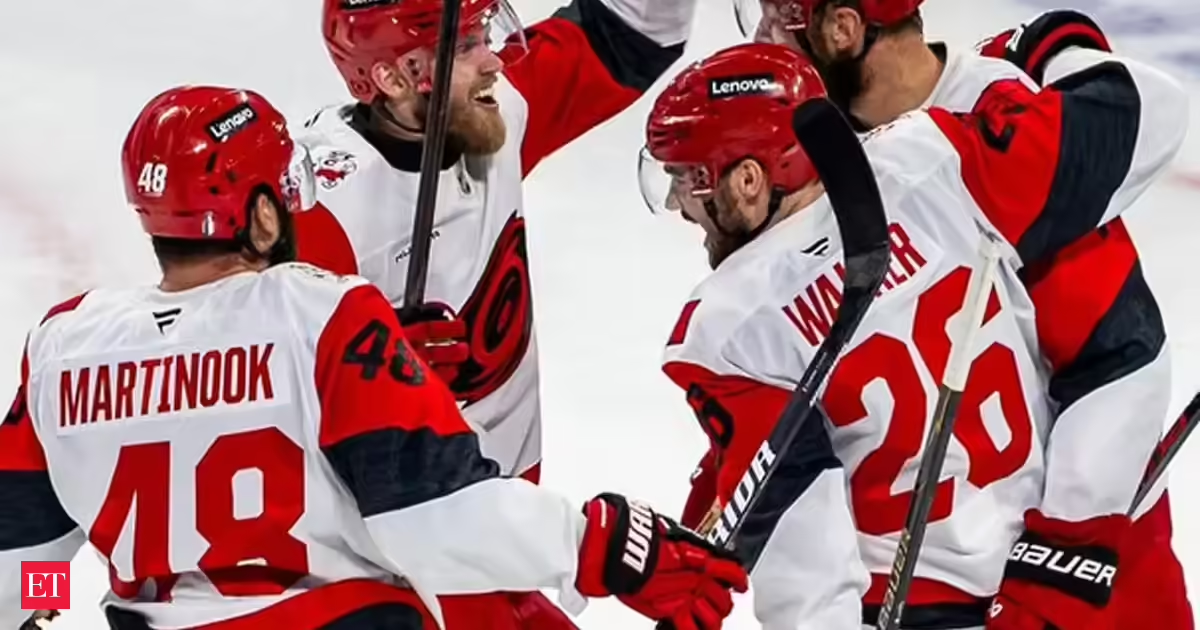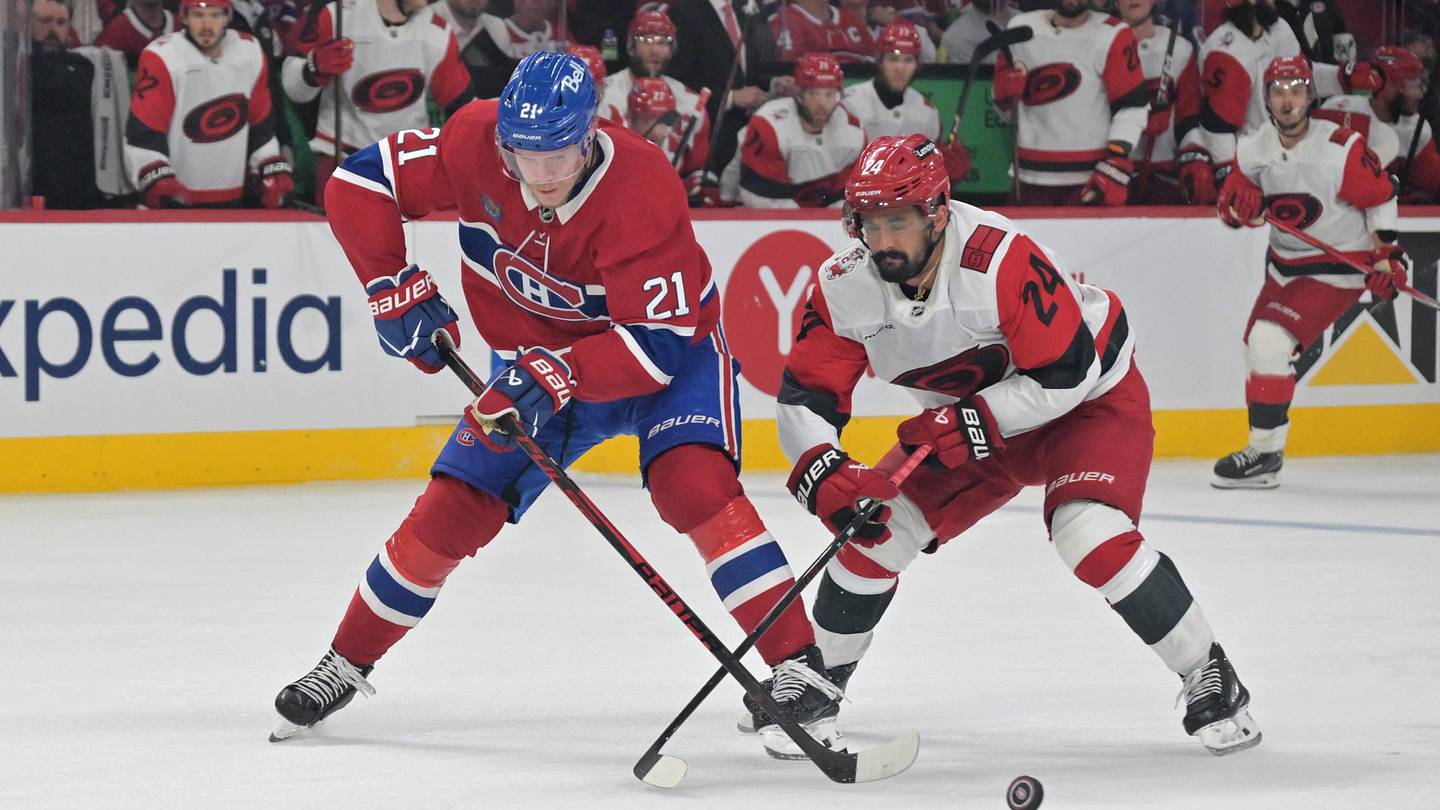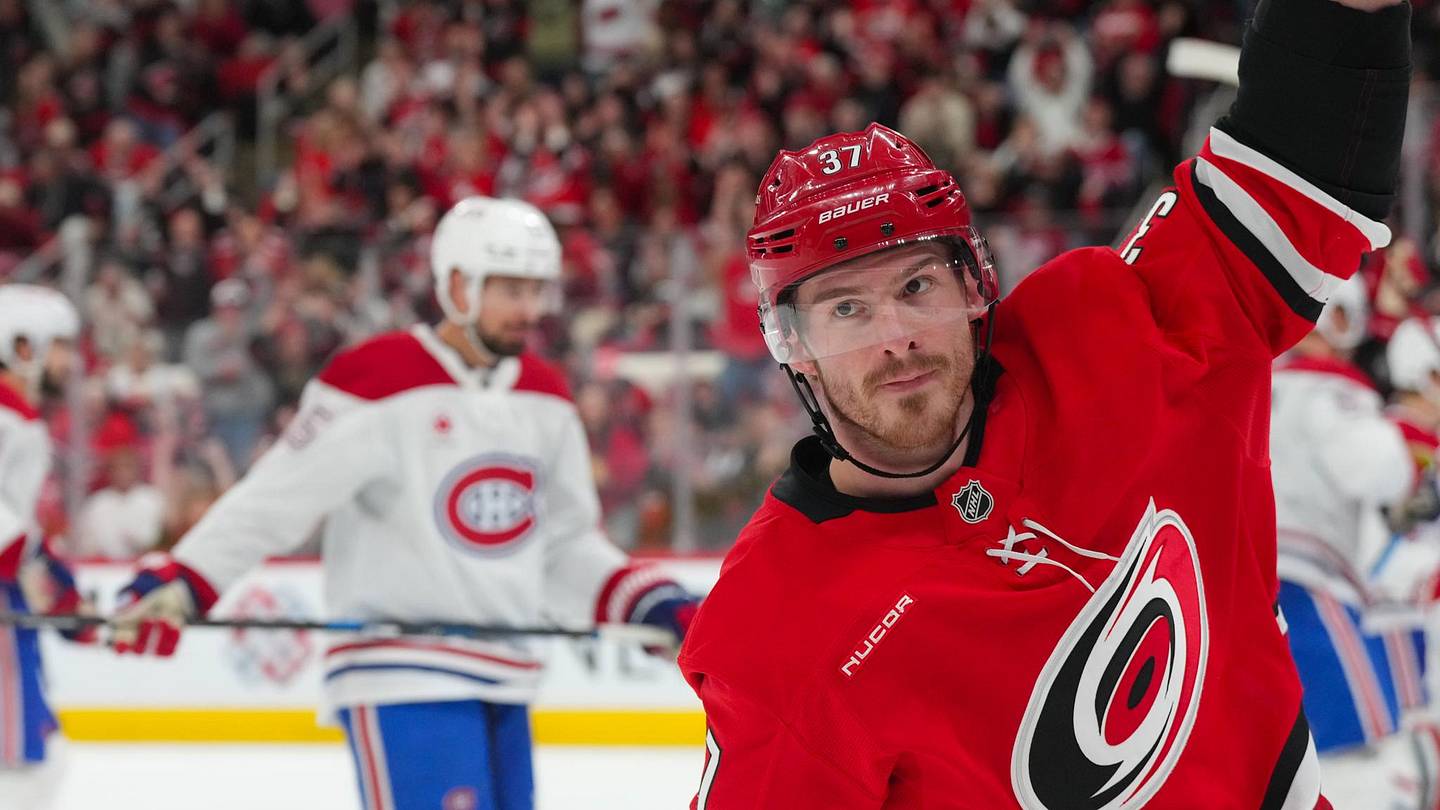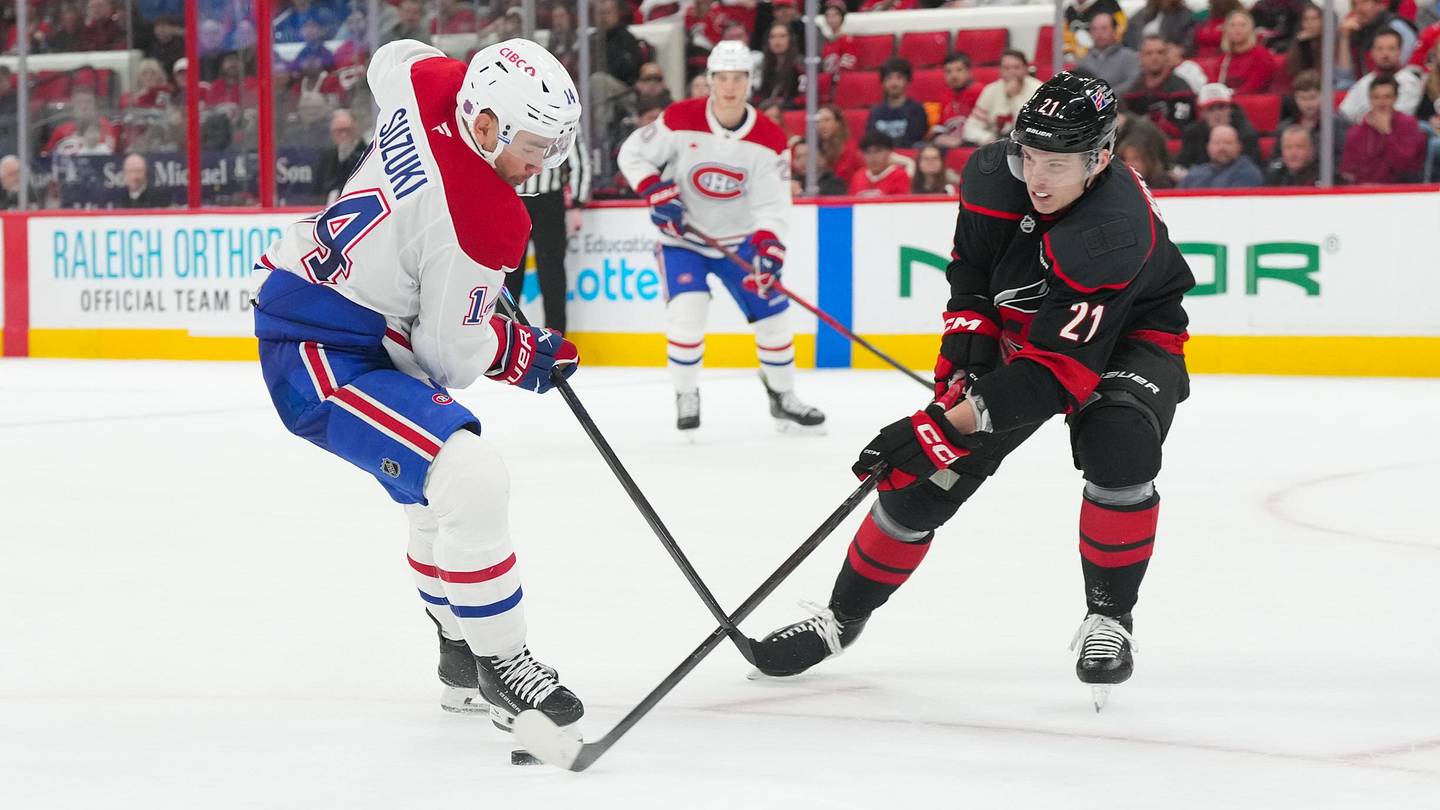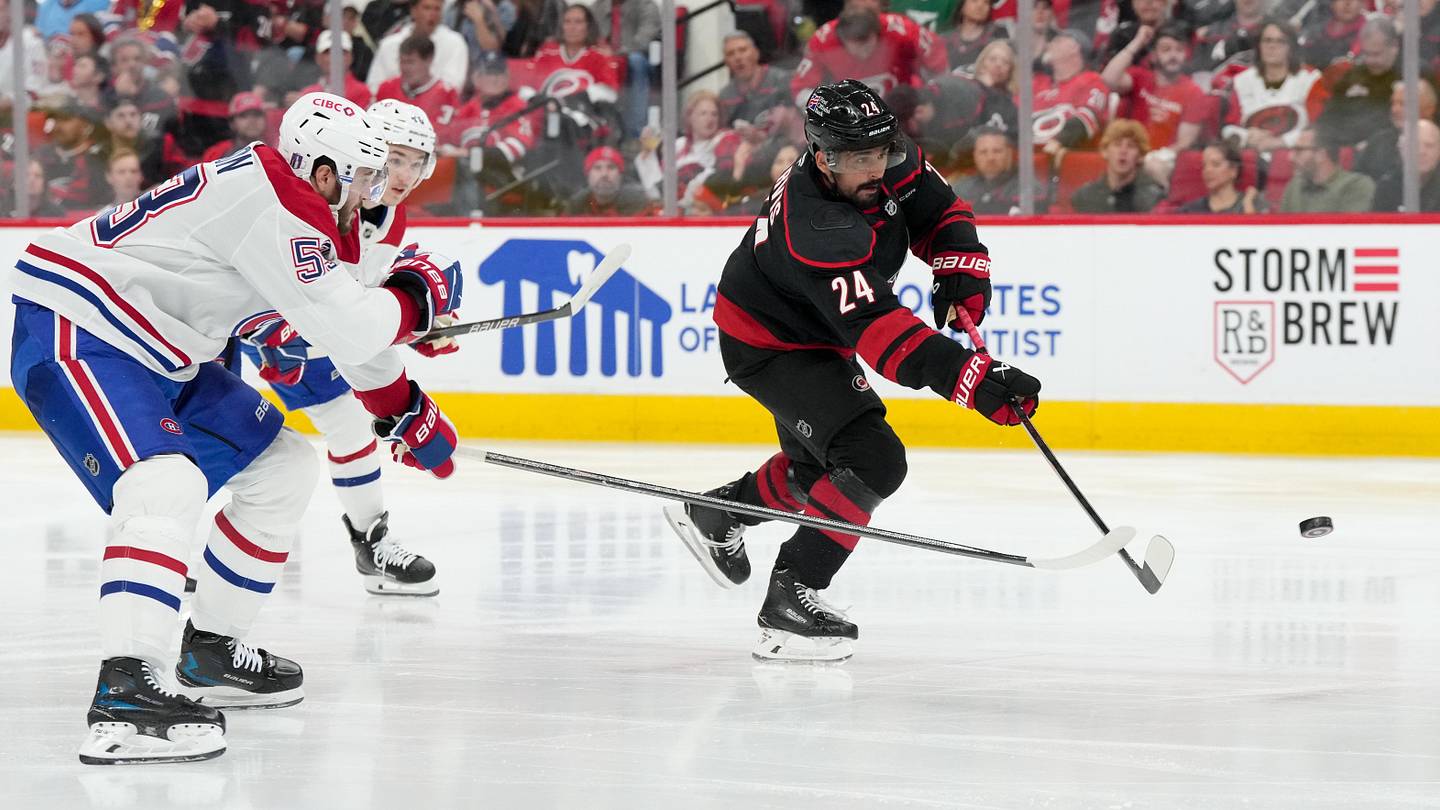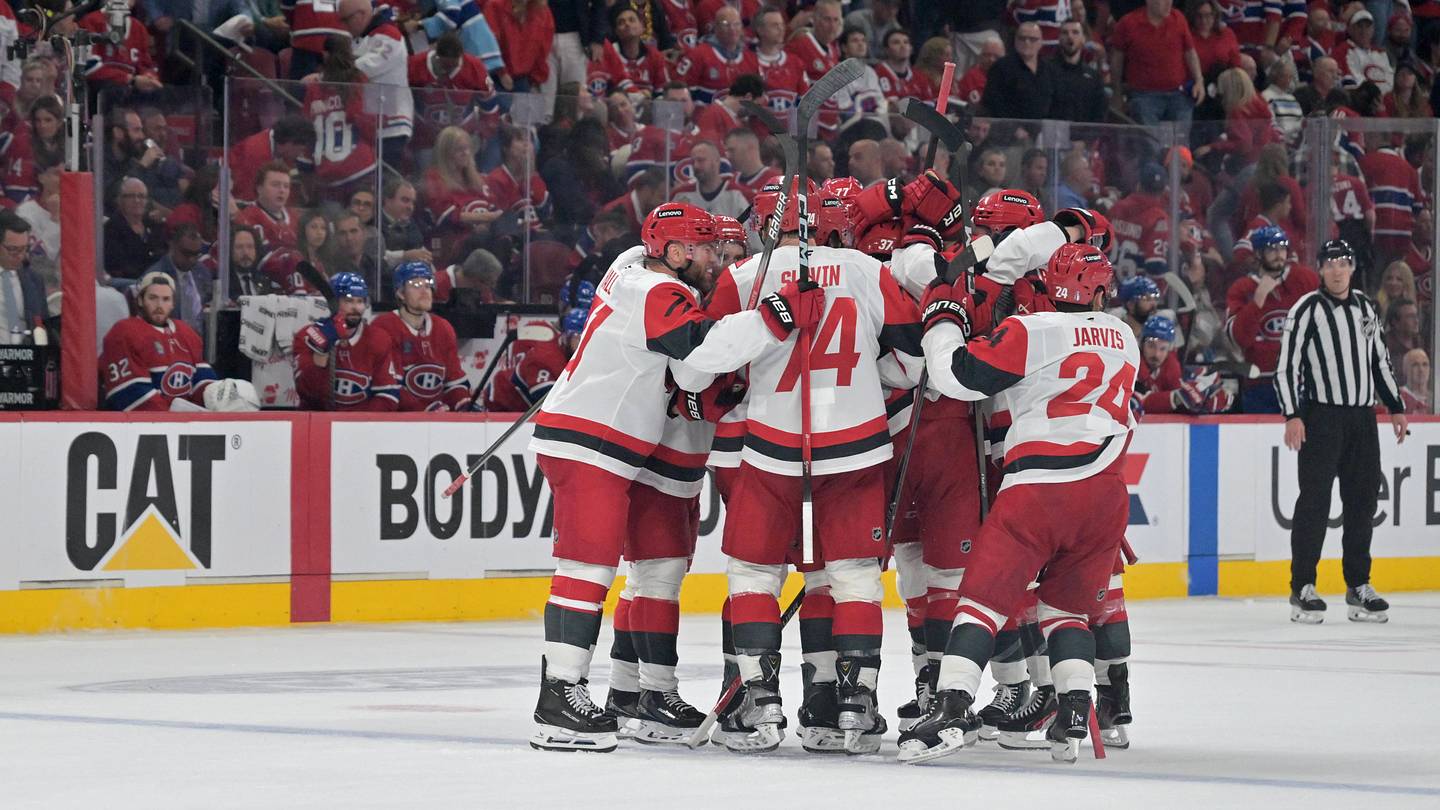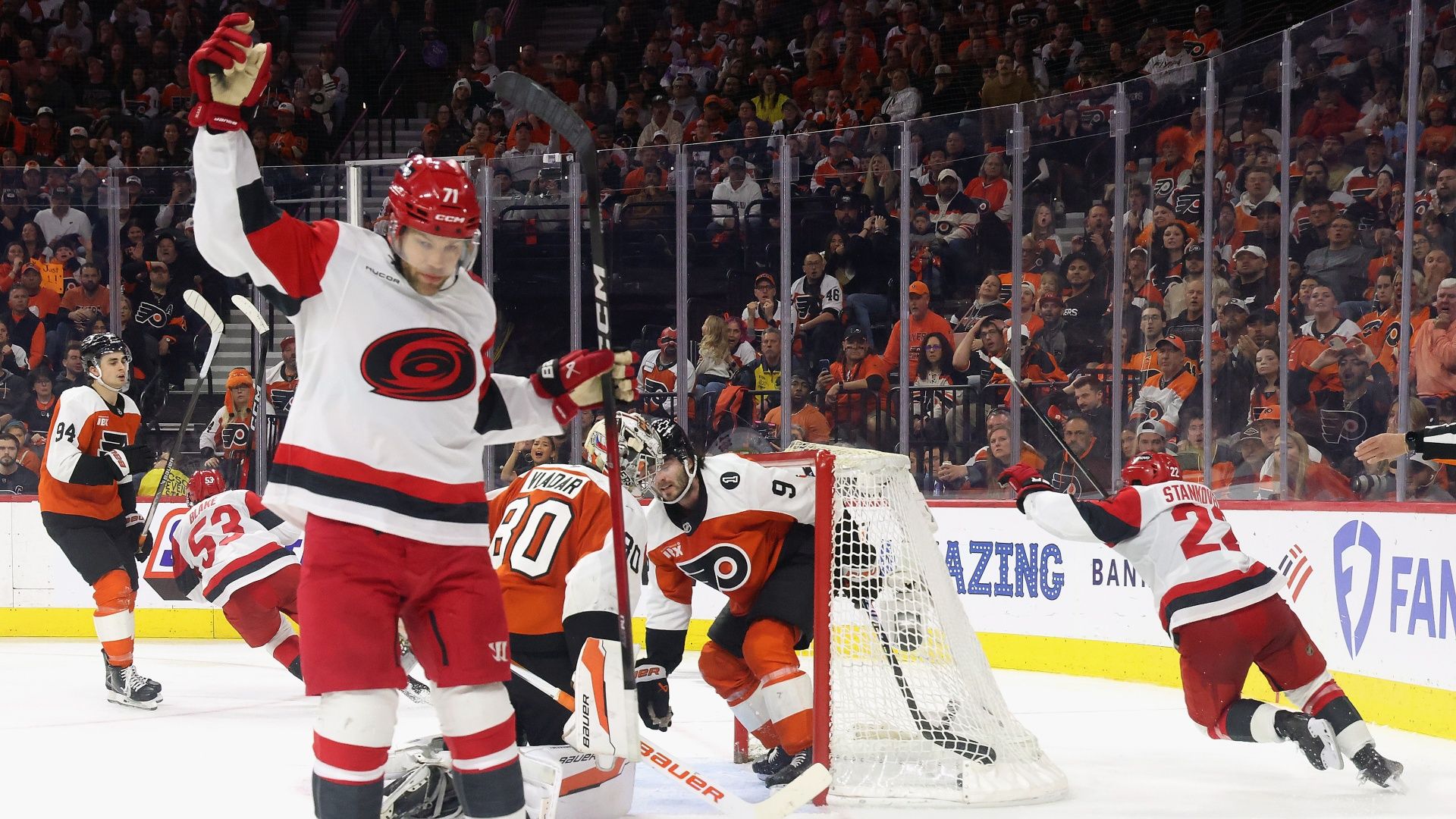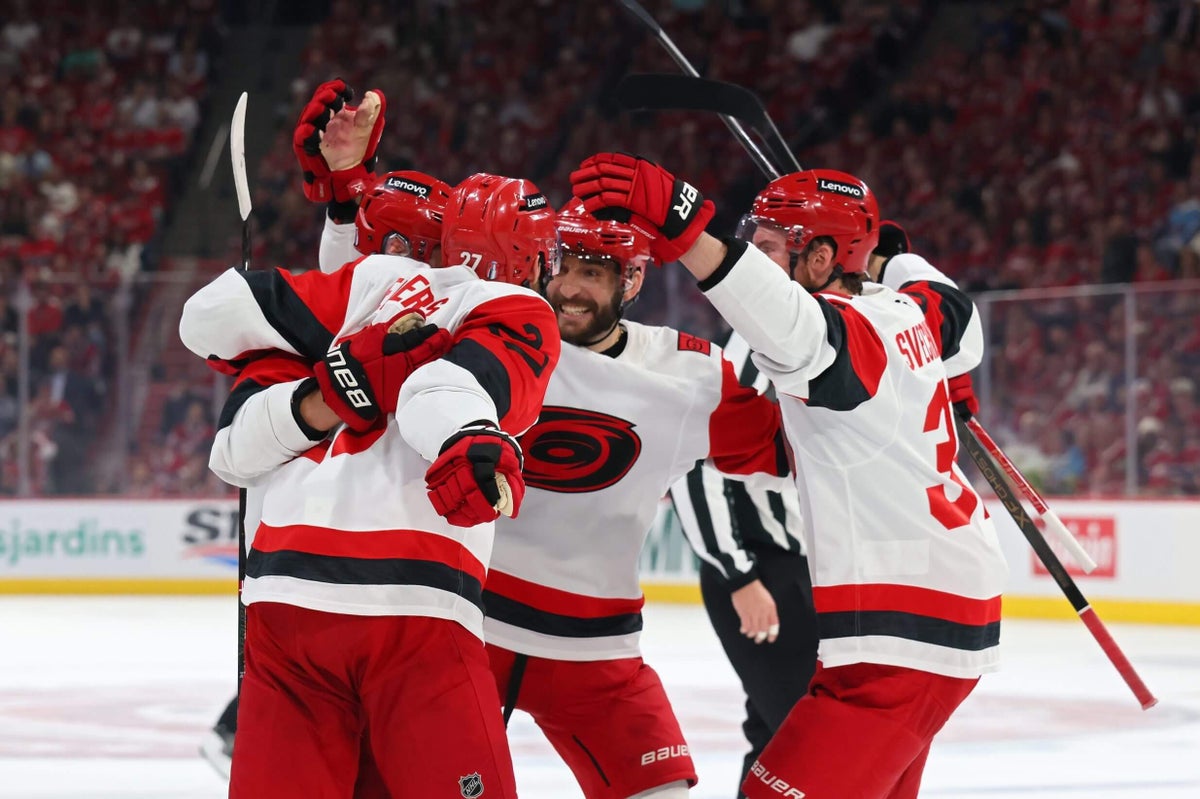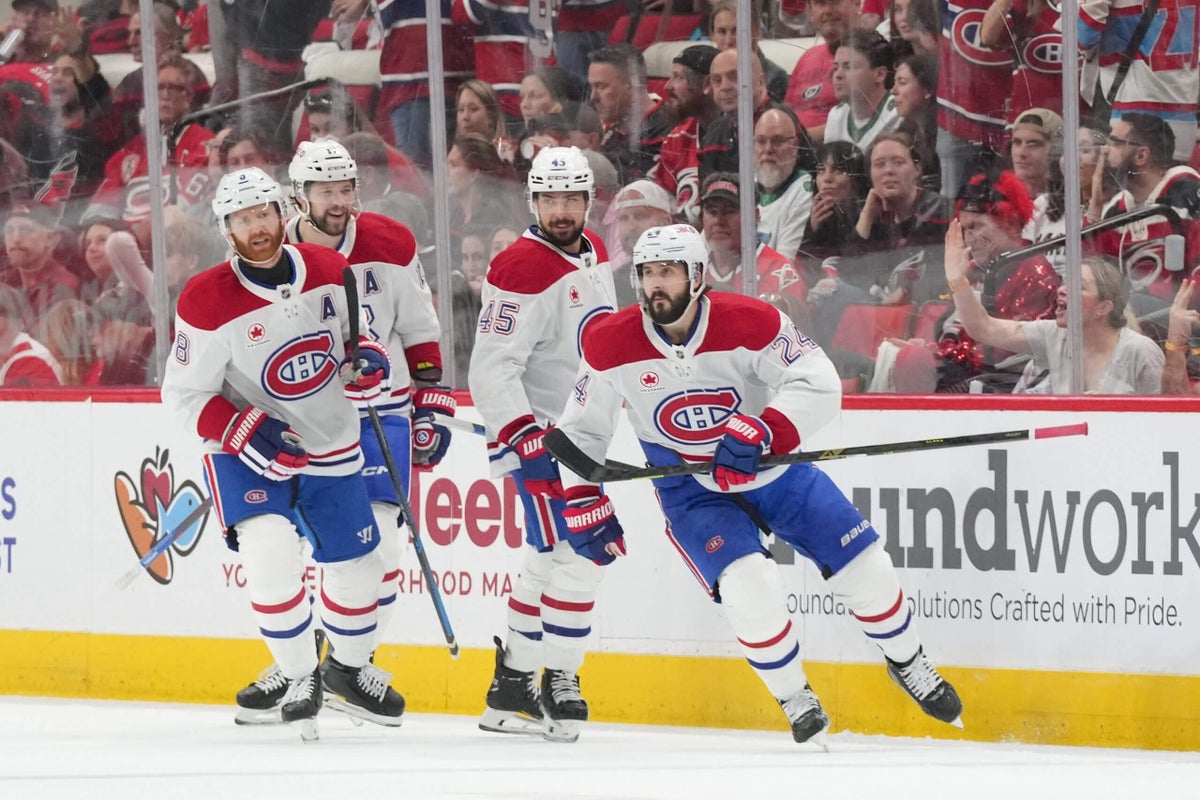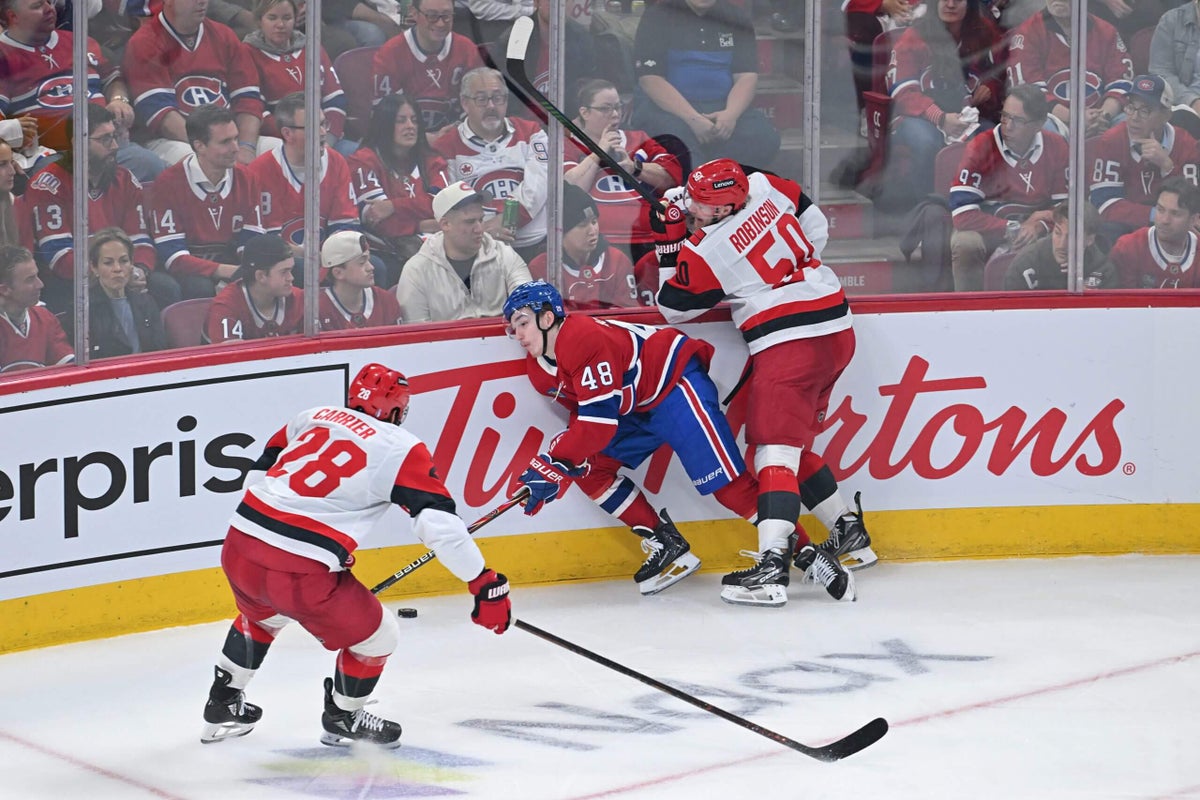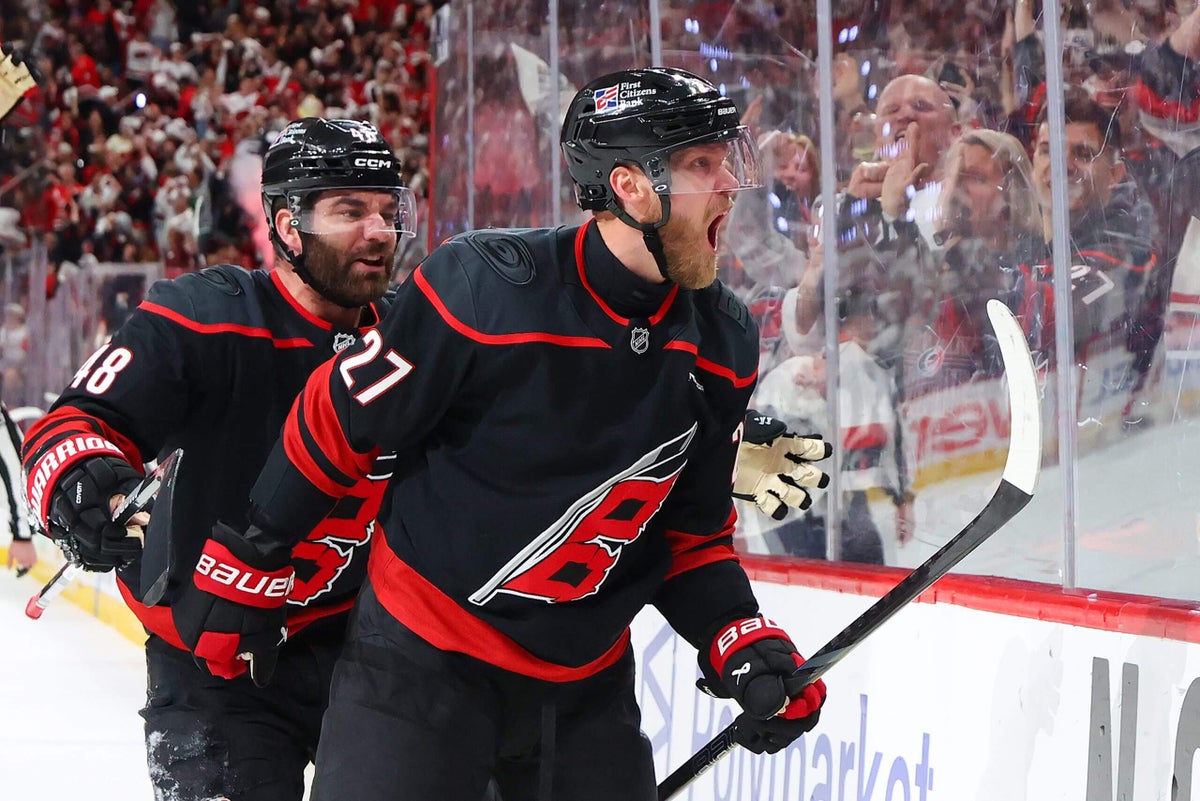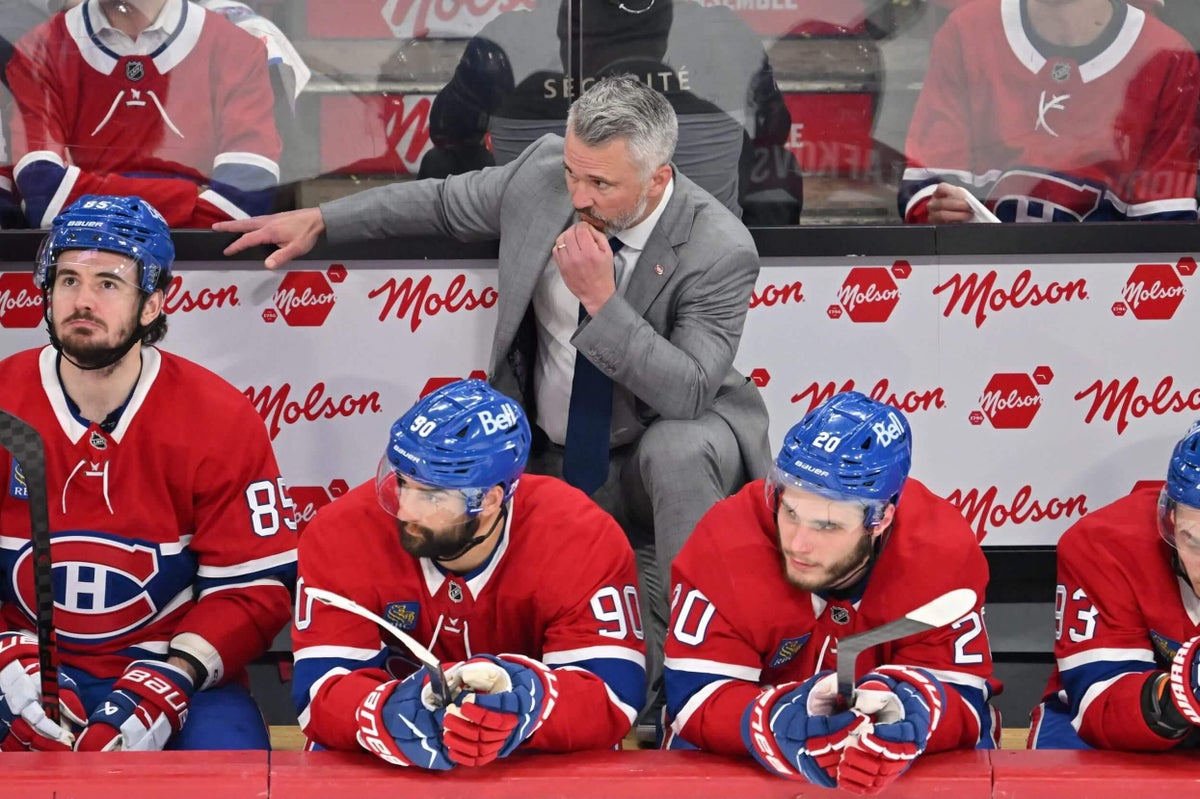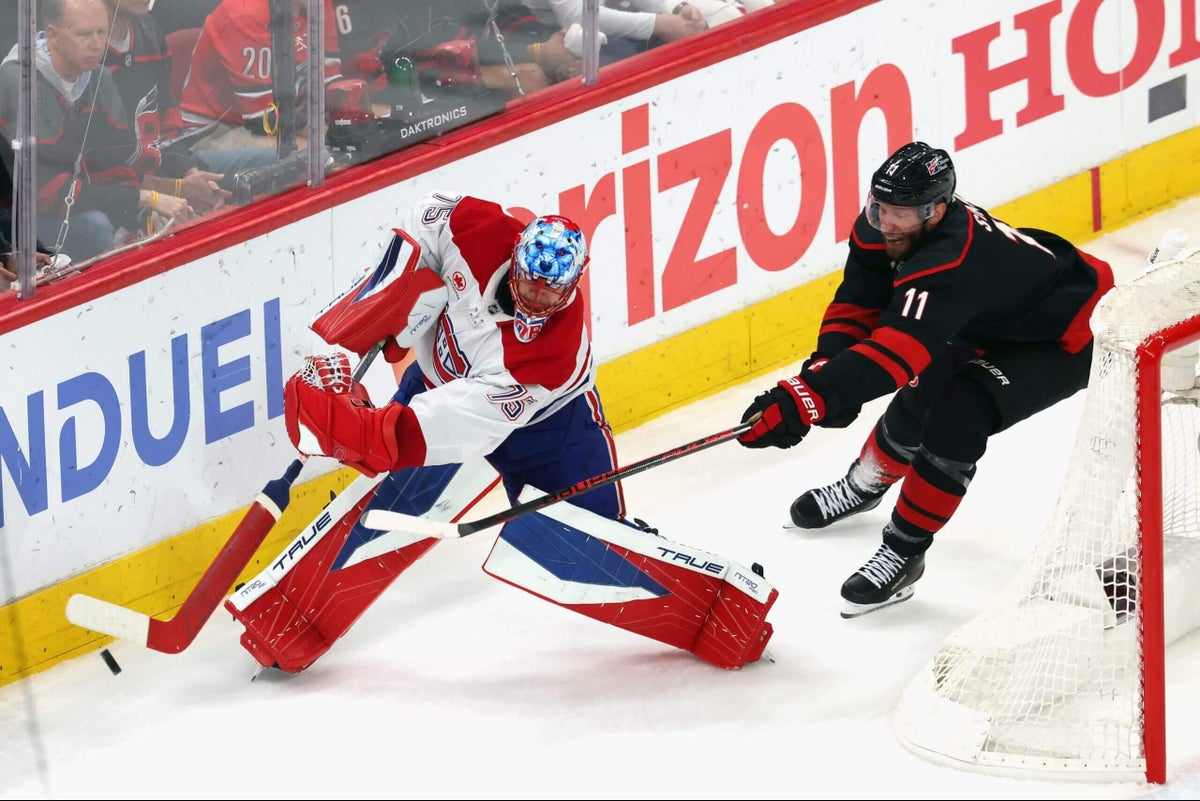
RALEIGH, N.C. — The day before the Carolina Hurricanes were set to start their third Eastern Conference final in four years, coach Rod Brind’Amour was asked to look backward.Over six days in late March, by a combined score of 8-3, the Hurricanes lost twice to the Montreal Canadiens. Those results didn’t carry over to the impending series between the teams. They didn’t count. They also aren’t ancient history.It was fair, then, to wonder if there was anything in particular to glean, to learn, to lean on for Game 1 — and Brind’Amour was largely uninterested in the pursuit.Those games, along with a 7-5 loss on Jan. 1, weren’t worth viewing as a prelude because, Brind’Amour said, his team played well. Appreciate the process, don’t dwell on the result and put it in the rearview. Carolina, for one, had outshot Montreal 103-60 on aggregate.“You look at how those games went,” Brind’Amour said, “I would have taken all three of them.”By Thursday night, he had a more relevant, much uglier result to concern himself with: a 6-2 Game 1 loss in which his team — which had steamrolled through the Ottawa Senators and Philadelphia Flyers — self-destruct in less than 12 minutes. Losing a game on March 24 is one thing; losing one on May 21 is something else.This is the first semblance of adversity these Hurricanes have faced in these playoffs, but they also have a long history of adversity on this specific stage, the conference finals, a quasi-annual roadblock. The Hurricanes are now 1-17 in Eastern Conference final games since Brind’Amour himself lifted the Stanley Cup as Hurricanes captain in 2006.There’s history there, and as irrelevant as Brind’Amour might find the Canadiens’ success against the Hurricanes in the regular season, there is reason to believe that history of adversity on this stage is entirely relevant now.Before Game 1, though, that was another premise Brind’Amour rejected.“There’s a lot to worry about,” he said, “without worrying about the past.”For the Canadiens, they don’t have much of a history to work off. But they have a recent history of being in this exact situation, approaching a game in which they are not the desperate team but have an opportunity to bury an opponent. Much has been made about the Canadiens not losing consecutive games since March 14 and 15; they have also won consecutive games only once in these playoffs, Games 2 and 3 against the Buffalo Sabres in the second round.The Hurricanes have their psychological hurdles to clear in Game 2, and to a far less urgent extent, so do the Canadiens. The contrasts in those hurdles are worth digging into.Mental approach coming off Game 1Carolina said its Game 1 fate was effectively sealed by the 11-minute, 32-second sequence after puck drop that featured one goal by Hurricanes winger Seth Jarvis, then four by various Canadiens. It seemed to be a mix of 11 days of between-series rust; poor play by some of Carolina’s best players, including pristinely regarded defenseman Jaccob Slavin; and Montreal’s ability to meet the initial moment.Once the score was 4-1, the hill was too steep to climb. Postgame, Brind’Amour labeled the end result one to “toss” — the idea being that the mistakes were too out of character and the circumstances too extreme to dwell upon.By Friday, it seemed clear that there were still lessons to be learned. The Hurricanes might not have skated, but they seemed to lean hard into video review.“We did practice, but you just didn’t see it,” Brind’Amour said. “No point in going on the ice today. It’s not what we need.”It all creates a needle for Brind’Amour and his players to thread. Not every early-series loss is one to agonize over; they all, though, should force some degree of reflection, if only in the name of preventing what could’ve been one-off mistakes from growing into a trend.“The whole ‘flush it’ thing in the playoffs is pretty hard,” veteran winger Taylor Hall said. “And I think it’s that way for a reason. We need to understand what happened yesterday and why it happened.“And I think that (Friday) morning, we went over a lot of stuff about that. I think when we wake up (Saturday), it’s about Game 2. But today is still about realizing what happened and correcting that.”For the Canadiens, the challenge is manufacturing urgency. It is not an easy thing to do, but it is vital in the playoffs. And it is generally something an experienced playoff team has an easier time doing.
A breakdown of the Game 2 psychology between the Canadiens and Hurricanes
The Hurricanes have their psychological hurdles to clear in Game 2, and to a far less urgent extent, so do the Canadiens.
2,159 words~10 min read