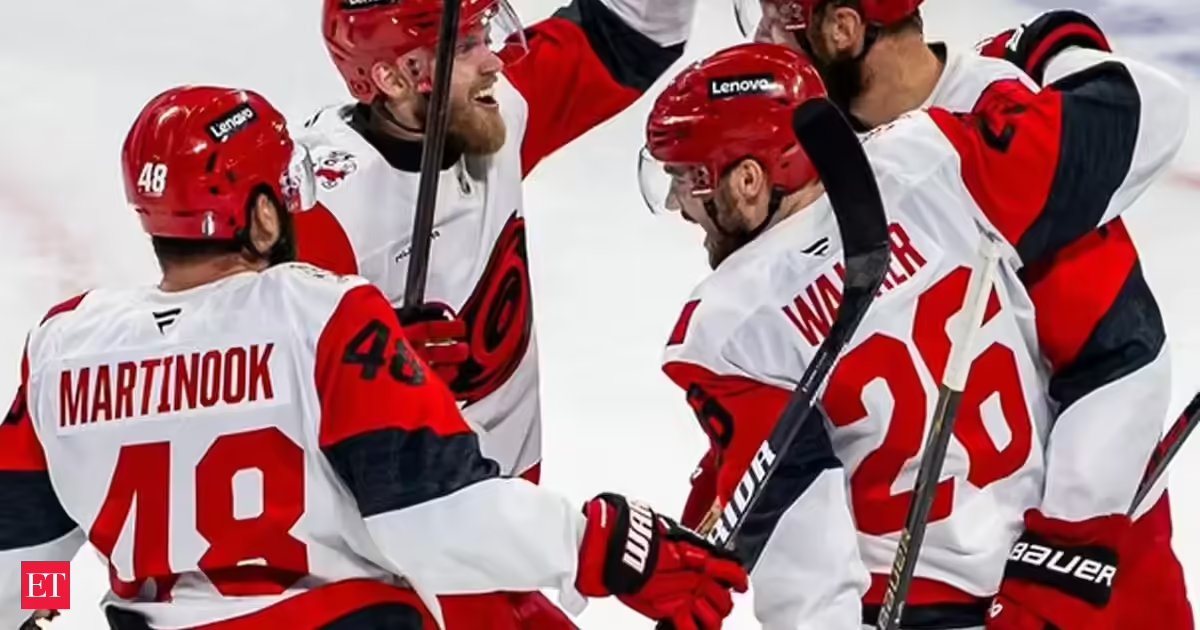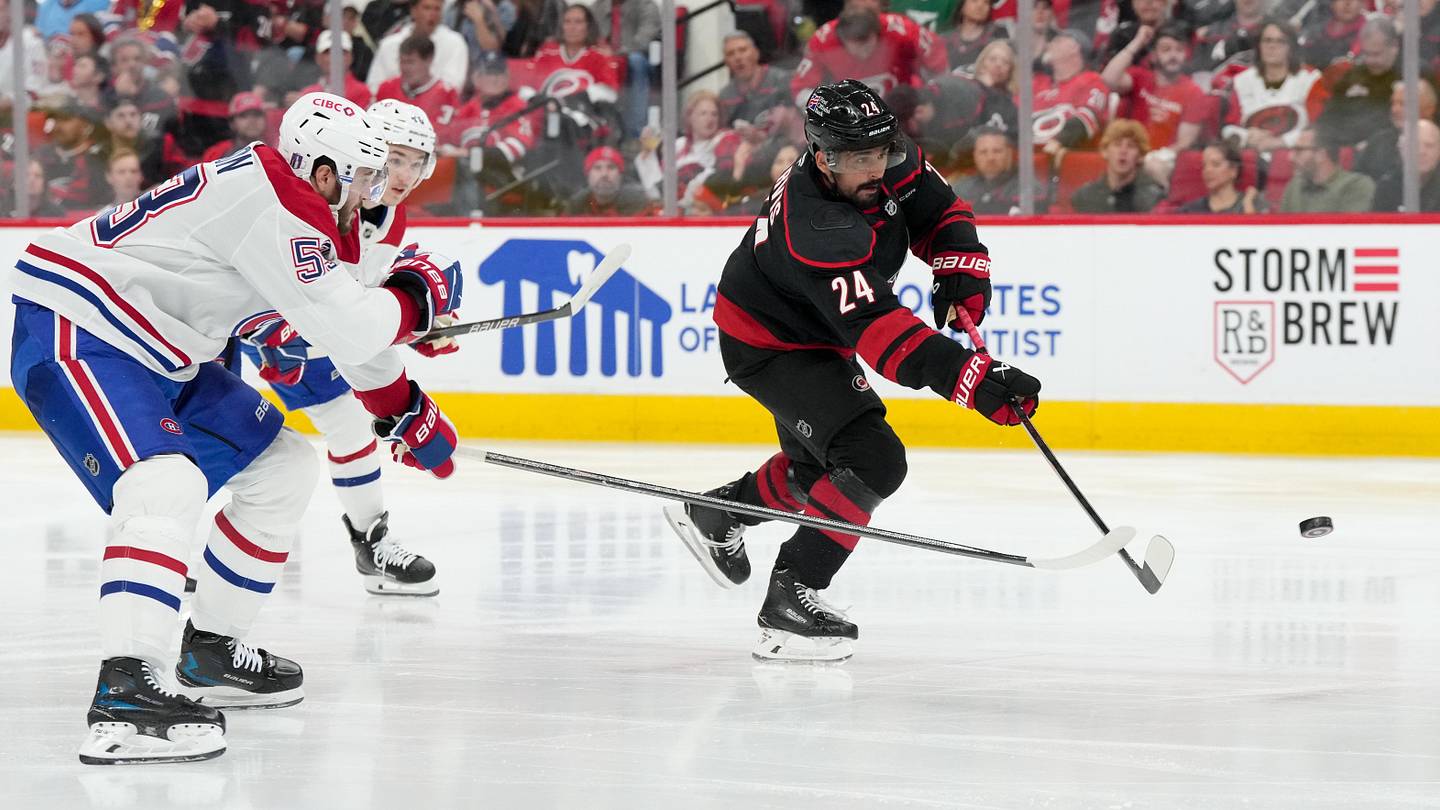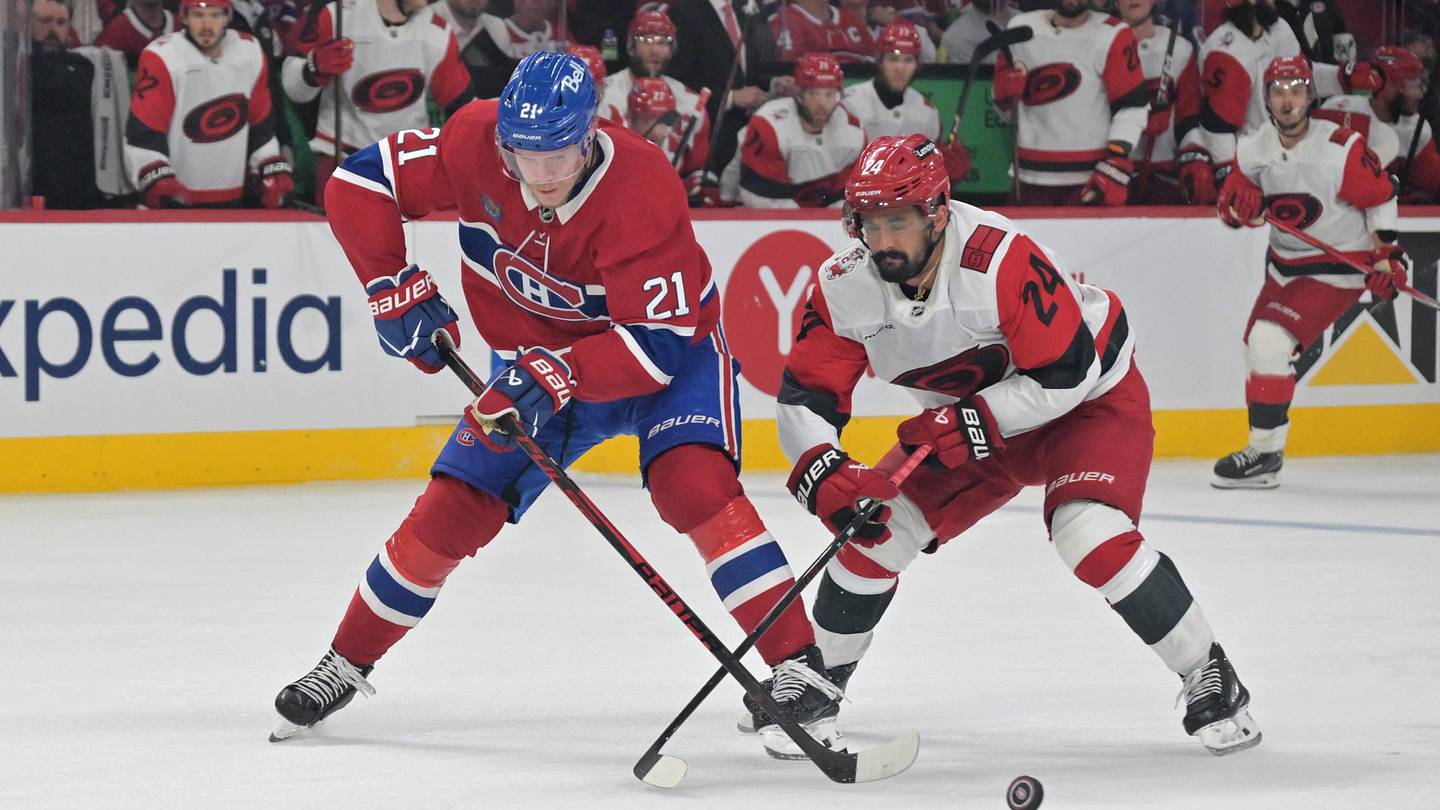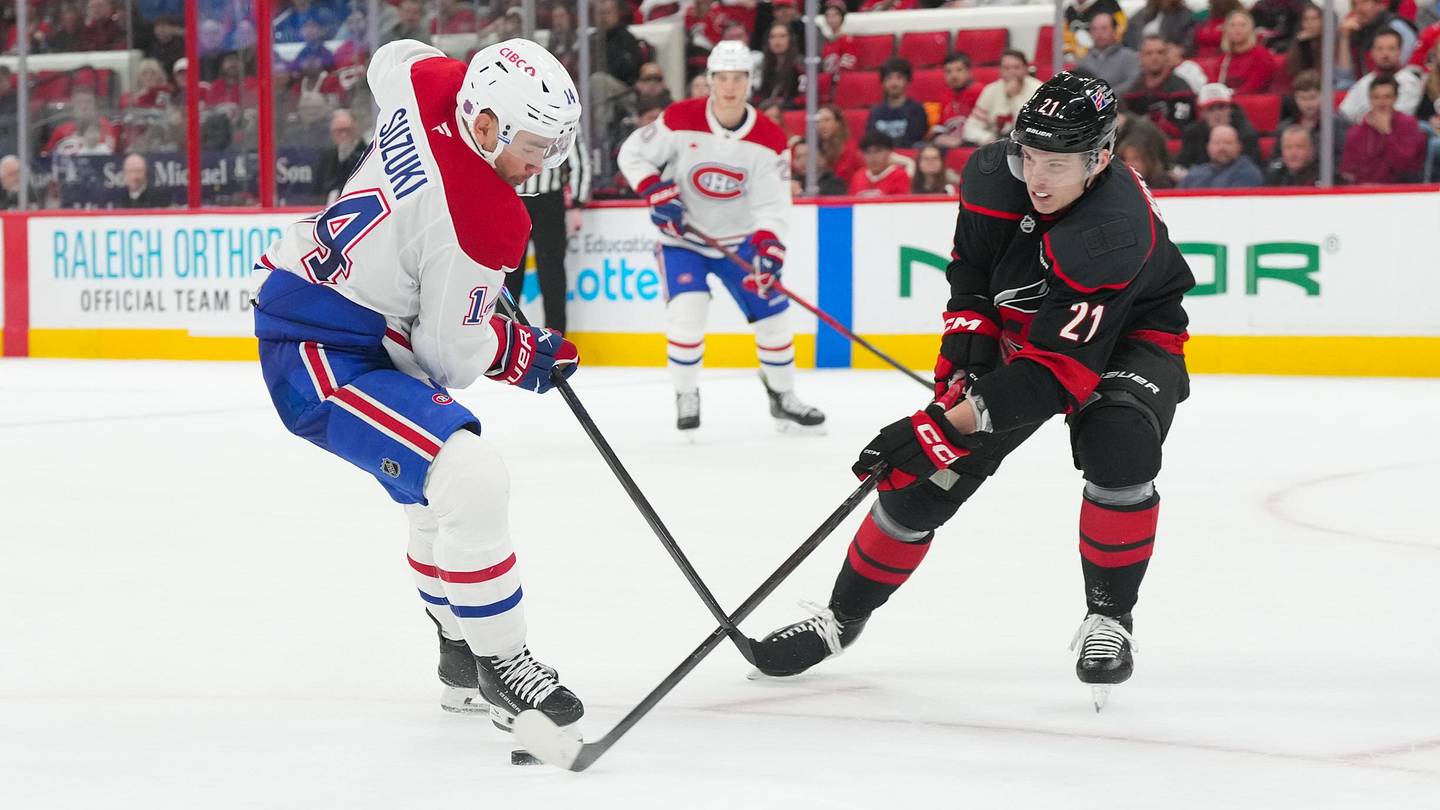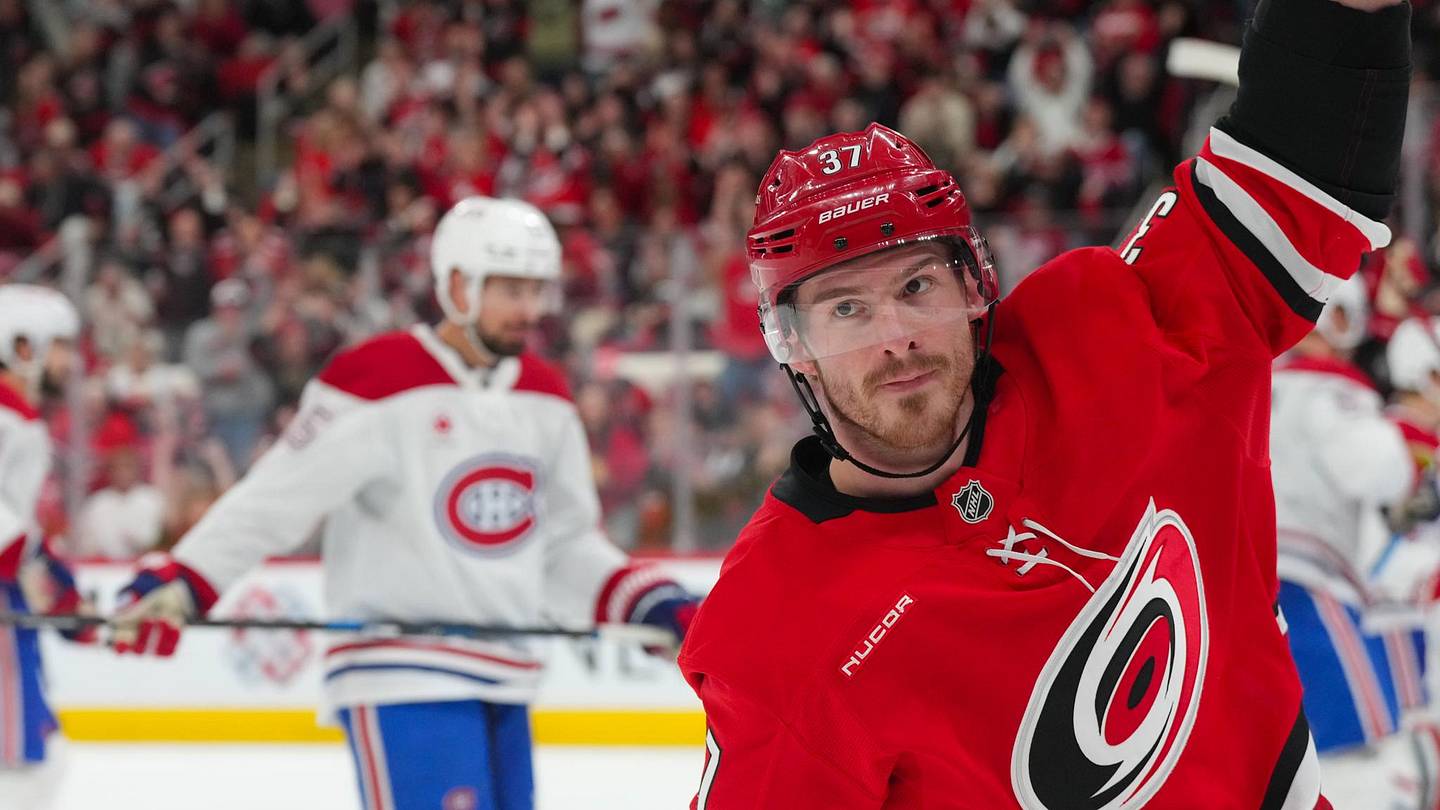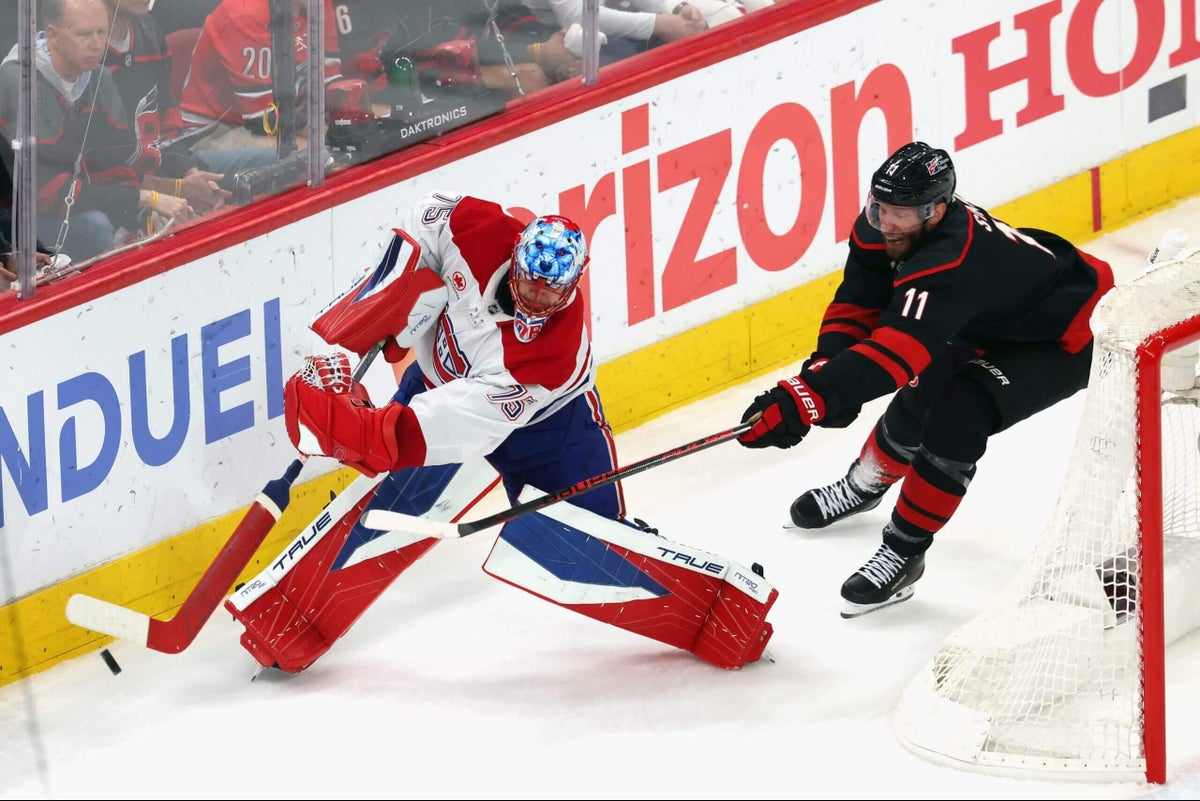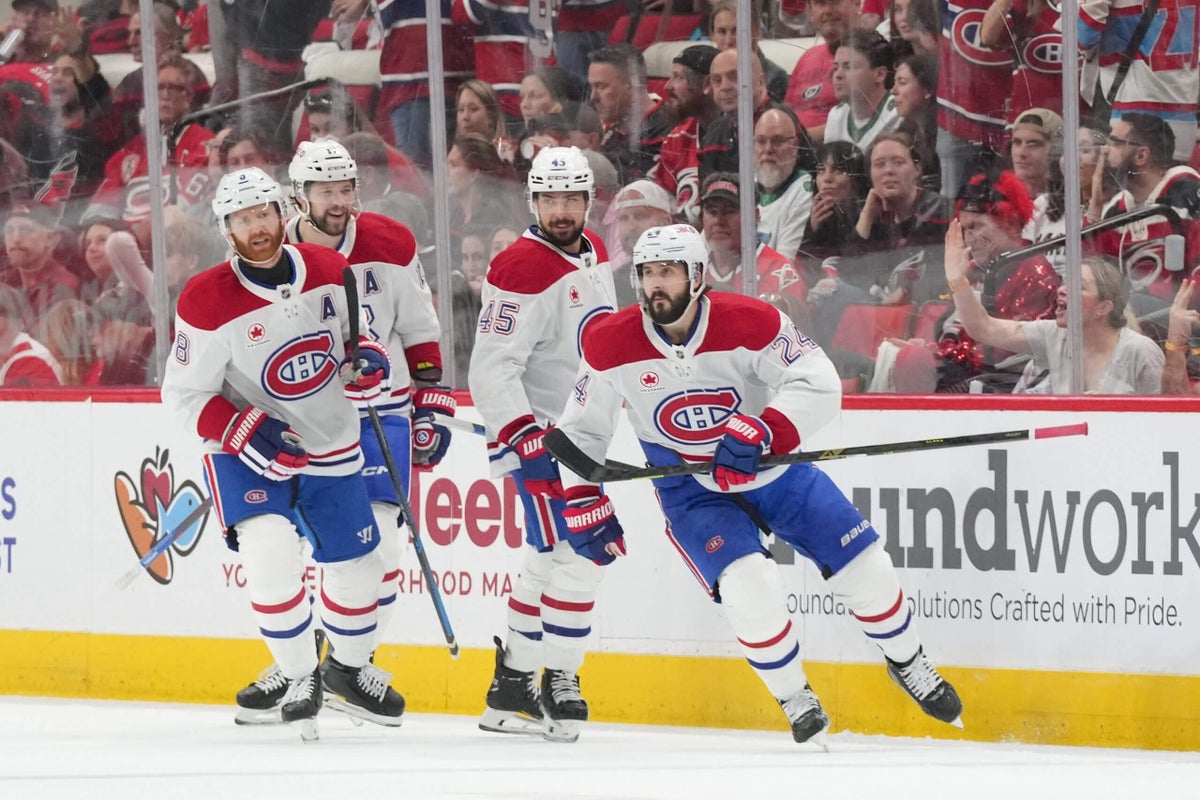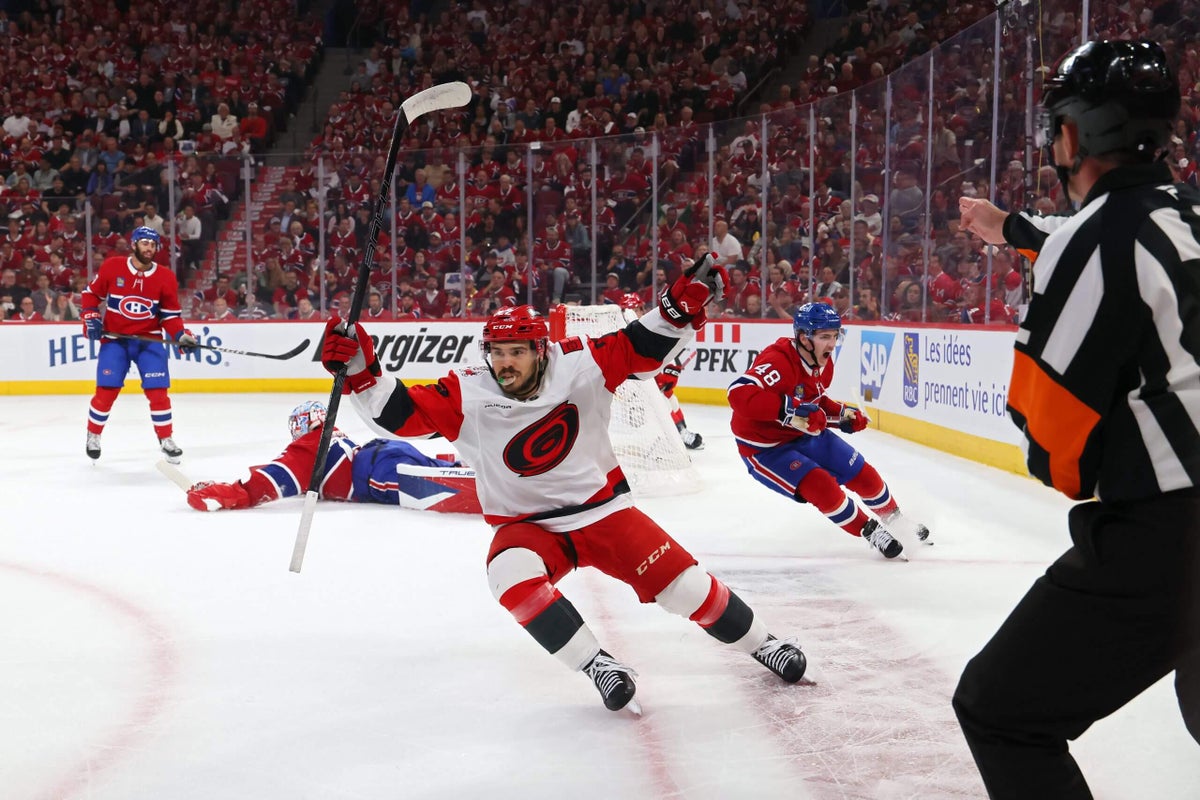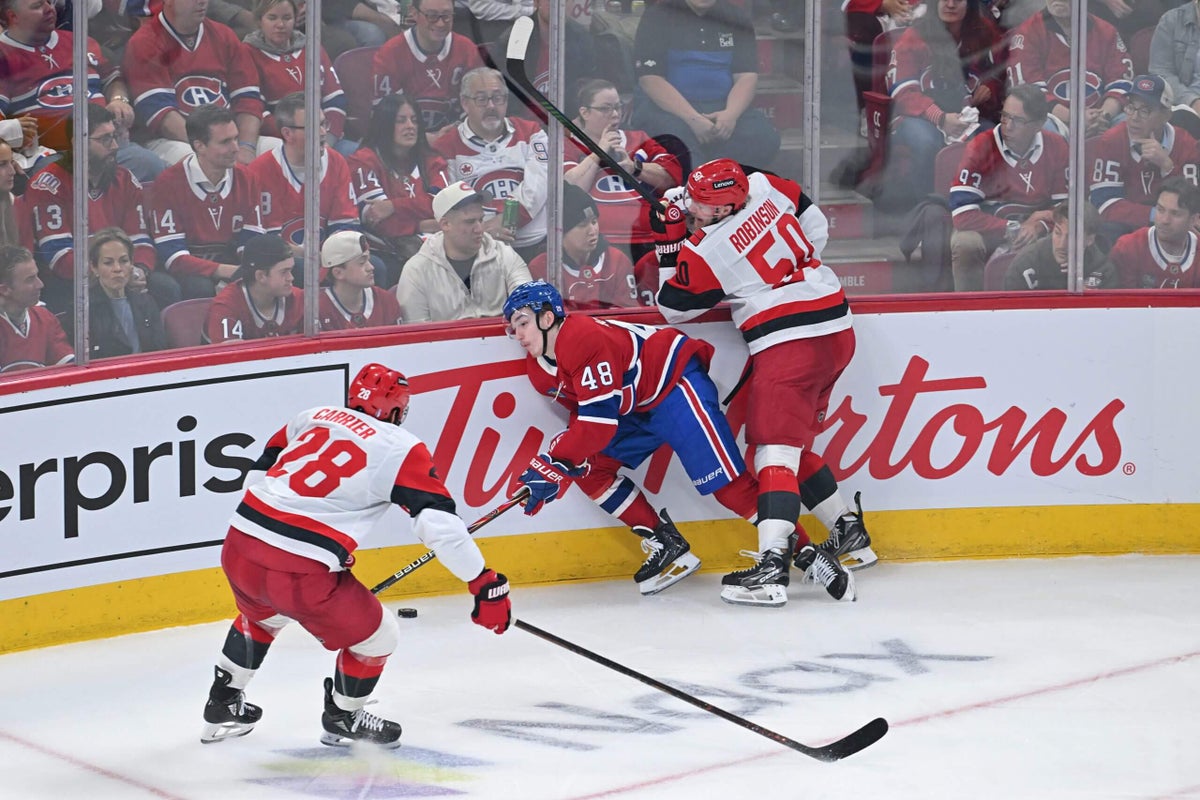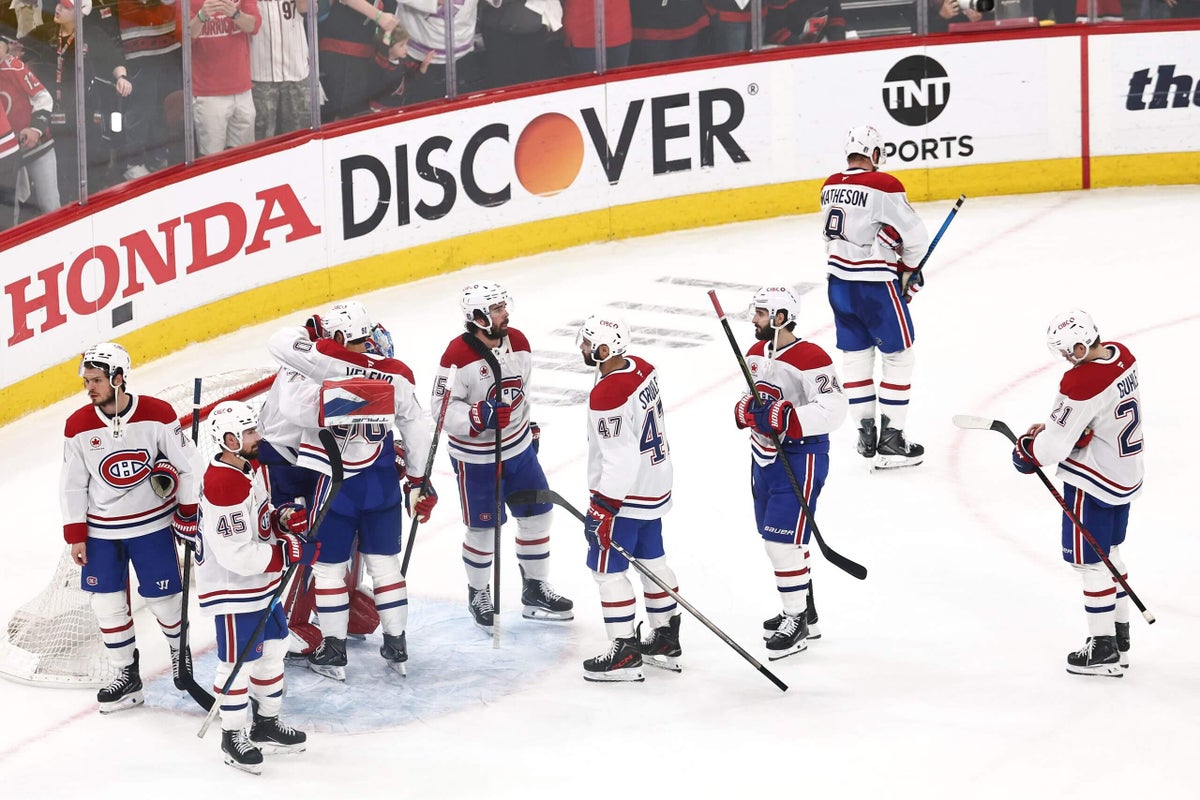
RALEIGH, N.C. — Despite losing a game in overtime, missing another opportunity to take a stranglehold on a playoff series, the Montreal Canadiens seemed generally content with what transpired over the first two games of their Eastern Conference final series against the Carolina Hurricanes.As well they should.Going home to the Bell Centre with a split on the road — something the Canadiens have now done in all three playoff series they’ve played — is the goal of any team. The Canadiens accomplished that.And despite a lopsided shot counter that gave the Hurricanes a 26-12 edge in shots on goal and a much wider 68-38 gap in shot attempts, high-danger chances at five-on-five were only 10-7 Carolina, according to Natural Stat Trick.The Canadiens lost the game 3-2 in overtime Saturday, but it was not the end of the world, and they seemed to know that.“We defended well, we worked hard,” Canadiens coach Martin St. Louis said. “For sure the result is disappointing, you lose in overtime, but I liked how we carried ourselves. We needed a bit better execution, but that’s the game. … I found we didn’t give them a whole lot. We didn’t get a whole lot, but we didn’t give them much, either.“The game was more even than the shot count.”That is largely true and a fair assessment of what happened in Game 2.The Canadiens were right there, one shot from getting a two-game advantage in a series for the first time in these playoffs.Except when you’re one shot away and don’t so much as attempt a shot in overtime, it is difficult to feel you are one shot away.Still, it will be much easier for the Canadiens to flush this result than it was for the Hurricanes after Game 1, knowing they were that close to getting that win.“It’s a long series,” captain Nick Suzuki said. “I think we’re in a good spot where we are right now.”The answers to most of the questions the Canadiens fielded were generally positive, or at least as positive as can be after losing a playoff game. They were aware that in the big picture, they are in a positive place despite the looming spectre of their 2-4 playoff record at the Bell Centre.But there were two questions in particular that seemed to sting, and the reason for that has as much to do with the recent past as it did the immediate present of losing Game 2.And the negative reactions in a sea of otherwise positive reactions were somewhat telling.The matchup questionHurricanes coach Rod Brind’Amour did not pay too much attention to the forward matchup against Suzuki’s line in Game 1.He certainly did in Game 2.Suzuki saw Sebastian Aho the most in Game 1, though there was not quite as hard a matchup from Carolina in that game as there was in Game 2, when Brind’Amour systematically sent Jordan Staal out against Suzuki and his linemates Cole Caufield and Juraj Slafkovský.“Jordo, that’s who he should be playing against, really, the best players,” Brind’Amour said. “That’s usually how we do it. It just felt like from the other night, we needed to change something up a little bit, so we tried to do that. You know what you’re getting out of Jordo no matter who he’s playing against, but he’s hard to play against. So that was a good matchup for us tonight.”The thing is, that’s not how the Hurricanes have usually done it in the playoffs. Staal’s most frequent opposing centre in the first round against the Ottawa Senators was Dylan Cozens, and not Tim Stützle. In the second round against the Philadelphia Flyers, it was Christian Dvorak and not Trevor Zegras.And in Game 1, it was Phillip Danault, and not Suzuki.From Suzuki’s perspective, he’s gone from a first-round hard matchup against Anthony Cirelli, a matchup he lost. In the second round, it was Josh Norris, a matchup he also lost. His line was collectively outscored at five-on-five in those two matchups 7-2.Lacking a hard matchup in Game 1, Suzuki, Caufield and Slafkovský generated two goals and 6 points at five-on-five, more than the 5 points at five-on-five they combined for over their first 14 playoff games.Against Staal, Jordan Martinook and Carolina’s offensive hero, Nikolaj Ehlers, in Game 2, the Suzuki line wasn’t exactly shut down, but it was still outscored 1-0. And taking questions about a matchup likely felt like more of the same for Suzuki, and he didn’t feel all that eager to go down that road again.“What makes it hard? They’re good defenders, strong. I mean, they’re trusted to defend against other teams’ top lines; they’ve been doing it a long time.“I don’t know, it’s not like we were shut down. I think we can play against whoever. We’ll be fine.”This can be a repeat of a story we saw in each of the first two rounds, or Suzuki can win this latest challenging matchup and make it less of a story.Or St. Louis can try to get Suzuki away from the matchup at home by managing his line’s deployment.Which leads us to the next uncomfortable question.The Canadiens’ fourth line of Oliver Kapanen, Zack Bolduc and Kirby Dach was on the ice when Nikolaj Ehlers scored the overtime winner. (Jared C. Tilton / Getty Images)The overtime deployment questionMuch like Suzuki before him, St. Louis managed to get through his postgame news conference in a generally positive way, right until the final question.The final question to Suzuki about his matchup and the final question to St. Louis was asked by Guillaume Lefrançois of La Presse.The question to St. Louis was whether he was rolling his lines in anticipation of a long overtime.“I don’t know, but why are you asking me that?” St. Louis responded.To which Lefrançois correctly pointed out, St. Louis had his fourth line of Oliver Kapanen, Zack Bolduc and Kirby Dach on the ice when Ehlers scored the overtime winner.“Yes,” St. Louis responded, “they were there.”With that, St. Louis got up and left the news conference. He was not happy.But it was a fair question, not only because the fourth line got scored on, but also because of the recent history of the fourth line getting scored on in key situations.In this one, Kapanen had the puck in the neutral zone and had the assignment of getting the puck deep for a change. As he carried the puck, anticipating his ability to complete the assignment, Mike Matheson and Noah Dobson skated toward the Canadiens bench to begin that change. Except that Kapanen did not get it deep, the Hurricanes quickly transitioned to offence, and Matheson and Dobson had to scramble back into position to defend.That left tons of ice for Ehlers, who had just come on the ice, to operate with. He won the game moments later.Though St. Louis did not answer the question about why he did not shorten his bench, he did answer a question on energy management that morning that might explain why he trusted his fourth line in overtime.“Your gas tank won’t always be at 100 percent,” St. Louis said Saturday morning. “We’re trying to do everything we can to get as close to that (as possible).”This was the Canadiens’ ninth game in 18 days, their third road game in six days. Fuel management was a legitimate concern.Except Dach, Bolduc and Kapanen were also on the ice in overtime of Game 2 against the Lightning, when Dach was charged with getting a puck deep for a change and iced it instead, with the Lightning scoring the winner off the ensuing faceoff. Dach, Bolduc and Alexandre Texier were on the ice in overtime of Game 6 against Tampa when Gage Goncalves scored the winner. In Game 7 of the second round against the Sabres, Dach and Bolduc each got two shifts in overtime while Kapanen was benched from the second period onward, but both Dach and Bolduc were on the ice when Rasmus Dahlin tied the score in the third period.And thus, it is entirely fair to question why Dach, Bolduc and Kapanen were on the ice in overtime, just as it is fair for St. Louis not to like the question because it was his decision to put them out there in that situation against Carolina’s fourth line.But the Canadiens have now lost three games in overtime, and Dach and Bolduc have been on the ice for all three overtime goals against, and Kapanen has been on the ice for two.Often, questions that leave someone irritated have that effect precisely because they are a little too on the nose.That doesn’t change the fact that the Canadiens are in a good spot, that they have home-ice advantage despite their difficulties on home ice and that they have quickly demonstrated this series will be far more competitive than just about anyone thought.But the relevance of those two questions is something the Canadiens need to think about heading into Game 3 and beyond.
Canadiens’ Game 2 positivity interrupted by 2 bothersome, highly relevant questions
The Canadiens earned their split on the road against the Hurricanes, but two recurring questions left the coach and captain a bit annoyed.
1,488 words~7 min read