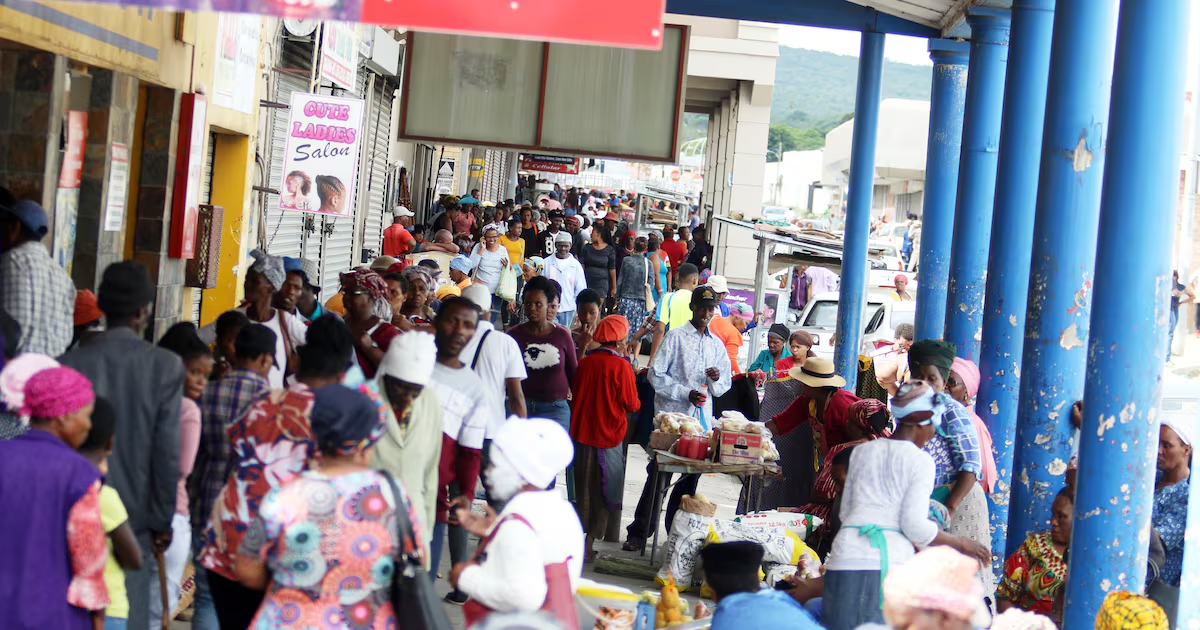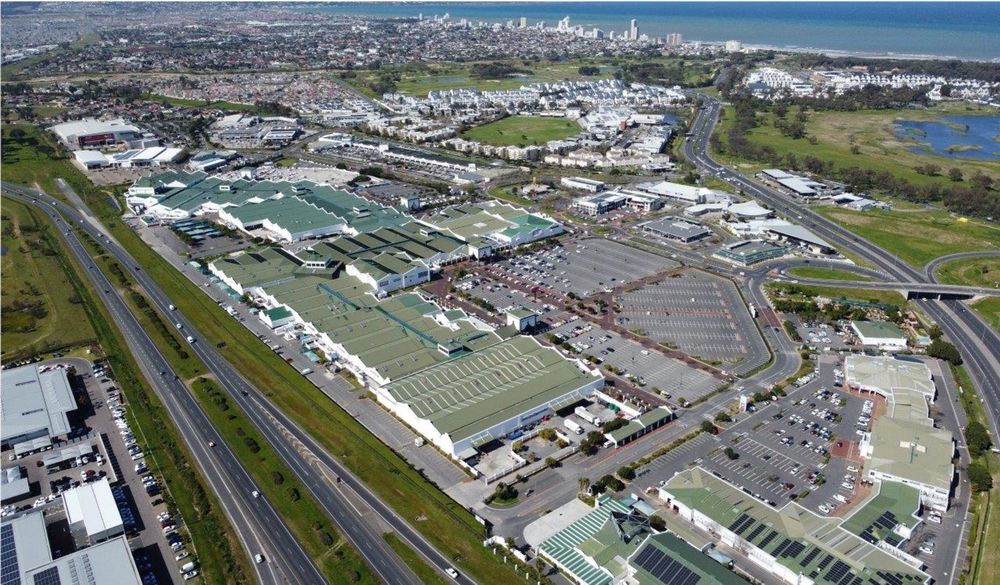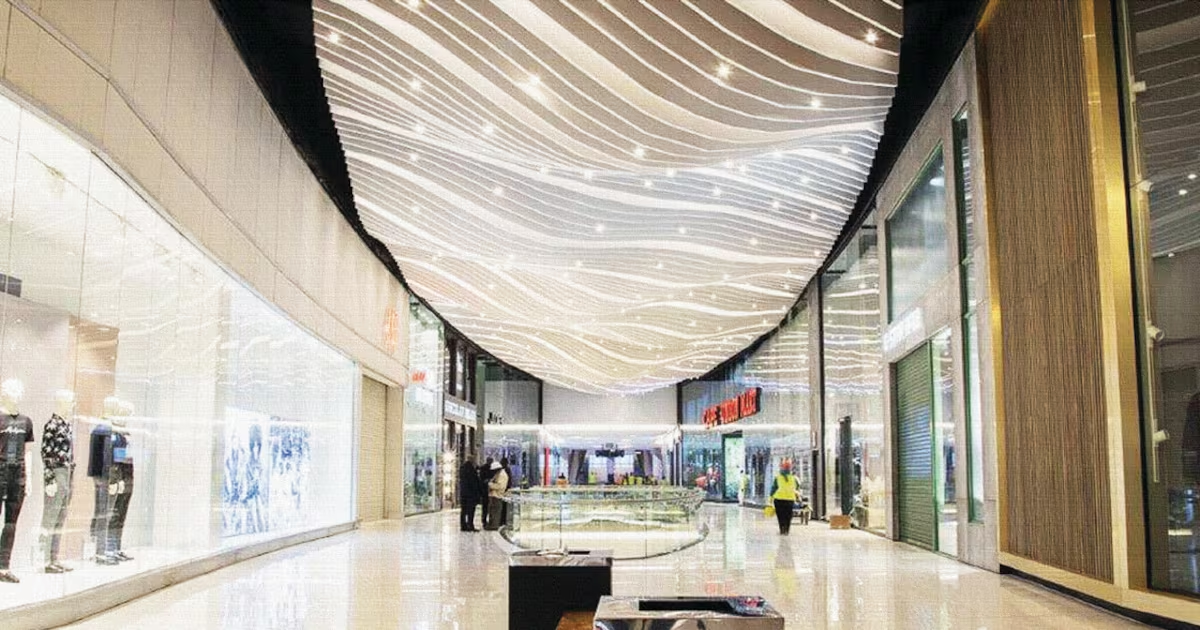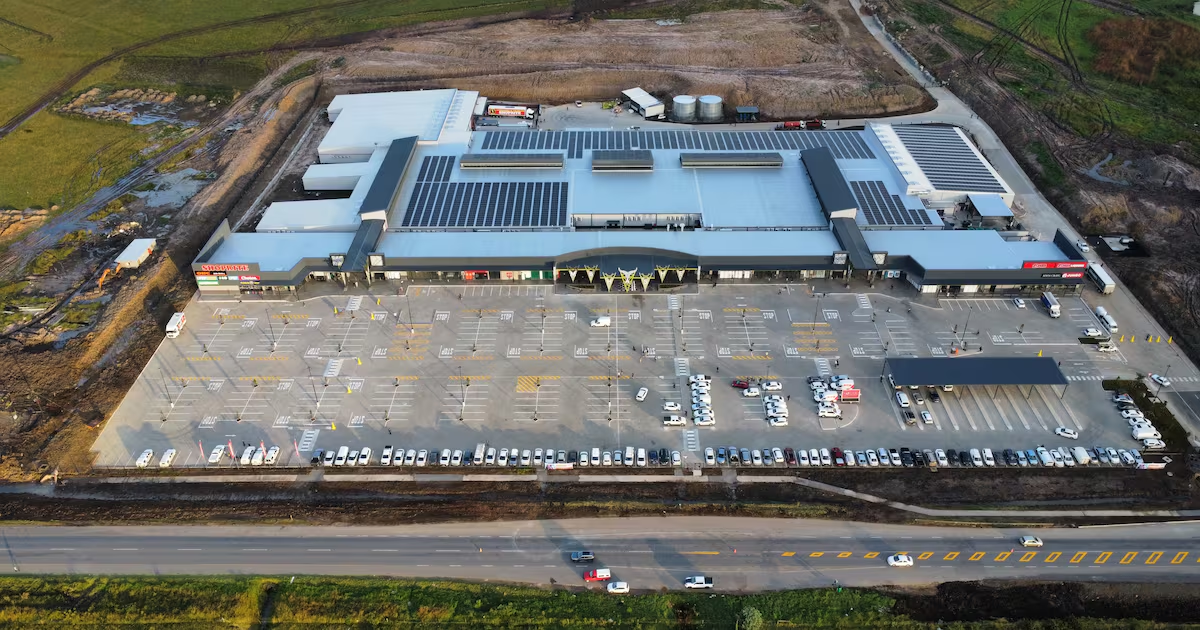
Township and rural retail landlord Exemplar reported a 15.3% increase in distributable income, driven by sustained demand across its portfolio.This was supported by an aggressive acquisition drive and expansion of space across its malls to deepen its footprint in high-growth township and rural communities.The group is sharpening its focus on acquisitions and portfolio expansion as it strengthens its position in key retail nodes, positioning its dominant centres to benefit from robust consumer spending patterns that anchor retail in townships. The group acquired Vosloorus Crossing, a retail centre in Vosloorus, Gauteng, in April at an initial yield of 9.3%. The mall is located adjacent to its flagship Chris Hani Crossing Mall, it said in results for the six months to end February.In addition to the expansion of Tonk Meter Crossing in Springs, Gauteng, where the group acquired a 50% stake late last year, Exemplar is growing the asset to more than 21,000m2. The redeveloped mall is scheduled to relaunch as iTonka Square in September 2026, the group said.“Beyond simple acquisitions, these are deliberate, accretive investments focused on deepening our presence in key high-growth nodes and improving asset quality through considered redevelopment of the sites. It is through the strength of our portfolio that we aim to consistently grow returns and ensure continued value for our stakeholders,” said Exemplar CEO Jason McCormick.The group declared a full-year distribution of 176.9cps, reflecting an 11.8% compound annual growth rate in distributions since its listing in 2018.Meanwhile, EPS showed strong growth, with basic EPS rising 26.8% to 424.1c, while HEPS increased 7.8% to 153.4c. Net asset value per share also strengthened 15.3% to R19.25.Net property income grew 13.1% to R978m, driven by sustained demand across the group’s township and rural retail centres, it said.Speaking to Business Day, McCormick said there is growing recognition that township retail is one of South Africa’s largest consumer markets, particularly from a scale and population perspective.“If I look back 10 or 15 years ago, many businesses weren’t investing in this segment or including it in their broader strategies. Today, almost every major corporate is looking for a foothold in that ecosystem. It goes far beyond retail — from financial services to digital inclusion, every industry is recognising the scale of the opportunity in this market,“ he said. In the next 10 to 15 years, McCormick said, the next major shift will be toward experiential and social shopping — making malls places to be, places to be seen, and destinations where families can spend the day together. In many township communities, there are still limited entertainment options, so malls can fill an important social role.“I also see malls evolving beyond just retail and commerce into far more service-oriented spaces. I see more education facilities and more healthcare services, in particular, because these malls are often the most accessible locations for the largest populations in South Africa. There’s a huge opportunity to create more human-centric services and experiences within these centres,” he said. Nedbank divisional executive for property finance Vanessa Murray noted that the expansion of malls in township and rural areas, driven by underlying demographic growth, is giving rise to new rural precincts. “As some metropolitan CBDs continue to deteriorate, retail nodes in smaller towns and rural communities are emerging, particularly through high-street retail, supported by growing demand for medical services and schools,” Murray said.“Malls in these areas are increasingly acting as catalysts for broader development, attracting offices, schools, banks and even public sector infrastructure, and ultimately evolving into integrated communities.”
Exemplar lifts payout on bustling township retail
The next major shift will be toward experiential and social shopping, it says
579 words~3 min read