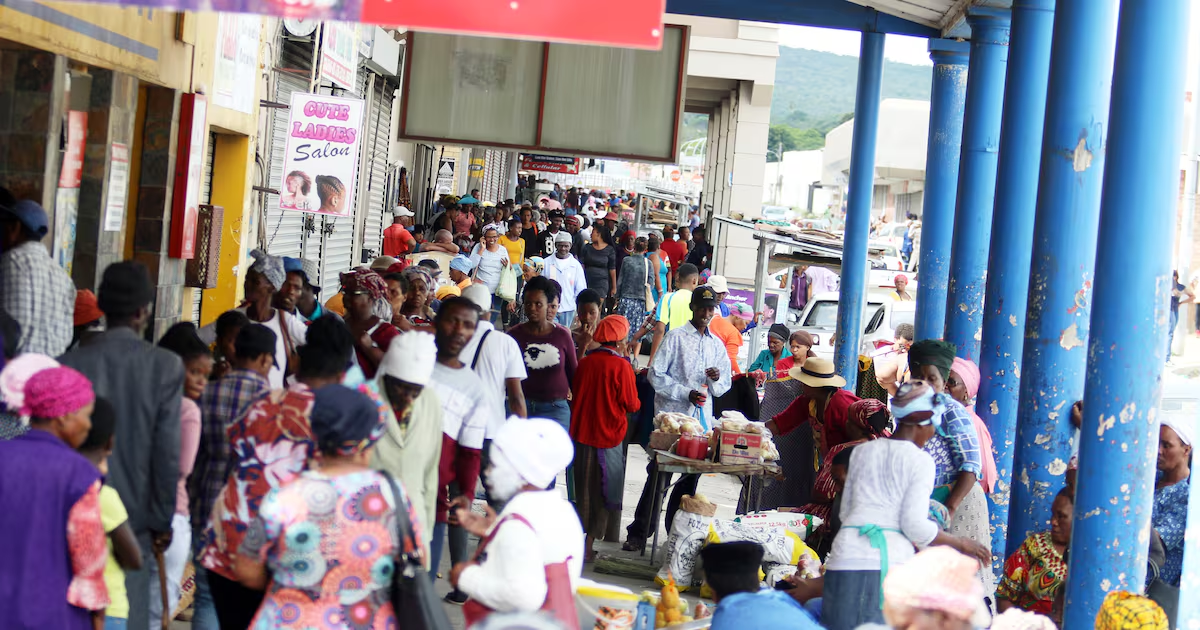
As South Africa’s township economy steps out of the shadows, pools of capital are showing growing confidence in its long-term potential. Retail property companies operating in township and commuter-node markets are increasingly becoming a magnet for business activity and infrastructure investment.The dynamic at play is being shaped by a market estimated to be worth between R900bn and R1-trillion annually, alongside strong entrepreneurial cash flows that continue to circulate through local economies. This is feeding into high trading densities across township centres, driven by a largely cash-based consumer base with relatively low exposure to formal household debt such as bonds, which translates into strong spending power. “The strength of entrepreneurial activity within township economies is a major driver of performance. Around many of our centres, vibrant informal and small-business ecosystems sustain a significant cash economy, with much of that spending ultimately flowing back into formal retail centres where consumers purchase essential goods,” said the MD of Vukile, Itumeleng Mothibeli.For landlords, those spending patterns have translated into a consistent operational trend. Over roughly seven years — including the pre-Covid period — Vukile’s township assets have consistently delivered the highest average annual trading densities across its township, rural, urban, commuter and value-centre portfolio, Mothibeli said. The group is also looking to deepen that exposure through the R443m acquisition of Botshabelo Mall in what is the Free State’s largest township.Rent-to-sales ratios are at attractive levels across the township and rural portfolios, supporting what Mothibeli describes as a highly sustainable trading environment. Johann Kriek, CEO of Resilient Reit, which owns shopping centres in underserviced communities such as Secunda and Highveld, said housing shortages and urbanisation pressures had created a favourable environment for backyard rentals, with many properties now accommodating multiple households in township communities.“This densification is boosting local population numbers and disposable income within townships, creating stronger and more concentrated demand for everyday goods and services. We have also seen how residential properties develop from informal structures to formal one-bedroom buildings, eventually becoming multi-bedroom houses, which is a clear illustration of how these areas are developing economically,” Kriek said.Increased residential density translates into higher foot traffic and more spending. “We are seeing greater demand for retail offerings and services that cater to both essential and growing discretionary spend and a need for convenience. Backyard landlords represent a growing segment requiring property-backed financing, or simply unsecured or micro-loans,” he said.Backyard landlords represent a growing segment requiring property-backed financing, or simply unsecured or micro-loans— Johann Kriek, CEO of Resilient ReitKriek added that the rise in small businesses and micro-enterprises, supported by densification, is driving demand for tailored micro-lending, transactional banking and business development solutions. He said this is gradually helping to formalise parts of the township economy while unlocking greater capital flows into these areas.Exemplar CEO Jason McCormick said a big part of the township retail story lies in widening the ecosystem and integrating more of the informal economy into formal retail spaces, as township economies are driven by local entrepreneurs and “hustlers”. Retail had the potential to act as a meaningful catalyst for economic change in these communities.Miles Kubeka is the CEO of the Wakanda food accelerator, which builds “cloud” kitchens — shared kitchen spaces — and provides smart banking for “kasi” township food entrepreneurs. It has supported more than 578 small food businesses.Kubeka notes that South Africa has two very different economies, both governed by a single policy framework. On the one hand, there is the formal economy of malls, corporate retailers and regulated businesses, and on the other, the independent economy of informal traders, spaza shops, street vendors, and township entrepreneurs“The independent economy has largely operated in the shadows of the formal system, often without the infrastructure, financing, or policy support it needs to thrive, yet it remains a significant contributor to GDP, jobs and livelihoods. Unlocking its potential will require a more intentional approach that reflects how this economy actually functions and is supported by fit-for-purpose policies and systems,” he said.McCormic sees a silver lining in the cloud of fuel price pressure, which he believes could create an unexpected tailwind for township and commuter malls as households cut transport costs by shopping closer to home.He noted that the growing penetration of digital payments and online delivery platforms into township markets is widening access to goods and services that were once largely concentrated in traditional urban retail hubs.Clur International’s community & smaller centres index shows that township-based retail centres are doing better than other centre types in year-on-year growth. Belinda Clur, founder and MD of the company, said the competitiveness of community and smaller centres first emerged during Covid, “when disrupted consumption and supply chains accelerated hybrid retail formats”.“This resilience carried into the post-pandemic period and had since evolved into a phase defined by trust, authenticity and sustained consumer confidence, where these centres continue to strengthen their relevance,” Clur said.Nedbank’s divisional executive for property finance, Vanessa Murray, said township retail had evolved well beyond basic convenience offerings, with landmark developments such as Maponya Mall and Alexandra Plaza laying the foundation for a more sophisticated retail ecosystem.“Rapid urbanisation, rising transport costs and a growing preference for convenience shopping are reshaping township consumer behaviour. At the same time, improving living standards and more aspirational consumers are driving landlords to modernise and redevelop malls to meet changing expectations,” she said.She pointed to financiers such as uMaStandi, part of the TUHF Group, which are increasingly backing small-scale township rental developers as the sector becomes more professionally managed.Business Times
Township retail emerges as capital magnet
The strength of entrepreneurial activity within township economies is a major driver of retail performance
910 words~4 min read